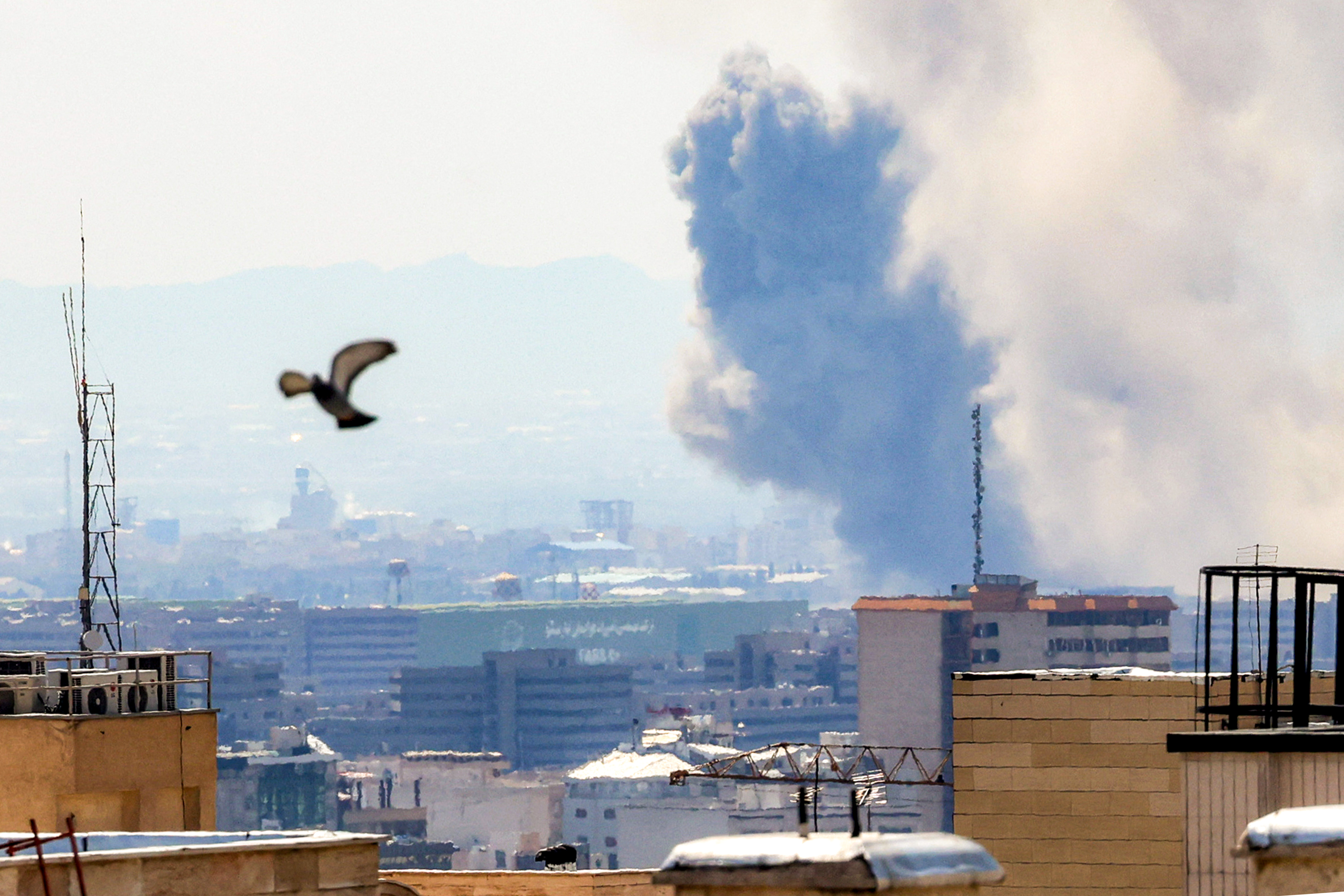
A tentative two-week pause in U.S.–Israel hostilities with Iran was announced by U.S. President Donald Trump on April 8 at 4:30 a.m. local Tehran time—less than 90 minutes before Trump’s deadline to target power plants and other infrastructure expired.
However, there remain uncertainties and conflicting statements about who is agreeing to what. As of 6 p.m. ET on April 8, Iran was still reported to be firing missiles and drones at Israel and some Gulf states; Israel maintained that the ceasefire doesn’t include its war against Hezbollah in Lebanon; Iran said global ship traffic access to the Persian Gulf through the Strait of Hormuz is something it can negotiate; Iran may—or may not—have been allowing international inspectors to retrieve whatever enriched uranium it has, and the Trump administration said a 10-point plan that Iran revealed on April 8 is different from the proposal that the president called “workable” the day before.
Those are merely a few of the questions to be resolved in the first days of the two-week voluntary ceasefire that Pentagon officials warn is not a restraint on responding to what in-theater commanders perceive as a violation of the pause or a threat to U.S. forces. Meanwhile, the Pentagon is continuing its build-up of forces in the region, including more ground forces.
Face-to-Face Talks Start Saturday
Vice President JD Vance and special envoys Steve Witkoff and Jared Kushner will be in Islamabad, Pakistan, for direct
talks with Iranian representatives beginning on April 11.
Speaking with reporters in Hungary on April 8, Vance said there have been three 10-point plans attributed to Iranian officials, with the second one the most viable.
“The first 10-point proposal was something that was submitted, and we think, frankly, was probably written by chat GPT ... that immediately went [to] the garbage and was rejected,” the vice president said.
“There was a second 10-point proposal that was much more reasonable, that was based on some back-and-forth between us, between the Pakistanis, and between the Iranians.” That’s the proposal Trump referenced as being “workable” when he agreed to the ceasefire.
“And then, frankly, I’ve seen a third 10-point proposal that’s even more maximalist than the first 10-point proposal that’s been floating around various social media channels,” Vance said. It may, or may not, reflect the positions of those who are representing Iran, he said.
“You have some crazy people at the fringes of the Iranian system who are leaking anonymously, either for propaganda purposes or because they’re embarrassed or because they don’t like what happened,” the vice president said.
Iran is not in a position to make demands in any event, White House press secretary Karoline Leavitt said during an April 8 press conference, recounting a long list of decimated Iranian military capacities.
“Thanks to the unbelievable capabilities of America’s war fighters, the United States has achieved and exceeded core military objectives [outlined by the president since Feb. 28] in just 38 days,” she said.
10 Points of Confusion
The president called off his threat to dramatically scale-up bombing—B-52s, not used thus far in Operation Epic Fury, were recalled mid-flight—after receiving an Iranian proposal that he described as a “workable basis on which to negotiate.”
But the 10-point proposal widely posted on social media and various media outlets on April 8 does not appear to be what Trump was referring to on April 7.
That proposal, attributed to Iranian Parliament Speaker Mohammad Bagher Ghalibaf, claims “the United States has, in principle, committed to” a series of key points that the Trump administration immediately rejected.
In brief, those alleged 10 points include “an American guarantee of nonaggression with Iran; Iran maintaining control of the Strait of Hormuz; “ending the regional war on all fronts,” including against Hezbollah in Lebanon; withdrawal of U.S. combat forces from all bases and positions in the region; reparations for war damages; acceptance of Iran’s right to nuclear enrichment; lifting all primary and secondary sanctions on Iran; termination of all resolutions against Iran by the International Atomic Energy Agency; and termination of all United Nations Security Council resolutions against Iran.
Vance told reporters in Hungary that most of those 10 points are not what was presented to the president in agreeing to the ceasefire.
“The truth is that President Trump and our powerful military got Iran to agree to reopening the Strait of Hormuz, and negotiations will continue,” Leavitt said in a statement.
Trump called the points allegedly issued by Ghalibaf “a FRAUD” in a subsequent social media post. The proposal is being circulated by Iranian state media outlet IRNA.
Strait Access Now Negotiable?
President Trump on April 7 said in a social media post that the ceasefire was subject to Iran agreeing to the “COMPLETE, IMMEDIATE, and SAFE OPENING of the Strait of Hormuz,” through which 20 percent of global crude oil and natural gas is exported from the Persian Gulf.
During a press conference early on April 8, U.S. War Secretary Pete Hegseth said the strait was open. Iran later said it was closing the strait in response to Israeli strikes in Lebanon.
Regardless, Iran maintains that it will control shipping traffic in the waterway. The United States, the United Nations, the Persian Gulf States, and essentially the rest of the world, say that would violate international law and cannot be allowed.
This is among the issues cited by critics of the war who argue that access to the strait was never a “negotiable” issue before the war and cannot be now, or Iran will be able to pick and choose when it wants to “close” the strait.
US Military Presence Expanding
As these issues are being discussed, the United States is not only sustaining its military presence in the region, but is expanding it.
At least 1,000 paratroopers from the 82nd Airborne Division are in theater. More than 2,200 Marines aboard the USS Tripoli are in the Arabian Sea and will be joined by mid-April by a same-sized combat contingent aboard the USS Boxer.
The 10th Mountain Division, already scheduled to relieve the Iowa National Guard in Iraq and Syria this spring, is gearing up for a more robust presence, possibly sooner than later.
A third aircraft carrier, the USS Bush, will be in range by mid-month, a key “third deck” as the Southwest Monsoon weather pattern becomes more prominent, requiring more “stand down” cleaning and maintenance of jet engines in the Arabian Sea.
What About Israel and Lebanon?
Iran is allegedly claiming that the ceasefire extends to Israel’s war against Hezbollah in Lebanon. Pakistani Prime Minister Shehbaz Sharif, a chief mediator in the talks, maintains that was his understanding as well.
Trump on April 8 told PBS NewsHour that the ceasefire will not extend to Lebanon or to Israeli actions against Hezbollah. “That’s a separate skirmish,” he said.
Israeli Prime Minister Benjamin Netanyahu’s office in an April 8 statement said it will cease strikes against Iran, but not against Hezbollah in Lebanon.
After the ceasefire on April 8, Israel launched air strikes that hit more than 100 Hezbollah targets in southern Lebanon and the Bekaa Valley, killing nearly 200 people, making it the deadliest day in the latest Israel–Hezbollah war.
Enriched Uranian Status
Trump on April 8 said any peace agreement with Tehran would require that Iran “dig up” enriched uranium buried at its nuclear development site that was buried in the June 2025 bombing under U.S. and international supervision. That is not negotiable and among the primary reasons for launching Operation Epic Fury, Trump has maintained since Feb. 28.
Hegseth during an April 8 Pentagon briefing said Tehran must “give it to us voluntarily” or the United States will do “something like” its June strikes with Israel.
The alleged 10-point proposal issued by Iran on April 8 requires “acceptance of enrichment” of uranium, but what that means is uncertain. There is a lower threshold for nuclear power generation that could be negotiated, although it is certain that the United States will demand strict supervision and compliance.
The US 15-Point Plan
The Trump administration and its negotiators have been working with a 15-point plan submitted to Iran for weeks, but only broad outlines have been publicly disclosed.
Some elements have been sketched out in administration officials’ discussions with various media. Among them are diminishment of Iran’s ballistic missile and nuclear programs, halting all of Iran’s nuclear enrichment, and no “control” of the strait.
“There is only one group of meaningful ‘POINTS’ that are acceptable to the United States, and we will be discussing them behind closed doors during these negotiations,” Trump said in an April 8 social media post, adding that “many of the 15 points have already been agreed to,” and repeating his insistence on “no enrichment of uranium.”