
Commentary
The holiday season is upon us and people are already making their plans. Will there be a party we can attend? Who is coming to dinner? What will we do on Thanksgiving, Christmas, and New Year’s? These are burning questions right now because people like to celebrate, and no one really wants to be alone, especially on holidays.
But you will notice something about the culture of the invitation these days. There is this pervasive unwillingness to commit. Excuses are many. I might be traveling, but I’m not sure. It’s possible that I might have to host family. We are considering an out-of-town trip but waiting to see if prices fall. I need to check if there is a possible conflict. Can I get back to you?
This pattern has become habitual for everyone today. To commit to being there means limiting one’s options. What if something better comes along? What if I just don’t feel like it? Why would I commit to the lesser event when it is possible I will get invited to the greater event? This kind of social-influence transactional peddling seems to have reached pandemic proportions today.
It has become the default on social behavior these days. Wait until the last minute. Check one’s mood of the day or the hour to see if it clicks or if one would rather just hang around the house gaming and streaming movies. I might not feel like it when the time comes, so I might as well put off committing to anything as long as possible.
After all, one never knows what’s around the corner. To say yes to anything in advance means closing off alternatives. It means looking ahead weeks, months, or years, and who knows what will happen between then and now?
Have we all just dropped the whole idea of future orientation, shortening our time horizons so much that we are only thinking of what’s in our interest this day or even this hour? This is what happens to a culture in upheaval. We are certainly in that with inflation, ill-health, the soaring costs of everything, political uncertainty, housing going nuts, and so on.
People just drop the whole idea of commitment because conditions are changing so much that one can never know.
The cultural cost here is enormous. The unwillingness to commit means the gradual erosion of familial, community, and social bonds. If everyone does this for himself, what of those who bother to plan things such as celebrations and events? What are they to do? They will give up and stop doing it completely.
The host who is told “maybe” 12 times throws in the towel in frustration. What’s the point of sacrificing for others, with the intention of making life more beautiful, if the response is indifferent and discourteous? The organizer just gives up. Then the ritual of life itself evaporates into nothingness. There is nothing to which to look forward.
I recently bought season tickets to the local symphony. This requires not only a financial investment (even if you save money over buying them the day of) but, more importantly, marking specific days on your calendar and reserving the time. The paper tickets came in the mail, and I suddenly experienced something I had missed: the idea of looking forward to an entire season of glorious music.
This music would not be something chosen on the fly because I’m in the mood, but a genuinely locked-in pattern complete with dates and times from the fall through the spring. Every time I look at the drawer, I thrill to think of what is inside, where mighty symphonies hide and await their fabulous reveal on the appointed day.
This is how symphonies mostly supported themselves in the old days. Most seats were filled with season ticket holders. This meant that patrons would see familiar faces when they showed up. You can give nice people whose names you do not know a smile suggesting familiarity and they smile back. Seems like a small thing, but it is not. This is the kind of experience that makes us feel rooted, that we have a home away from home.
Any symphony manager will tell you that those days are gone. The COVID-19 pandemic-era closures shattered the pattern. People stopped bothering with season tickets. Now it is à la carte everything, and people decide all things the day of.
The season ticket holder was not merely buying music. He was modeling a posture toward time: that there is a future on which we can depend. The world will still be here in April, and there will be a seat waiting in the same row beside the same strangers who have become, without ever quite becoming friends, a kind of community.
This is not only classical music. It pertains to everything. The lockdowns broke the idea that one can expect certain paths in the future and plan for them. Nowadays, there doesn’t seem to be much point in planning anything. The habit was broken and that has broken much else besides.
There is an older word for what we have lost, and it is not planning. It is liturgy.
A liturgy is a schedule that is not up to you. It does not consult your mood. It does not wait to see whether something better comes along. It simply arrives, on the appointed day, whether you feel like it or not, and it asks you to show up and participate. Advent comes. Christmas comes. Lent comes. The seasons of the year are themselves a kind of season ticket, handed down by people who knew that human beings cannot thrive on spontaneity alone.
The lockdowns, whatever else they did, severed us from the calendar. The days blurred. The days of the week did not matter. Tuesday became Saturday. Not even the time of day mattered. The year lost its landmarks. And when the landmarks go, the horizon shrinks, and when the horizon shrinks, so does the soul.
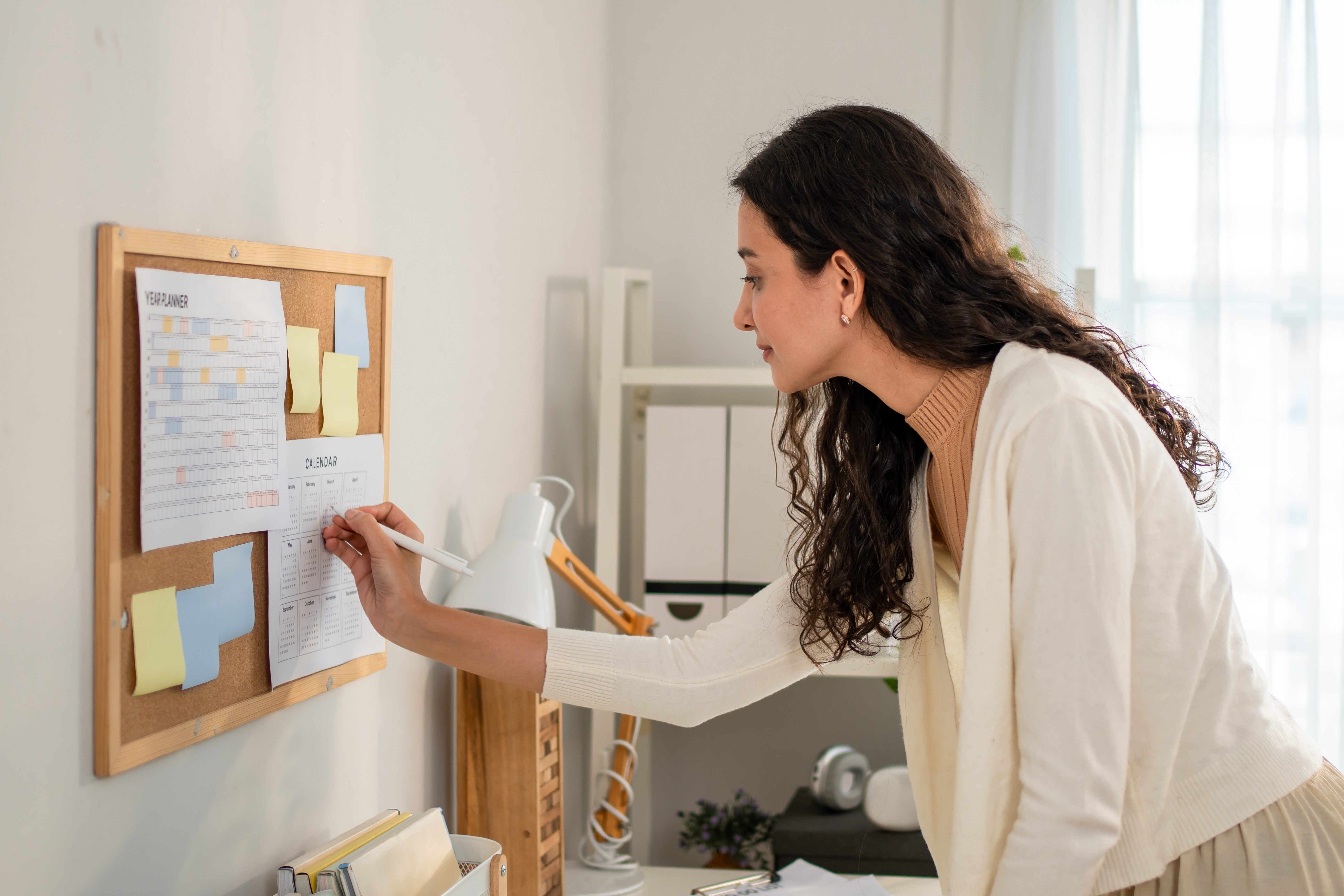
We take back the calendar. Not just the religious calendar—although we need that most of all if only to re-root ourselves—but the small domestic one. The Sunday roast. The Friday night fish fry. The fall squashes. The holiday pies. The annual trip to the same cabin. The birthday that is always celebrated on the actual day.
These are liturgies, too, and they do the same work: They take a formless stretch of time and make it into a shape inside of which a community can thrive.
A calendar with nothing written on it is not freedom. It is a blank stare.
Go ahead. Plan something. This is how we stop being what the Germans call “Luftmenschen”—people of the air, rootless, weightless, blown about by every passing mood—and become grounded again in the lovely, slow, ceremonious flow of human life.
Dinner at seven. The same seats every season. The familiar faces in the same row. A year with a shape to it. The planners are tired. Give them a reason to keep going. Say yes. Mean it. Show up.