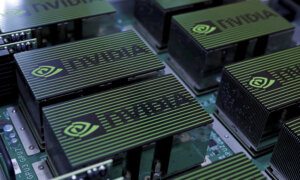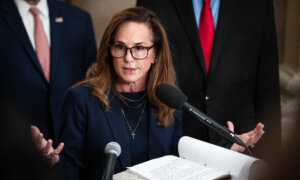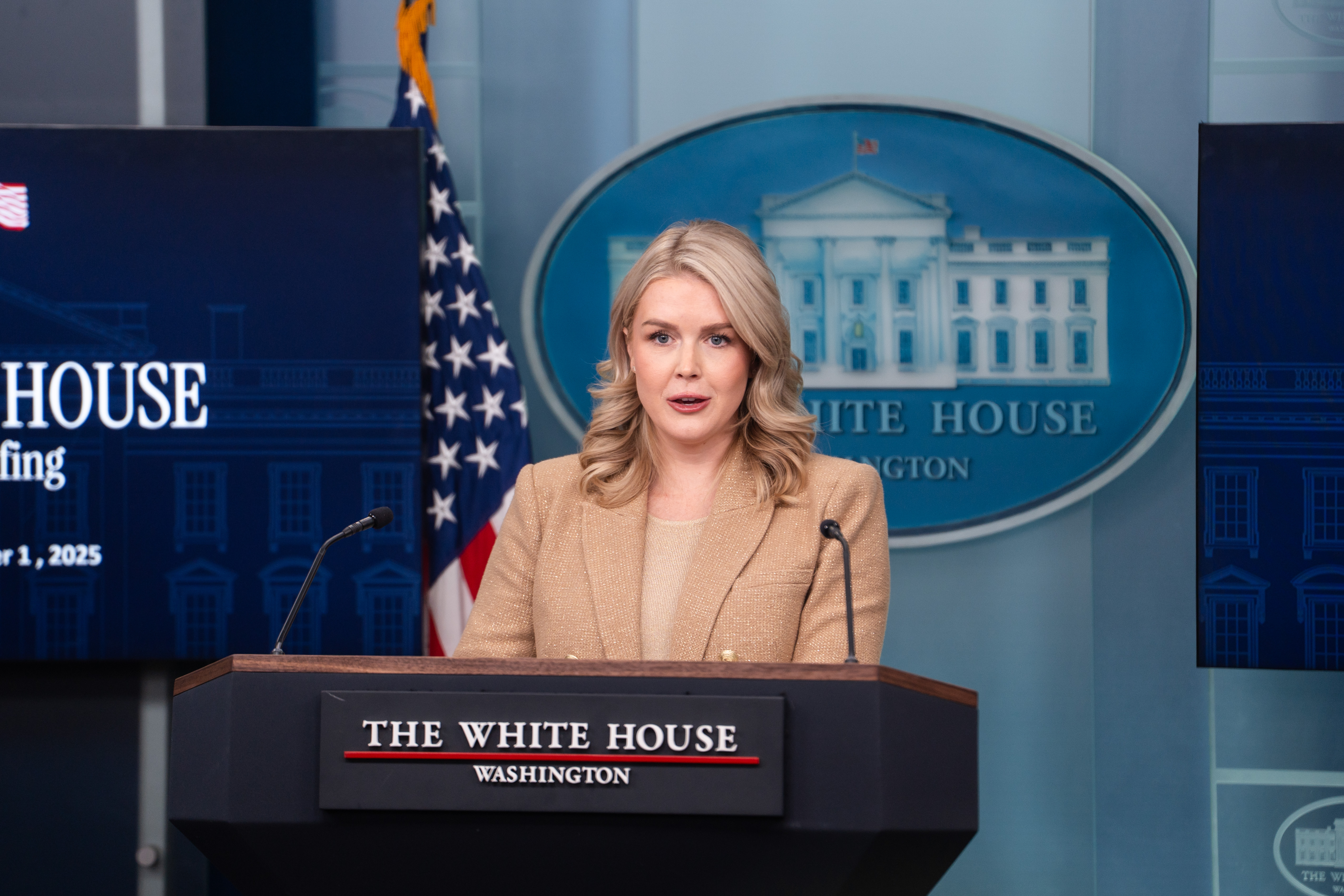

Plans to sell Nvidia’s H200 chips to Chinese customers are in line with national security policy and export controls, White House press secretary Karoline Leavitt said during a Dec. 11 news briefing.
“The administration continues to maintain a strict export control regime, and we are ensuring that Blackwell chip and other advanced technologies stay right here in America,“ Leavitt said. ”And these H200 chips will only be sent to China after undergoing a security inspection here in the United States.”
President Donald Trump announced on Dec. 8 on Truth Social that he would approve sales of Nvidia’s H200 artificial intelligence chips to “approved customers” in China. He said he had spoken to Chinese leader Xi Jinping about the decision and that Xi “responded positively.”
This would be the first time that non-modified versions of Nvidia’s Hopper line of AI chips would be allowed for export to China.
Nvidia previously created the H800 and H20 chips specifically for the Chinese market in line with U.S. export controls. They were “degraded” versions of its H100 and H200 chips, and Trump blasted policy requiring U.S. companies to produce downgraded versions of products on social media.
Nvidia’s Blackwell line is its latest generation of AI chips, and next year it plans to release the more advanced Rubin AI chip, both of which will not be approved for export to China.
Chinese companies using AI currently rely on the Nvidia H20 chip, which the Trump administration briefly considered banning in April before reversing course. The president floated the idea of requiring 15 percent of H20 sales to be paid to the United States, but the policy did not materialize.
In the wake of Trump’s reversal on H20 chips, Chinese officials, raising concerns about potential backdoors in chips, summoned Nvidia to Beijing to provide security reassurances for its products. Chinese trade industries have also urged companies to curb reliance on U.S. chips and find domestic alternatives. Nvidia CEO Jensen Huang said the company had not received orders for H20s from China even after the policy reversal.
Trump announced that the H200 sales would be subject to a 25 percent fee and that other U.S. chip companies will see similar allowances. The companies would still need to apply for export licenses and gain approval from relevant agencies to sell to customers in China.
Trump’s announcement has drawn criticism from lawmakers who have sought to strengthen chip export controls to China as AI competition heats up between the two nations.