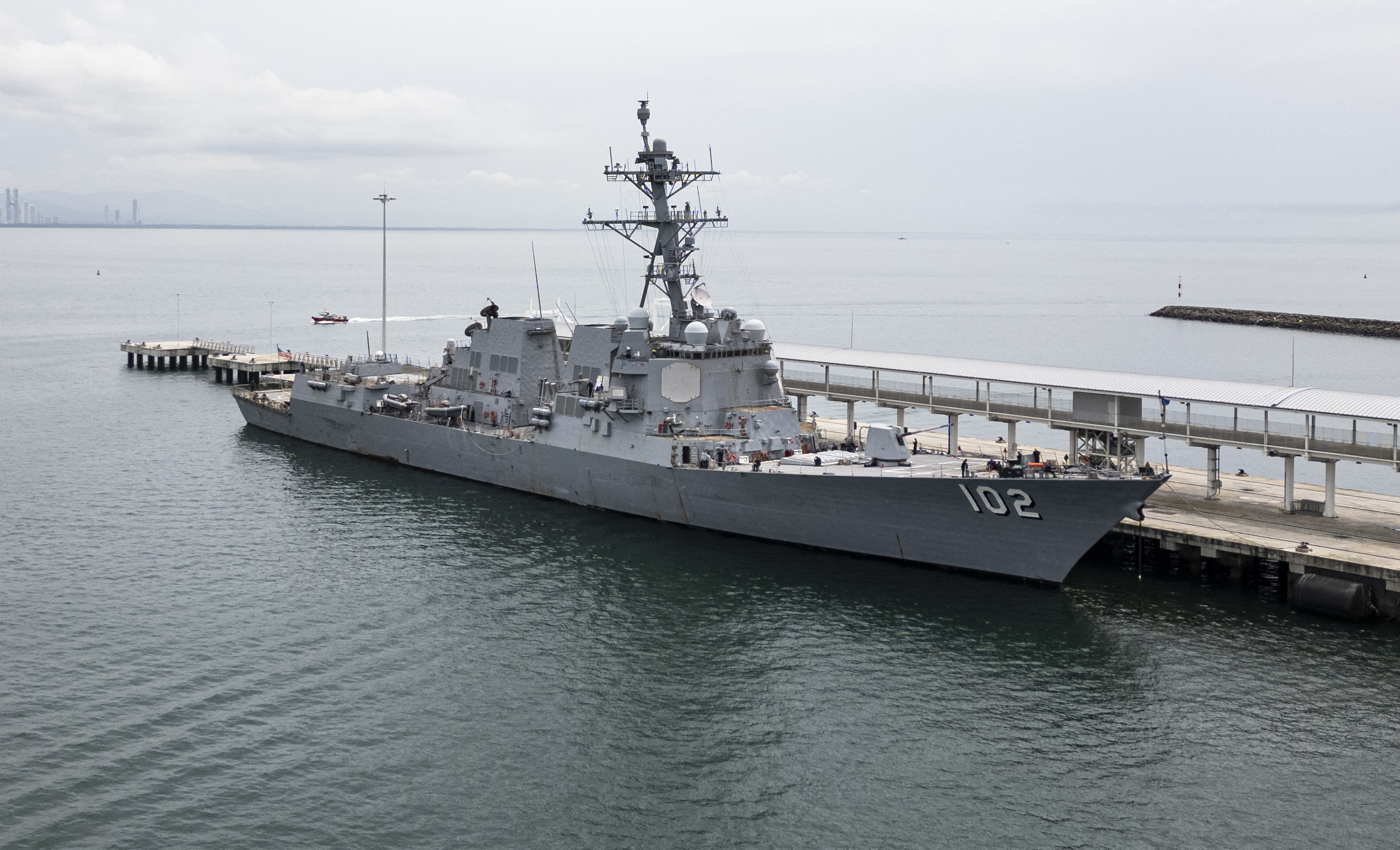

A U.S. strike on an alleged drug smuggling boat from Venezuela has brought a deadly new intensity to the growing pressure campaign around the South American country and its leader, Nicolás Maduro.
Highlighting the strike in a Sept. 2 post on Truth Social, President Donald Trump said those aboard the vessel were members of Tren de Aragua, a transnational criminal organization recently designated by the United States as a foreign terrorist organization. Trump added the Venezuela-based group to a growing list of cartels and criminal organizations his administration says are operating with support and direction from Maduro.
Here’s what we know about the intensifying U.S. operations and the reactions they’re eliciting.
US Force Buildup Preceded Strike
The Sept. 2 strike at sea, which Trump said killed 11 Tren de Aragua suspects, comes in the weeks after the U.S. government doubled the reward for information leading to Maduro’s arrest to $50 million. It also comes after the U.S. military dispatched air and naval assets to the southern Caribbean Sea to counter drug trafficking.
According to a source familiar with the matter, these U.S. naval assets include the Iwo Jima Amphibious Ready Group (ARG), consisting of the USS Iwo Jima Amphibious Assault Ship, as well as the USS Fort Lauderdale and USS San Antonio amphibious transport docks, and the 22nd Marine Expeditionary Unit.
The amphibious warships attached to the Iwo Jima ARG are equipped to deploy helicopters and specially designed jet aircraft such as the AV-8B Harrier II and F-35B Lightning II, as well as amphibious landing craft.
According to the official, other U.S. warships either operating in or approaching the Caribbean include the guided-missile destroyers USS Sampson, USS Gravely, and USS Jason Dunham, the guided-missile cruiser USS Lake Erie, and the attack submarine USS Newport News.
During an Aug. 19 press briefing, White House press secretary Karoline Leavitt was asked whether there was a possibility of U.S. boots on the ground in Venezuela. She did not rule out such a possibility.
“What I will say, with respect to Venezuela, President Trump has been very clear and consistent; he’s prepared to use every element of American power to stop drugs from flooding into our country and to bring those responsible to justice,” Leavitt said.
Leavitt went on to reiterate the Trump administration’s allegations that Maduro is not the legitimately elected leader of Venezuela, but rather a key player in the region’s drug trade.
More Strikes Possible
The boat strike is not the limit of the U.S. government’s efforts to halt the flow of drugs through the region, Defense Secretary Pete Hegseth said in an interview with Fox News on Sept. 3.
“This is a deadly, serious mission for us, and it won’t stop with just this strike,” he said. “Anyone else trafficking in those waters, who we know is a designated narco-terrorist, will face the same fate, and it is important to protect our homeland and hemisphere.”
Hegseth said Trump is now “willing to go on offense in ways others have not been” against transnational criminal organizations.
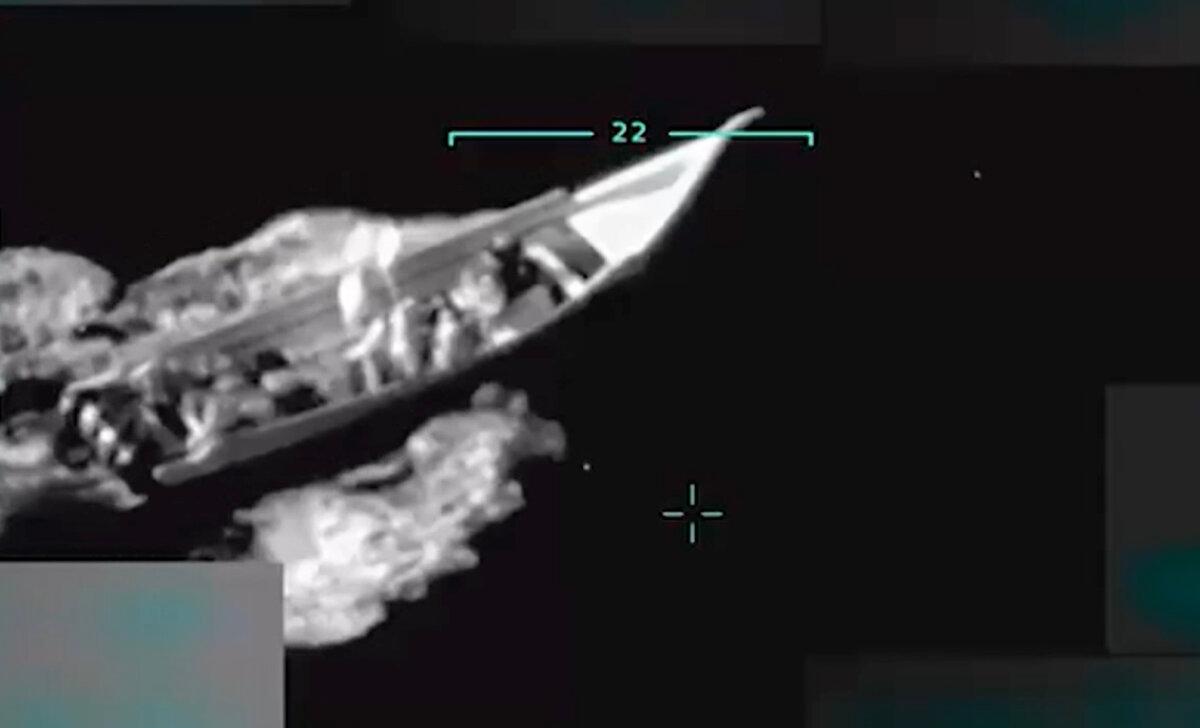
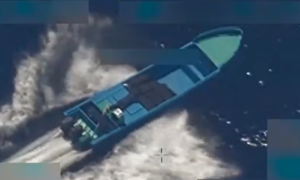
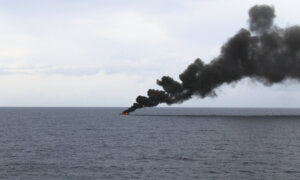
The U.S. military conducts a lethal strike against an alleged drug boat tied to the cartel Tren de Aragua, as seen in a still from video shared by President Donald Trump on Truth Social on Sept. 2, 2025. (@realDonaldTrump via Truth Social)
During a press conference in Mexico on Sept. 3, Secretary of State Marco Rubio said that rather than board the suspected Tren de Aragua drug boat and seize its cargo, Trump elected to authorize a lethal strike.
“Instead of interdicting it, on the president’s orders, we blew it up,” Rubio said. “And it'll happen again. Maybe it’s happening right now. I don’t know.”
Rubio said the decision to conduct a strike rather than stop and board the vessel was justified because the drug shipment posed an immediate threat.
“If you’re on a boat full of cocaine, or fentanyl, or whatever, headed to the United States, you’re an immediate threat to the United States. And the president, under his authority as commander-in-chief, has a right under exigent circumstances to eliminate imminent threats to the United States,” Rubio said. “And that’s what he did yesterday in international waters.”
Maduro Disputes Allegations
U.S. allegations of Maduro’s drug trafficking ties are not new.
In March 2020, the Department of Justice announced a $15 million reward for information leading to Maduro’s arrest and alleged that Maduro’s regime is heavily intertwined with a multi-decade narco-terrorism scheme alongside Colombia’s left-wing FARC guerrillas.
This January, in the final days of U.S. President Joe Biden’s term, the Justice Department increased the arrest reward to $25 million.
The Venezuelan leader has denied the allegations.
Responding to the doubling of the U.S. arrest reward last month, Venezuelan Foreign Minister Yván Gil Pinto said the U.S. government was generating “a media circus to please the defeated far-right in Venezuela.”
“We repudiate this crude political propaganda operation,” Gil said in a statement at the time.
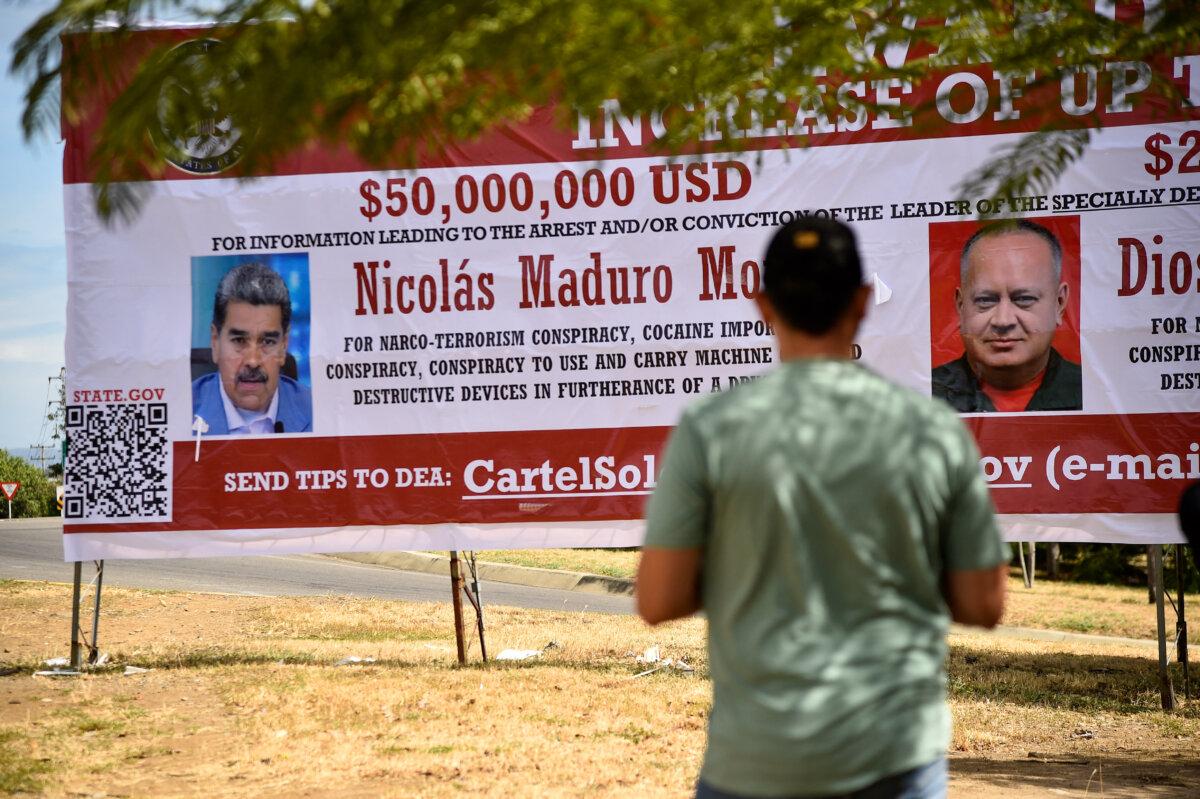
A man looks at a banner offering a reward for information leading to the arrest of Venezuelan President Nicolás Maduro and Venezuelan Minister of Interior Relations, Justice, and Peace Diosdado Cabello, in Villa del Rosario, Colombia, on Aug. 23, 2025. (Schneyder Mendoza/AFP via Getty Images)
Mexican President Claudia Sheinbaum also questioned the evidence supporting U.S. allegations linking Maduro to the Sinaloa cartel in her country.
“As we always say, if they have some evidence, show it. We do not have any proof,” she said during a press conference last month.
US Moves Test Venezuelan Loyalties
Amid the intensifying U.S. operations in the Caribbean Sea, Maduro has ordered Venezuelan forces to mobilize and has called on the people of his country to join militias. Maduro’s office said on Sept. 2 that Venezuela is responding to “maximum pressure” from the United States by “preparing for maximum defense.”
In an Aug. 18 press statement, Maduro’s office said it could count on about 4.5 million people to join government-sanctioned militias, from a population of about 30 million people.
“We are preparing for any aggression by the U.S. against our sacred sovereignty. We are preparing, and we will fight if you set foot in Venezuela,” the country’s defense minister, Gen. Vladimir Padrino López, said on Sept. 1.
The opposition movement, in contrast, has used the rising tensions to cast doubts on Maduro’s hold on power.
María Corina Machado, a top opposition figure, thanked Trump for the recent force deployment near Venezuela during an Aug. 25 interview with Fox News.
“Maduro is very concerned, and he should be,” Machado said.
Machado said Venezuela’s military leadership is fractured.
“Very few military top brass still support Maduro, and they have to make a decision very soon because they just realized that President Trump is not joking. This is very serious,” she said.
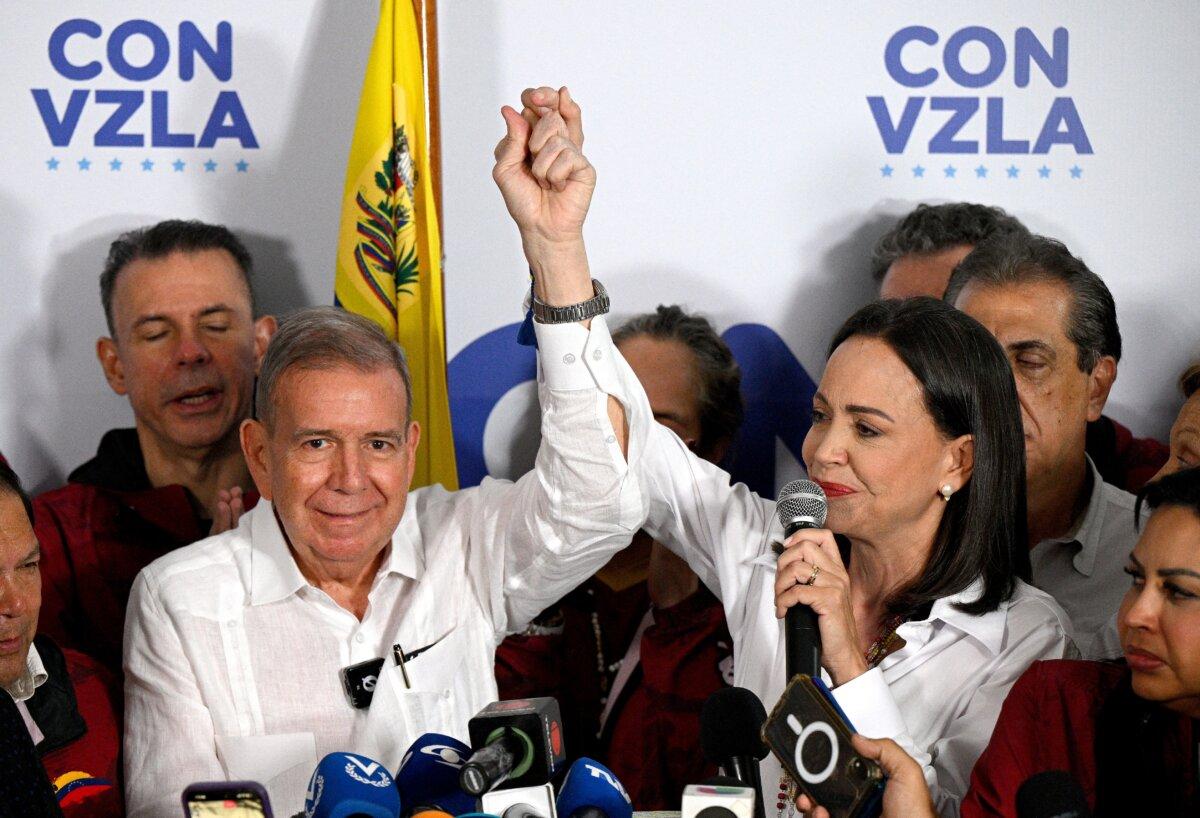
Venezuelan opposition leader María Corina Machado (R) talks to the media, accompanied by opposition presidential candidate Edmundo Gonzalez Urrutia, following the presidential election results in Caracas on July 29, 2024. (Federico Parra/AFP via Getty Images)
Although Machado has raised hopes, past attempts to remove Maduro have failed.
On April 30, 2019, Venezuelan opposition leader Juan Guaidó—whom the first Trump administration recognized as the legitimate interim president of Venezuela following the disputed 2018 election—led a short-lived uprising that failed to gain enough traction to drive Maduro from power.
On May 3, 2020, a group organized by U.S. Green Beret veteran Jordan Goudreau and consisting of Venezuelan expatriates attempted an amphibious landing on the country’s northern coast, in what would prove to be another failed attempt to oust Maduro. Just days after the failed raid, two of Guaidó’s advisers—Juan José Rendón and Sergio Vergara—offered Guaidó their resignations after Rendón acknowledged contacts with Goudreau.
Jack Phillips and Reuters contributed to this report.