
Secretary of Agriculture Brooke Rollins announced on Aug. 15 a new plan to protect the United States from the threat posed by flesh-eating flies south of the border, the United States Department of Agriculture (USDA) said in an Aug. 15 statement.
The parasite, New World screwworm (NWS), is a “devastating pest,” the agency said.
“When NWS fly larvae (maggots) burrow into the flesh of a living animal, they cause serious, often deadly damage to the animal. NWS can infest livestock, pets, wildlife, occasionally birds, and in rare cases, people,” according to the statement.
“It is not only a threat to our ranching community, but it is a threat to our food supply and our national security.”
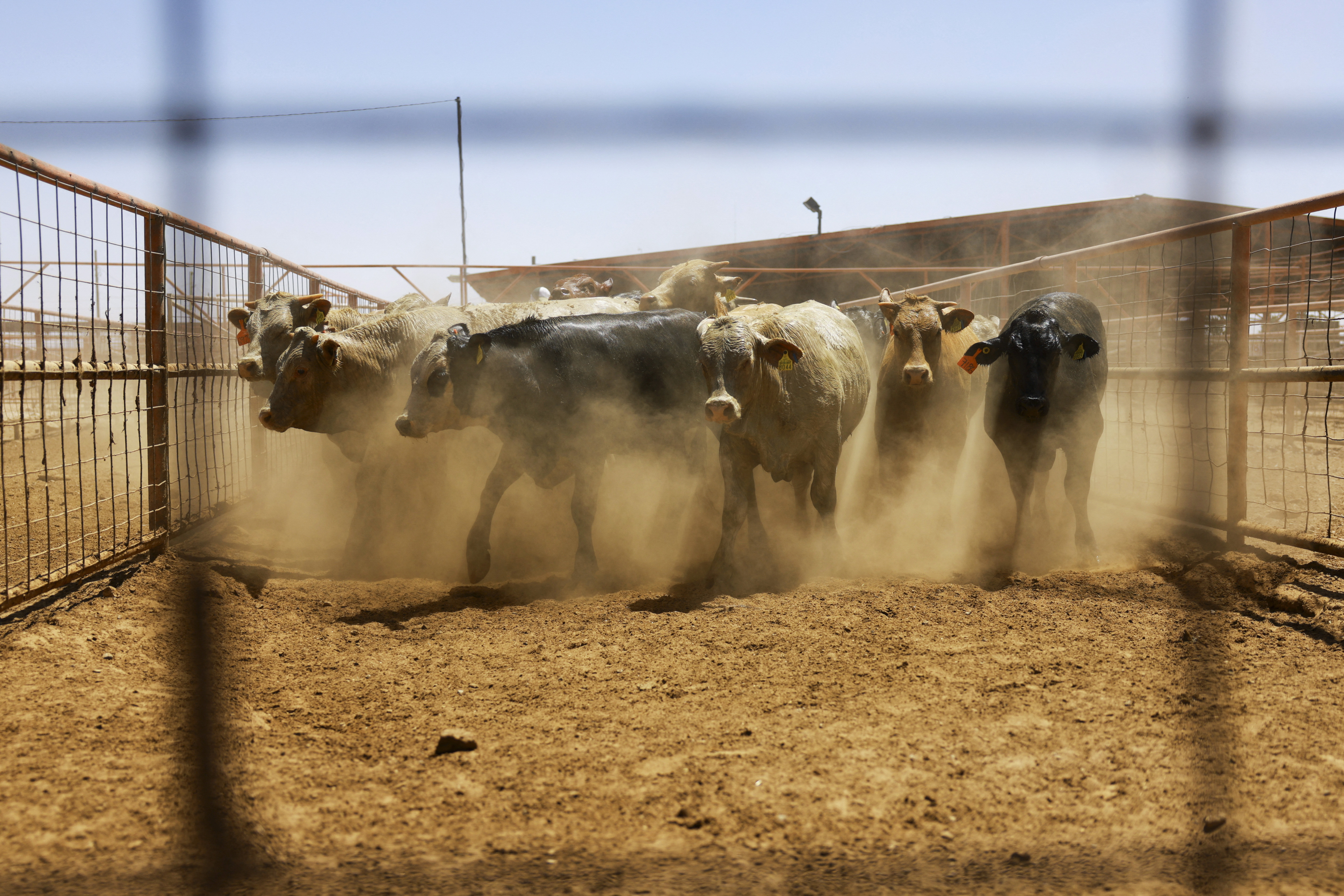
After a case of NWS was reported just 370 miles south of the U.S.–Mexico border last month, Rollins ordered the closure of livestock trade via southern ports of entry on July 9. The order remains in effect.
Under the newly announced plan, USDA will set aside $100 million to invest in innovations that could accelerate the pace of sterile NWS fly production.
The United States intends to counter the NWS threat by using millions of sterile male NWS flies. When these male flies are released en masse into an NWS swarm, they mate with wild females, which eventually lay unfertilized eggs, thus bringing down the population.
The $100 million funding will be focused on new sterile NWS fly production techniques, traps, or lures and on therapeutics that may be useful to tackle NWS if they reach the United States, USDA said.
The funds will also go toward any other tools that bolster the agency’s response or preparedness against NWS, it added.
Secondly, Rollins announced the construction of a sterile NWS fly production facility at Moore Air Force Base in Edinburgh, Texas.
The site’s proximity to the U.S.–Mexico border is part of why that is an ideal location for such a project, USDA said.
Once completed, the facility is expected to produce up to 300 million sterile male NWS flies per week that can be used to combat the parasite swarm, it added.
The Edinburgh site will work in tandem with similar facilities in Mexico and Panama, according to the agency. This project is crucial to protect $100 billion in U.S. economic activity linked to cattle and livestock that is being threatened by NWS, the USDA said.
In an Aug. 15 statement, the Office of the Texas Governor said that USDA will be investing $750 million into the Edinburgh facility. At present, the United States does not have a domestic site to produce sterile NWS files and is completely reliant on Panama.
The third step of Rollins’s plan aims at preventing wildlife migration from Mexico into the United States by ramping up the hiring of patrol officers and staff for border surveillance. In addition, dogs are being trained to detect NWS infestations in animals along the border and ports of entry, USDA said.
A fourth initiative involves cooperation between USDA and Mexico’s National Service of Agri-Food Health, Safety and Quality to contain the NWS swarm south of the U.S. border, the agency said.
The final part of the plan involves USDA’s Food Safety and Inspection Service, which checks for the presence of NWS in animals and carcasses to keep the United States’ food supply safe, the agency said, adding that the parasite has not been reported or detected in the United States thus far.
Protecting American Industry
Rollins announced the plan at the Texas State Capitol alongside Texas Gov. Greg Abbott and stakeholders from across the country. According to the USDA, this is the “largest initiative yet” in the agency’s plan to combat the NWS threat.
“President [Donald] Trump has made it clear that we must take all necessary steps to protect our country from foreign pests and diseases that threaten our economy and way of life,” Rollins said.
“If our ranchers are overrun by foreign pests, then we cannot feed ourselves. USDA and Customs and Border Protection are constantly monitoring our ports of entry to keep NWS away from our borders. We are working every day to ensure our American agricultural industry is safe, secure, and resilient.”
The initiative builds upon a previous five-pronged plan USDA announced in June to counter the spread of NWS from Mexico into the United States.
According to a fact sheet from USDA’s Animal and Plant Health Inspection Service, NWS was detected in October 2016 by the agency and the Florida Department of Agriculture and Consumer Services.
That was the first incident of NWS infestation in the United States in more than 30 years. Authorities eventually succeeded in eradicating the threat by March 2017.
This outbreak resulted in 136 wildlife cases, with 15 percent of the endangered Key Deer dying because of NWS infestation. Nine domestic animal cases were also identified, according to the fact sheet.
To combat the threat, more than 188 million sterilized NWS pupae were placed at 35 sites. The eradication efforts cost about $3.2 million.
“Another incursion into the United States could cost millions of dollars from livestock losses, trade embargoes, and eradication work. Pets, livestock, wildlife, and even people may suffer and die,” APHIS warned.