
Less than a week after its heavy-lifting rocket exploded on the launch pad, Blue Origin affirmed that it would resume launches within the year.
“We will fly again before the end of this year,” the company’s CEO Dave Limp declared on X on June 1.
Blue Origin’s New Glenn rocket stands more than 320 feet tall. It is powerful enough to deliver 45 metric tons into low Earth orbit, with seven main-stage engines each capable of generating 640,000 pounds of thrust at sea level and two second-stage engines each delivering up to 200,000 pounds of thrust in the vacuum of space.
That entire vehicle suddenly exploded on the night of May 28 during a hotfire test of its mainstage engines, unleashing a fireball said to be visible all the way across the Florida Peninsula.
Initial images taken the following morning appeared to show the complex at Cape Canaveral Space Force Station charred and in disarray.
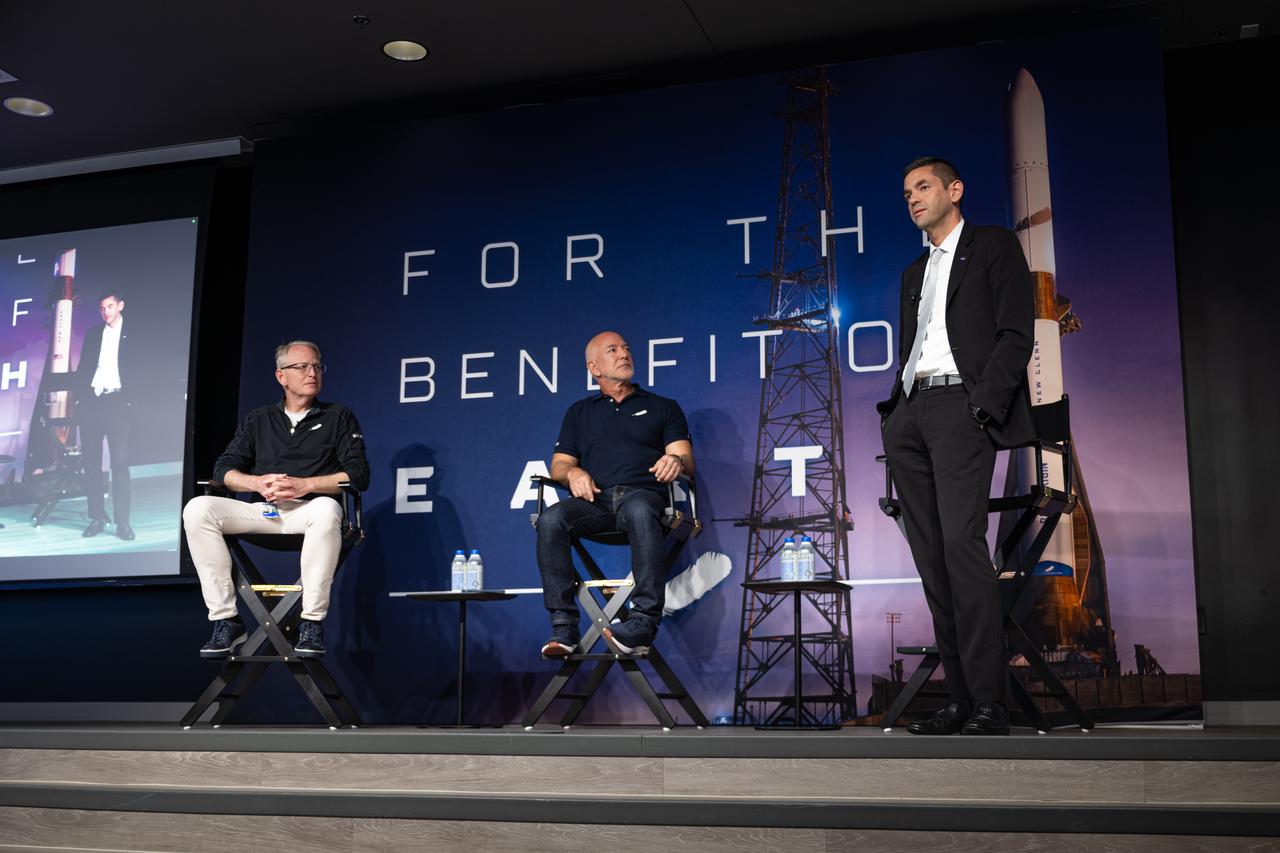
Blue Origin held an all-hands meeting at its rocket factory near the Kennedy Space Center with its CEO and founder, Jeff Bezos, and NASA Administrator Jared Isaacman on May 29, and regained access to the site on May 30.
After a few days of inspection, Limp said he was able to share “a bit of good news,” that much of the critical launch-related infrastructure was still in good shape.
He said the oxygen, liquid hydrogen, and liquid natural gas tanks, all used to fuel the rocket, were found to be in good condition, as was the water tower.
The complex also hosts a rocket integration facility in immediate proximity to the pad that serves as a place to service the reusable main stage booster, and horizontally piece the vehicle together ahead of a launch.
Limp confirmed that a second booster Blue Origin had in operation and three second-stage variants that were inside that facility during the explosion survived and “looked good.”
As for what was damaged, Limp said the “big support tower” could be repaired on-site rather than torn down and completely replaced. He also said that the asset used to transport the rocket from the integration facility and raise it upright on the launch pad did not need to be replaced. Instead, the spacefaring company would use the opportunity to install a new transporter concept that he said was already in development.
While Blue Origin’s rocket parts are in good shape, its one and only departure point along Florida’s spaceport is Launch Complex 36 at Cape Canaveral Space Force Station.
The launch-halting accident came just a few days after Isaacman announced Blue Origin would have a significant role to play in the space agency’s initial Moon Base missions.
While no official launch date was set, Isaacman revealed Blue Origin’s Blue Moon MK-1 lander would fly to the area near the Lunar South Pole eyed for a moon base—Shackleton Crater—later this year.
It was also selected to deliver a crewed variant of the lander, the MK-2, into low Earth orbit by mid-2027 for the Artemis III mission, as well as two rovers to the lunar surface in 2028.
While the status of MK-1’s delivery to the moon and MK-2’s delivery to orbit remains unclear, Isaacman said in an interview that the 2028 rover missions were “well within what is possible” regarding the pad recovery.
“Blue Origin leadership has responded incredibly quickly, and NASA will do all we can to help with root cause analysis and accelerate pad recovery timeframes while staying extremely focused on progressing the lander,” he said on X.