
Rising productivity has renewed hopes that heavy investment in artificial intelligence could start to deliver broader economic gains, according to new government data.
Business-sector worker productivity strengthened in the third quarter, the Bureau of Labor Statistics reported on Nov. 5.
Nonfarm productivity—a measure of hourly output per worker—increased at an annualized rate of 3.6 percent in the July–September period.
This marked the strongest increase since the third quarter of 2025 and blew past the consensus forecast of 2.8 percent.
Hours worked ticked up by just 0.1 percent, signaling higher output compared with labor input.
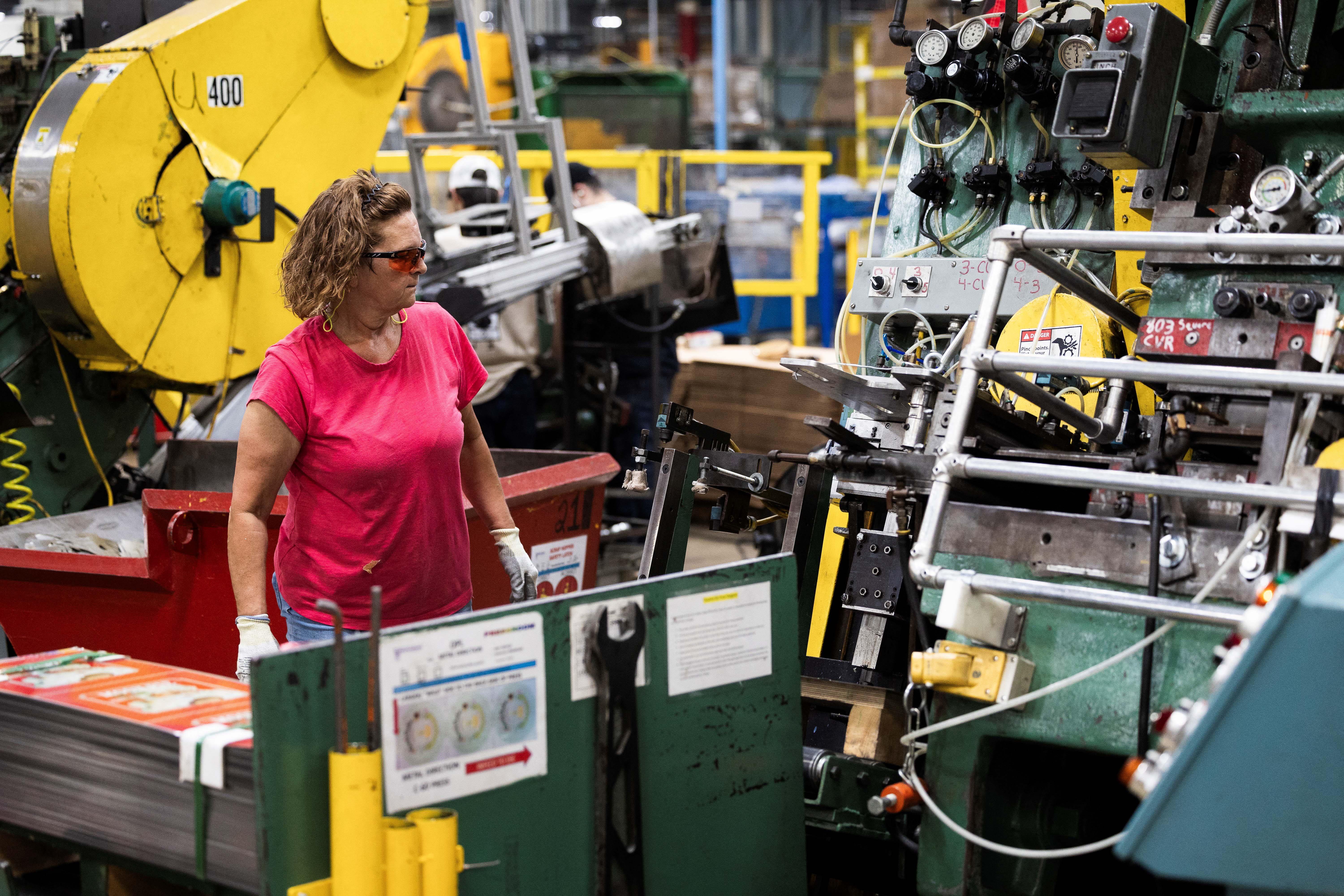
Productivity gains were concentrated in the durable-goods sector, with output up by almost 4 percent versus a 1.6 percent increase in hours worked. Nondurable goods output slipped by almost 2 percent and hours worked edged up by 0.1 percent.
Expectations for a productivity boom have grown in recent years as economists anticipate that massive investments in AI will translate into stronger output growth.
The data also show that the labor market is not a source of inflation pressure, with unit labor costs falling by 0.7 percent. This reflects a 2.9 percent jump in hourly compensation and a 3.6 percent surge in productivity.
Over the past four quarters, labor costs have risen by more than 2 percent.
Real (inflation-adjusted) hourly compensation rose by 1.1 percent in the third quarter and by 1 percent over the past four quarters, the bureau said.
The productivity data could be welcomed by Federal Reserve officials because stronger productivity can help ease inflation pressures without weakening the labor market.
The U.S. central bank is widely expected to raise interest rates next month as annual inflation remains firmly above its 2 percent target.
But workers have yet to experience the benefits of higher productivity.
Workers received 53 percent of total output as compensation in the third quarter, the smallest share on record since 1947, Bureau of Labor Statistics data show.
“The U.S. economy is steadily becoming more productive, which should eventually bring a host of benefits to the economy, from easing inflation pressure to rising per capita incomes,” Aubrey Woessner, an associate economist at the Indeed Hiring Lab, said in a note following the release of the data.
“So far, the productivity data show steady improvement rather than dramatic acceleration, with employers feeling much of the benefits.”
Productivity Positivity
A chorus of economists and policymakers has generally been optimistic that the new technology will ignite a productivity boom similar to the dot-com revolution in the 1990s.
The University of Pennsylvania’s Penn Wharton Budget Model estimated last year that AI would boost productivity and gross domestic product by 1.5 percent by 2035 and by almost 3 percent by 2055.
While AI has yet to transform the workplace, companies are gradually integrating the technology into daily operations, said Adrian Balfour, founder of consultancy firm Envorso.
“If you look at it across two different markets, AI startups are using it as augmented employees,” Balfour told The Epoch Times in an emailed note.
“Traditional companies are using it as a productivity assistant.”
At last month’s annual meetings in Thailand, the International Monetary Fund and World Bank projected that AI could bolster annual global economic growth by about half a percentage point over the next decade if productivity gains materialize.
In a discussion with International Monetary Fund Director Kristalina Georgieva, Fed Chairman Kevin Warsh reiterated his expectation that AI would enhance productivity and wealth. He also cautioned that the path could be “a very bumpy one.”
“We really don’t know what the market structure will be for these new technologies,” Warsh said. “Who’s going to be making the money?”
For now, it is a tale of two cities in the private sector.
“Established companies are largely adopting AI as a productivity-enhancing tool, while startups are using it more like a digital workforce to expand capabilities without hiring at the same pace,” Balfour said.