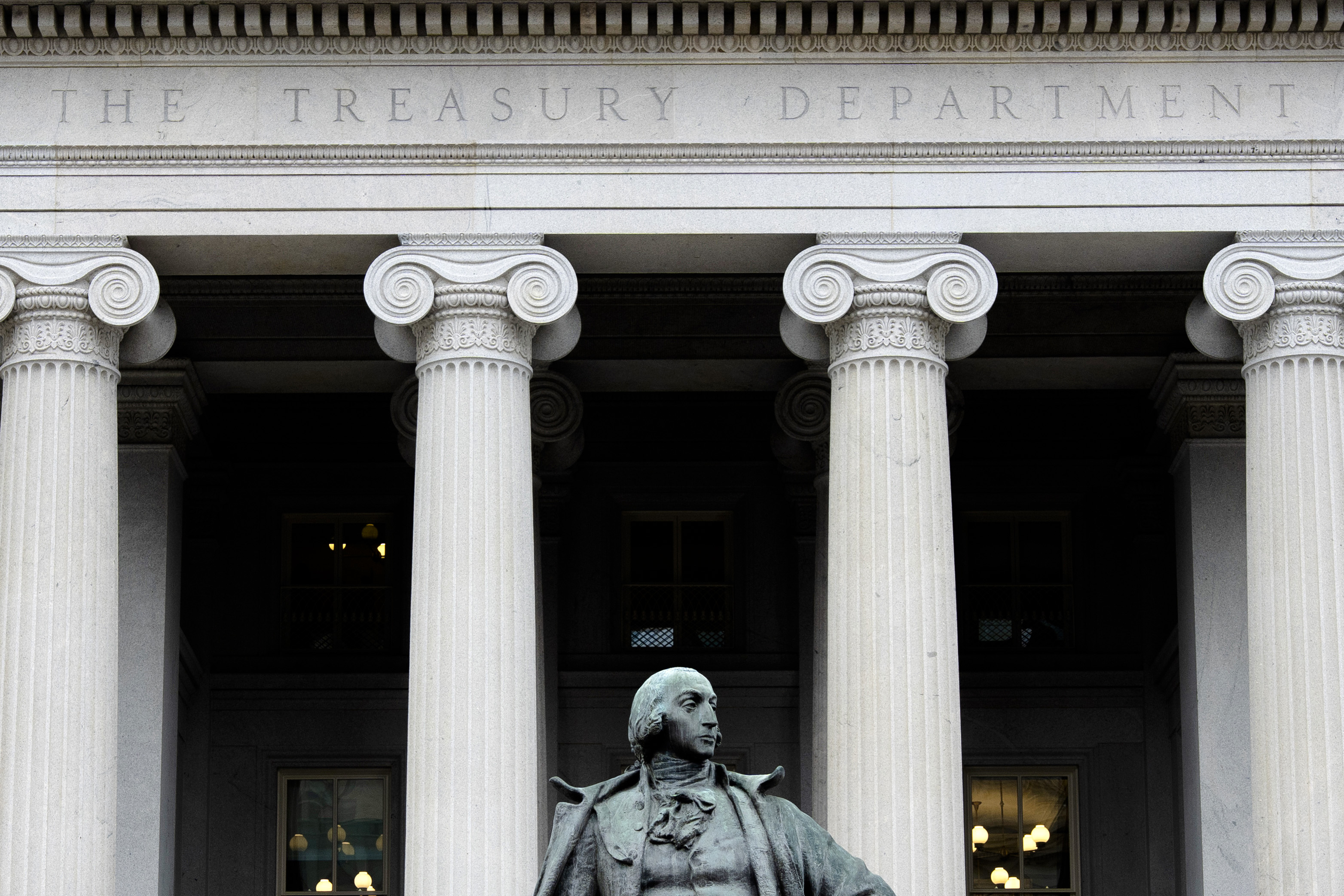

The U.S. Treasury Department released interim guidance Thursday for enforcing provisions in President Donald Trump’s tax reforms that prohibit companies from claiming federal clean energy subsidies if they depend on equipment from China or other specified foreign nations.
The rules apply to valuable tax incentives for manufacturing clean energy equipment and generating electricity from renewable sources. Solar and wind project developers, along with factory operators, have been expecting this clarification since Trump signed the One Big Beautiful Bill Act into law last July.
The legislation hastened the phaseout of several clean energy tax credits created under the Biden administration. It also implemented new mandates to diminish U.S. dependence on supply chains dominated by “prohibited foreign entities,” including China, Russia, Iran, and North Korea.
In his second term, Trump has said that clean energy industries are too connected to Chinese manufacturing. The law specifically bars firms owned or controlled by Chinese entities from accessing credits and curtails the incorporation of components or labor from Chinese sources.
U.S. production of solar panels and batteries has grown significantly in recent years. Nonetheless, the industry continues to depend on imported materials and parts, particularly from China, the global leader in solar component manufacturing.
“There’s been so many projects that have been in limbo, so having some clarification out there should certainly be more helpful than hurtful,” Yogin Kothari, chief strategy officer for the Solar Energy Manufacturers for America Coalition, said.
The IRS detailed on its website the process for assessing whether a project or component involves “material assistance” from a prohibited entity, including the formulas and procedures for compliance.
Companies can apply IRS-provided cost percentages for components to check eligibility thresholds. They may also use supplier certifications confirming that materials and equipment qualify.
The IRS stated that taxpayers can depend on these interim rules pending the issuance of final regulations. The agency is accepting public comments for 45 days regarding future updates.
The One Big Beautiful Bill Act received broad endorsement in an Epoch Times readers’ poll, though respondents showed concern over its potential impact on the deficit.
Reuters contributed to this report.