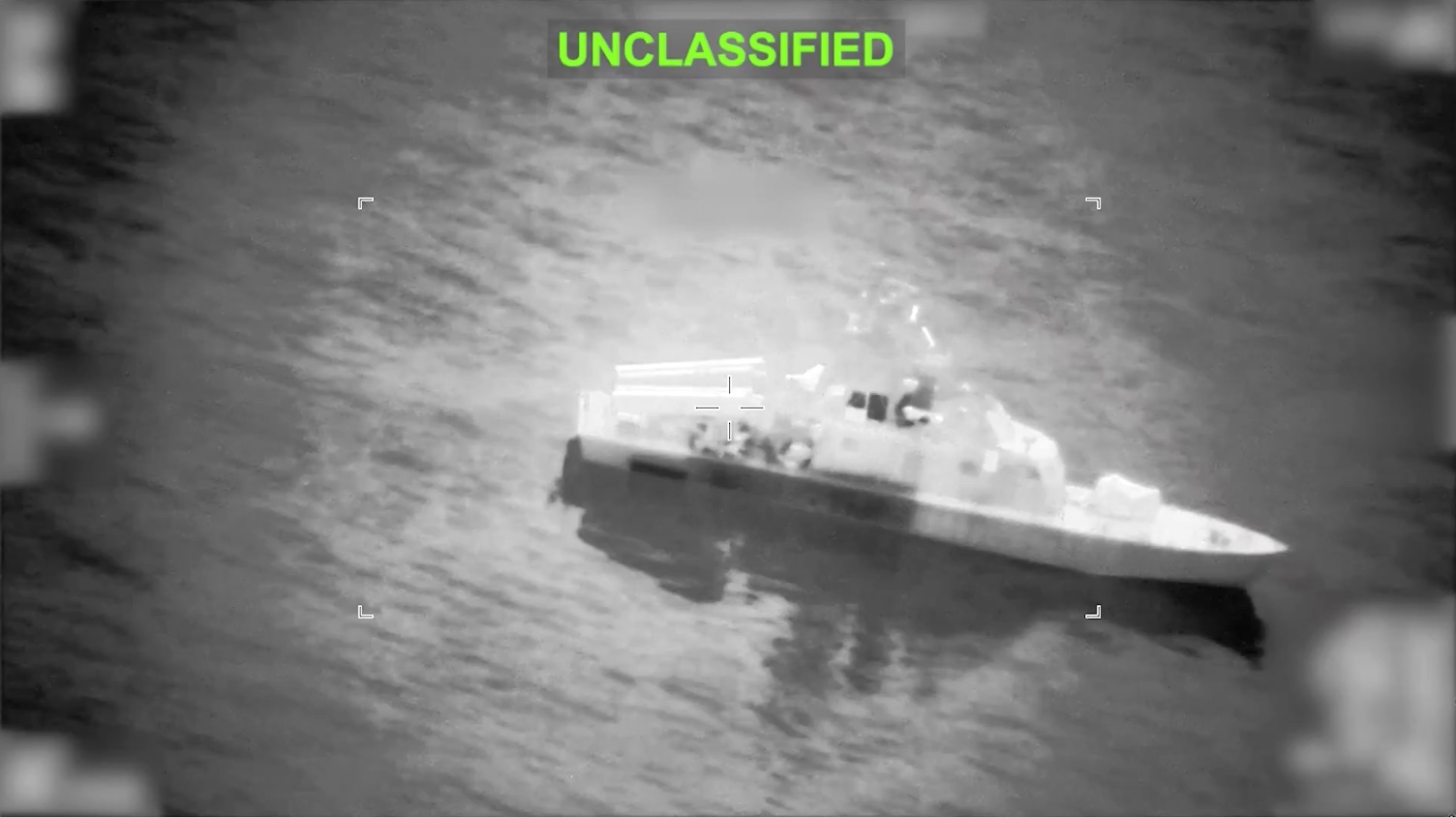

The Pentagon said U.S. forces destroyed 16 Iranian mine-laying boats near the Strait of Hormuz on Tuesday.
The minelayers were among multiple Iranian naval vessels “eliminated” by the United States, U.S. Central Command said in an X post.
President Donald Trump, in an earlier post on his Truth Social platform, warned Tehran that if “for any reason mines were placed, and they are not removed forthwith, the military consequences to Iran will be at a level never seen before.”
“If Iran has put out any mines in the Hormuz Strait, and we have no reports of them doing so, we want them removed, IMMEDIATELY!” Trump said in the post.
“If, on the other hand, they remove what may have been placed, it will be a giant step in the right direction!”
The president’s comments came after reports first published by CBS News that Iranian small craft, capable of carrying two to three mines each, have been detected moving into the 100-mile waterway.
Less than 15 minutes later, the president added in another post that “within the last few hours, we have hit, and completely destroyed, 10 inactive mine laying boats and/or ships, with more to follow!”
Traffic in the Hormuz Strait—through which 20 percent of the world’s oil leaves the Persian Gulf—has come to a near standstill over fears of attacks from Iranian drones, missiles, bunkered artillery, and mines. Up to 250 ships, including around 150 oil tankers, are stacked in the Arabian Sea.
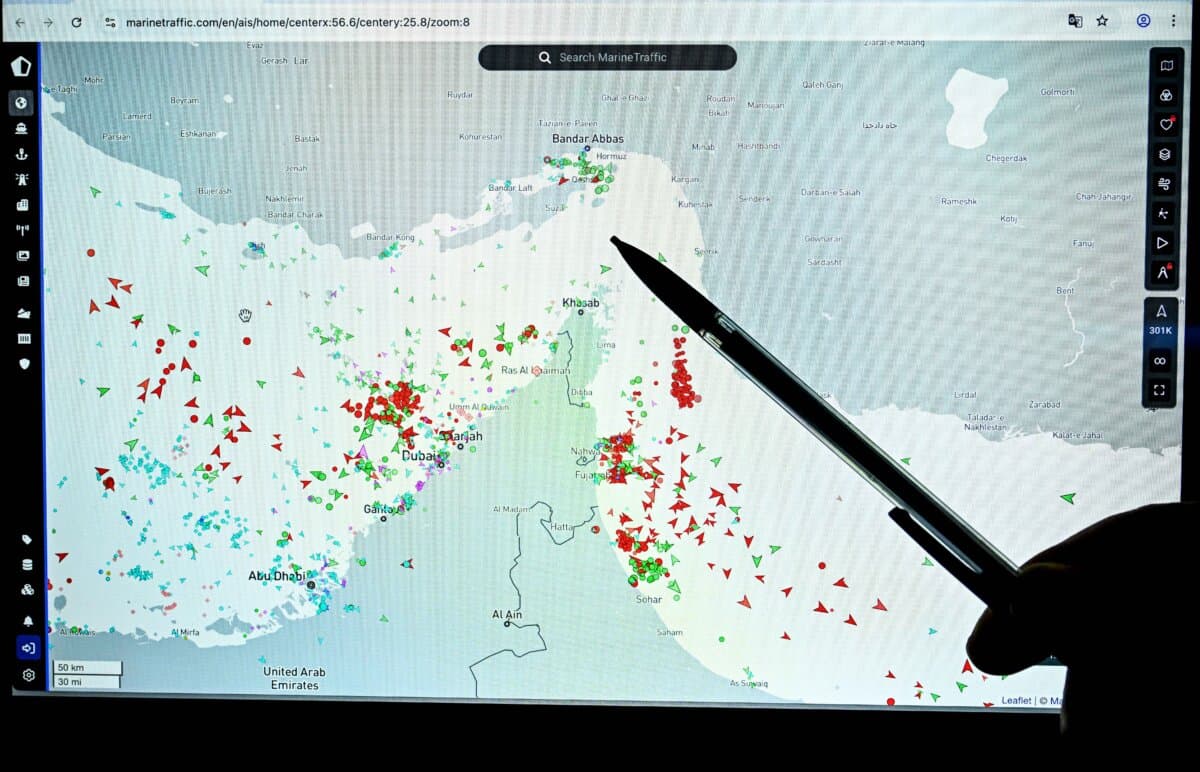
A person points at a page on the Marinetraffic website that shows commercial boats traffic on the edge of the Strait of Hormuz near the Iranian coast, in Paris on March 4, 2026. (Julien de Rosa / AFP via Getty Images)
At a Tuesday morning Pentagon press conference, Joint Chiefs of Staff Chair Gen. Dan Caine said U.S. forces are aggressively targeting “mine-laying vessels in mine storage facilities” and will continue “to hunt and strike” suspected Islamic Revolutionary Guard Corps (IRGC) sites along Iran’s mountainous coast, which is less than 21 miles from the strait’s six-mile wide commercial shipping channel.
According to widely published analyses, the IRGC has as many as 6,000 mines of varied types and technologies. Belgium-based defense journal Army Recognition said “using mines alongside drones, fast boats, and coastal missiles to keep the strait unusable for commercial traffic for as long as it chooses” is a “sustained friction” strategy it implemented during the 1980-88 Tanker War.
In April 1988, the guided-missile frigate USS Samuel B. Roberts struck an IRGC-laid M-08 “contact mine”—a WWI era floating bomb—in the central Persian Gulf while escorting ships during Operation Earnest Will. The blast ignited massive fires, nearly sinking the ship and wounding dozens of sailors.
Iran has at least three kinds of mines: mines tethered to the seafloor; “influence bottom” mines that detonate from magnetic and acoustic pressure; and “rocket rising mines” from China designed to hug the seafloor and launch rocket-propelled warheads. All can be deployed relatively rapidly from small watercraft, including fishing dhows.