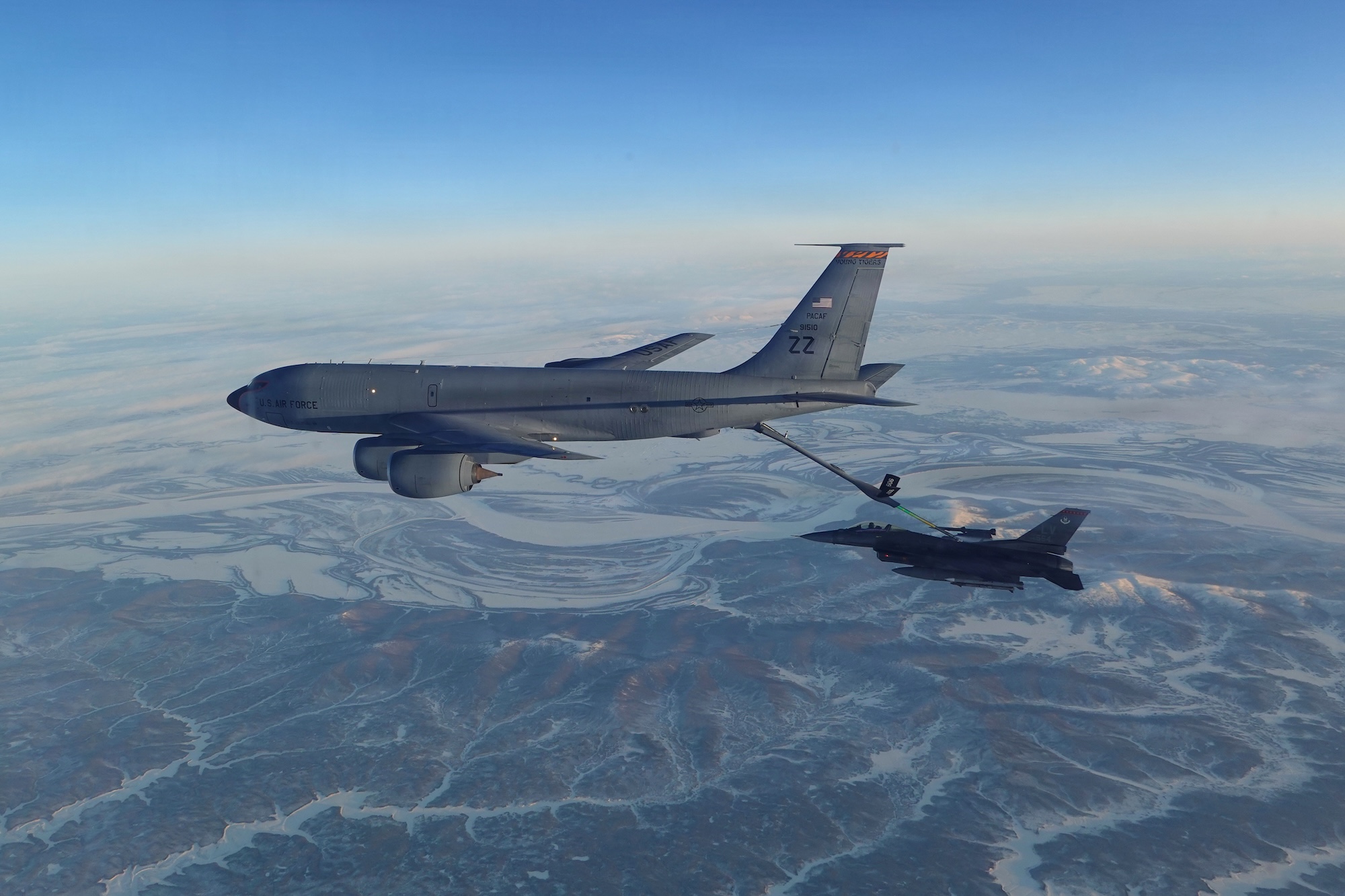


All six crew members aboard a U.S. military refuelling aircraft have been confirmed dead after it crashed in western Iraq, military officials said.
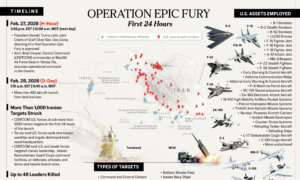
In a post on X, U.S. Central Command (CENTCOM) said the KC-135 Stratotanker refueling plane, which had a crew of six, went down at about 2 p.m. ET on March 12 while flying over friendly airspace during Operation Epic Fury.
“The circumstances of the incident are under investigation. However, the loss of the aircraft was not due to hostile fire or friendly fire,” CENTCOM said.
Earlier reports had confirmed four fatalities, but officials later said all six crew members were deceased.
The identities of the deceased service members are being withheld until at least 24 hours after next of kin have been notified, CENTCOM added.
CENTCOM said a second aircraft was involved in the March 12 incident, but was able to safely land.
A Pentagon official told The Epoch Times that the second aircraft involved was another KC-135, and that the flight crew of the second aerial refueling aircraft landed in Israel.
On March 12, the Iranian-backed Islamic Resistance in Iraq claimed responsibility for the downing of the KC-135, saying it was to defend the country’s “sovereignty and airspace.” They provided no evidence to support their claim.
The exact location of the crash site has not been disclosed, but much of western Iraq is made up of desert, with the occasional wadi and small town.
The KC-135 is the fourth U.S. plane to come down during Operation Epic Fury.
Three F-15E Strike Eagles were shot down in a friendly fire incident over Kuwait on March 1.
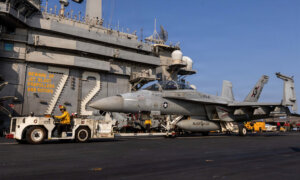
The KC-135 Stratotanker is a plane used to refuel other aircraft in midair, allowing them to remain operational longer.
The regular crew of the KC-135 is three, with a pilot, co-pilot, and boom operator, and it is not known what the roles were of the additional crew of the crashed plane.
Based on the basic design of the Boeing 707 passenger plane, the KC-135 has been in service for more than 60 years, supporting the U.S. Air Force, Navy, and Marine Corps.
It is due to be phased out and replaced by KC-46A Pegasus tankers.
The U.S. Air Force has 376 KC-135s, of which 151 are on active duty, the Air National Guard has 163, and the Air Force Reserve has 62, according to a report from the Congressional Research Service.
Yang Uk, a security expert at South Korea’s Asan Institute for Policy Studies, said it would be rare for a refueling tanker to be downed by enemy fire because they usually operate away from combat zones.
KC-135s have previously been involved in several fatal accidents.
On May 3, 2013, a KC-135R crashed after takeoff in Kyrgyzstan, while supporting U.S. forces fighting in Afghanistan.
A U.S. Air Force investigation later found that the crew had experienced problems with the plane’s rudder.
As the crew struggled with the rudder, the tail section broke off, and the plane exploded midair, killing all three crewmembers, the probe found.
Iran Launches More Attacks
Iran launched more missiles and drones at its Arab neighbors in the Gulf on March 13.
Saudi Arabia said it had shot down around 50 Iranian drones, while the Oman News Agency said two people were killed when two drones crashed in an industrial area in the Sohar region of Oman.
Bahrain sounded air-raid sirens amid signs of more incoming drones, while smoke was seen in an industrial area in Dubai, United Arab Emirates, after a drone was intercepted.
In Turkey, NATO defenses intercepted another ballistic missile fired from Iran, the third time since the war began. Residents in the southern city of Adana reported hearing a loud explosion and sirens sounding at Incirlik Air Base, which is used by U.S. forces, in the early hours of the day, according to The Associated Press.
The missile is believed to have targeted Incirlik air base—which is used by U.S. forces—near the southern city of Adana.
The new Iranian leader, Mojtaba Khamenei, threatened on March 12 to continue the attacks on Gulf states and keep the vitally important Straits of Hormuz closed.