
The Trump administration is tapping into the U.S. Strategic Petroleum Reserve to ease rising gas prices amid the war with Iran, the president said Wednesday.
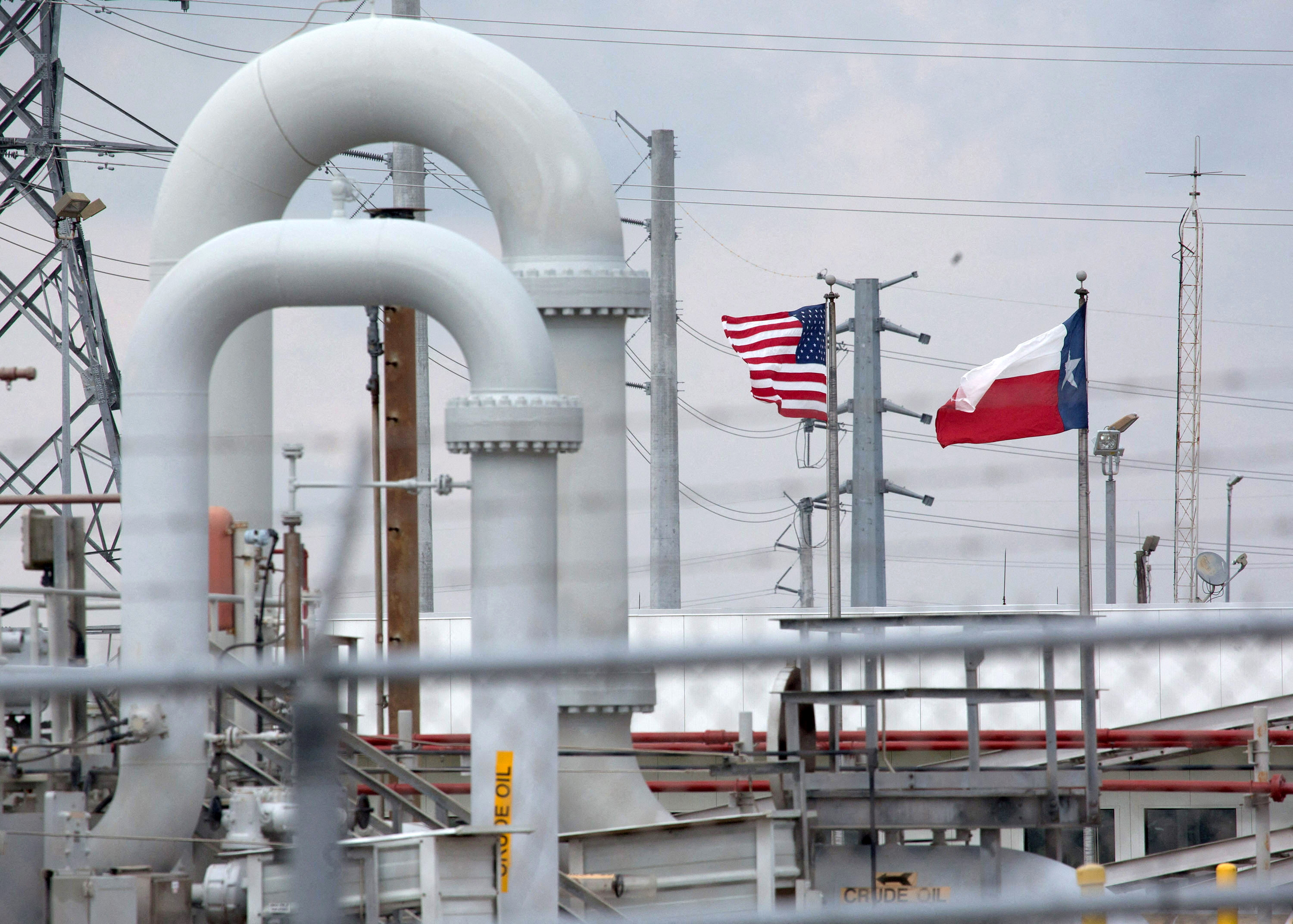
The Department of Energy announced 172 million barrels of oil will be released beginning next week.
“This will take approximately 120 days to deliver based on planned discharge rates,” the Energy Department said in a statement. “Unlike the previous administration, which left America’s oil reserves drained and damaged, the United States has arranged to more than replace these strategic reserves with approximately 200 million barrels within the next year—20 percent more barrels than will be drawn down—and at no cost to the taxpayer.”
America’s energy security is as strong as ever, the statement said.
Trump announced the move earlier Wednesday but did not specify at the time how many barrels of oil would be released. The action follows another announcement the same day by the International Energy Agency (IEA), which said it will make 400 million barrels of oil available.
When asked about tapping into the reserve, Trump said, “We’ll do that, and then we’ll fill it up. I filled it up once, and I’ll fill it up again.”
A month ago, the national average gas price was $2.94 a gallon, according to AAA. Last week, that number was $3.20. On Wednesday, AAA reported it to be $3.58.
The national average price for diesel on Wednesday was $4.83. A week ago, it was $4.04, AAA said, and the number was at $3.67 a month ago. California had the highest prices: an average of $5.34 a gallon of regular.
“We have to get rid of the evil,” Trump said about the Iranian regime, adding that releasing some of the U.S. reserves will help ease Americans’ pain at the pump caused by the war.
The president’s comments come only hours after the Paris-based IEA said its member nations agreed to release 400 million barrels of oil from reserves. It would become the largest withdrawal on record as governments around the world attempt to mitigate the spike in global energy prices.
Global crude oil demand is about 100 million barrels per day, so the IEA’s release is expected to cover about four days of worldwide consumption.
Oil prices reacted following the international group’s announcement.
The U.S. benchmark for oil prices, West Texas Intermediate, increased nearly 5 percent Wednesday to top $92 per barrel on the New York Mercantile Exchange.
Brent, the global benchmark, rose almost 5 percent as well to around $97 per barrel in overseas markets.
Oil prices have eased significantly since the start of the trading week, when oil topped out at $115 per barrel.
The IEA’s announcement came a day after 32 member governments met to discuss fallout from the Iranian conflict, especially regarding shipping traffic through the Strait of Hormuz, which has plunged since the onset of the war.
Each country will release its emergency reserves over a timeframe, according to the IEA’s decision.
“The oil market challenges we are facing are unprecedented in scale,” IEA Executive Director Fatih Birol said in a statement.
“Oil markets are global so the response to major disruptions needs to be global too. … I am pleased that IEA members are showing strong solidarity in taking decisive action together.”
This is the sixth time the group, established in 1974, has coordinated a release from emergency reserves.
But it could take time for the oil to reach the market, Siebert Financial CIO Mark Malek told The Epoch Times. Or this could purely be a “psychology move,” he added.
“The market responded to it like a patient responding to a placebo that they believe is real medicine,” Malek said.
Meanwhile, Iran also warned the world on Wednesday to prepare for potential $200 per barrel prices as it struck three commercial vessels near the Strait of Hormuz. The United Kingdom Maritime Trade Operations reported that unknown projectiles targeted a bulk carrier, cargo vessel, and container ship overnight Wednesday.