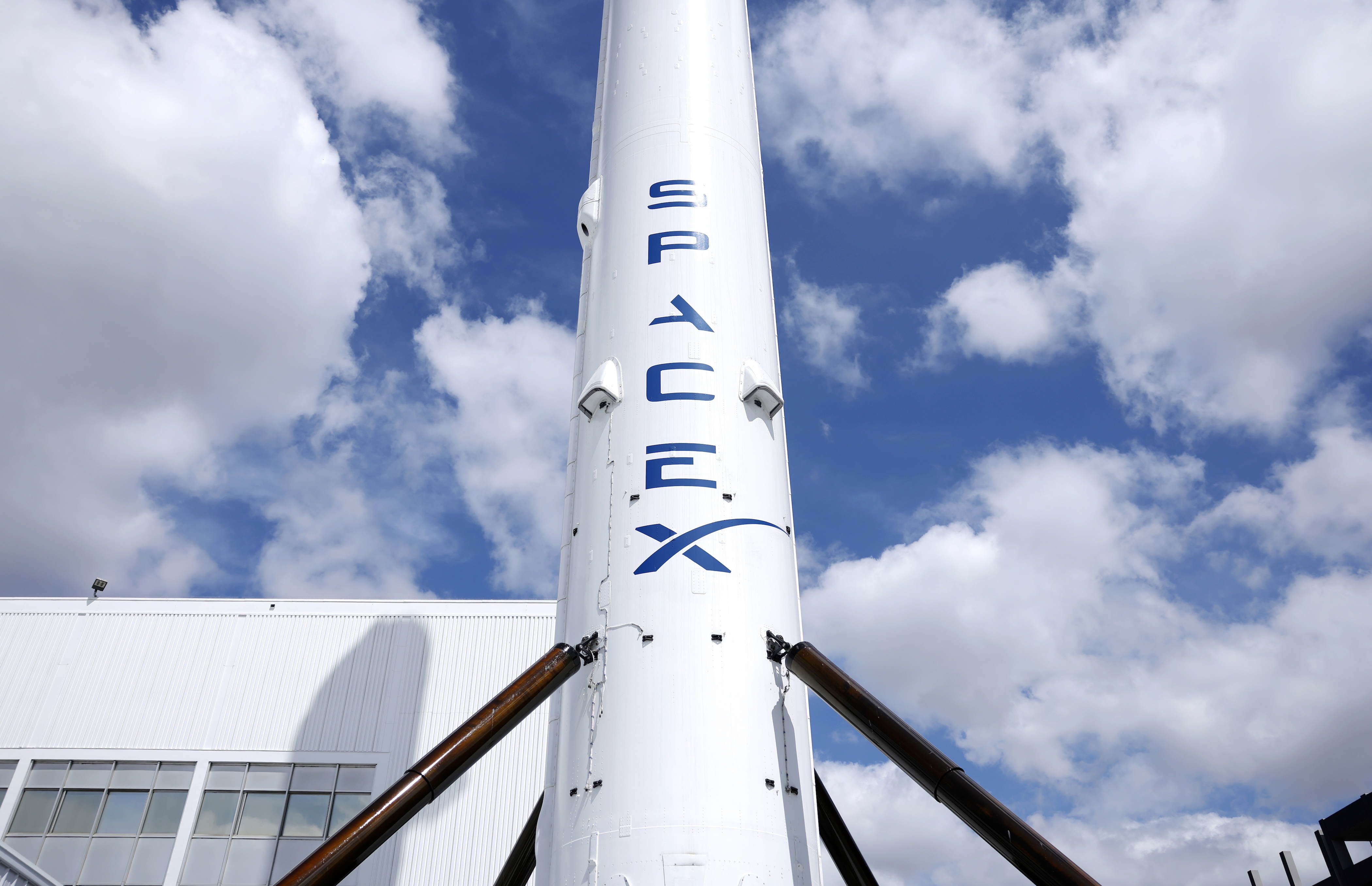

The U.S. Space Force has agreed to a $2.29 billion contract with SpaceX to build a high-speed satellite communications network to connect military sensors and weapons platforms across the globe, the service said on May 26.
The fixed-price nontraditional contracting agreement covers the Space Data Network (SDN) Backbone, a resilient network architecture that provides high-capacity, low-latency data transport for the military.
Among other roles, the SDN Backbone will provide communication pathways to integrate and move data from missile-warning and tracking sensors to interceptors in near real time, a capability seen as foundational to the Trump administration’s Golden Dome missile defense initiative.
The Space Force said the vendor must deliver a fully operational prototype capability by the end of 2027.
“The SDN Backbone leverages the best of commercial innovation and delivers a strong foundation for the SDN mission set – a huge benefit and enabler for our warfighters,” Space Force Col. Ryan Frazier said in a statement.
“The SDN Backbone supports the broader SDN, which acts as a core communications layer for the [U.S. Space Force] warfighting systems, ensuring our sensors and shooters are connected continuously, globally and securely.”
The SDN Backbone is a proliferated low-Earth-orbit satellite constellation that will expand a mesh of satellites to deliver worldwide communication services, the Space Force said. It will work alongside the Space Development Agency’s Transport Layer to form a unified architecture that provides critical data transport for current and future Department of War missions.
The Space Force said that a collaborative consortium is working to identify additional contractors over the summer “to deliver a unified network architecture and demonstrate advanced communication’s [sic] capabilities.”
“Our acquisition strategy is designed to foster competition and broaden our industrial base,” Space Force Lt. Col. Jeffrey Fry of the SDN Backbone program said.
“We aren’t trading speed for scale; we are demanding both. By using rapid prototyping and Other Transaction Authorities, we are ensuring our advanced solutions are integrated and delivered to the warfighter as fast as possible.”

U.S. President Donald Trump in the Oval Office on May 20, 2025. (Alex Brandon/AP Photo)
President Donald Trump announced from the Oval Office on May 20, 2025, that the Golden Dome project would cost $175 billion and be ready in less than three years, meaning the system would be in place before Trump departs the White House.
The project involves the creation of a network of sensors and weaponry, both on Earth and in space, capable of intercepting cruise missiles, ballistic missiles, hypersonic missiles, and drones, War Secretary Pete Hegseth, speaking alongside Trump, said at the time.
The Golden Dome would serve a function similar to that of Israel’s air defense system, which includes the Iron Dome and David’s Sling.
Trump said last year that the Golden Dome would be more sophisticated than Israel’s system.
“We helped Israel with theirs, and it was very successful, and now we have technology that’s even far advanced from that,” he said on May 20, 2025.
Noé Chartier contributed to this report.