
The United States has spent decades engaging with Beijing to address its harmful trade policies, but U.S. Trade Ambassador Jamieson Greer recently acknowledged that those efforts have largely fallen short.
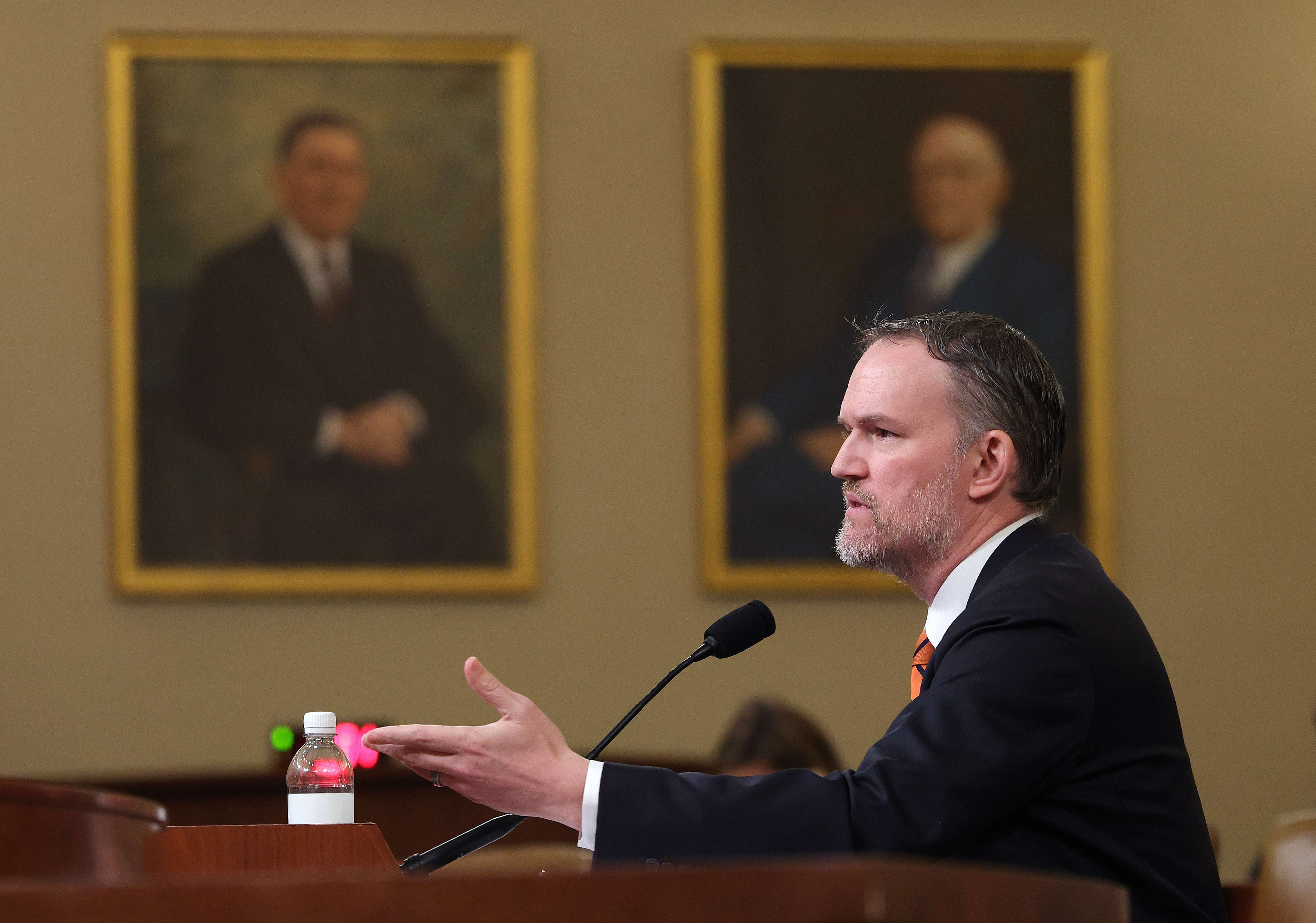
“We’ve just come to terms with the fact that there’s not going to be some giant comprehensive reform of the way the Chinese political system works, including all these economic elements,” Greer said at a May 26 event organized by the Council on Foreign Relations.
“Some of these things we’ve been asking them for decades are, in fact, part and parcel of their political system,” Greer told the gathering in Washington.
“We think of them as part of their economic system. It’s part of their political system.”
Greer, who has participated in trade negotiations with China during President Donald Trump’s first and second terms, described the challenges of attempting to convince Beijing to rectify its trade practices.
“It’s like if they came to us and said, well, listen ... get rid of the Republican Party, and then you all be Democrats ... I mean, that’s kind of the equivalent of what they’d be asking us to do.”
When asked whether the Trump administration is giving up on that approach, he replied, “I would say, mostly.”
During the first Trump administration, Washington launched a trade dispute with Beijing in an attempt to force the regime to fix its unfair trade practices that local governments and businesses have long complained about. In addition to Beijing’s massive subsidies to domestic industries, core U.S. concerns include the theft of U.S. intellectual property and the forced transfer of trade secrets as a condition of doing business in China.
After months of negotiations, Trump and China’s then-Vice Premier Liu He signed a phase one agreement in January 2020, which requires structural reforms and changes from the communist regime.
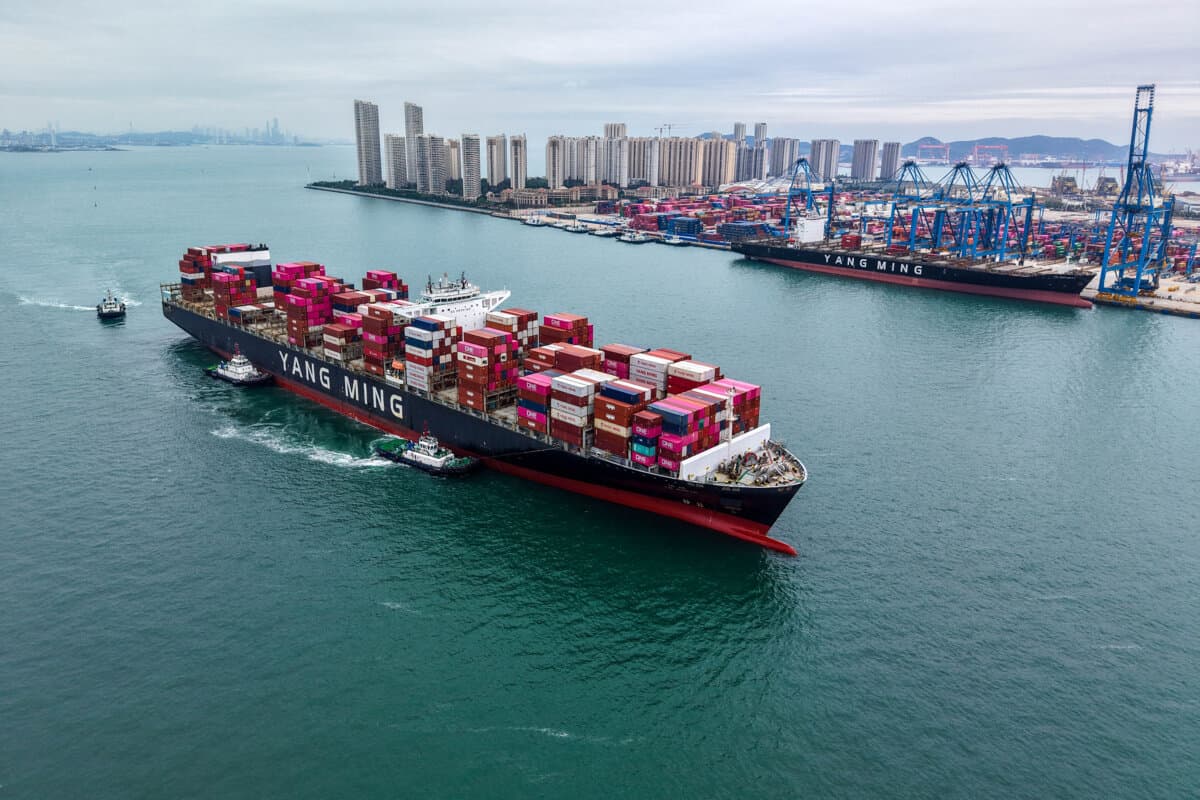
A cargo ship sails into the port in Qingdao, in eastern Shandong Province, China, on Oct. 13, 2025. (AFP via Getty Images)
Greer, speaking at the recent event in Washington, revealed that the U.S. negotiators had sought a much broader deal that addressed the regime’s industrial policies—an offer Beijing rejected.
“In the first term, we went to them, and we started negotiating a deal,” Greer said. “There was a broader deal made that would have gotten at some of these things—industrial subsidies, et cetera. And it went all the way to the top in China, and it came back redlined in a way where it’s very clear that they were not going to change some of these things.”
U.S. officials have long criticized Beijing for failing to live up to its commitment under the phase one trade agreement, which also includes a two-year purchase deal designed to narrow the substantial trade deficit. According to a Congressional Research Service report, dated May 21, China fulfilled roughly 60 percent of the goods it committed to buy under the deal signed six years ago.
In October 2025, the Office of the United States Trade Representative (USTR) initiated an investigation into China’s compliance with the phase one deal.
‘Managed Trade’
The U.S. trade chief suggested the administration has shifted its strategy to focus on reform “around the edges.”
“We can have some managed trade,” he said. “We can maybe have some reform around the edges of that managed trade” in the interest of stability and continued economic peace between the world’s two largest economies.
Following the summit between Trump and Chinese leader Xi Jinping in Beijing earlier this month, both sides agreed to establish new mechanisms—the Board of Trade and a separate Board of Investment—to manage the trade, investment, and related issues between the two nations.
Greer said his agency will issue a Federal Register notice “shortly” to seek public comments on establishing a Board of Trade with China.
He reiterated that the body would limit the tariff reduction to $30 billion worth of “non-sensitive goods.”
“It’s a good amount to build confidence with the Chinese and try to seek balance with them, but I don’t think it’s really enough to swing supply chains in a major way,” Greer said.
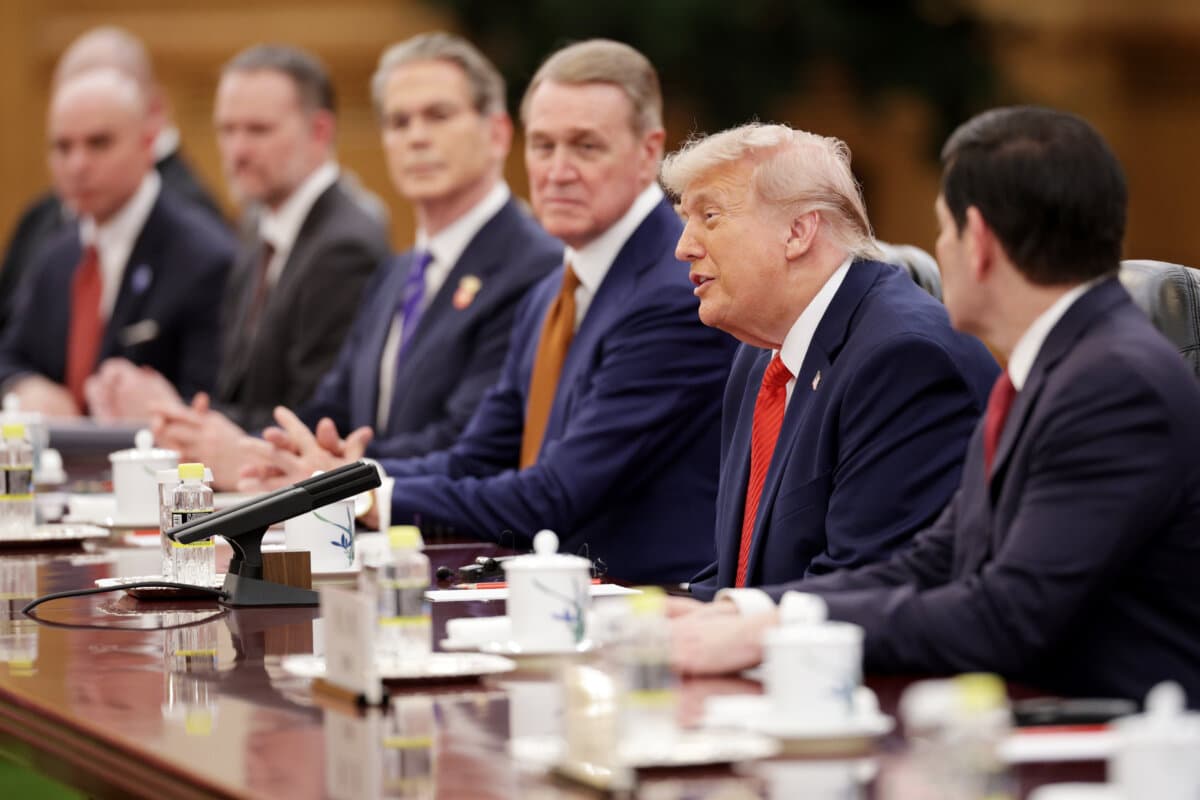
U.S. President Donald Trump speaks during a bilateral meeting with Chinese leader Xi Jinping in Beijing on May 14, 2026. (Alex Wong/Getty Images)
In March, the USTR also opened two Section 301 trade investigations into unfair trade practices, targeting China and several other countries.
The U.S. president also imposed a 10 percent import duty under Section 122 of the Trade Act of 1974, which is due to expire in July, after the Supreme Court struck down the administration’s one method of imposing tariffs earlier this year.
Greer declined to comment on the results of ongoing probes, but he signaled the administration will maintain pressure on the communist regime.
“We have the Section 301 tariffs from the original Trump administration. We have Section 232 tariffs, and that kind of thing. We have the current 122 tariffs. And, you know, there could be more, depending on the outcomes of various investigations,” he said.
“My sense is that there will always be a higher average tariff coming out of China, because that’s part of the source of some of our largest problems when it comes to overcapacity in our trade deficits, and things like that.”
Greer’s comments came amid mounting pressure on Beijing over its trade policies that have created industrial overcapacity and flooded its trading partners with subsidized products.
The European Commission warned on May 28 that its trade relations with China are “not sustainable” and must change after a preliminary debate on the future of ties between Beijing and the 27-nation bloc.