
Producer prices accelerated last month, signaling renewed inflationary pressures ahead for consumers.
The producer price index—a measure of the prices paid for goods and services by businesses—rose by 1.4 percent in April, the sharpest increase since March 2022, according to new Bureau of Labor Statistics data published on May 13.
March’s increase was adjusted upward to 0.7 percent, and above the 0.5 percent consensus.
Economists pay attention to producer inflation because it can serve as a pipeline indicator of what shoppers may face in the future.
On an annualized basis, wholesale inflation advanced to a higher-than-expected 6 percent, the largest gain since December 2022. This is also up from the upwardly revised 4.3 percent registered in the previous month and above market estimates.
Almost 60 percent of the increase can be traced to the index for final demand services.
Two-thirds of the services inflation increase was attributed to trade indexes, including transportation and warehousing. Another sizable factor was a 3.5 percent jump in margins for machinery and equipment wholesaling, the bureau said.
Goods also jumped 2 percent, driven mainly by a spike in energy prices. More than 40 percent of the surge in energy prices was fueled by an almost 16 percent spike in gasoline.
The war in Iran—approaching its 12th week—has rocked energy markets as the Strait of Hormuz, the vital global chokepoint that handles about 20 percent of the world’s oil supply, remains shuttered.
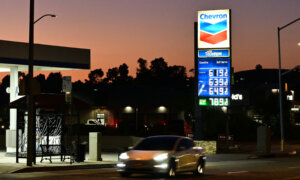
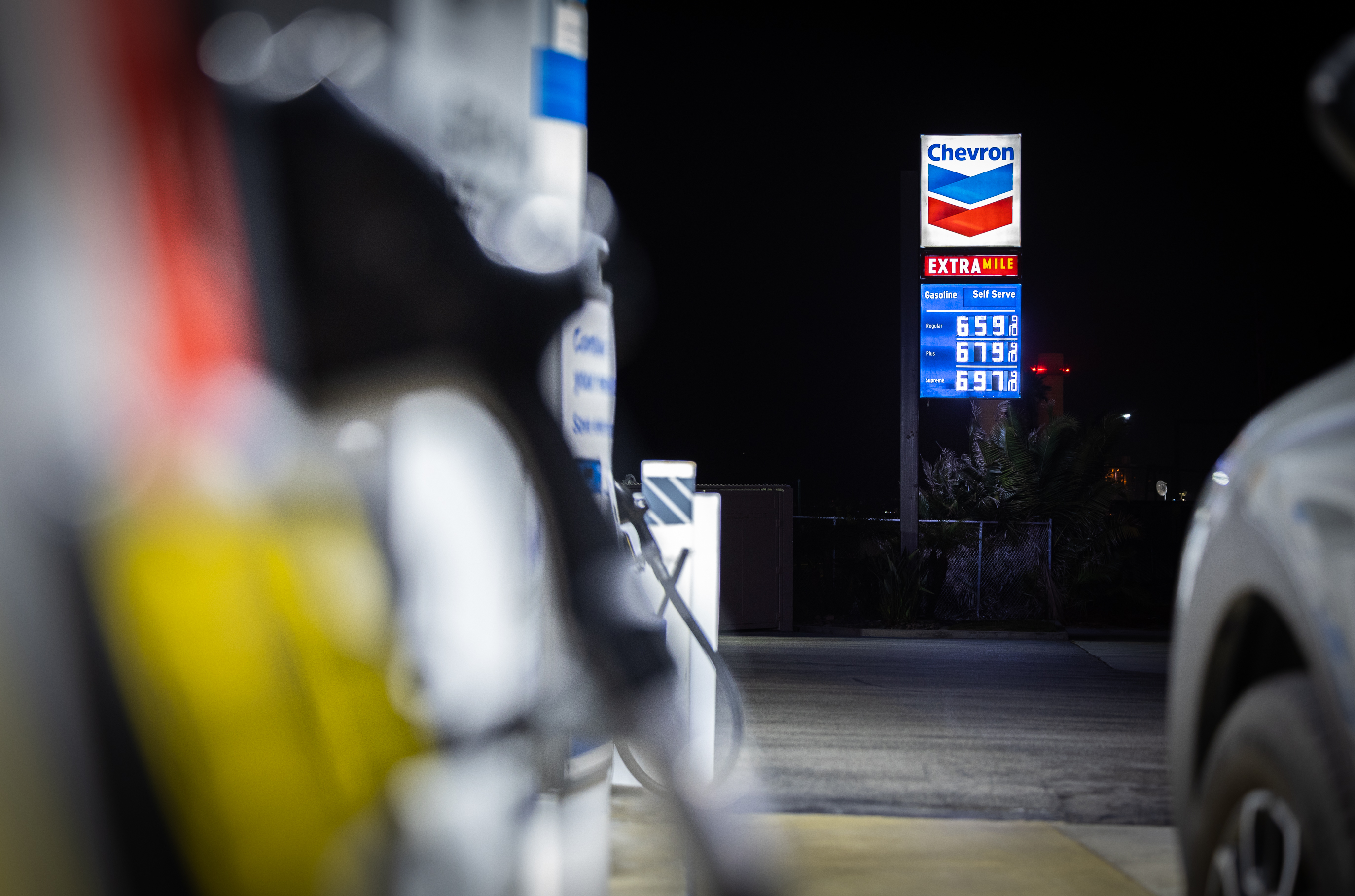
Crude oil prices—the U.S. and global benchmarks—have firmed above $100 per barrel. Motorists are also facing $4.50-a-gallon of gas at the pump. Diesel is also firmly above $5 per gallon.
This has led to higher input costs for businesses, which could translate into higher consumer prices.
Underlying inflation pressures could also be building.
The core producer price index, which omits volatile energy and food prices, surged 1 percent in April, from 0.2 percent in March. This also topped economists’ projections of 0.3 percent.
The 12-month rate also climbed to 5.2 percent, from 4 percent.
Excluding food, energy, and trade, wholesale inflation jumped 0.6 percent month over month and edged higher to 4.4 percent year over year.
Shifting From Tariffs to War
While economists had focused on the effects of tariffs on producer inflation, the war in Iran has fired up energy prices, leading to higher input costs for U.S. companies.
The Bureau of Labor Statistics released fresh April Consumer Price Index (CPI) data, showing an acceleration of consumer inflation, fueled mainly by pump prices.
Last month’s annual inflation rate shot up to a nearly three-year high of 3.8 percent, from 3.3 percent, and was higher than economists’ expectations.
Underlying inflation could also be heating up.
The 12-month rate of core inflation advanced to 2.8 percent, from 2.6 percent. It also topped market estimates.
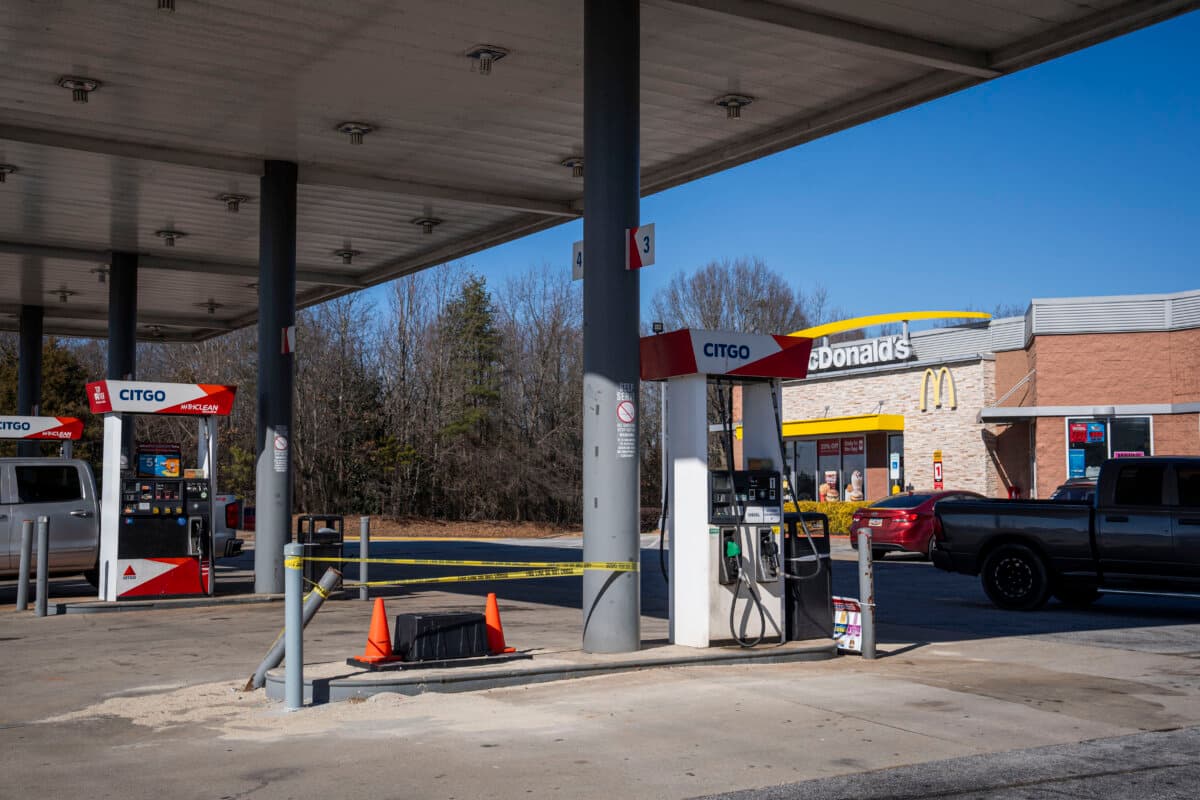
A gas station in Greenville, S.C., on Feb. 3, 2024. (Madalina Vasiliu/The Epoch Times)
“The key issue with inflation right now is whether the spike in energy/commodity prices is feeding into overall inflation,” Tom Essaye, president and co-founder of Sevens Research Report, said in a note to The Epoch Times.
If the energy shock is filtering through the marketplace, it could intensify stagflation fears and bolster the odds of interest rate hikes over the next year, he says.
Talk of stagflation—an environment of high inflation, rising unemployment, and anemic growth—has become more widespread recently.
Economists have often predicted stagflation scenarios over the years, only for them to fail to materialize. The closest was in 2022 when inflation peaked at 9.1 percent, and growth flatlined, but the unemployment rate was below 4 percent.
Critics contend that the term was coined during a unique period when the United States experienced two recessions, uneven growth, a jobless rate as high as 9 percent, and inflation hitting double digits. Outgoing Federal Reserve Chair Jerome Powell said it could be time to retire the term.
As for interest rates, the odds are steadily rising that the Fed will consider rate hikes.
Futures market data suggest there is a 50 percent chance that officials will follow through on a quarter-point rate increase by March 2027, according to CME FedWatch.
Incoming Fed Chair Kevin Warsh will have to navigate a minefield of issues. Like his predecessor, Warsh will have to decide to lower interest rates but risk reviving inflation, or raise rates and threaten growth prospects.
“Inflation pressures are building again and that means the sooner oil prices drop from current levels, the better, because the longer they stay elevated, the more entrenched inflation will become and we know where that ends up (dramatically higher interest rates and, possibly, a market that looks like 2022),” Essaye wrote.
Yields on U.S. Treasury securities also crept higher following the latest inflation data.
The benchmark 10-year yield reached 4.48 percent for the first time since July. The 20- and 30-year yields firmed above 5 percent.
The 2-year, which tracks expectations for Fed policy, continued to hover around 4 percent, reaffirming rate hike forecasts.
The next two-day Federal Open Market Committee policy meeting will take place on June 16 and 17.