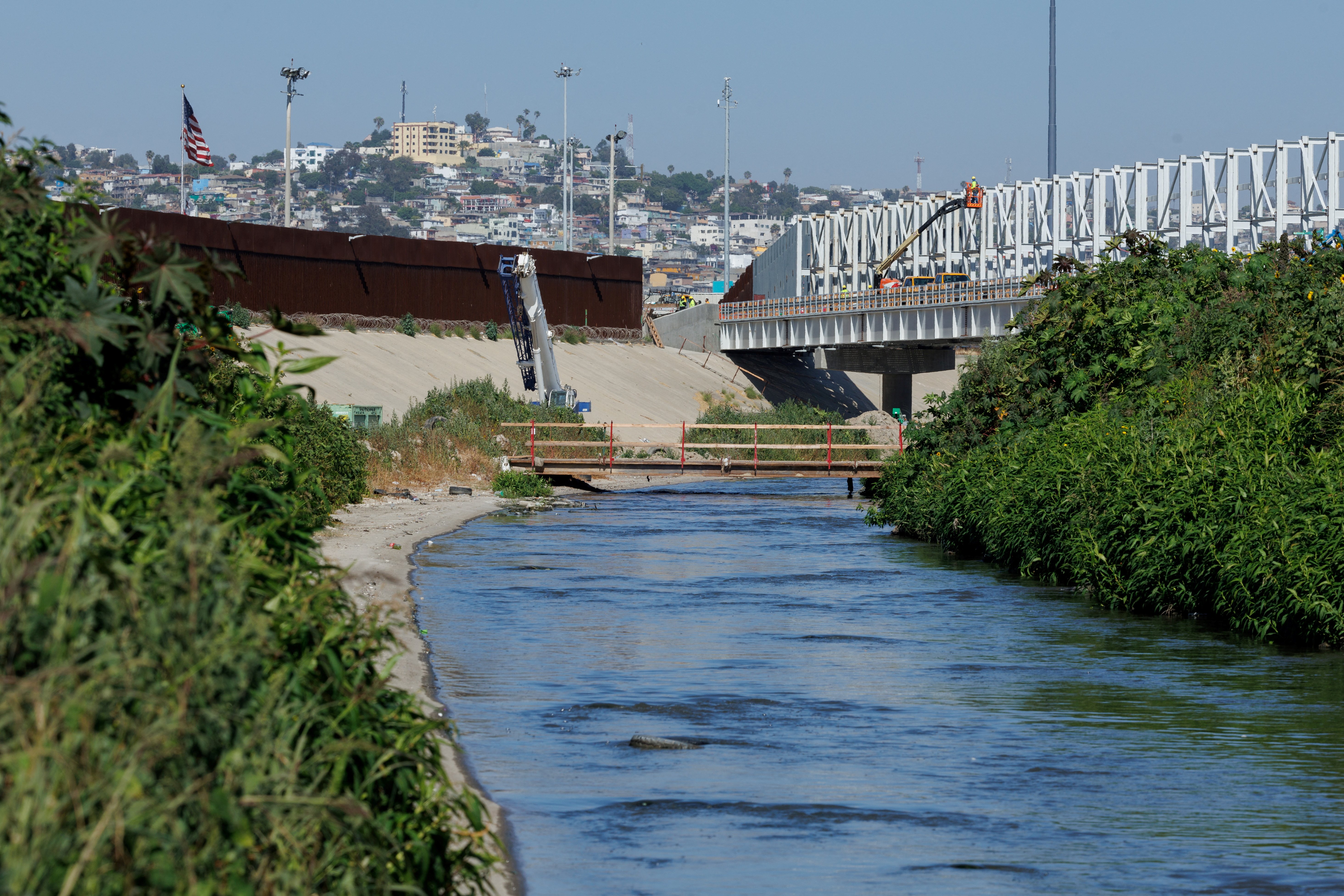

The United States and Mexico have reached an agreement aimed at solving the long-standing sewage crisis in the Tijuana River, during which untreated, raw sewage has been flowing into Southern California from Mexico, the Environmental Protection Agency (EPA) announced on July 24.
EPA Administrator Lee Zeldin and Mexican Environment and National Resources Secretary Alicia Bárcena Ibarra signed a memorandum of understanding in Mexico City to address the crisis.
The decades-long crisis in the Tijuana River Valley has remained a sore point for both nations. The United States and Mexico have long cooperated on water and sewage issues but have struggled in the face of rapid growth in the border city of Tijuana. A lack of funding for infrastructure projects is further exacerbating the issue.
Millions of gallons of treated and untreated sewage from Tijuana’s overburdened infrastructure make their way into the Tijuana River every day, emptying into the Pacific Ocean near San Diego, according to the International Boundary and Water Commission (IBWC), a body governed by U.S.–Mexican treaty agreements.
The commission has measured up to 50 million gallons per day of sewage-contaminated water from the Tijuana River heading toward Imperial Beach in San Diego, roughly half of which was raw sewage, while the remainder was a mix of treated sewage, groundwater, and potable water from Tijuana’s leaky pipes.
The EPA said the long-standing issue has forced beaches to close, fouled the air, harmed the region’s economy, and sickened people on both sides of the border.
According to the EPA, the new deal with Mexico achieves the Trump administration’s three top priorities and milestones that are “critical” to ensuring the issue is fully resolved.
As part of the agreement, Mexico has agreed to expedite the expenditure of $93 million for improvements to the Tijuana sewage system detailed under a previous treaty in the IBWC Minute No. 328, according to the EPA.
Mexico has also agreed to immediately seek internal funding to initiate construction of two projects this year: the diversion of 10 million gallons per day of treated effluent entering the Tijuana River from two wastewater treatment plants and the rehabilitation of a parallel gravity line.
Additionally, Mexico has agreed to complete other pressing water infrastructure projects by Dec. 31, 2027, and some of those projects are set to be completed four years ahead of schedule, the EPA said.
In return, the United States—which had withheld funding for Mexican projects until Mexico fulfilled its obligations toward other projects—agreed to release EPA Border Water Infrastructure Program funds to complete the rehabilitation of a pump station and Tijuana River collection pipes.
The U.S. IBWC also agreed to complete the expansion of the South Bay International Wastewater Treatment Plant treatment capacity by August, raising it from 25 million gallons to 35 million gallons a day.
Mexico also agreed to sign onto a new minute agreement before the end of the year to accomplish a “permanent, long-term, and durable 100 percent solution to [the] crisis,” the EPA said.
The new minute will contain at least a dozen new actions that the United States deemed necessary to permanently end the crisis, according to the agency.
Within the next 100 days, both the United States and Mexico will evaluate all infrastructure project schedules to ensure projects are on the shortest possible timelines for completion, the EPA said.
“The Trump Administration is proud to deliver this massive environmental and national security win for Americans in the San Diego area who have been living with this disgusting raw sewage flowing into their communities for far too long,” Zeldin said.
Ibarra also welcomed the agreement, writing on X that the memorandum “strengthens collaboration to address environmental and health challenges on the northern border.”