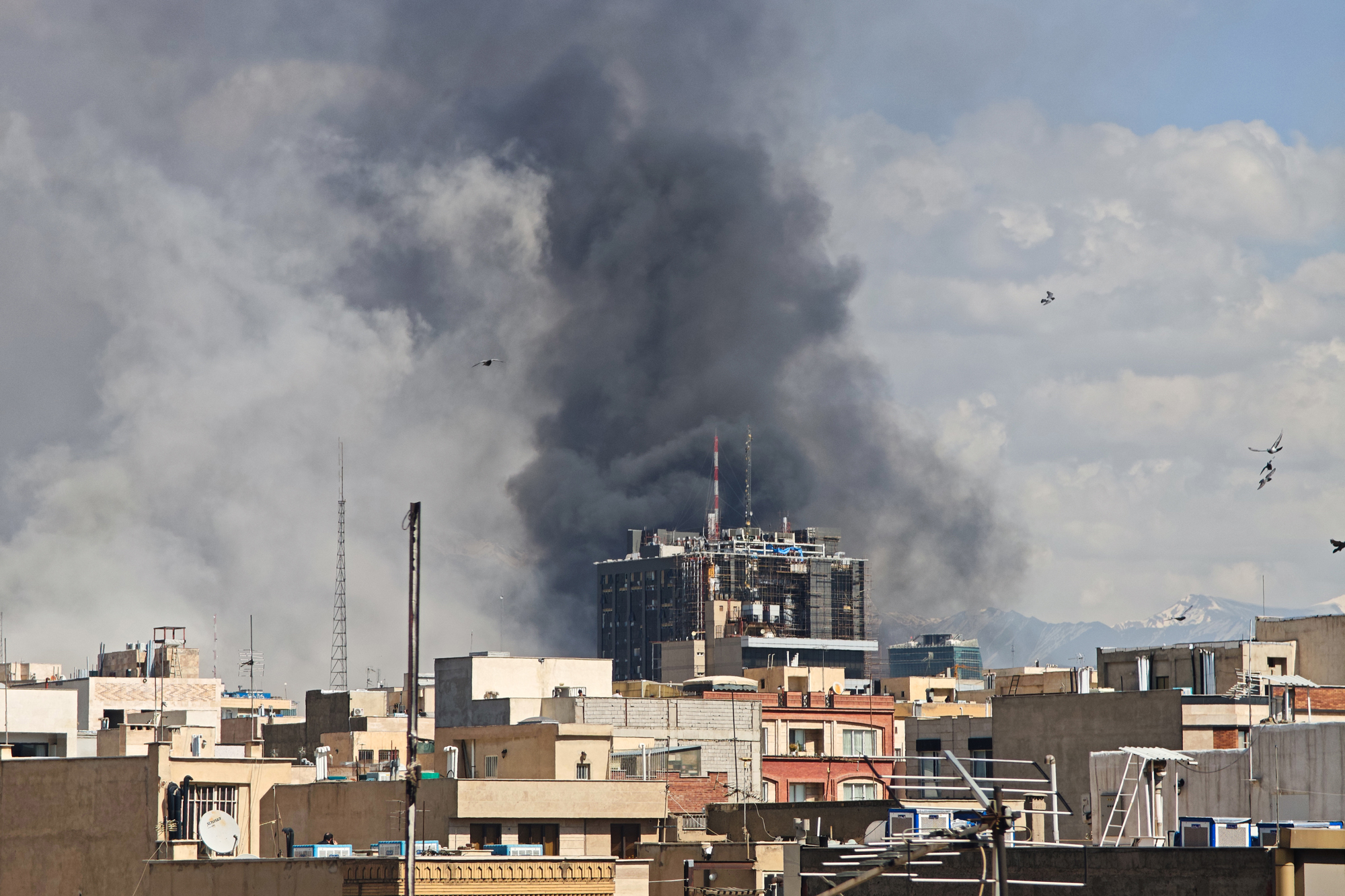

ARLINGTON, Va.—U.S. and Israeli forces are continuing to expand their reach into Iranian airspace and expect the skies to be completely uncontested in a matter of days, Secretary of War Pete Hegseth announced on March 4.
Speaking at a Pentagon news briefing as the joint U.S.–Israel military operations against Iran neared the one-week mark, Hegseth and Chairman of the Joint Chiefs of Staff Gen. Dan Caine described how the joint operation is grinding down Iranian offensive and defensive capabilities.
“Starting last night and to be completed in a few days, in under a week, the two most powerful air forces in the world will have complete control of Iranian skies,” Hegseth said.
Caine said Israeli forces are primarily targeting air defense installations in Iran’s north, while U.S. forces are striking similar targets from the south.
As the Iranian air defense collapses, U.S. and Israeli forces can strike further into Iran, Hegseth said.
“We will fly, all day, all night, day and night, finding, fixing, and finishing the missiles and defense industrial base of the Iranian military; finding and fixing their leaders and their military leaders,” he said.
Uncontested airspace could also allow U.S. airpower to fight more economically.
Toward the start of the joint operation, U.S. forces more frequently employed stand-off weapons, which can be launched from farther outside an enemy’s air-defense shield.
With fewer concerns about being shot down, U.S. and Israeli pilots can more easily fly over Iran, dropping relatively cheap and more widely available stand-in munitions.
“Transition from stand-off munitions to stand-in munitions ... will allow the joint force to deliver significantly increased precision effects on the target,” Caine said.
Caine said U.S. forces have already gained localized air superiority along Iran’s south.
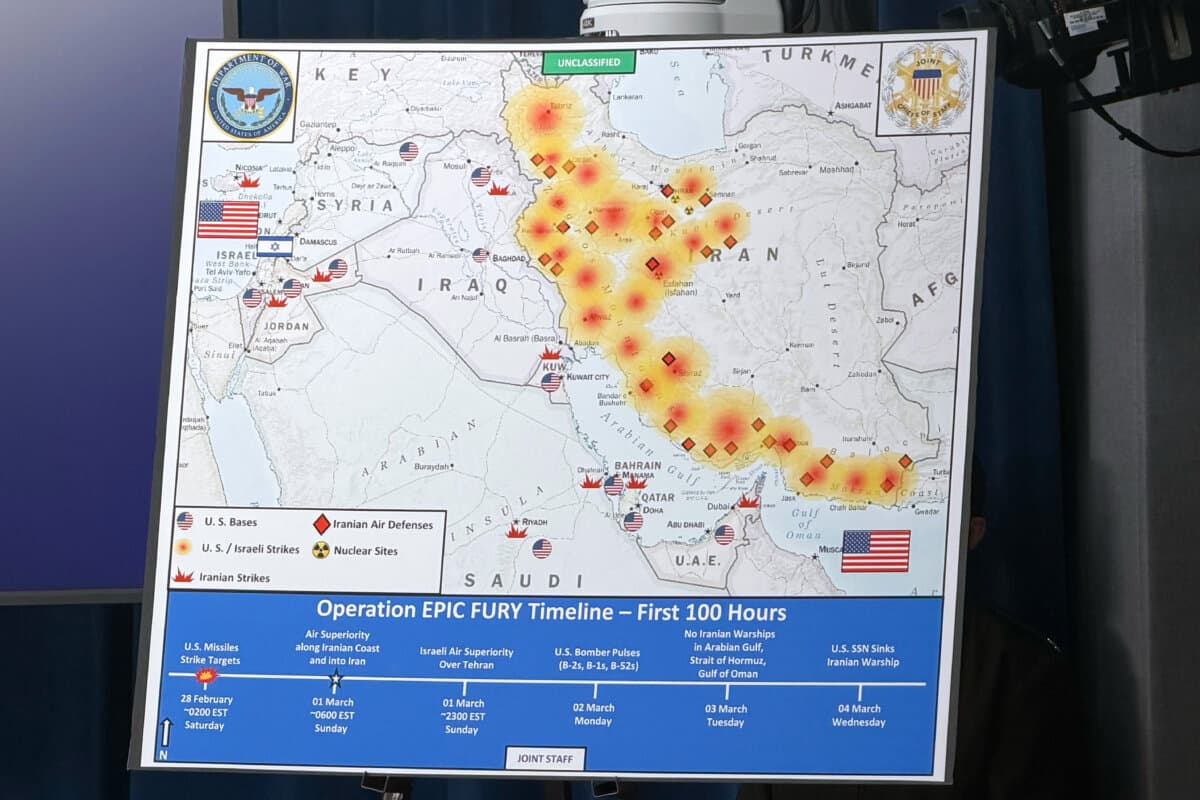
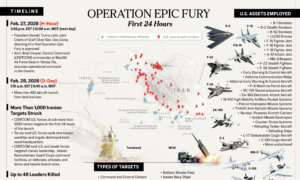
A Department of War map titled "Operation EPIC FURY Timeline—First 100 Hours" is displayed during a news conference with War Secretary Pete Hegseth and Chairman of the Joint Chiefs of Staff Gen. Dan Caine at the Pentagon in Washington on March 4, 2026. (Konstantin Toropin/AP Photo)
In a March 3 statement, Adm. Bradley Cooper, commander of the U.S. Central Command, said U.S. B-1 Lancer and B-2 Spirit bombers have conducted “uncontested surgical strikes against multiple missile facilities deep inside Iran.”
Cooper said large B-52 Stratofortress bombers have also struck targets inside Iran.
Iranian Offenses Waning: Pentagon
Along with breaking down Iran’s air defense shield, Pentagon officials reported that U.S. and Israeli forces are breaking down Iran’s offensive missile and drone capabilities.
Following the initial U.S. and Israeli strikes, Iranian forces began launching salvos of missiles and drones across the Middle East, targeting Israel broadly, as well as bases hosting U.S. forces, oil tankers, and other targets.
Caine said the rate at which Iranian forces are firing ballistic missiles has fallen by 86 percent since the start of hostilities on Feb. 28, with a 23 percent drop just since March 3. He said salvos of Iranian explosive-laden, one-way attack drones have also fallen by 73 percent since the start of the conflict.
On the morning of March 4, Turkey’s Ministry of Defense reported that NATO air defense forces in the eastern Mediterranean had intercepted an Iranian ballistic missile that had passed over Iraq and Syria and was heading toward Turkey. The Turkish military said missile debris fell in Hatay Province, northwest of Syria.
Hegseth said that the United States is aware of the reported ballistic missile interception over Turkey but that there is no sense now that the incident would trigger Article 5 of the North Atlantic Treaty, which calls for NATO members to support the defense of other alliance members that come under attack.
On March 4, the U.S. Central Command reported that U.S. forces had attacked more than 20 Iranian warships.
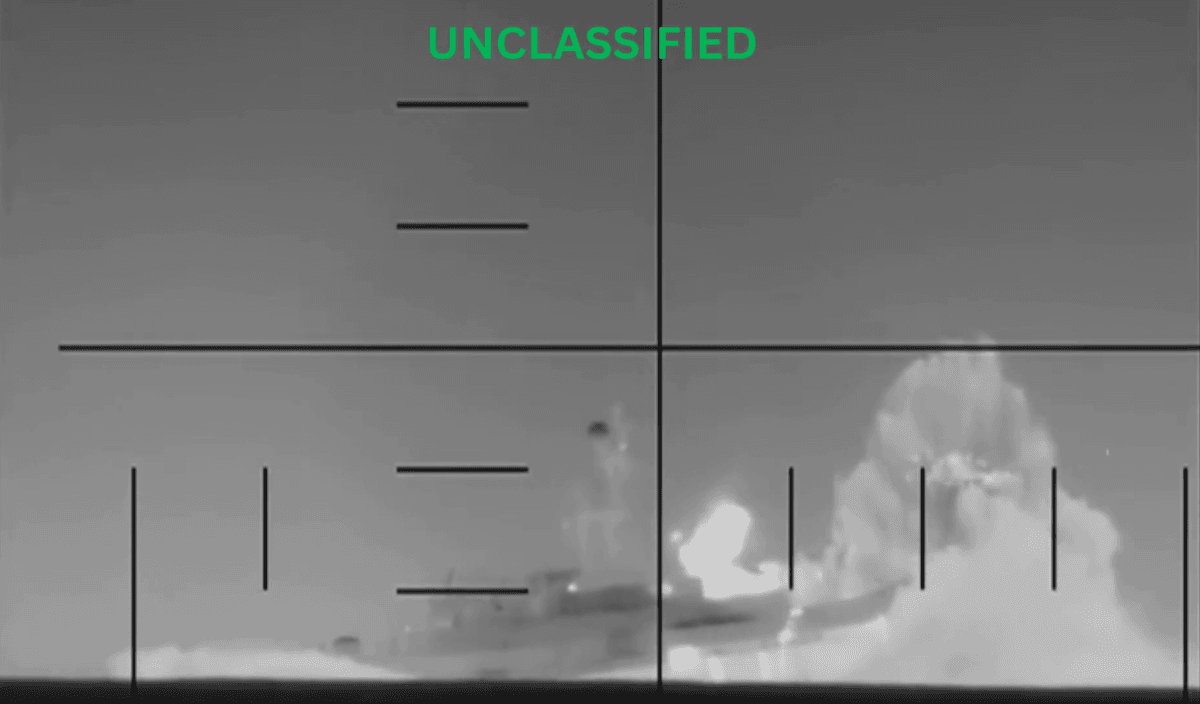
The view from an unidentified U.S. submarine following a strike on an Iranian warship in the Indian Ocean during Operation Epic Fury, released on March 4, 2026. (Office of the Secretary of War via DVIDS)
A U.S. submarine sank one such Iranian warship with a torpedo, Hegseth announced on March 4. He said the attack was the first time a U.S. submarine has employed such a weapon to sink an enemy ship since World War II.
Cooper, in a March 3 statement, shared his assessment that the joint U.S.–Israel campaign is proceeding ahead of schedule.
Leadership Vacancy Persists in Tehran
U.S. and Israeli forces opened the combined operation against Iran on Feb. 28 with a decapitation strike that killed Iranian leader Ali Khamenei. Those strikes also targeted gatherings of senior Iranian military and intelligence officials.
Following Khamenei’s death, Iranian President Masoud Pezeshkian said a temporary leadership council had assumed the late ayatollah’s leadership responsibilities.
Iran is governed as a Shiite Islamic republic. Its current theocratic constitution assigns to the 88-member Assembly of Experts the responsibility of selecting a new ayatollah. The assembly has yet to announce the selection of a new supreme leader.
During his March 4 remarks, Hegseth said Iranian leadership is in disarray following the joint U.S.–Israel strikes.
“Iran’s senior leaders are dead,“ he said. ”The so-called governing council that might have selected a successor? Dead, missing, or cowering in bunkers, too terrified to even occupy the same room. Senior generals, mid-level officers, enlisted ranks, they can’t talk or communicate, let alone mount a coordinated and sustained offensive.”
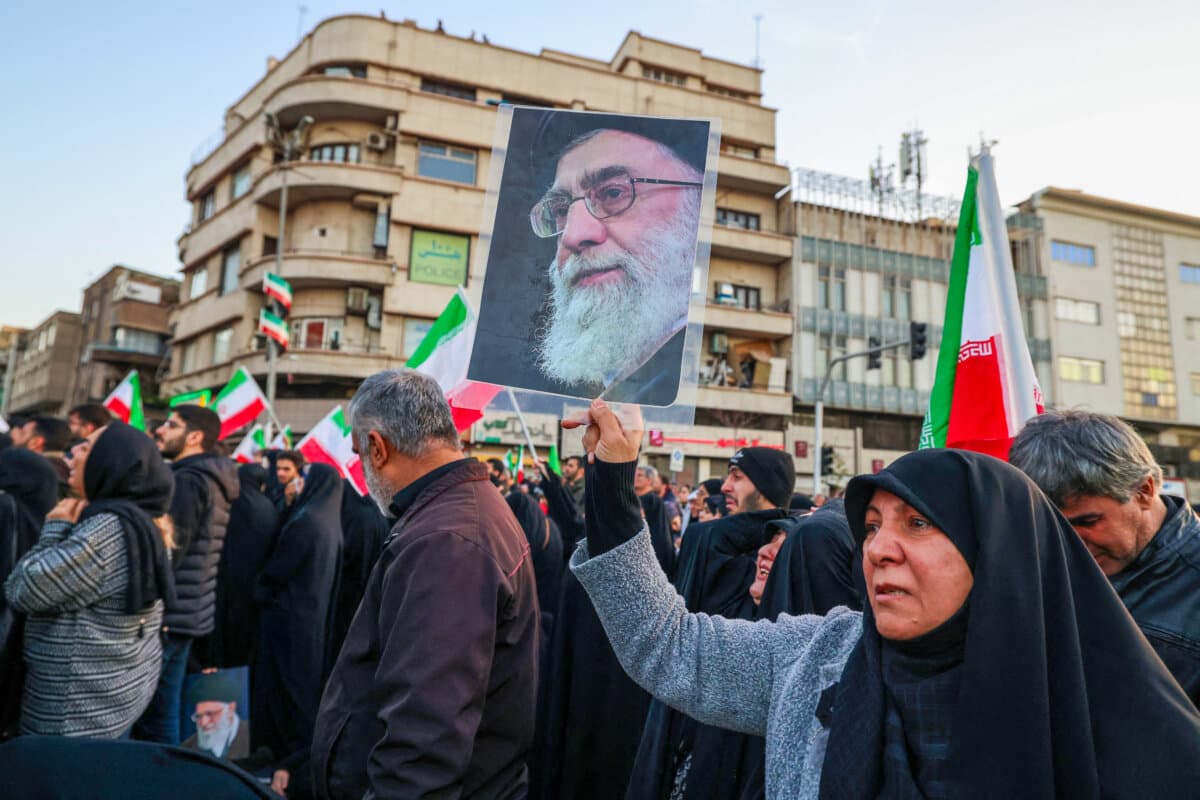
Pro-regime demonstrators gather at a square to mourn the death of Iranian leader Ali Khamenei in Tehran, Iran, on March 1, 2026. (Atta Kenare/AFP via Getty Images)
On March 3, Israeli military officials said their forces had struck a building in the Iranian city of Qom where the Assembly of Experts meets. According to Iran’s semi-official Tasnim News Agency, the building was empty at the time of the strike.
Israeli Defense Minister Israel Katz on March 4 said Israel will continue to target “every leader appointed by the Iranian terror regime.”
Risks Remain
Although U.S. officials have reported successes, Iranian forces continue to pose a threat.
Six U.S. military personnel were killed in the first week of hostilities, and others have been injured.
In remarks on March 2, Caine said additional losses of U.S. troops are expected.
In his March 4 comments, Hegseth said U.S. planners took as many precautions as they could to protect U.S. forces ahead of the launch of the offensive operations.
“This does not mean we can stop everything, but we ensured that the maximum possible defense and maximum possible force protection was set up before we went on offense,” he said.
The U.S. State Department is also overseeing efforts to assist civilian evacuations from across the Middle East. Caine said the U.S. military is offering some space-available seating on transport aircraft making runs through the region to assist the civilian evacuation process.
Iranian forces may continue to pose risks to commercial shipping through the region. The UK Maritime Trade Operations, a monitoring component affiliated with the British navy, has reported several instances of attacks targeting vessels transiting the Persian Gulf and the Strait of Hormuz since the start of the hostilities.