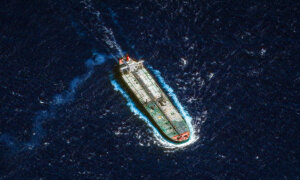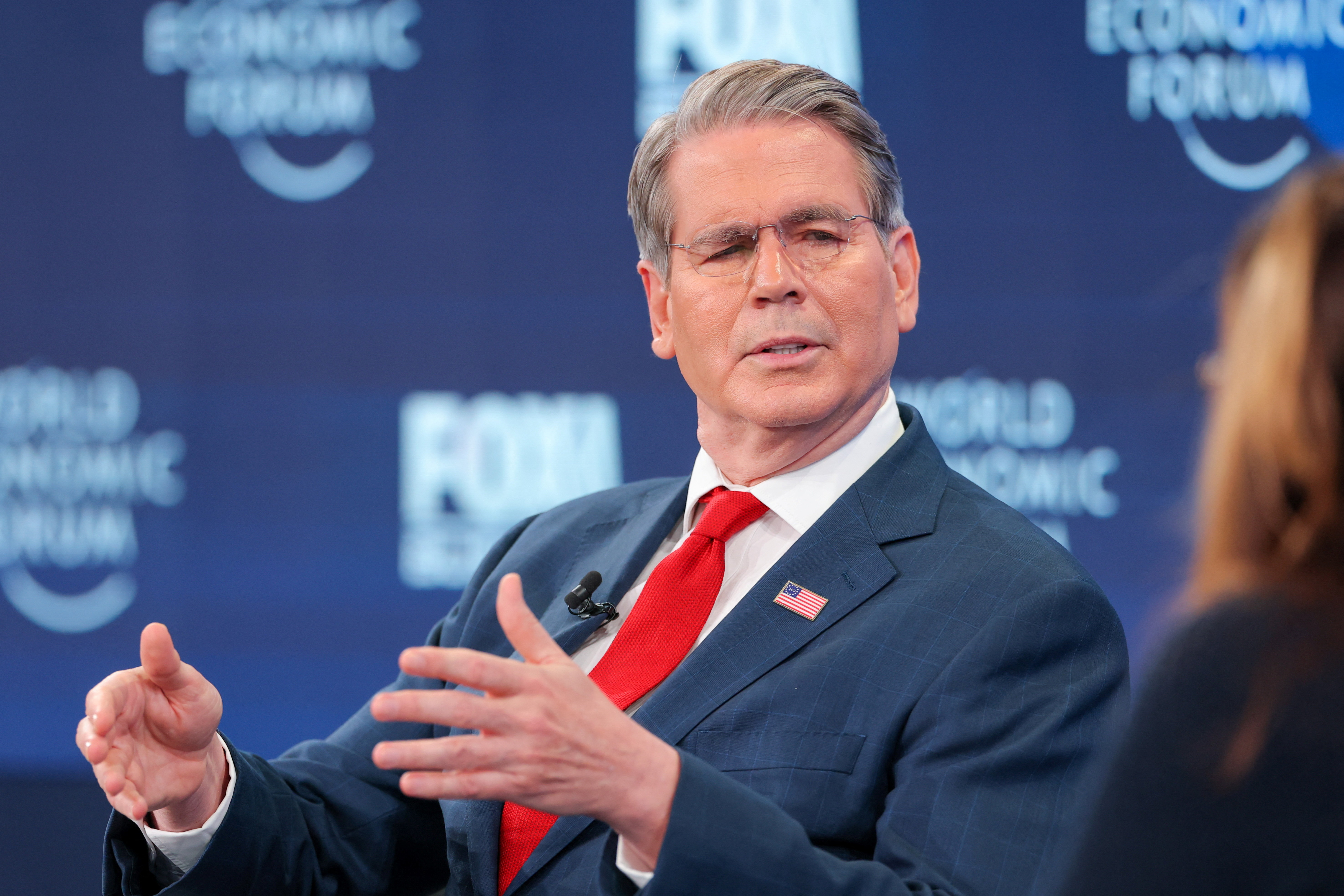

U.S. Treasury Secretary Scott Bessent said on March 12 that Washington could deploy naval escorts for commercial shipping in the Strait of Hormuz as soon as military conditions allow.
In an interview with Sky News on March 12, Bessent said there was “the chance that the U.S. Navy, or perhaps an international coalition, will be escorting oil tankers through,” adding that escort operations would begin “as soon as it is militarily possible.”
He said improving shipping flows through the strait will be a prospect once U.S. forces achieve air superiority and degrade Iranian capabilities.
“There are, in fact, tankers coming through now. Iranian tankers. I believe some Chinese-flagged tankers have come through. So, we know that they have not mined the straits,” he said.
About a fifth of the world’s seaborne oil trade and 20 percent of liquefied natural gas travel via the Strait of Hormuz, according to the U.S. Energy Information Administration.
Beyond naval protection, Washington is also working to stabilize maritime insurance markets after some insurers paused coverage for vessels entering the Gulf.
Sergey Pigarev, a senior equity analyst at Freedom Finance Global PLC, told The Epoch Times that U.S. naval escorts and mine-clearing forces would make tanker voyages safer and help keep oil exports moving.
He noted, however, that insurers typically classify risk based on the overall security environment, not just the protection of individual voyages.
“As long as the region remains an active military theater with persistent missile, drone and maritime threats, underwriters are likely to continue treating Hormuz as a listed high-risk area,” he said.
Bessent said the U.S. International Development Finance Corporation had anticipated such disruptions, noting that war risk clauses could trigger force majeure and cancel policies.
Bapco Energies, Bahrain’s state-owned energy company, declared force majeure on its group operations on March 9 following an Iranian attack on its Sitra refinery complex.
Force majeure is a legal term meaning an unexpected event beyond someone’s control, such as war, natural disaster, or government action, that prevents them from fulfilling a contract.
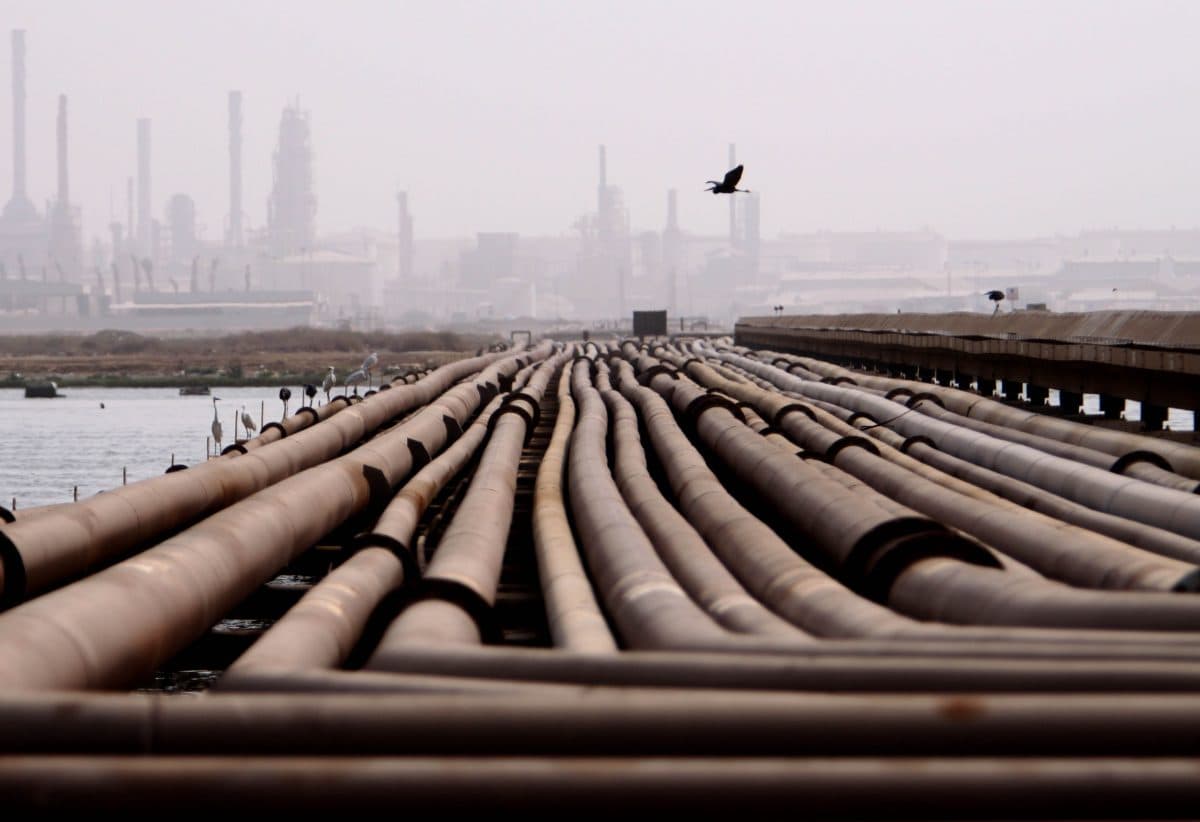
Oil pipelines on a hot, humid day near a refinery in Sitra, Bahrain, in the Persian Gulf, on Aug. 19, 2009. (Hasan Jamali/AP Photo)
“We think that $20 billion in insurance for tankers going into and out of the Gulf will be enough to ensure a circular insurance program,” Bessent said.
Pigarev said that the effectiveness of a $20 billion government-backed insurance pool would depend on how risk is assessed and how coverage is structured.
If insurance applies only to the highest-risk segment inside the Gulf and through the Strait of Hormuz—a voyage of about one to two days—the fund could be sufficient to help tankers already in the region depart, he said.
Pigarev added that if the facility operated on a rolling basis, it could be enough to sustain tanker flows at roughly prewar levels of about 20 million barrels per day moving through the Strait of Hormuz.
Bessent said that escort operations would begin only once safe passage can be assured, saying U.S. forces are working to degrade Iran’s air and naval capabilities and missile production.
Cost of Conflict
Bessent dismissed suggestions that the U.S. administration might halt operations due to costs, pointing to robust foreign investment in U.S. Treasuries and relatively low yields compared with those of other G7 countries.
Public figures released so far put the cost of operations at roughly $11 billion over several weeks, he said.
“We have cushions built in. It’s not something we have to worry about; there’s no horizon,” Bessent said when asked about how long the United States could sustain the effort.
Benchmark U.S. crude hovered near $95 per barrel at the time of the interview, up sharply from below $60 at the start of the year.
Bessent said the economic threat lies less in the price level than in how long elevated costs persist.
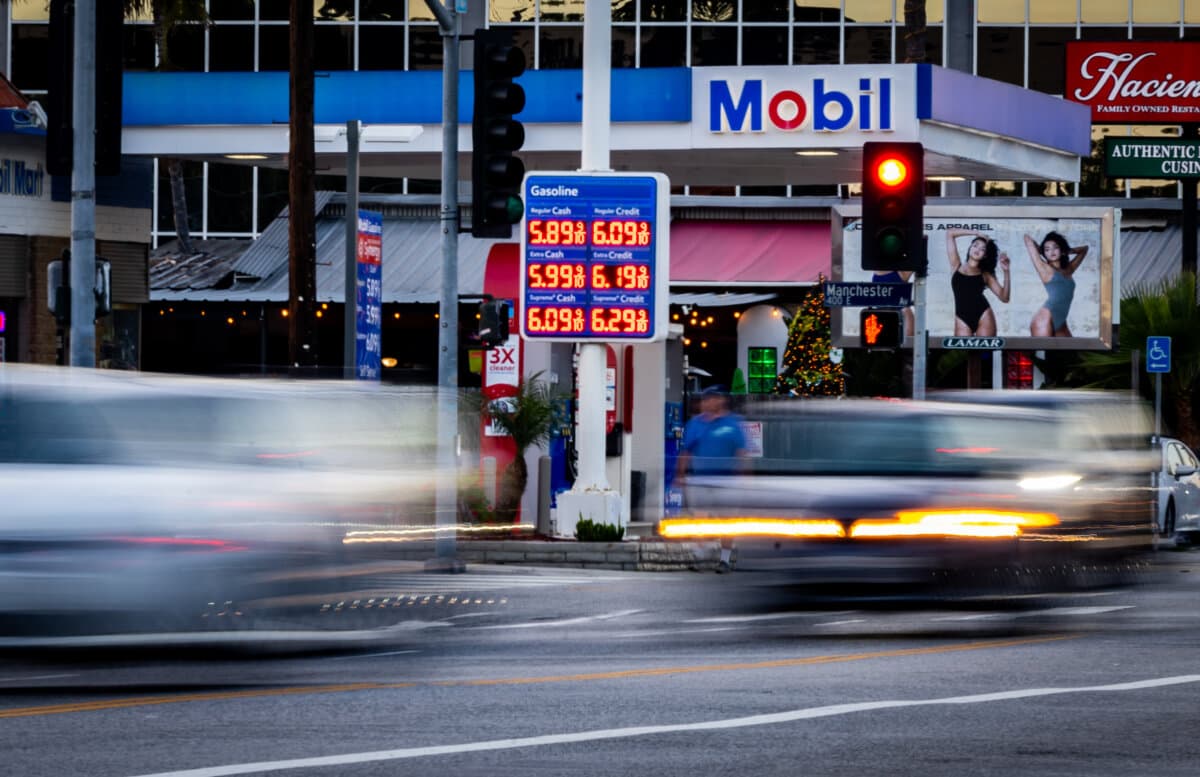
Traffic moves past a gas station in Los Angeles on March 11, 2026. (John Fredricks/The Epoch Times)
“I don’t think it’s the level. I think it’s probably the duration,” he said, noting oil had spiked to about $147 during the 2008 financial crisis. He credited U.S. energy output with cushioning the impact, citing record production of crude oil and natural gas.
According to the U.S. Energy Information Administration’s Short-Term Energy Outlook published March 10, U.S. crude oil production is expected to average 13.6 million barrels per day in 2026. It is forecasted to rise to 13.8 million barrels per day in 2027 as higher prices encourage more drilling.
Marketed natural gas production is forecast to average about 121 billion cubic feet per day this year and increase to roughly 124 billion cubic feet per day in 2027, driven in part by associated gas from oil output.
“Natural gas prices have been little affected, and a lot of that goes into the household bills,” Bessent said, adding that President Donald Trump remained focused on dismantling Iranian military capabilities.
Emergency Release
The International Energy Agency member countries on March 11 agreed to release 400 million barrels of oil from reserves to curb surging global energy prices.
The U.S. Department of Energy said the same day it would release 172 million barrels of oil from the Strategic Petroleum Reserve starting next week.
The International Energy Agency said in estimates published on March 12 that global oil supply is expected to fall by about 8 million barrels per day in March, partly offset by higher output from non-OPEC+ producers, including Kazakhstan and Russia.
Bessent acknowledged that Russia could temporarily benefit from the crisis through increased oil sales, particularly after Washington granted India a 30-day waiver to continue purchasing Russian crude already in transit.
“I think it’s an inevitability,” he said, arguing that those barrels would otherwise have been redirected to China. He said the situation is unfortunate and said any benefit to Moscow would likely be brief.
Despite the near-term decline, the IEA said global supply is still projected to grow by about 1.1 million barrels per day on average in 2026, driven entirely by producers outside OPEC+.