
The U.S. Commission of Fine Arts on Feb. 19 approved a proposal for a new White House ballroom, advancing a major renovation project at the executive residence.
The commission—whose members were appointed by President Donald Trump—was originally scheduled only to review and discuss the ballroom’s design, planned for the site of the former East Wing. Instead, six of the seven commissioners voted to approve the proposal. Commissioner James McCrery abstained, citing his previous involvement as the project’s original architect.
Before the vote, Rodney Mims Cook Jr., chairman of the commission, praised the plan.
“Our sitting president has actually designed a very beautiful structure,” he said. “The United States just should not be entertaining the world in tents.” Large outdoor tents are erected on the White House grounds for events that exceed the building’s interior capacity.
The proposal will next be considered by the National Capital Planning Commission, which oversees major construction and renovation projects involving federal buildings in the Washington area. The agency is scheduled to review the ballroom project on March 5.
On Feb. 3, Trump shared a rendering of the new structure—replacing the East Wing—on Truth Social. The design, shown from the vantage point of the neighboring Treasury Department building, depicts a ballroom complex intended to match the scale and height of the White House.
“This beautiful building will be, when complete, the much anticipated White House Ballroom—The Greatest of its kind ever built!” Trump wrote, noting that the design is “totally in keeping with [the] historic White House.”
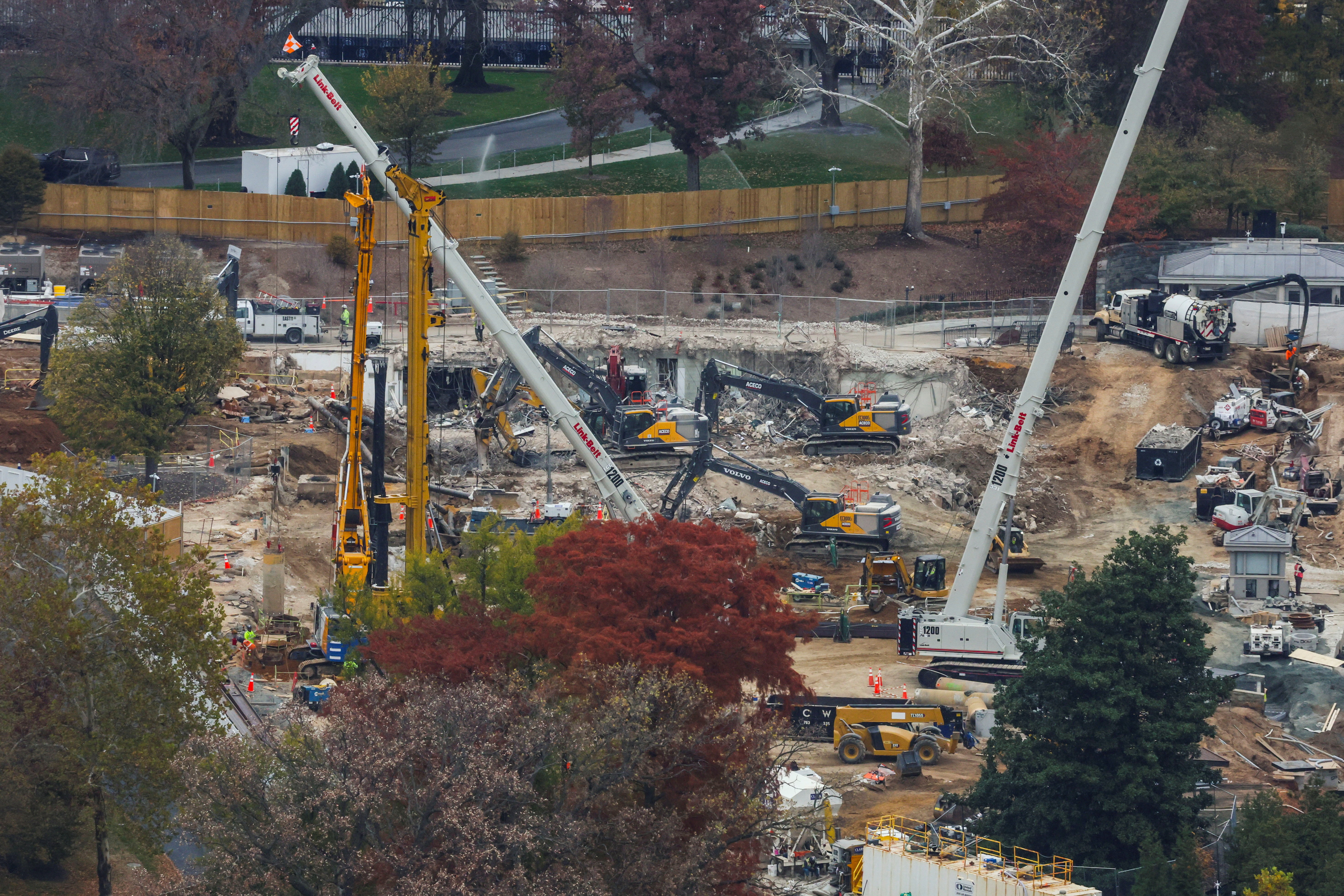
The original East Wing, which housed the first lady’s offices, was demolished in October. The new ballroom is expected to cost $200 million and will be funded entirely by private donors. At 90,000 square feet, it is designed to accommodate up to 999 guests. By comparison, the White House’s East Room—currently used for many social functions—can seat about 200 people. The expanded capacity would allow more guests to attend large-scale events such as state dinners.
The project has drawn legal opposition from the National Trust for Historic Preservation, which has filed a lawsuit seeking to halt construction. A court ruling has not yet been issued.
The lawsuit states, “Within days, the East Wing and its colonnade—a version of which was first built on the site during the presidency of Thomas Jefferson—were completely destroyed.”
The Trump administration maintains that the renovation is lawful and consistent with past presidential improvements to the property. White House spokesperson Davis Ingle previously said the president “has full legal authority to modernize, renovate, and beautify the White House—just like all of his predecessors did.”
The Associated Press contributed to this report.