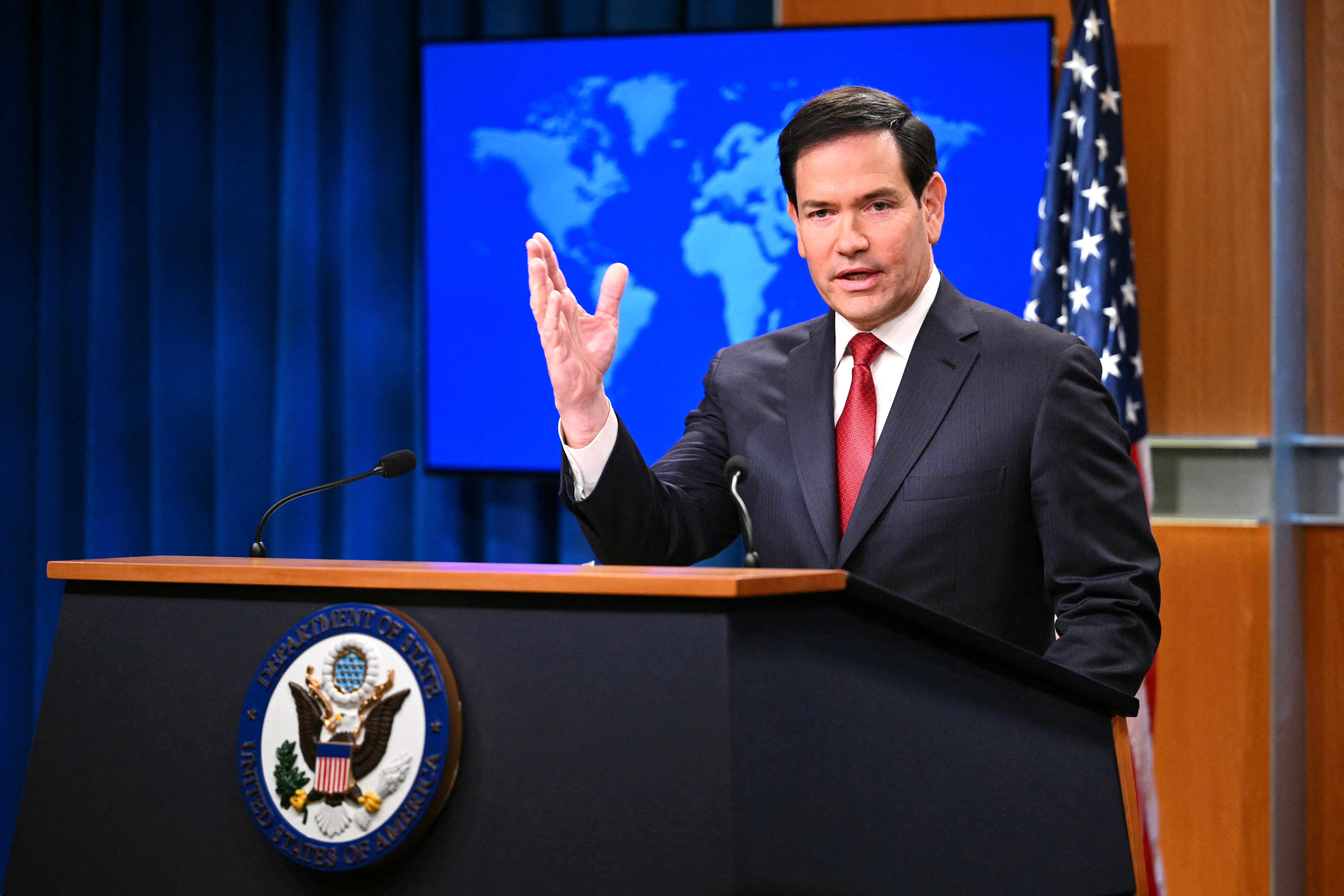

The United States will block the entry of foreign nationals who have supported efforts to censor Americans, Secretary of State Marco Rubio announced on Dec. 23.
“For far too long, ideologues in Europe have led organized efforts to coerce American platforms to punish American viewpoints they oppose. The Trump administration will no longer tolerate these egregious acts of extraterritorial censorship,” Rubio wrote in an X post highlighting the move.
In a related press statement, Rubio said the U.S. State Department will initially take action against five individuals who have organized efforts to compel American companies and platforms to censor, suppress, or demonetize Americans for their speech and views.
“These radical activists and weaponized [non-government organizations] have advanced censorship crackdowns by foreign states—in each case targeting American speakers and American companies,” Rubio said.
“As such, I have determined that their entry, presence, or activities in the United States have potentially serious adverse foreign policy consequences for the United States.”
Individuals targeted by the State Department action will generally be barred from entry into the United States.
Among the most high-profile figures targeted in Tuesday’s announcement was former European Commissioner Thierry Breton.
The other four individuals targeted are Imran Ahmed, CEO of the Center for Countering Digital Hate; Clare Melford, who helps run an organization called the Global Disinformation Index; and Anna-Lena von Hodenberg and Josephine Ballon, who co-lead a German organization called HateAid.
All four have led non-government organizations that purport to monitor extremism and disinformation online.
In May, Rubio announced new policies to restrict visas for foreign nationals seeking to curtail the free speech of Americans.
“Whether in Latin America, Europe, or elsewhere, the days of passive treatment for those who work to undermine the rights of Americans are over,” he said at the time.
Several U.S. tech companies, including Apple, Google, Microsoft, Meta, and X, have faced scrutiny within the European Union under the bloc’s Digital Services Act (DSA).
The DSA requires large tech platforms to account for their content moderation decisions, including the steps they take to remove content deemed to be hateful or deceptive.
On Dec. 5, the European Commission issued its first fine for noncompliance under the DSA, pressing X to pay 120 million euros ($141 million).
The commission said X’s blue check account verification methodology was deceptive, because users can pay for the checkmark without the platform actually verifying the identity of the user.
The European Commission further faulted the social media service for not providing enough transparency regarding advertisements on its platform, and for hindering efforts by researchers to collect data about the platform.
Last week, the office of the U.S. Trade Representative warned of U.S. government retaliation for the EU’s fine against X.