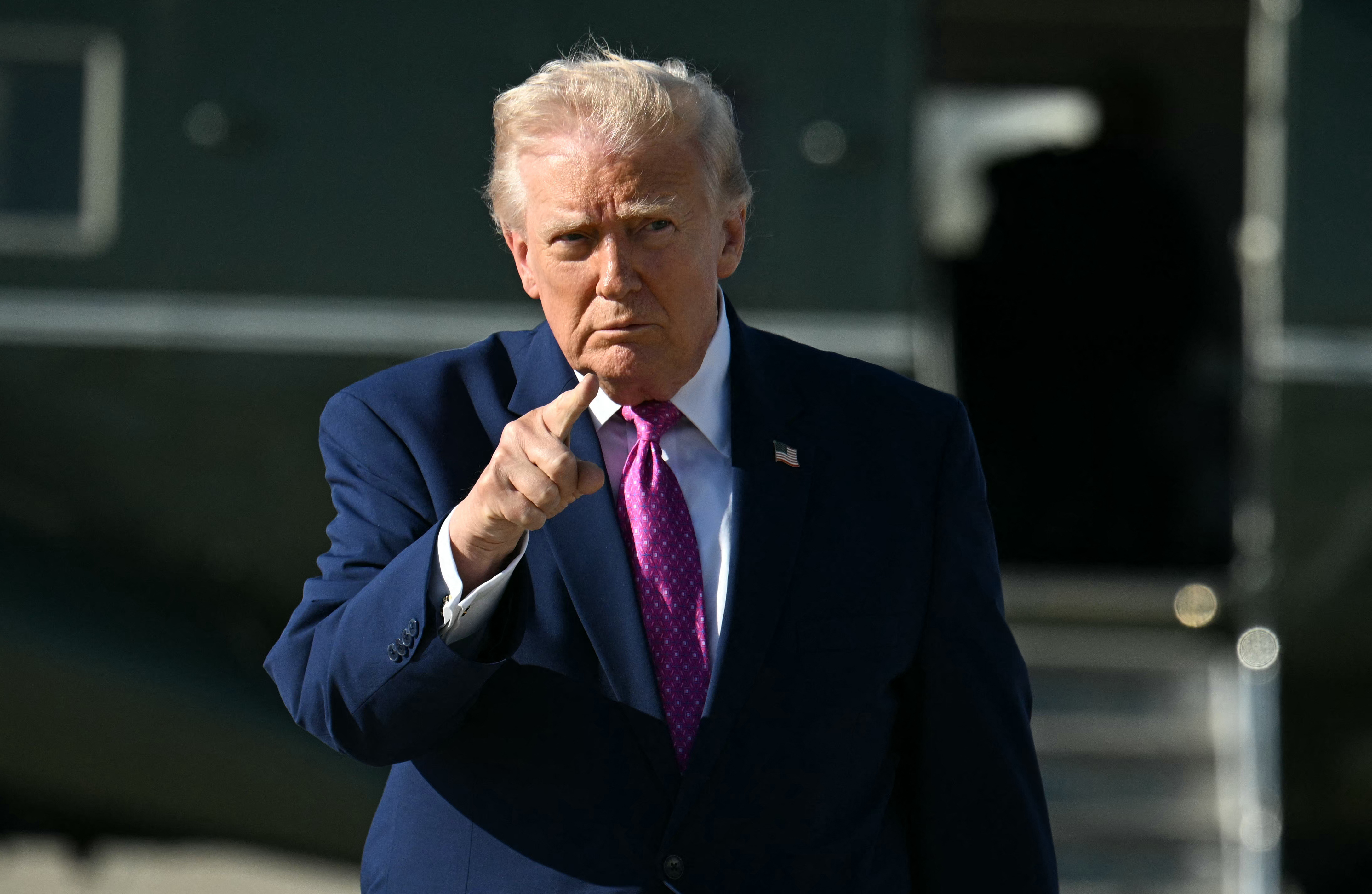

U.S. President Donald Trump said on April 12 that China could face a 50 percent tariff on its exports to the United States if the country is found to be arming Iran.
In an interview with Fox News, Trump said he had heard reports alleging that China was supplying military weapons to Iran, although he expressed doubts about their veracity.
“I hear news reports about China giving the shoulder missiles, what’s called a shoulder missile, anti-aircraft missile. I doubt they would do that,” he told the media outlet.
“But if we catch them doing that, they get a 50 percent tariff, which is staggering. That’s a staggering amount.”
Trump had earlier warned that countries supplying weapons to Iran would face immediate 50 percent tariffs on their exports to the United States, as the United States and Iran entered a two-week ceasefire agreement.
Peace talks between U.S. and Iranian officials concluded without an agreement on April 12, with U.S. Vice President JD Vance saying Tehran refused to abandon its goal of obtaining nuclear weapons.
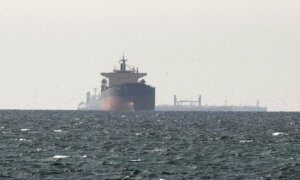
Following the talks, Trump announced that the U.S. Navy would enforce its own blockade of all ships in the Strait of Hormuz, which U.S. Central Command (CENTCOM) stated was to stop ships from entering Iranian ports. Traffic through the critical waterway for global oil and gas shipments has been disrupted since the United States and Israel launched attacks on Iran at the end of February, and Iran retaliated with drone and missile attacks on Israeli and U.S. military assets across Gulf nations and laid sea mines in the strait while seeking payment for safe passage of the international waterway.
The U.S. military will begin its blockade of Iranian ports on April 13 at 10 a.m. EDT, or 5:30 p.m. Tehran time, according to CENTCOM.
The command stated that U.S. forces won’t interfere with freedom of navigation for vessels traveling in the waterway, so long as those ships are visiting non-Iranian ports.
CENTCOM has also begun a mine-clearing mission to ensure safe passage for international traffic through the strait, “a favor to Countries all over the World, including China, Japan, South Korea, France, Germany, and many others,” Trump said on April 11.
Trump is expected to meet with Chinese Communist Party leader Xi Jinping in Beijing on May 14, after delaying the meeting originally scheduled for April due to the war in Iran.
This will mark the first bilateral meeting between the two leaders since they met on the sidelines of the APEC summit in Busan, South Korea, in October 2025. Trump and Xi subsequently talked by phone in February, ahead of the Supreme Court’s decision to strike down Trump’s use of emergency powers to set tariffs.
Following the court ruling on Feb. 20, the Trump administration launched new trade probes into China and other countries, under measures such as Section 301 of the Trade Act of 1974, which looks into potential unfair trade practices by trading partners.
U.S. Trade Representative Jamieson Greer said on March 12 that the probes “will determine whether foreign governments have taken sufficient steps to prohibit the importation of goods produced with forced labor and how the failure to eradicate these abhorrent practices impacts U.S. workers and businesses.”
Jack Phillips contributed to this report.