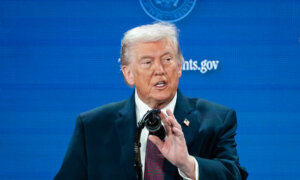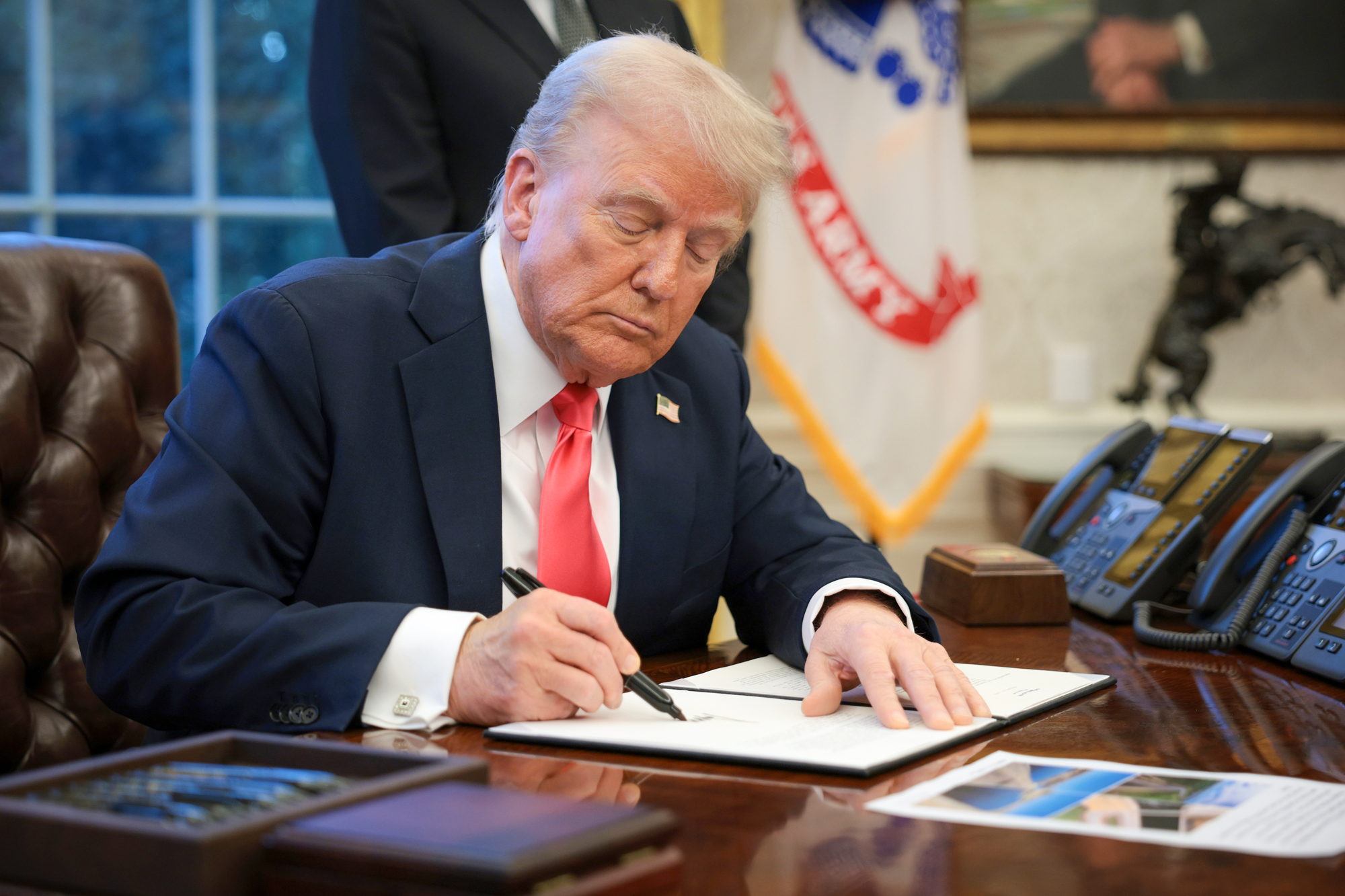


President Donald Trump on Jan. 29 launched a government-wide federal response to treating addiction, also known as substance use disorder.
The president issued an executive order outlining the Great American Recovery Initiative, a unified federal strategy to combat the addiction crisis by treating substance use as a chronic medical condition rather than an isolated occurrence.
The initiative prioritizes early intervention, based on scientific evidence, to stop dependency before it begins. That intervention is to be followed by continued support for those in long-term recovery.
The plan seeks to foster collaborative partnerships between government agencies and local leaders, faith-based groups, and tribal nations to implement effective local solutions.
The initiative is co-chaired by Health and Human Services Secretary Robert F. Kennedy Jr. and Kathryn Burgum, the former First Lady of North Dakota and wife of Interior Secretary Doug Burgum.
“Addiction is not a moral failure. It is a disease,” Kennedy said during a White House press conference. “It’s chronic, it’s treatable. And for too long, our nation has responded with fragmentation, with stigmatization and silence, instead of science, compassion, and coordination.”
Nearly 50 million Americans, or 16.8 percent of the nation’s population, suffer from the disease of addiction, also known as substance use disorder, according to the White House.
Many never receive treatment, said Kennedy.
Kathryn Burgum spoke of her 23-year personal recovery from alcoholism in remarks to reporters. “If not for the grace of God, I would not be alive today,” she said. “My message is simple, never give up hope for recovery.”
Burgum hailed the initiative as a shift from reaction to prevention. “When addiction is treated early and correctly, people recover, and families heal.”
This order builds on action taken in Trump’s first term. He declared the opioid crisis a nationwide public health emergency in 2017 and launched the Initiative to Stop Opioid Abuse and Reduce Drug Supply and Demand to confront the many causes fueling the drug crisis.
The current project aims to streamline national resources to provide a comprehensive continuum of care that extends from initial intervention to successful community reentry.
“Addiction treatment should parallel that of other chronic diseases—utilizing evidence-based care, scientific advancement, continuous support, and community connection,” Trump wrote in the executive order.
“My Administration will drive a new national response to the disease of addiction that will create stronger coordination across government, the healthcare sector, faith communities, and the private sector in order to save lives, restore families, strengthen our communities.”
Under the Trump administration, the federal government has also implemented an aggressive campaign against drug trafficking through large-scale seizures and military kinetic strikes, beginning in 2025.
By the end of 2025, the U.S. Coast Guard had seized more than 469,000 pounds of cocaine, an amount the Department of Homeland Security calculates is enough to provide 177 million lethal doses.
The administration has also utilized Joint Task Force Southern Spear, a military campaign launched in November 2025 to target narco-terrorist activities in the Western Hemisphere. As of late 2025, there had been at least 30 reported strikes under this operation.
“Over the past year, we have made incredible progress in stopping the inflow of illegal drugs that threaten American communities. We must now supplement that work by furthering a national effort to prioritize addiction treatment and recovery,” President Trump stated in the order.