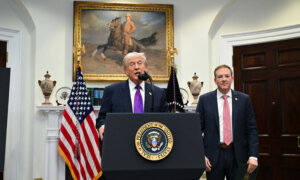

President Donald Trump signed two executive orders on Friday related to improving home-ownership opportunities for Americans by reducing regulatory burdens and increasing access to mortgage loans.
“Every American seeking to buy a home should have access to a mortgage from a reliable lender, at a rate commensurate with his or her creditworthiness,” Trump wrote in an order titled “Promoting Access to Mortgage Credit.”
“Layers of unnecessary regulatory barriers, slow permitting processes, and onerous mandates at all levels of government have delayed construction, restricted development, and driven up the costs of new housing.”
The directive seeks to mitigate the impact of compliance costs originating from legislative actions over the past 20 years.
“These burdens have contributed to a significant decline in bank participation in mortgage lending,” the order reads.
Consumer Financial Protection Bureau officials are directed to propose amendments to regulations restricting community banks and other small financial institutions from issuing mortgage loans.
Rural families and low- to moderate-income households are most impacted, according to the order.
Officials overseeing financial agencies, including the Federal Reserve, the National Credit Union Administration, the Federal Deposit Insurance Corporation, and the Comptroller of the Currency, are instructed to ensure that mortgage lending evaluation is merit-based.
Examiners are instructed to base decisions on applicants’ ability to repay instead of compliance with technical and process-related criteria.
Other modernization efforts ordered by the president include considering adjustments to data collection and disclosure provisions of the Home Mortgage Disclosure Act; revisions to lenders’ capital requirements; exclusions for residential construction up to four-family developments from commercial real estate regulations; and using alternative asset-valuation models, including artificial intelligence-generated estimates.
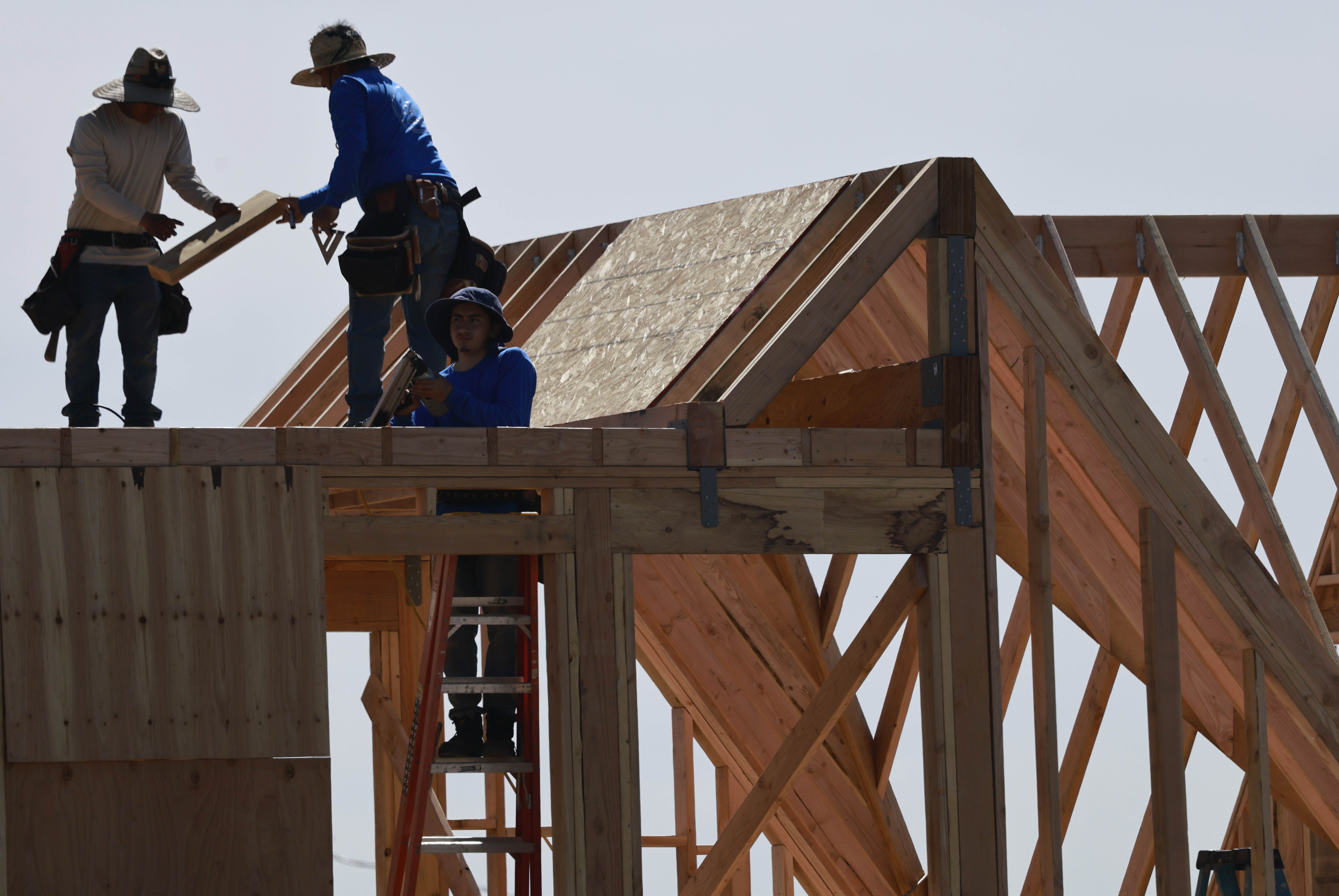
Trump also signed an order targeting federal home construction regulations.
“The American dream of homeownership depends on a dynamic housing market in which a varied inventory of new homes is built and renovated each year,” Trump said, noting that “layers of unnecessary” red tape are limiting supply and increasing costs.
“It is the policy of my Administration to reduce regulatory barriers to building homes and to steward taxpayer dollars in a manner that promotes housing affordability.”
Secretary of the Army Daniel Driscoll and Environmental Protection Agency Administrator Lee Zeldin are instructed to review and revise regulations related to construction near bodies of water to reduce costs, expedite approval timelines, and mitigate property tax increases.
Other changes are intended to fast-track federal permitting processes for residential housing construction.
Scott Turner, secretary of Housing and Urban Development, is tasked with developing best practices facilitating affordable residential construction that state and city governments can follow. Examples include caps on fees and timelines, faster inspection and dispute-resolution processes, and the elimination of “green-energy building requirements or other energy-choice restrictions.”
The order also encourages financing and homebuilding in Opportunity Zones, established by the president with the passage of the 2017 Tax Cuts and Jobs Act to incentivize development in distressed communities.
Housing supply varies by market, but nationwide trends indicate a shortage, with rent and home prices increasing in recent years.
The average price of a home in the United States is approximately $430,000, up about 1 percent from last year, according to the online real estate listing company Redfin.
Supply is affected by mortgage rates, with up to one-third of homeowners locked into loans between 3 percent and 4 percent, according to real estate firm Realtor.com. Some owners are disinclined to sell and buy a new home with significantly higher financing costs at closer to 6.11 percent in today’s market, a drop from 6.65 percent this time last year. The rate briefly dipped below 6 percent in late February, according to National Association of Realtors data.
Trump has repeatedly vowed to improve Americans’ access to housing, issuing an executive order in January titled, “Stopping Wall Street From Competing with Main Street Home Buyers.”
He also directed the purchase of $200 billion in mortgage-backed securities through Fannie Mae and Freddie Mac.