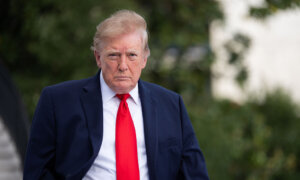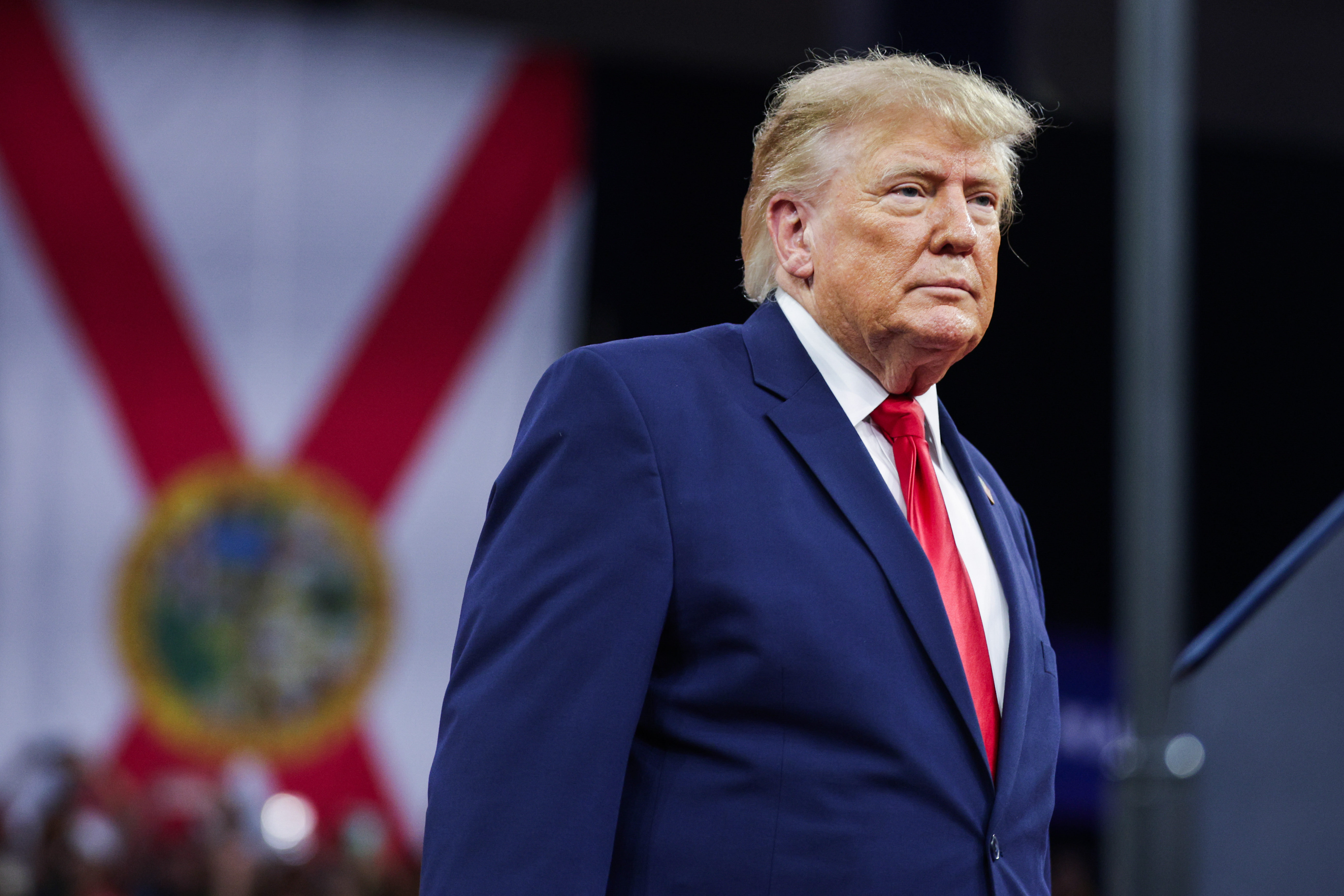

President Donald Trump said on Oct. 23 that the United States may launch a “little” version of Operation Epic Fury, the U.S. military operation that started the conflict with Iran in late February.
“We may do another little Epic Fury, or they’ll agree,” Trump told a crowd at a midterm rally in Fort Myers, Florida, on Friday. “If they’re smart, they’ll just say, ‘Let’s get down to business.’ But I doubt they’ll do that because perhaps they’re not smart.”
Operation Epic Fury was first launched on Feb. 28. More than 50,000 U.S. service members were deployed throughout the Middle East to support the operation, which included strikes on about 13,500 targets, according to Adm. Brad Cooper, commander of U.S. Central Command (CENTCOM).
The president’s comments come as the military conflict between the United States and Iran has stalled in recent weeks. The Trump administration has shifted tactics and increased economic pressure on Iran with the U.S. military blockade of Iranian ports and sanctions under Operation Economic Outcast.
Prior to the president’s comments, U.S. Ambassador to Turkey and special envoy Tom Barrack said in an interview with online commentator Mario Nawfal that there “absolutely” could be a U.S. strike against Iran as early as this weekend.
“The president is very clear. He’s open and available and accessible to a deal. And we’ve been at the table for months and months and months,” Barrack said.
He said that Trump has also made it clear to Iran that he wants to establish a process that “eventually brings the temperatures down” but that Iran will face consequences if it continues to threaten U.S. allies and the rest of the world.
The U.S. ambassador also told Nawfal that Trump was not interested in regime change but was instead interested in “rebalancing” so that “there’s no hostages, there’s no threats, and the world can calm down.”
Asked about Barrack’s suggestion that the United States could strike Iran over the weekend, Trump told reporters, “If that’s the case, I don’t know anything about it.”
During Friday’s rally, Trump said Iran had the worst economy and the highest inflation in the world.
The president told the crowd that the United States has already defeated Tehran “militarily, financially, and otherwise” and is working to ensure that Iran never obtains a nuclear weapon. He added that oil prices “will soon plummet.”
Trump also announced Friday that the United States would “take care of Cuba” on the way back from Iran after the conflict with Tehran is ended.
“We’ll do a little stopover,” the president told the crowd, suggesting that a U.S. warship could be sent somewhere just off the coast of Cuba.
“They’ll raise up their hands, and then we’re going to send [U.S. Secretary of State] Marco Rubio in to finish up the deal,” he continued.
On Wednesday, Trump told reporters that the United States was “doing very well” both militarily and financially against Iran.
“We are going to have something one way or the other. It’ll happen fairly soon,” Trump said. “Most people seem to think it’s after the election, and we’re going to see what happens.”
Earlier this month, Trump announced that the United States would not launch additional strikes against Iran before the November midterm elections.
While the United States has not carried out strikes against Iran in recent weeks, the Trump administration has continued to impose new rounds of sanctions targeting Tehran and any entities and individuals helping the regime evade the sanctions.
Iranian President Masoud Pezeshkian said this week that U.S. sanctions needed to be lifted for negotiations to move forward between Tehran and Washington, according to Turkey’s state-run Anadolu News Agency.
“One cannot increase the intensity of sanctions and pressures every day, close the paths of interaction, and simultaneously speak of negotiation,” Pezeshkian wrote in a social media post on Oct. 21. “Dialogue with the language of threats and pressure has no meaning.”