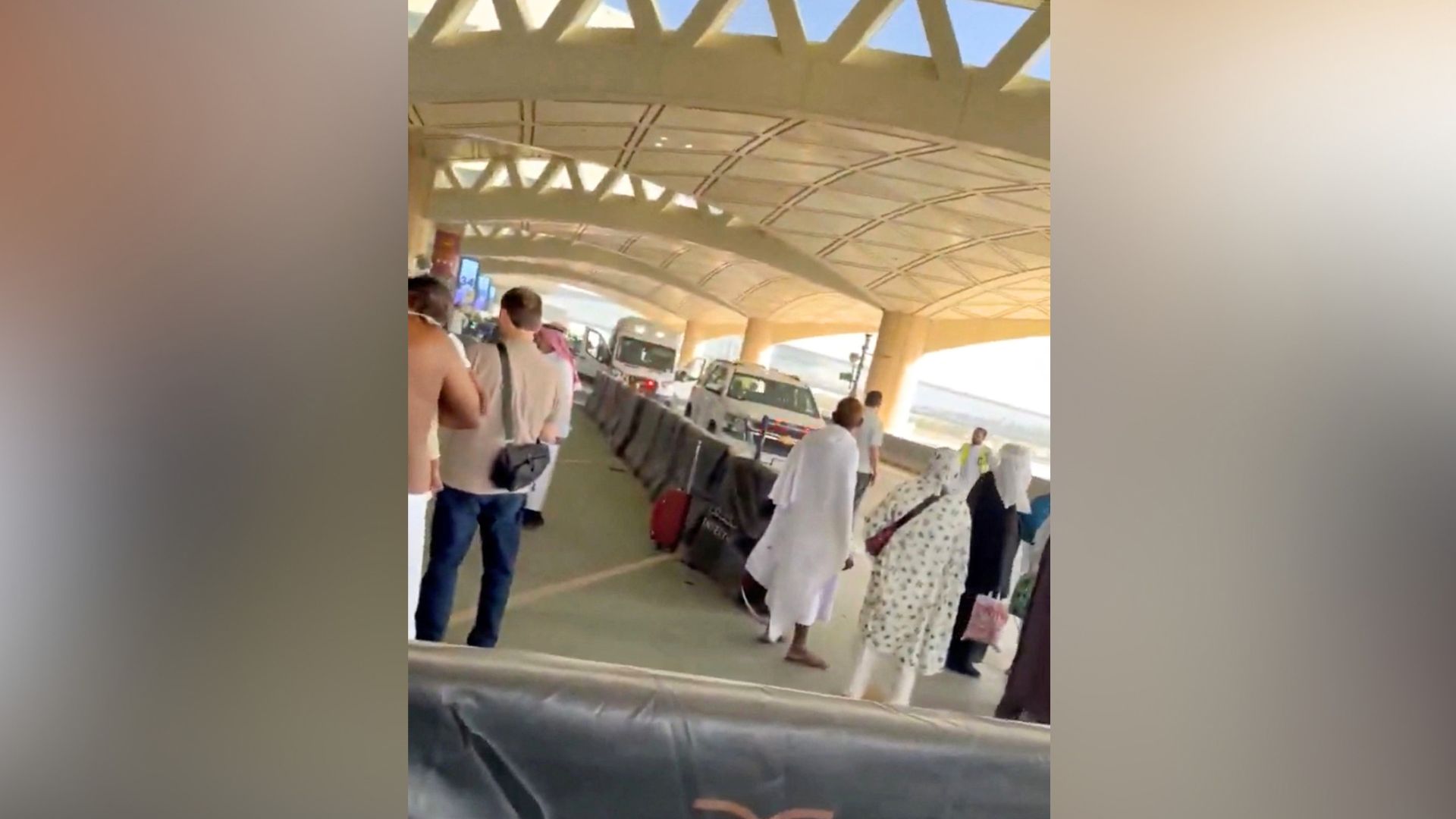

A terror attack on a passenger terminal at the international airport in the Saudi Arabian capital of Riyadh killed at least 13 and injured more than 300, the Saudi-led coalition forces in Yemen said on Oct. 11.
The coalition government blamed the attack on Iran-backed Houthis in Yemen, who claimed responsibility for the attack later in the day.
The attack late on Oct. 10 on King Khalid International Airport “constitutes a full-fledged war crime according to the Customary International Humanitarian Law,” spokesman for the Saudi-led Arab coalition forces Col. Turki Al-Maliki said in a statement on X.
U.S. Secretary of State Marco Rubio condemned the attack.
One U.S. citizen was among the “numerous innocent lives” taken, Rubio said in a statement hours after reports of the missile strike.
The coalition forces said in its statement that in addition to the American, the deceased included four Saudi citizens, two Bangladeshi nationals, a Palestinian, an Egyptian, a Jordanian, a Syrian, and a Sudanese.
The group stated that the injured were being treated at several hospitals. Civil aviation authorities said early on Oct. 11 that some were in critical condition. An Indian national who was injured in the attack later succumbed to his wounds, bringing the death toll to 13.
There have been several Houthi attacks on Saudi airports this past week, including one on King Khalid International Airport on Oct. 7 for which the Houthis claimed responsibility.
The coalition forces responded with operations targeting the Houthis’ ballistic missile capabilities and weapons storage.
“We are working to dismantle and destroy the ballistic missile network of the terrorist Houthi militia,” Al-Maliki said in an Oct. 9 statement on X.
He said that 136 military targets had been destroyed.
In a televised speech on Oct. 11, Houthi military spokesperson Yahya Saree said the group had also struck another airport in Dammam and two facilities of Saudi oil giant Saudi Aramco, while claiming responsibility for the attack on King Khalid International Airport.
The terrorist group also threatened further attacks. “Unless the Saudi enemy stops its aggression and interference in Yemen, worse is yet to come,” Yemen’s Houthi-run foreign ministry said in statements carried by Al Masirah television.
The U.S. State Department has warned Americans to exercise caution when traveling in the region.
In an Oct. 11 update, the U.S. Embassy in Riyadh stated that it “strongly recommends all U.S. citizens avoid this airport and surrounding areas.”
“Please take extreme caution when using all major airports in Saudi Arabia,” it stated.
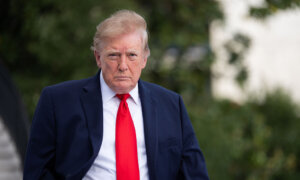
Shortly after the attack, U.S. President Donald Trump was asked if the United States would join Saudi strikes against the Houthis.
“We may. We’re going to look at it,” he told reporters. “We just found out about the recent attack. So we’ll make a decision. We move very quickly.”
Later, Trump said he planned to speak to Saudi Crown Prince Mohammed bin Salman about the attack.
“What happened in Saudi Arabia is not acceptable,” he told reporters.
The deaths make it the deadliest attack on any Gulf Arab country since the start of the Iran war in February. The conflict has recently escalated to a new battlefront at the Saudi–Yemen border and the Red Sea, with the Houthis fighting the coalition government forces.
U.N. Secretary-General António Guterres said in an Oct. 11 statement: “Attacks on civilians & civilian infrastructure are a violation of international law. These attacks must cease immediately.”
The Council of Arab Interior Ministers, representing the 22 member nations of the League of Arab States, condemned the attack.
Muslim World League Secretary-General Mohammed Al-Issa said the terrorist act violates “all religious values, international laws, and humanitarian norms” and reflects “the criminal approach of this terrorist militia in deliberately targeting civilians and civilian infrastructure.”
The Associated Press contributed to this report.