
“I think that everyone is going to honor their deal,” Bessent said during an interview with Fox News’s Will Cain.
Bessent referenced other trade authorities in the U.S. code that could be used to back the deals, including Section 232 of the Trade Expansion Act, which lays out criteria for national security tariffs and shipping bans; and Section 301 of the Trade Act of 1974, which allows the United States to retaliate against countries using unfair trade practices.
The Treasury secretary also said that the ruling leaves open one “draconian alternative.” Namely, Bessent said the president “has a right to a complete embargo, right? He can just cut countries off, he can … cut whole product lines off.”
Under the International Emergency Economic Powers Act, the authority Trump had been relying on to impose tariffs, the president also has the power to declare a complete trade embargo with a foreign country.
Bessent noted that under this route, “We can’t receive any money.”
“So, you know, I would call on all countries to honor their agreements and move forward,” he added.
“Today, the Supreme Court decided that Congress, despite giving the president the ability to ‘regulate imports,’ didn't actually mean it,” Vance wrote in a post on X. “This is lawlessness from the Court, plain and simple. And its only effect will be to make it harder for the president to protect American industries and supply chain resiliency.”
Vance said that Trump “has a wide range of other tariff powers and he will use them to defend American workers and advance this administration’s trade priorities.”
Tariffs under the IEEPA have been a centerpiece of Trump’s economic and trade policy during his second term, with the administration relying on their interpretation of the law to enact sweeping trade deals.
Responding to the ruling, Trump said he will sign an executive order to impose 10 percent global tariffs under another authority while the administration pursues alternative pathways to enact tariffs. Those 10 percent tariffs would last 150 days and can be extended by Congress.
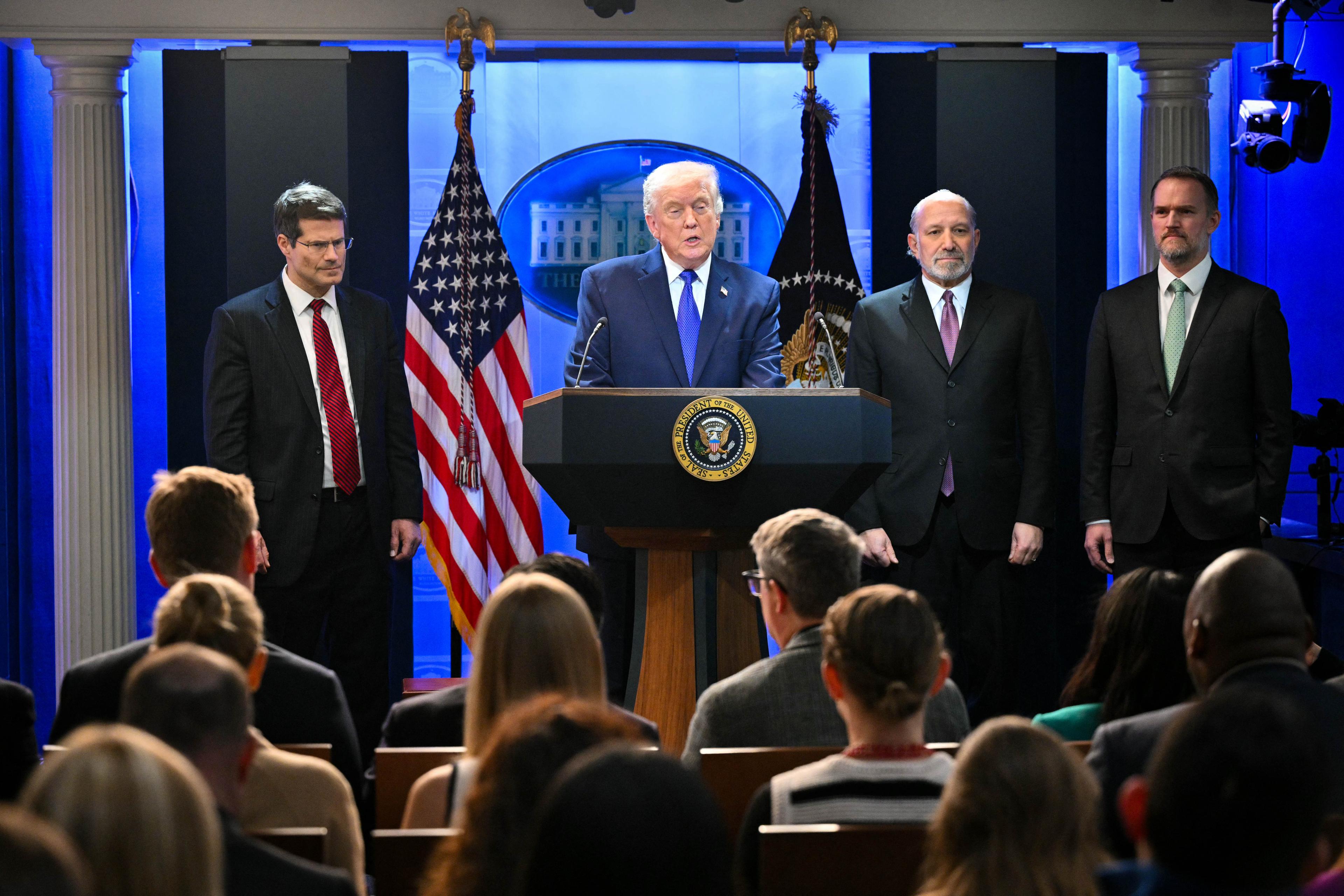

President Donald Trump said on Feb. 20 that he will issue an executive order to create a 10 percent “global tariff,” announced shortly after the Supreme Court invalidated his reciprocal duties on U.S. trading partners.
The new tariff would be added to existing import levies, which remain in place under the court’s decision.
“The good news is that there are methods, practices, statutes, and authorities, as recognized by the entire court in this terrible decision, and also recognized by Congress, which they refer to, that are even stronger than the IEEPA tariffs available to me as president of the United States,” Trump told reporters at a press briefing.
Section 122
Trump’s executive action will invoke Section 122 of the Trade Act of 1974.
Section 122 allows the president to implement a tariff rate of up to 15 percent on countries that maintain “large and serious” trade surpluses with the United States. The measure also authorizes the president to introduce limits on the volume of foreign goods entering the country.
The tariff can be applied for 150 days. An extension will require the White House to seek congressional approval, which could be difficult, especially as the midterm elections near.
One of the key advantages of Section 122 is that it does not mandate the administration conduct a formal investigation to justify the tariffs.
The Trade Act of 1974 was first introduced in 1973 by Rep. Al Ullman (D‑Ore.) and was enacted in 1975 when President Gerald Ford signed it into law.
While it has been on the books for more than 50 years, it has never been invoked by a president.
Market watchers had widely anticipated that the White House would use Section 122.
“Section 122 offers the fastest path forward,” ING economists said in a Feb. 20 research note.
“Section 122 has never been invoked, but its balance-of-payments trigger clearly applies to major partners like China and Mexico. Think of it as a temporary patch while more durable options take shape.”
Section 301
Trump added that his team is using Section 301 to initiate a series of inquiries into possible unfair trade actions—steps that could ultimately produce new tariffs.
Section 301 permits the president expansive power to address unfair trade practices, including by using tariffs and sanctions.
U.S. Trade Representative Jamieson Greer will also be allowed to probe and respond to policies from foreign governments that the White House considers violations of trade agreements with the United States.
“While that has not been difficult to prove in the case of China 301 tariffs, it won’t be as easy for broader tariffs across dozens of countries,” Jeff Buchbinder, chief equity strategist at LPL Financial, said in a note emailed to The Epoch Times.
Trump tapped Section 301 during his first term and applied it against China.
Other administrations have used it in the 1980s and 1990s, specifically against Japan as part of pressure tactics to force Tokyo to open its markets to U.S. goods.
“For longer-term tariffs, Section 301 investigations remain the primary tool,” the ING economists added.
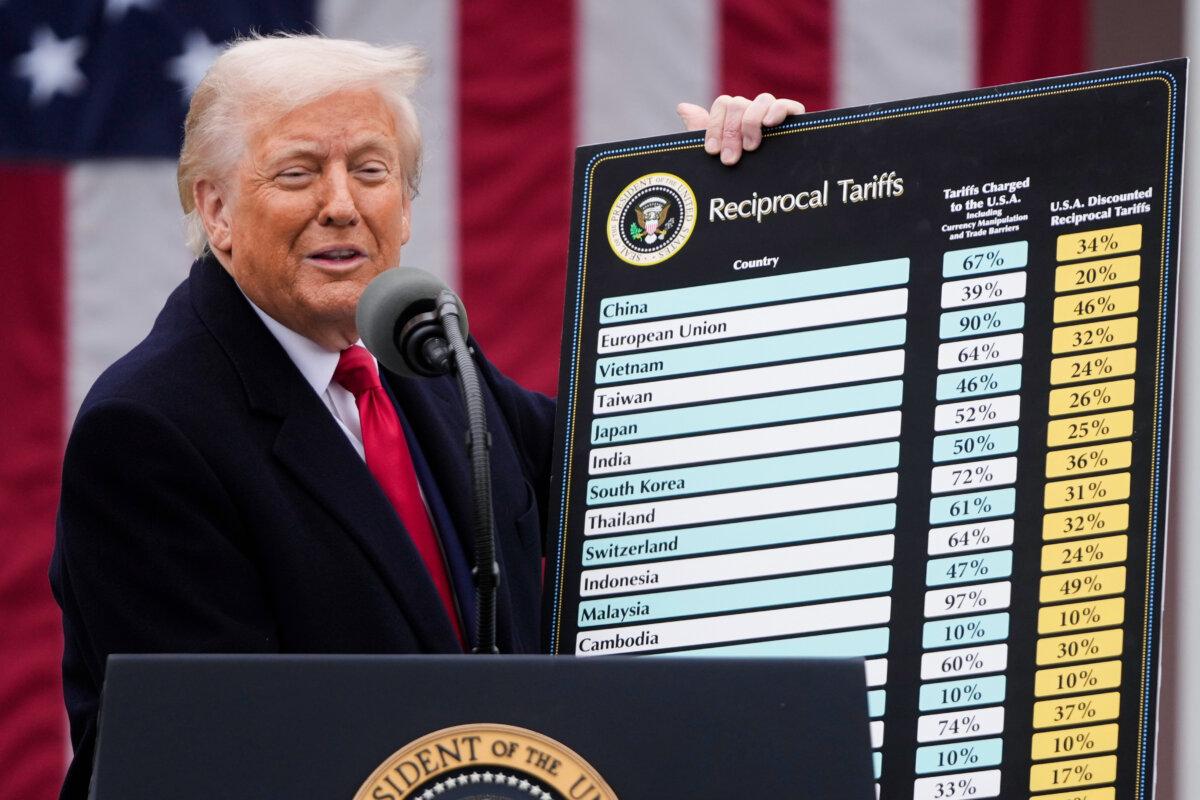
President Donald Trump speaks during an event to announce new tariffs in the Rose Garden at the White House in Washington, on April 2, 2025. (AP Photo/Mark Schiefelbein)
“These allow duties in response to unfair trade practices but require up to nine months of review before implementation.”
Higher Tariffs Could Come
The president warned that while the Supreme Court’s decision has brought “great certainty” to the economy, the next set of tariffs could potentially be higher.
“It depends, whatever we want them to be, but we want them to be fair for other countries,” he said.
“And you know, we have some countries that have treated us really badly for years, and it’s going to be high for them, and we have other countries that have been very good, and [those are] going to be very reasonable tariffs.”
U.S. stocks shrugged off these fears, with the leading benchmark index averages up across the board.
Yields on long-term Treasury securities were also little changed, despite the possible fiscal fallout from refunds and future tariff collections.
However, speaking at an Economic Club of Dallas event, Treasury Secretary Scott Bessent stated revenues will not change very much.
“I can tell you that the total amount of revenue the Treasury will collect this year will be little changed,” Bessent said.
Trump’s tariffs were forecast to generate approximately $3 trillion over the next decade.
Economists at the Penn Wharton Budget Model estimated that more than $175 billion in tariff collections could be returned to U.S. importers.

Addressing the Economic Club of Dallas, he said the Trump administration “will invoke alternative legal authorities to replace the [International Emergency Economic Powers Act] tariffs.”
“Treasury’s estimates show that the use of Section 122 authority, combined with potentially enhanced Section 232 and Section 301 tariffs, will result in virtually unchanged tariff revenue in 2026,” he said.

The Supreme Court on Feb. 20 struck down many of President Donald Trump’s tariffs, stating they violated an emergency powers law he invoked last year.
The president previously declared a national emergency under the International Emergency Economic Powers Act, saying the tariffs were needed to stem the flow of illegal drugs and to combat “large and persistent” trade deficits with foreign nations.
The act generally gives the president the power to regulate imports to address emergencies, but debate ensued over what that meant in practice.
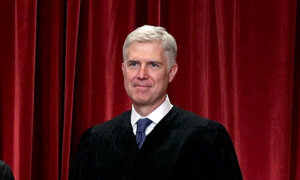
Writing for the 6–3 majority, Chief Justice John Roberts rejected Trump’s arguments, saying that the law’s phrasing did not clearly authorize tariffs.
Tariffs enacted under other laws are not affected by the ruling.
Tariffs Not Authorized Under Emergency Law
Roberts said Trump rested his claim of tariff authority on the words “regulate” and “importation” in the International Emergency Economic Powers Act, which gives the president authority to act.
“The President asserts the independent power to impose tariffs on imports from any country, of any product, at any rate, for any amount of time,” Roberts said. “Those words cannot bear such weight.”
The Supreme Court has long been reluctant to approve delegations of congressional power based on ambiguous statutory text, especially where they concern a core congressional power such as spending power, he said.
Roberts said that Trump would have needed clearer authorization from Congress to prove it wanted to delegate its tariff power under Article I of the Constitution.
Refund Process Likely a ‘Mess’
In a dissenting opinion, Justice Brett Kavanaugh said providing refunds to those affected by the tariffs would probably be a “mess.”
The federal government may be forced to refund billions of dollars to importers who paid tariffs under the International Emergency Economic Powers Act, “even though some importers may have already passed on costs to consumers or others,” he said.
Kavanaugh said the United States has benefited from the tariffs, which gave the government leverage to negotiate trillions of dollars in trade deals with governments in countries such as China, Japan, and the United Kingdom.
The court’s decision “could generate uncertainty regarding those trade agreements,” he added.
During a White House press conference on Feb. 20, Trump suggested the Supreme Court didn’t do enough to address the refund issue.
“We'll end up being in court for the next five years,” he said, indicating the refunds would be determined by future court decisions.
Trump Planning Alternatives to Rejected Tariffs
Trump responded to the ruling with disappointment and suggested it was a win for countries that had taken advantage of the United States. He also said he was “ashamed of certain members of the court.”
He added that “other alternatives” would replace the tariffs the court rejected, and that he would sign an order to impose a 10 percent global tariff rate under a different law.
Treasury Secretary Scott Bessent has said that the government could invoke other authorities to implement tariffs, although they are “not as efficient, not as powerful.”
Trump said after the Supreme Court’s decision that there were legal avenues other than the emergency powers law that were “even stronger.”
U.S. Trade Representative Jamieson Greer similarly indicated in December that the administration had a backup plan.
Kavanaugh: Other Laws Allow Trump’s Tariffs
It remains to be seen how Trump will attempt to fill the void left by his tariffs. As Kavanaugh noted, the court’s decision focused on one emergency powers law rather than ruling out the possibility that Trump could reimpose his tariffs.
“The decision might not substantially constrain a President’s ability to order tariffs going forward,” Kavanaugh said in his dissent, which was joined by Justices Samuel Alito and Clarence Thomas.
“That is because numerous other federal statutes authorize the President to impose tariffs and might justify most (if not all) of the tariffs at issue in this case—albeit perhaps with a few additional procedural steps that [the International Emergency Economic Powers Act], as an emergency statute, does not require.”
During oral argument in November, Alito similarly questioned why Trump couldn’t impose the tariffs using a law known as the Tariff Act. Kavanaugh’s dissent pointed to that law, as well as two others.
Disagreement Over Major Questions Doctrine
Although six of the justices rejected Trump’s tariffs, their reasoning differed in important ways. More specifically, the justices disagreed over how to apply the major questions doctrine, which requires Congress to give clear authorization when it allows the president to make decisions of major economic or political importance.
Roberts, along with Justices Amy Coney Barrett and Neil Gorsuch, each agreed that Congress’s language had not clearly authorized Trump’s tariffs. The three liberal justices, however, thought that the doctrine need not be relied on for the analysis of this case and that ordinary statutory interpretation was sufficient.
“Most important, [the law’s] key phrase—the one the Government relies on—says nothing about imposing tariffs or taxes,” said Justice Elena Kagan, writing for her colleagues. She added that the term “regulate,” both in common parlance and as Congress uses the word, does not encompass taxing.”
Kavanaugh and his conservative colleagues said the law’s language was enough to authorize the tariffs, but also stated that the major questions doctrine didn’t apply to foreign affairs.
“In the foreign affairs realm, courts recognize that Congress often deliberately grants flexibility and discretion to the President to pursue America’s interests,” he said.
“Great certainty has been brought to the economy of the United States, and actually the economy of the world, because we generate so much in the world, with the biggest in the world, and we're now the strongest by far,” he said.
“We were a country that was dead one and a half years ago. Now we have the hottest country in the world. We're going to keep it that way.”
“It depends, whatever we want them to be, but we want them to be fair for other countries,” he said.
“And you know, we have some countries that have treated us really badly for years, and it's going to be high for them, and we have other countries that have been very good, and it's going to be very reasonable tariffs.”


While a majority of the Supreme Court held on Feb. 20 that President Donald Trump cannot impose tariffs using the International Emergency Economic Powers Act (IEEPA), Justice Brett Kavanaugh said that he might be able to do so using other laws.
“Although I firmly disagree with the court’s holding today, the decision might not substantially constrain a president’s ability to order tariffs going forward,” Kavanaugh wrote in a dissenting opinion that was joined by Justices Samuel Alito and Clarence Thomas.
“In essence, the court today concludes that the president checked the wrong statutory box by relying on IEEPA rather than another statute to impose these tariffs.”
Kavanaugh said Trump could use other federal statutes to impose most, if not all, the tariffs, “albeit perhaps with a few additional procedural steps.”
He cited Section 232 of the Trade Expansion Act of 1962, which says: “No action shall be taken ... to decrease or eliminate the duty or other import restrictions on any article” if the president determines that it would threaten national security.
That determination is made by the president after coordinating with the secretaries of defense and commerce.
He also pointed to Section 338 of the Tariff Act of 1930, which lets the president impose up to 50 percent tariffs if it serves public interest or when another country places “any unreasonable charge, exaction, regulation, or limitation which is not equally enforced upon the like articles of every foreign country.”
Finally, Kavanaugh said the president relies on sections of the Trade Act of 1974 to impose tariffs to prevent “imminent and significant depreciation of the dollar in foreign exchange markets,” or to correct trade imbalances and import competition, among other situations.
Those tariffs are capped at 15 percent, and last up to 150 days, unless extended by Congress.
In the meantime, Kavanaugh added, the United States might have to refund billions of dollars in previous tariff payments, a process that he said is “likely to be a mess.”
Trump said in a press briefing following the ruling: “The good news is that there are methods, practices, statutes, and authorities ... that are even stronger than the IEEPA tariffs available to me as President of the United States. Other alternatives will be used to replace the ones that the court incorrectly rejected.”
Kavanaugh, Thomas, and Alito also dissented from the majority’s ruling.
They held that the IEEPA does allow the president to impose tariffs in emergencies.
Thomas, in his dissenting opinion, noted that the text of the law authorizes the president to regulate importation.
“Throughout American history, the authority to ‘regulate importation’ has been understood to include the authority to impose duties on imports,” he wrote.
He also pointed out that the Constitution forbids Congress from delegating “core legislative powers” to the president—but not other powers such as imposing tariffs.
“Early Congresses often delegated to the president power to regulate foreign commerce, including through duties on imports,” he wrote.
The three justices also disagreed with Chief Justice John Roberts’s application of the “major questions doctrine,” which says federal agencies can’t enact rules unless Congress explicitly authorizes them to do so.
Kavanaugh wrote that Roberts, by requiring the IEEPA to contain the words “tariff,” “duty,” or “tax,” was using a “magic words test,” an approach the Supreme Court had already rejected in previous cases.
“In sum, under the major questions doctrine as the court has applied it, this should be a straightforward case. Congress supplied clear authorization for the president to impose tariffs under IEEPA,” he said.
He also said major questions do not apply to this case for a separate reason: Tariffs are a foreign affairs issue, and the Supreme Court has never applied the major questions doctrine to a foreign affairs statute.
“In short, in the foreign affairs context, this court has never before super-imposed the major questions doctrine (or any similar canon or principle) onto ordinary statutory interpretation to place a thumb on the scale against the president,” Kavanaugh wrote.
“Some of them stand, many of them stand. Some of them won't, and they'll be replaced with the other tariffs,” he said.
“You’d think they would have put one sentence in there saying that—keep the money or don't keep the money—right? I guess it has to get litigated for the next two years,” the president told reporters on Friday afternoon.
When asked to clarify whether he planned to honor refunds to companies that paid the tariffs, the president doubled down on his previous answer.
“We’ll end up being in court for the next five years,” he said.
“Today, I will sign an order to impose a 10 percent global tariff under Section 122, over and above our normal tariffs already being charged,” he said, referring to that part of the Trade Act of 1974.
“Although I firmly disagree with the court’s holding today, the decision might not substantially constrain a president's ability to order tariffs going forward,” Trump said, quoting Supreme Court Justice Brett Kavanaugh, who dissented in the case.
“That's because numerous other federal statutes, which is so true, authorized the president to impose tariffs, and might justify most, if not all, of the tariffs issued, in this case, even more tariffs, actually, those statues include … think of that, those statutes include, for example, the Trade Expansion Act of 1962, section 232, all of these things I know so well, the Trade Act of 1974 sections 122, 201301, and the Tariff Act of 1930, section 338.”
“The good news is that there are methods, practices, statutes, and authorities, as recognized by the entire court in this terrible decision, and also recognized by Congress, which they refer to, that are even stronger than the IEEPA tariffs available to me as president of the United States,” he said.
“The Supreme Court's ruling on tariffs is deeply disappointing, and I'm ashamed of certain members of the court, absolutely ashamed for not having the courage to do what's right for our country,” the president said.
He said the justices who ruled against him are a "disgrace" to the United States.
The court ruled 6–3 that Trump’s global tariffs weren’t authorized under an emergency powers law.

A long list of companies around the world have filed preemptive lawsuits seeking refunds on tariffs imposed under President Donald Trump’s trade actions.
The Supreme Court’s Feb. 20 ruling struck down the president’s use of emergency powers to implement those tariffs, a major setback for the administration’s broader trade agenda.
With the legal foundation for the duties now in question, businesses may face a long and complex battle to recover payments they have already made.
Cosmetics giant Revlon, for example, sought refunds for the tariffs it paid in a Nov. 14 court filing, joining the wave of companies challenging the tariff regime.
The case pressed for a legal remedy by Jan. 31, underscoring the urgency businesses feel as they try to recover costs tied to the levies.
Days later, Costco also filed a lawsuit against the Trump administration seeking a “full refund” of import duties.
“The text of [the International Emergency Economic Powers Act (IEEPA)] does not use the word ‘tariff’ or any term of equivalent meaning,” Costco’s attorneys wrote in filings.
“IEEPA was first enacted in 1977 and has been amended several times, but it has never been amended to authorize, or used by any other president to impose, tariffs.”
Costco did not disclose how much the tariffs have cost the company.
Subsidiaries of the Toyota Group, Toyota Tsusho America, Toyota Tsusho Canada, and Toyota Tsusho Nexty Electronics America filed claims in November seeking full reimbursements.
Toyota projected this past spring that the levies would cost the company about $1.3 billion over two months.
Goodyear Tire & Rubber requested relief in December and explained how tariffs had harmed the company.
Last month, J Crew Group and the Dole Fresh Fruit Company also requested full refunds for all tariffs paid to the United States to date.
While the White House has said it has backup options to impose tariffs, the refund issue will be the “wild card” in the U.S. economy, says Mark Malek, CIO at Siebert Financial.
“The refund issue remains the wild card because importers now have a path to request repayment of already collected duties, which would convert what was once income into an immediate fiscal outflow,” Malek said in a note emailed to The Epoch Times.
The United States has reported record tariff revenues, already exceeding $132 billion through the fiscal year, up 300 percent from the same period in 2025, according to Treasury Department data.

Revlon signage in a Boots store in London on June 16, 2022. (Hannah McKay/Reuters)
The president wrote in a Jan. 12 Truth Social post that refunds “would be a complete mess, and almost impossible for our country to pay.”
Justice Brett Kavanaugh noted in his dissent that refunds would have “significant consequences” for the Treasury Department.
“The court says nothing today about whether, and if so how, the government should go about returning the billions of dollars that it has collected from importers,” Kavanaugh wrote.
“But that process is likely to be a ‘mess,’ as was acknowledged at oral argument.”
A new estimate from the Penn Wharton Budget Model indicates that the Supreme Court’s decision could trigger up to $175 billion in tariff refunds, dramatically raising the financial stakes for the federal government and for companies seeking to recoup duties they paid under the invalidated authority.
“Unless replaced by another source, future tariff revenue collections will fall by half,” the group wrote in a Feb. 20 report.
Reuters contributed to this report.
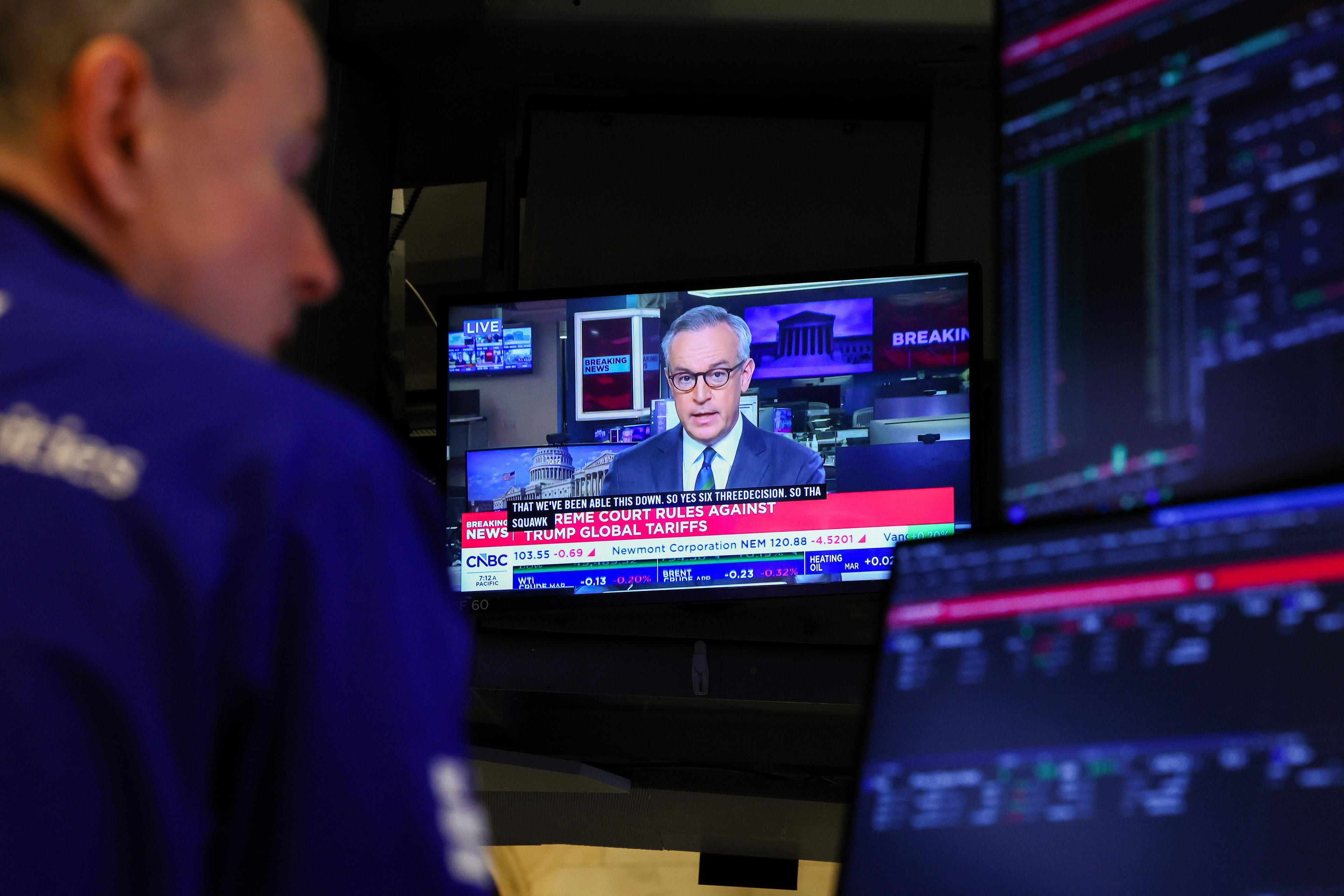

The Dow Jones Industrial Average, the S&P 500 Index, and the Nasdaq Composite all rose slightly following the U.S. Supreme Court’s 6–3 ruling that struck down a large portion of President Donald Trump’s tariffs.
As of noon trading on Friday, the Dow Jones was up around 140 points, or 0.28 percent, while the Nasdaq increased by 1.12 percent, or 253 points, in that same time period. The S&P 500 increased 0.66 percent, or 45 points.
On Friday morning, a decision released by the Supreme Court’s majority found that the U.S. Constitution “very clearly” gives Congress the power to impose taxes, which include tariffs.
“The Framers did not vest any part of the taxing power in the Executive Branch,” Chief Justice John Roberts wrote in the opinion, adding that the president ”enjoys no inherent authority to impose tariffs during peacetime.”
Roberts added that the government “does not defend the challenged tariffs as an exercise of the President’s warmaking powers. The United States, after all, is not at war with every nation in the world.”
In dissent, Associate Justice Brett Kavanaugh disagreed with the majority, saying the “tariffs at issue here may or may not be wise policy ... but as a matter of text, history, and precedent, they are clearly lawful.”
As of December, federal data show that the Treasury Department had collected more than $133 billion from the tariffs through U.S. Customs and Border Protection. The tariffs, meanwhile, were estimated to have an economic impact of some $3 trillion over the next decade, according to the Congressional Budget Office.
On behalf of the Trump administration, the Department of Justice argued before the Supreme Court that a 1977 law allowing the president to regulate imports during emergencies also includes setting tariffs. But the challengers argued that the law doesn’t even mention tariffs and that Trump’s use of it fails several legal tests, including one that doomed then-President Joe Biden’s $500 billion student loan-forgiveness program.
As the Supreme Court was considering the case, Trump, Treasury Secretary Scott Bessent, and other administration officials signaled they could pivot to imposing their tariffs using other authorities. And in January, Bessent said that the Treasury Department has enough funds to potentially cover any refunds to companies.
Trump has said that the tariffs, in part, were used as leverage to reach peace deals, diffusing multiple armed conflicts around the world. The tariffs, he said in early January, are similarly used for national security-related purposes, and a ruling against the policies would be a “terrible blow” against the United States.
In November, Trump also floated the idea of sending out $2,000 payments to American families derived from the tariffs, although few details about the plan have been released to the public since then.
Democrats have been critical of Trump’s tariffs, saying they are harming Americans’ pocketbooks. After the ruling on Friday, a number of prominent Democrats hailed the ruling.
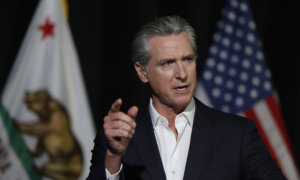
“Your tariffs were nothing more than an illegal cash grab that drove up prices, hurt working families, and wrecked longstanding global alliances,” California Gov. Gavin Newsom, a Democrat, said in a post on X, directed at Trump. “Every dollar your administration unlawfully took needs to be immediately refunded—with interest.”
The Epoch Times has contacted the administration for comment.
The Associated Press contributed to this report.
Thomas, in his dissenting opinion, noted that the law’s text authorizes the president to regulate importation.
“Throughout American history, the authority to ‘regulate importation’ has been understood to include the authority to impose duties on imports,” Thomas wrote.
He also pointed out that the Constitution forbids Congress from delegating “core legislative powers” to the president—but not other powers such as imposing tariffs.
“Early Congresses often delegated to the President power to regulate foreign commerce, including through duties on imports,” Thomas wrote.

Specifically, this will impact the universal 10 percent tariff on nearly all U.S. trading partners and the higher country-by-country "reciprocal" import duties. The additional fentanyl-related tariffs on Canada, Mexico, and China will also be affected.
The high court's ruling will not overturn various sectoral tariffs, including those on aluminum, copper, and steel, issued by other tariff authorities.
“We’re going to wait and see its reach,” she said.
The United States last year imposed a 25 percent tariff on Mexican imports that are not covered by the U.S.–Mexico–Canada free-trade agreement.
“Time to pay the piper, Donald," the governor said on Feb. 20.
"These tariffs were nothing more than an illegal cash grab that drove up prices and hurt working families, so you could wreck longstanding alliances and extort them. Every dollar unlawfully taken must be refunded immediately—with interest. Cough up!”
The Supreme Court acknowledged in its ruling that the tariff refund process "is likely to be a 'mess.'"
The Supreme Court also acknowledged that “the refund process is likely to be a ‘mess.’”
Analysis
WASHINGTON—The Supreme Court released its long-anticipated decision on Feb. 20 over whether President Donald Trump’s tariffs exceeded the boundaries of congressional authority.
The Supreme Court’s ruling invalidates tariffs imposed using the 1977 International Emergency Economic Powers Act.
Specifically, this affects “Liberation Day” reciprocal tariffs on imports from most U.S. trading partners, with rates ranging from 10 to 50 percent.
It also impacts border security and fentanyl-related tariffs on China (10 percent), Mexico (25 percent), and Canada (35 percent). Tariffs on India for buying Russian oil and tariffs on Brazil will also be affected.
The high court’s ruling will not overturn various sectoral tariffs, including those on aluminum, copper, and steel, issued by other tariff authorities.
The pivotal decision is expected to shake up the United States’ foreign and economic policies. However, Trump said he will reimpose a significant portion of his tariffs using other legal authorities available to the executive branch.
Treasury Secretary Scott Bessent had said earlier that the administration could work around a negative ruling, but he said the potential fix wouldn’t be as efficient.
Although recent presidents have applied pressure through trade, Trump ushered in a paradigm shift in the country’s economic policy when he announced a sweeping set of tariffs beginning in April last year.
Here are the potential impacts of today’s decision.
1. Presidential Power
The decision may affect Trump’s future decisions to use emergency powers for many economic measures.
This decision is expected to set precedents for executive emergency powers in other policy areas.
Trump has previously called the decision potentially “life or death” for the United States.
However, during a press conference on Feb. 20, Trump announced that he would sign an order imposing a 10 percent global tariff under Section 122, in addition to the existing tariffs already in place.
He also said national security tariffs—Section 232 and Section 301 tariffs—will remain in place, and will be in full force and effect.
“We’re also initiating several Section 301 and other investigations to protect our country from unfair trading practices of other countries and companies,” Trump said.
The president stated that, with the new levies, tariff levels for each country would remain largely unchanged despite the Supreme Court’s decision.
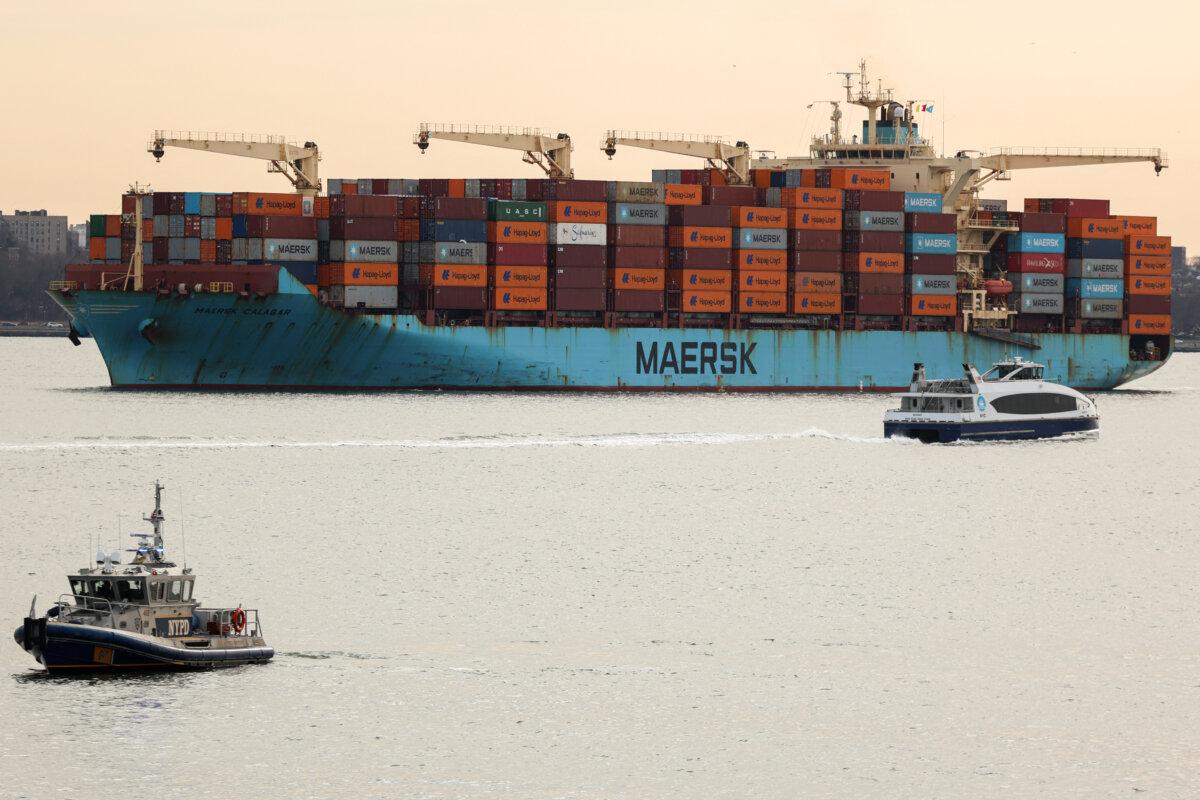
A Maersk cargo ship loaded with shipping containers navigates through New York Bay, on Jan. 23, 2026. (Charly Triballeau/AFP via Getty Images)
2. Government Revenue
The country has seen record tariff revenues and trade renegotiations that have affected billions of dollars in commerce.
Tariffs generated record revenue of more than $215 billion in fiscal year 2025.
As of Feb. 17, the federal government had collected more than $130 billion in tariff revenue so far this fiscal year, according to the Treasury Department.
Data from the Bureau of Economic Analysis has shown the monthly trade deficit narrowing since the president’s tariffs.
But the annual deficit totaled $901 billion—a tepid decline from the previous year—making it the third-largest on record.
The decision may force the federal government to refund importers, straining the federal budget and complicating deficit-reduction efforts.
A new Penn Wharton Budget Model estimated that more than $175 billion in U.S. tariff revenue could be returned to importers in the aftermath of the Supreme Court’s decision.
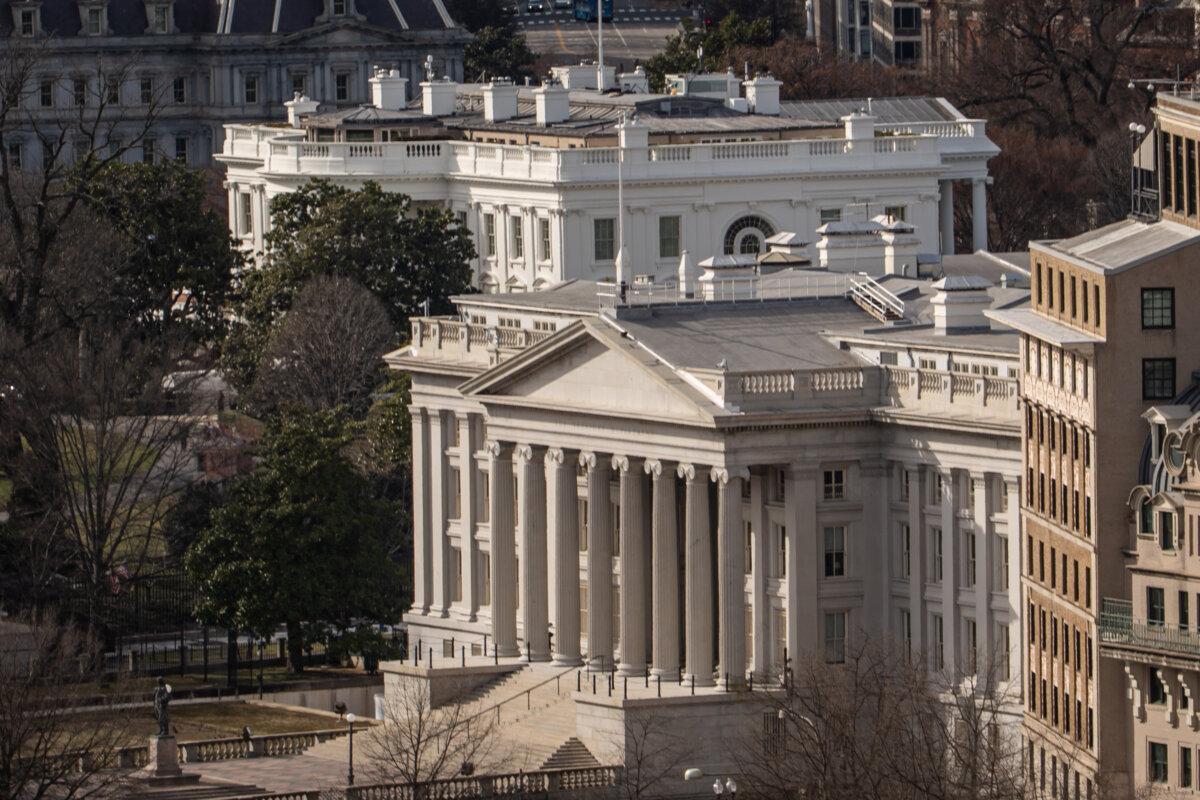
The White House and the U.S. Department of the Treasury in Washington on March 10, 2025. (Madalina Vasiliu/The Epoch Times)
In a dissenting opinion, Justice Brett Kavanaugh said providing refunds to those affected by the tariffs would probably be a “mess.”
The federal government may be forced to refund billions of dollars to importers who paid tariffs under the International Emergency Economic Powers Act, “even though some importers may have already passed on costs to consumers or others,” Kavanaugh said.
Trump raised a similar concern and said that the issue may have to be resolved in the courts.
“Well, what happens to all the money that we took in?” Trump asked during the press conference, criticizing the court decision for not providing guidance on that.
“I guess it has to get litigated for the next two years,” he said.
3. Impact on Markets
Financial markets have been preparing for volatility.
The recent ruling against the tariffs has been good news for investors, offering some relief from higher company costs.
Still, the stock market rally may not last, as uncertainty could return.
New tariffs proposed by Trump will be implemented, which may increase uncertainty for investors.
“Foreign countries that have been ripping us off for years are ecstatic,” Trump said during the press conference. “They’re so happy and dancing in the streets—but they won’t be dancing for long.”
“I’m going to go in a different direction, probably the direction that I should have gone the first time,” he said, referring to the authorities he will use to impose new tariffs.
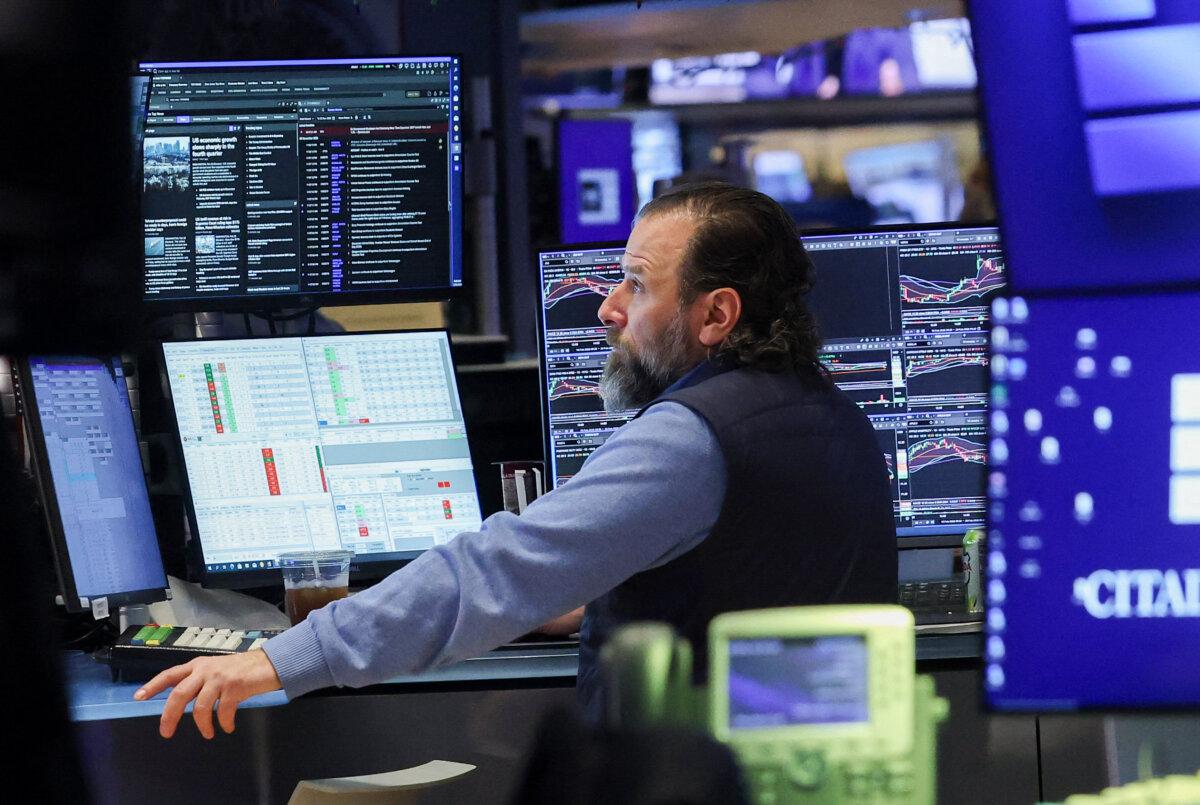
A trader works on the floor of the New York Stock Exchange at the opening bell in New York, on Feb. 20, 2026. (Timothy A. Alary /AFP via Getty Images)
Before the announcement, predictive markets such as Kalshi and Polymarket had shown that the odds of the high court ruling in favor of the Trump administration were about 25 percent.
The stock market’s reaction was tepid as investors had largely priced in the Supreme Court’s decision.
On Feb. 20, the blue-chip Dow Jones Industrial Average added 230 points, or 0.47 percent. The tech-heavy Nasdaq Composite Index surged 0.9 percent, and the broader S&P 500 ticked up nearly 0.7 percent.
Despite fiscal concerns surrounding lower-than-expected tariff-related revenues from the ruling, U.S. Treasury yields were little changed at the end of the Feb. 20 session. The benchmark 10-year rose 1.1 basis points to 4.086 percent.
4. Importers and Businesses
More than 1,000 companies, including Costco, have sued the government over tariffs.
U.S. importers have applied for electronic refunds, pending a Supreme Court decision on the legality of Trump’s IEEPA tariffs.
The deadline for importers to register for electronic refunds through the Automated Clearing House network with Customs was Feb. 6.
It remains unclear how these companies will receive their refunds, which is a significant problem for the administration at this time.

Costco wholesale store in Elkridge, Md., on Oct. 24, 2025. (Madalina Kilroy/The Epoch Times)
5. ‘America First’ Trade Policy
It’s unclear how trade agreements will change after the Supreme Court decision.
However, Trump stated he would immediately impose a 10 percent tariff on all trading partners.
Following that, he said that over the next five months, his administration will conduct “various investigations” needed to implement fair tariffs on each country.
“And in the end, I think we’re [going to be] taking more money than we’ve taken in before,” Trump said.
During a Fox News interview on Feb. 20, Bessent expressed confidence that all trading partners will honor their trade deals.
He noted that, otherwise, the president has the authority, reaffirmed by the Supreme Court, to impose a full embargo or block specific countries or product lines from trade.
“I would call on all countries to honor their agreements and move forward,” Bessent said.
In his second term, Trump has been using tariffs as leverage to reduce tariffs and nontariff barriers on U.S. goods.
Shortly after his inauguration, the 47th president described “tariff” as the most beautiful word in the dictionary.
He drew inspiration from William McKinley, the 25th president, who championed steep tariffs to protect American industries in the late 19th century.
On April 2, Trump imposed levies of at least 10 percent on more than 80 countries.
This was a significant shift from the trade policy of his first term, when tariffs targeted a few specific countries, such as China.
Trump has frequently praised tariffs for attracting $18 trillion in new investment commitments this year.
He also floated the idea of sending American taxpayers $2,000 tariff rebate checks directly, using funds from the tariff revenue.
After April 2, 2025, which he dubbed “Liberation Day,” Trump launched trade talks with key trading partners to revise long-standing agreements.
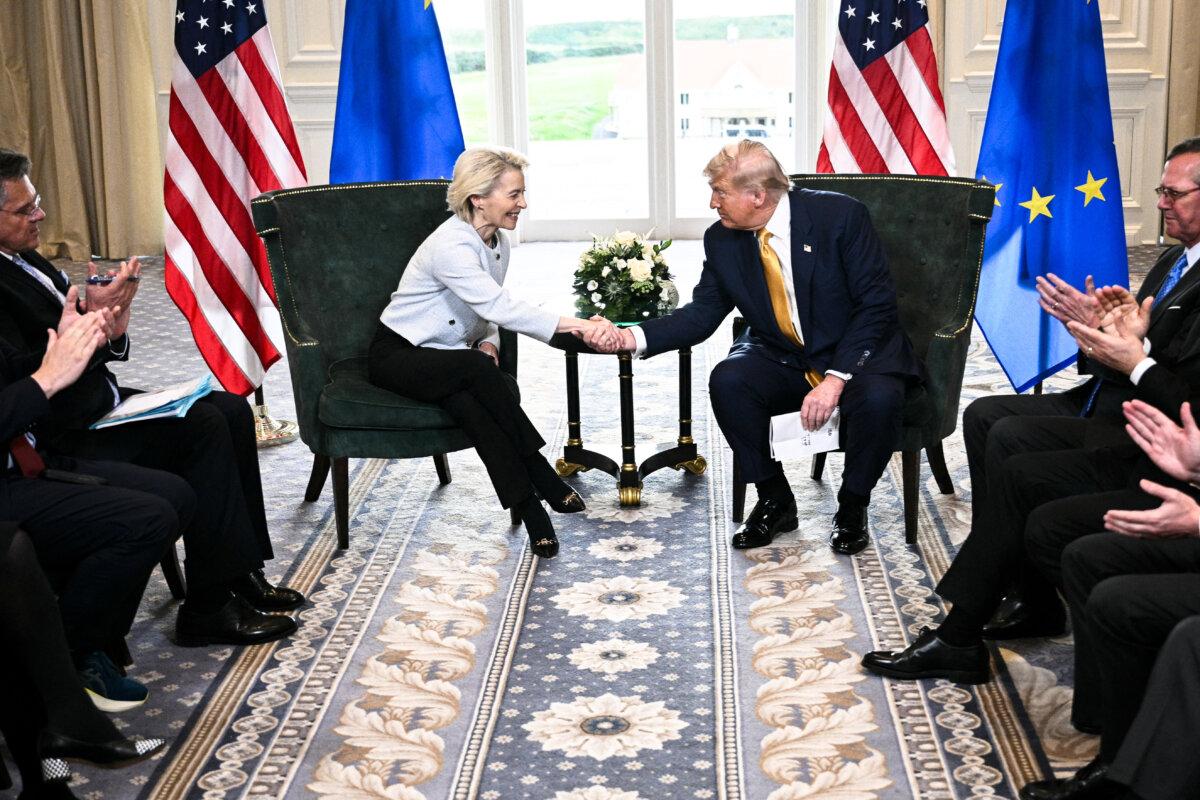
President Donald Trump shakes hands with European Commission President Ursula von der Leyen after agreeing on a trade deal between the two economies following their meeting, in Turnberry, Scotland on July 27, 2025. (Brendan Smialowski /AFP via Getty Images)
He has announced new trade deals with dozens of trading partners, including Argentina, the European Union, Japan, South Korea, Switzerland, Thailand, the UK, and Vietnam.
Since taking office, Trump has also increased pressure on China by significantly raising tariff rates on Chinese goods.
Although some were reduced in a November truce, current tariffs remain high, at 47.5 percent.
This was expected to lead to long-term economic decoupling between the United States and China.
Trump’s trade agenda faced legal challenges from businesses and from states in 2025.
Although some economists warned that tariffs would increase inflation, the Bureau of Labor Statistics recently reported that inflation cooled to 2.4 percent in January, below expectations.
The law does allow an expansion of presidential power during an emergency, such as the imposition of sanctions. But Trump’s tariffs “would represent a transformative expansion of the President’s authority over tariff policy,” the court’s 6–3 ruling says.
“It is also telling that in IEEPA’s half century of existence, no President has invoked the statute to impose any tariffs, let alone tariffs of this magnitude and scope,” Chief Justice John Roberts wrote in his opinion for the majority.
Roberts also invoked a principle called the “major questions doctrine,” which says that on issues of great importance, Congress reserves the power to set regulations unless it explicitly delegates that power to a federal agency—or in this case, the president.
The government had argued that the doctrine should not apply to emergency situations, but Roberts said that reading the law that way allows the president to declare emergencies as a “pretext” to grab power that rightly belongs to Congress.
National Economic Council Director Kevin Hassett told CNBC's "Squawk on the Street" in January that there are "other legal authorities" to reach the "same place" as the administration’s use of the International Emergency Economic Powers Act.
Treasury Secretary Scott Bessent has referenced a "plan B" to "recreate the exact tariff structure."
Appearing at The New York Times DealBook Summit last December, Bessent pointed to several sections of the 1962 Trade Act that would provide Trump with similar tariff powers.
Bessent is scheduled to speak at the Economic Club of Dallas at 2 p.m.
“A win for the American people. Trump’s tariffs are an illegal tax on working families—hiking costs on everything from groceries to utility bills. Democrats will keep fighting to make your life more affordable,” House Minority Whip Katherine Clark (D-Mass.) posted on X.
“Today is the real ‘Liberation Day’!” Rep. Bill Foster (D-Ill.) posted on X. Liberation Day is the name given to April 2, 2025, the day Trump announced global tariffs.
Sen. Rand Paul (R-Ky.) said the ruling was a “defense of our Republic” that “will also prevent a future President such as AOC from using emergency powers to enact socialism.”
Not all members of Congress celebrated the decision.
Sen. Bernie Moreno (R-Ohio) called the ruling “outrageous.”
“SCOTUS’s outrageous ruling handcuffs our fight against unfair trade that has devastated American workers for decades. These tariffs protected jobs, revived manufacturing, and forced cheaters like China to pay up,” he posted on X.
The court ruled that Trump could not unilaterally impose tariffs under the International Emergency Economic Powers Act.
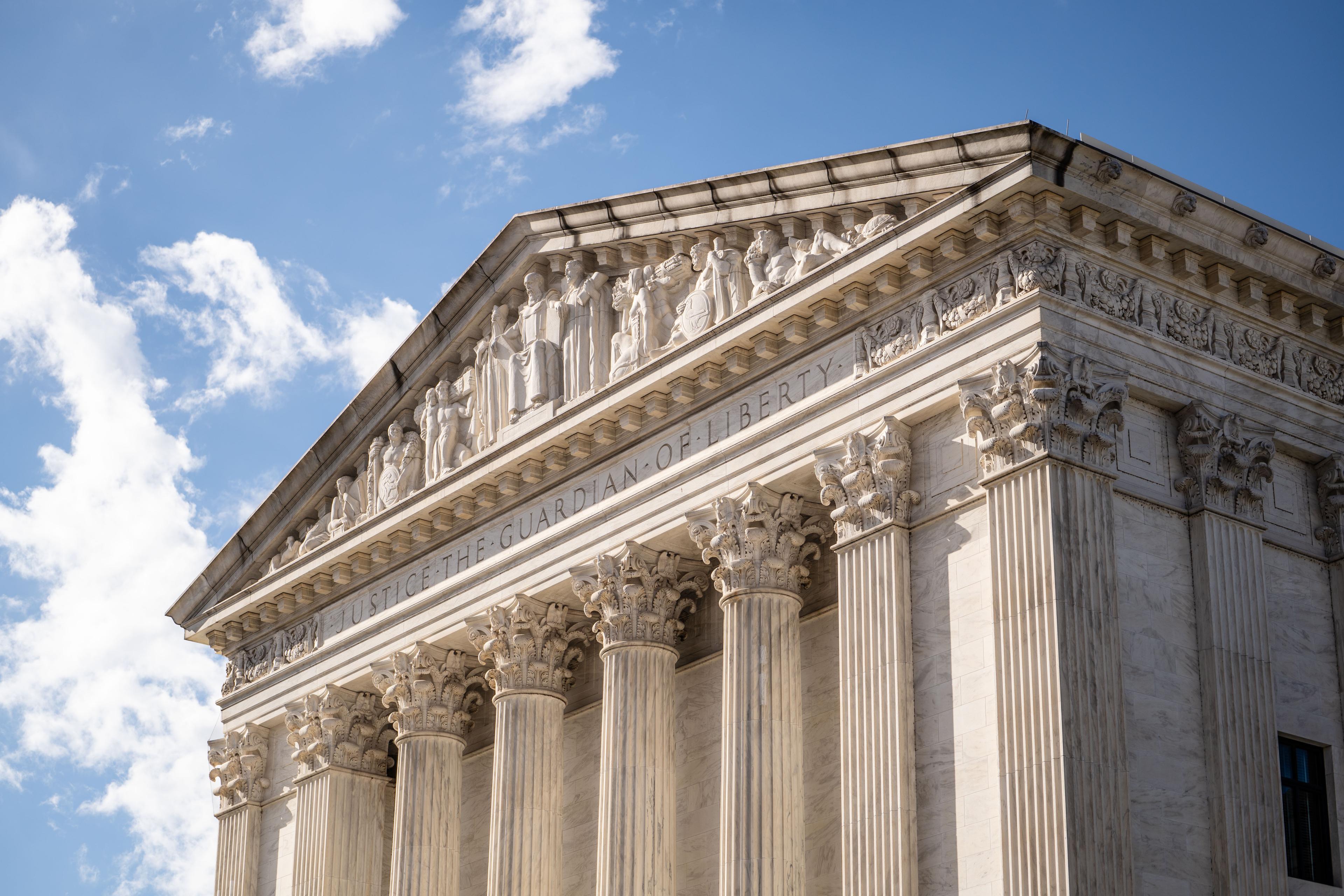

The Supreme Court on Feb. 20 ruled 6–3 that some of President Donald Trump’s global tariffs exceeded an emergency powers law passed by Congress.
Chief Justice John Roberts wrote the majority opinion, stating that Trump’s tariffs didn’t fit with the language of the International Emergency Economic Powers Act. Trump had invoked that law to impose a series of tariffs, including reciprocal rates on dozens of countries and drug trafficking levies on Mexico, Canada, and China.
The administration argued that the law’s wording allowed tariffs by permitting the president to “regulate ... importation.”
“The President asserts the independent power to impose tariffs on imports from any country, of any product, at any rate, for any amount of time,” Roberts said. “Those words cannot bear such weight.”
Justices Clarence Thomas, Brett Kavanaugh, and Samuel Alito dissented.
During a White House press conference, Trump responded with disappointment and said some of the justices were a “disgrace” to the country. He also praised Kavanaugh’s dissent, in which he said that “tariffs are a traditional and common tool to regulate importation.”
Joined by Thomas and Alito, Kavanaugh offered an opinion that outlined different legal authorities Trump could use to implement his tariffs. Trump similarly said during his press conference that he would pursue the tariffs under other laws. That day, he said, he was planning to sign an order implementing a 10 percent global tariff rate under Section 122 of the Trade Act of 1974.
Justice Elena Kagan wrote a separate opinion that was joined by Justices Sonia Sotomayor and Ketanji Brown Jackson.
The justices differed in how they applied something known as the “major questions doctrine,” which says Congress must be very clear if it wishes to delegate questions of major economic or political importance to the president. This is the doctrine that the Supreme Court used to strike down former President Joe Biden’s sweeping student loan forgiveness.
Justices Amy Coney Barrett and Neil Gorsuch joined Roberts in stating that Congress would have needed to be clearer in its language if it intended for presidents to issue these types of tariffs. Kavanaugh, meanwhile, suggested that doctrine shouldn’t apply to foreign affairs.
“In the foreign affairs realm, courts recognize that Congress often deliberately grants flexibility and discretion to the President to pursue America’s interests,” he said.
Kavanaugh also said refunding those impacted by tariffs would likely be a “mess.”
“The interim effects of the Court’s decision could be substantial,” he said. “The United States may be required to refund billions of dollars to importers who paid the IEEPA tariffs, even though some importers may have already passed on costs to consumers or others.”
With trillions of dollars at stake, the decision could have major implications for the nation’s economy. Trump’s tariffs have targeted a broad range of activities, but the ones in this case focused on combating drug trafficking and correcting trade imbalances with other countries.
It’s unclear how existing trade deals will be impacted, but Trump indicated that at least some would change.
“Many of them stand,” he said of the deals. “Some of them won’t, and they'll be replaced with the other tariffs.”
Trump also suggested the Supreme Court should have provided more guidance on how companies would be reimbursed for the tariffs.
“We’ll end up being in court for the next five years,” he said, indicating the refunds would be determined by future court decisions.
In the weeks leading up to the decision, Trump repeatedly portrayed his tariffs as important for the nation’s economic and financial health.
“Pray that the United States Supreme Court allows our country to continue its unprecedented march toward unparalleled greatness!” he wrote in all caps in a Jan. 6 post on Truth Social.
Treasury Secretary Scott Bessent has said that the government could invoke other authorities to implement tariffs, although they are “not as efficient, not as powerful.”
U.S. Trade Representative Jamieson Greer similarly indicated in December that the administration had a backup plan.
Tariffs have helped the United States collect nearly $99 billion so far this fiscal year, which started on Oct. 1, 2025, according to the Daily Treasury Statement published on Jan. 7.
During oral argument on Nov. 5, 2025, the justices seemed skeptical of Trump’s bid to use the International Emergency Economic Powers Act to implement those tariffs.
The law allows presidents to regulate imports during times of emergency, but it was questionable whether that regulation included tariffs, and, in particular, Trump’s large-scale tariffs.
Multiple federal courts had ruled that Trump’s tariffs exceeded what was allowed under the law.
Days after oral argument, Trump indicated in a Nov. 11 post on Truth Social that a negative decision by the Supreme Court could implicate trillions of dollars.
“The ‘unwind’ in the event of a negative decision on Tariffs, would be, including investments made, to be made, and return of funds, in excess of 3 Trillion Dollars,” he said.
He added that the situation “would truly become an insurmountable National Security Event, and devastating to the future of our Country - Possibly non-sustainable!”
Andrew Moran contributed to this report.