

WASHINGTON—As the Iran war continues, U.S. President Donald Trump said he would delay his long-awaited trip to Beijing, originally set for the end of this month.
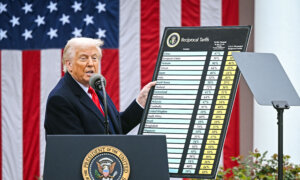
“I have to be here, I feel. And so we’ve requested that we delay it a month or so,” Trump told reporters on March 16.
Trump’s visit to China for a summit with Chinese leader Xi Jinping was initially scheduled for March 31 to April 2.
Trump indicated earlier that he might postpone his trip to China. He has also urged China to support U.S. efforts to reopen the Strait of Hormuz, a key oil transit corridor currently closed by Iran, but Beijing has so far remained unresponsive.
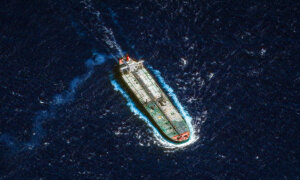
After the U.S.–Israeli strikes, Tehran closed the strait to most maritime traffic, raising concerns about a global oil price shock. On March 16, Brent oil settled at about $100 a barrel, nearly 40 percent higher than on Feb. 27, before the war.
On March 16, U.S. Treasury Secretary Scott Bessent said that any delay in the trip would be “because of logistics” rather than the president’s request for assistance to reopen the strait.
“It would be a decision the president made as commander in chief to stay in the White House or to stay in the United States while this war is being prosecuted,” he told CNBC.
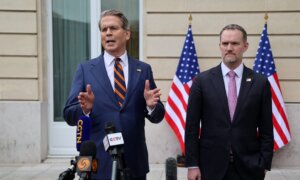
The comments came after Bessent and U.S. Trade Representative Jamieson Greer held a new round of trade talks with their Chinese counterparts in Paris.
White House press secretary Karoline Leavitt echoed Bessent’s remarks.
“The dates may be moved,” Leavitt told reporters on March 16. “As commander-in-chief, it’s his No. 1 priority right now to ensure the continued success of this Operation Epic Fury.”
Gordon Chang, political commentator and China expert, said the president has a valid reason to postpone the trip.
“China is an enemy combatant, and it would not be appropriate for President Trump to go to its capital at the time of war. So I’m not surprised,” he told The Epoch Times.
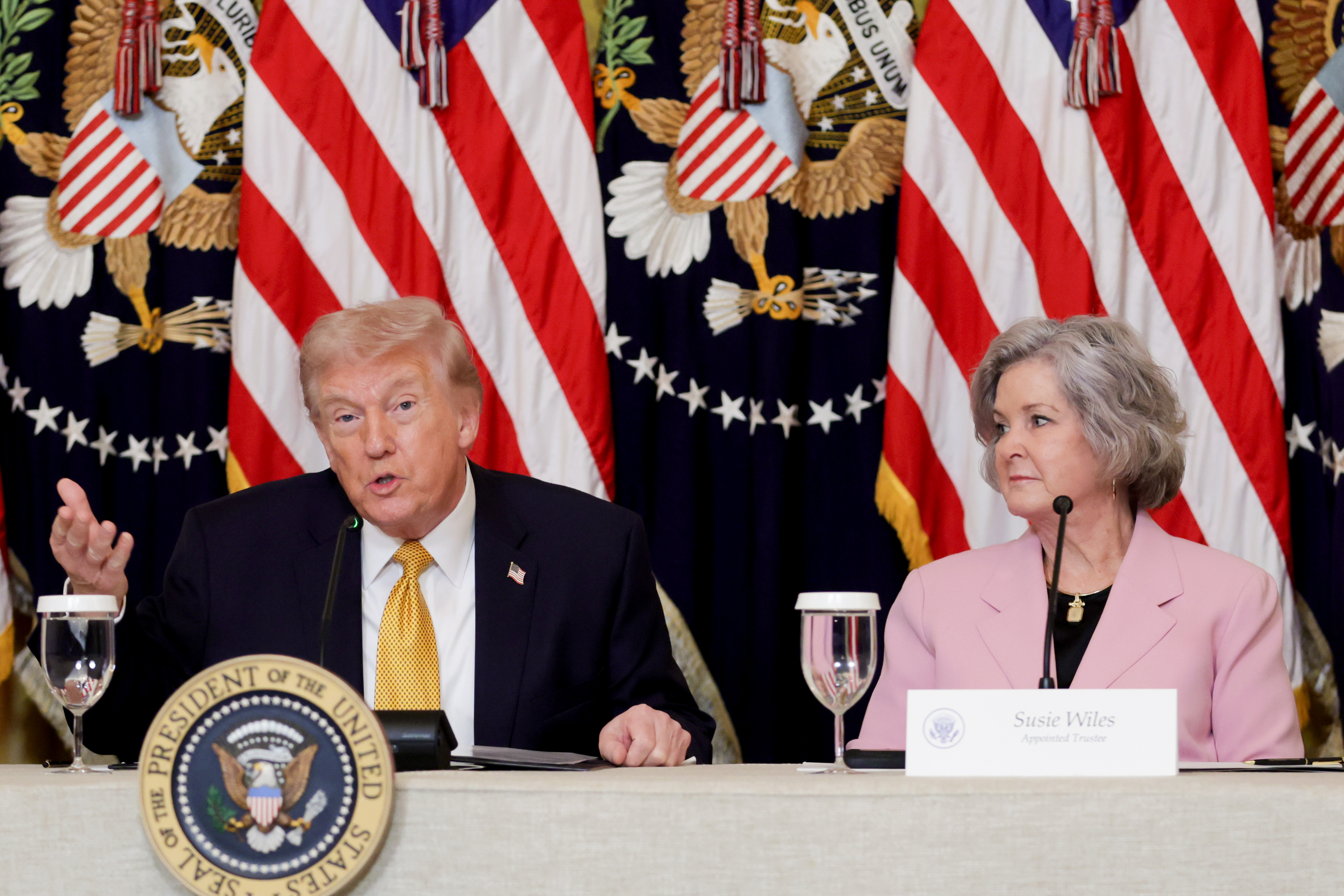
During a lunch with the Trump Kennedy Center board members at the White House, Trump said China gets 90 percent of its oil from the region. He reiterated his calls for support to reopen the strait.
“Numerous countries have told me they’re on the way. Some are very enthusiastic about it,” Trump told reporters, referring to the countries that agreed to send warships to help escort commercial ships through the strait.
“I think we’re going to have some good help. And I think we’re going to be disappointed in some nations, too. I'll let you know who those nations are.”
In a Truth Social post on March 15, Trump named China, France, Japan, South Korea, and the UK as nations he hoped would deploy ships to assist U.S. forces in the region.
But China is unlikely to help Trump, according to Chang.
“Until Trump imposes real costs on China, they’re not going to help the United States on Iran,” he said.
China Silent About Trump’s Request
Chinese Foreign Ministry spokesperson Lin Jian did not directly address Trump’s call for assistance.
Lin acknowledged the situation in the Strait of Hormuz and called on “all parties to immediately cease military operations,” but did not mention sending warships to the strait.
When pressed if China had received any request from Trump to send ships to the waters around the strait, the spokesman again sidestepped the question, reiterating that Beijing is maintaining communication with “all parties” on the situation in Iran.
Yeh Yao-Yuan, professor of political science and international studies at the University of St. Thomas in Houston, told The Epoch Times that “China is unsure how much Iran will change once the war is over.”
As a result, China is still hoping that Iran will remain pro-China rather than shift toward the United States.
Asked about Trump’s comments on the potential delay of the meeting with Xi, Lin said that Beijing has been “maintaining communication” with Washington regarding the U.S. president’s visit.
“If they think Trump is winning the war, they probably don’t want him parading around their capital,” Chang said. “So I think there’s hesitation there.”
Speculation swirled this month that the summit could be disrupted by the joint U.S. and Israeli military strikes on Iran, which killed the regime’s leader, Ali Khamenei.
This marked the second time in less than two months that a regime friendly to Beijing was targeted, following the U.S. capture of Venezuelan leader Nicolás Maduro in January.
At an annual press conference on March 1, China’s top diplomat Wang Yi signaled that the Iran war would not affect the upcoming summit, while highlighting the importance of maintaining high-level engagement between Beijing and Washington.
Although Wang described the war in Iran as something that “should not have happened,” he avoided mentioning Washington by name, a cautious tone that analysts have interpreted as Beijing’s effort to prevent further strain in U.S.–China relations.
According to Chinese insiders who previously spoke to The Epoch Times, the Chinese regime had underestimated the likelihood of a U.S. military offensive in Iran.
“China is already being chased out of the Middle East by Trump, so it doesn’t look good for them,” Chang said. “Iran was their No. 1 proxy, and Trump is taking that proxy down.”
Correction: A previous version of this article misstated President Donald Trump’s earlier remark on his potential reason for postponing the China trip. The Epoch Times regrets the error.