

Prisha Mosley thought that she would get her day in court when the North Carolina Legislature extended the state’s statute of limitations surrounding medical malpractice lawsuits filed by “detransitioners.”
But even with a change in the law, she is struggling to get her case before a jury.
As a teen, Mosley’s doctors prescribed testosterone and recommended a double mastectomy to change her body to match her gender identity at the time. But as she matured, she came to realize that these medical procedures destroyed her body and left lasting physical and emotional damage.
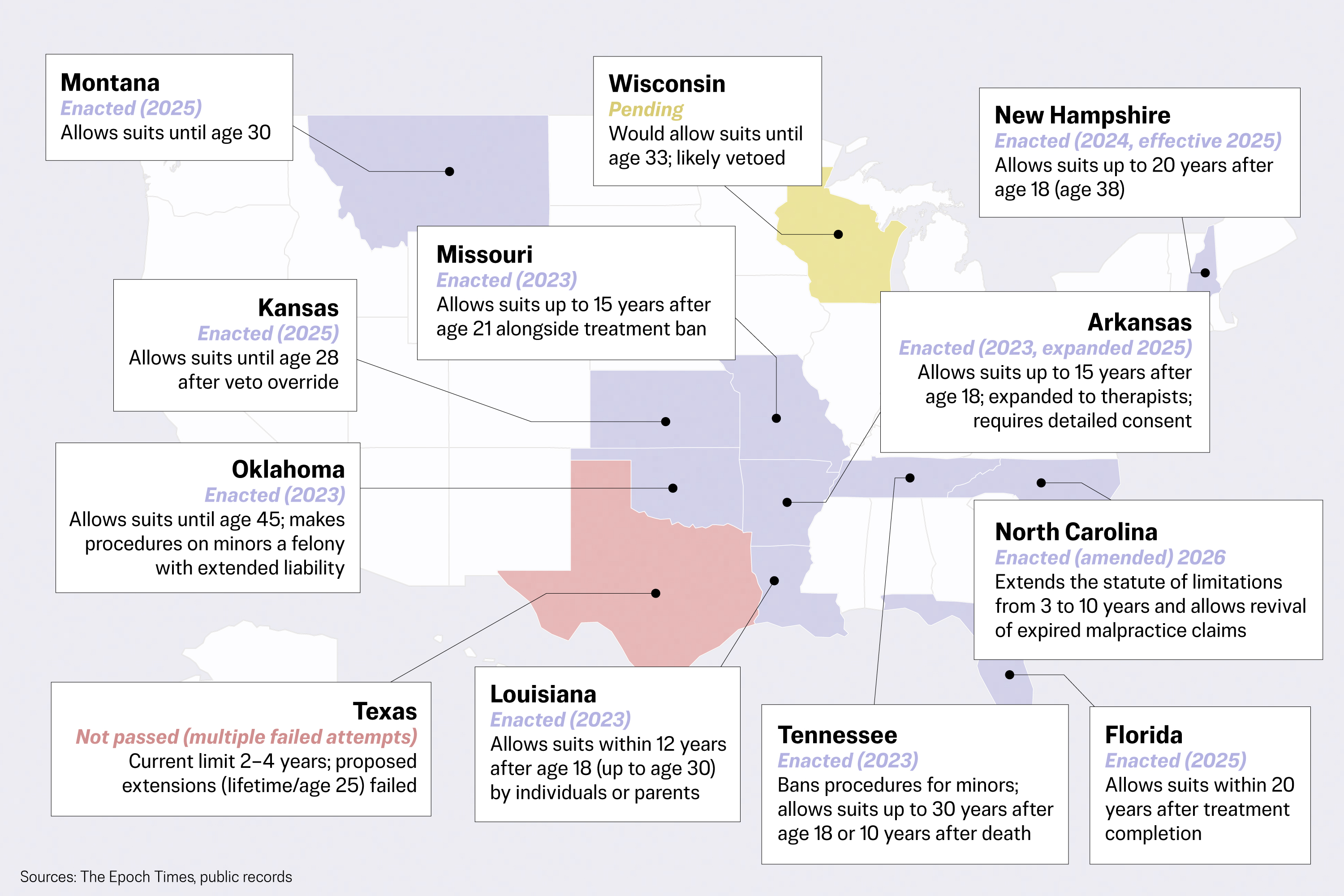
Mosley is just one of many “detransitioners” who have sued after life-altering medical procedures. Their plight has prompted debate about how long states such as North Carolina should allow medical lawsuits to be filed for those harmed by “gender-affirming” procedures. States including Tennessee and Arkansas have passed these laws, while others such as Texas, which is considering a lawsuit over the issue, have failed.
Mosley told The Epoch Times that she had painful pregnancy complications that stemmed from her surgery a decade earlier.
“I also think that speaks to the statute of limitations issue, because, despite the fact that I had this surgery like 10 years ago ... I had this complication less than two years ago when I gave birth to my son, and it was, it’s by far the worst thing that’s ever happened to me in my life,” Mosely said.
She recounted how her body was able to produce some milk despite a double mastectomy, but she still couldn’t breastfeed because of the nature of the surgery. She developed swollen lymph nodes and was at risk for mastitis, or breast inflammation.
Mosley sued her doctors for fraud and medical malpractice in 2023. A judge ruled in 2024 that the statute of limitations barred the malpractice claim but that the fraud claim could proceed.
As the fraud question was being litigated, North Carolina extended the statute of limitations from three to 10 years, and included a provision reviving claims that had previously timed out.
So Mosley was shocked in August 2025 when Superior Judge Robert Ervin, of North Carolina’s District 25A Superior Court, dismissed the fraud claim with prejudice—overturning his own previous ruling—and also refused to allow the malpractice claim to be revived.
Ervin did not give a specific reason for his ruling; he wrote that previous court decisions allowed trial judges “discretion” to amend their previous decisions, or apply new laws in cases that were already underway. Mosely is appealing her case in state court.
Like Mosely, Soren Aldaco sued after receiving hormones and a surgery.
Aldaco told The Epoch Times that medical malpractice laws in Texas and beyond don’t take into account the psychological and social development of adolescents and young adults.
“It’s very frustrating,” she said. “If you’re a 13-year-old on puberty blockers, you might not realize you’re infertile until you’re 26 and just got married and you’re trying to have kids.”
Her case is pending before the Texas Supreme Court.
State Limits
In Texas and other states, medical malpractice suits must typically be filed within two years of when the negligent treatment occurred, although a few states allow up to four years.
In a show of support for Aldaco, Texas lawmakers vowed to support future legislation next year to extend the statute of limitations for detransitioners.

Detransitioner Soren Aldaco speaks during the Genspect—Life Beyond Transition event in Washington on March 12, 2026. Aldaco sued her doctors for medical malpractice after receiving hormones and a surgery. (Madalina Kilroy/The Epoch Times)
Red states, especially, have championed laws barring hormones and surgeries for minors experiencing gender dysphoria. But they have lagged behind in providing timeline carve-outs for medical malpractice suits for children or young adults who have transitioned.
Dozens of plaintiffs have filed lawsuits against therapists and surgeons who approved these procedures in recent years, alleging fraud, negligence, and medical malpractice. Some have even managed to obtain settlements.
The first medical malpractice verdict in favor of a detransitioner came on Jan. 30 in the Fox Varian case. A jury found a psychologist and surgeon liable for malpractice after they supported and performed breast removal surgery on the girl, who was 16 at the time and identified as transgender.
Trial litigation analyst Kevin Keller noted that the statute of limitations—not faulty claims—has killed many detransitioner suits. When addressing the issue publicly, he said that no case has been dismissed for lack of merit.

Kevin Keller (L) speaks during the Genspect—Life Beyond Transition event in Washington on March 12, 2026. (Madalina Kilroy/The Epoch Times)
But critics say such legislation punishes doctors who are trying to navigate different standards between state and federal laws.
“Physicians are finding themselves in legal limbo, straddling state laws that ban gender-affirming care and federal law, which prohibits discrimination in health care on the basis of gender identity,” said author Christy Mallory, legal director at the Williams Institute at the UCLA School of Law.
“Even if blocked by courts, these bans may have a chilling effect on physicians and impact access to gender-affirming care in many states across the U.S.”
Extended Deadlines
Tennessee’s Senate Bill 1, which became law in 2023, banned medical procedures on minors with gender dysphoria, but it also established a longer statute of limitations for civil action extending 30 years from the date that the minor reaches age 18, or 10 years after the minor’s death if he or she dies before then.
The law’s provisions banning gender transitioning for children were upheld by the U.S. Supreme Court in United States v. Skrmetti in 2025. The ruling confirmed its constitutionality, allowing enforcement measures, such as civil liability provisions, to remain in effect. The Tennessee law is among the most thorough in creating a civil remedy with a prolonged limitations period.

U.S. Capitol Police officers stand by as people protest over a case involving restrictions on gender-related medical procedures for minors outside the Supreme Court in Washington on Dec. 4, 2024. In June, the high court upheld a Tennessee law banning puberty blockers and hormone treatments for minors. (Madalina Vasiliu/The Epoch Times)
In 2023, Arkansas passed Senate Bill 199, extending the time limit that minors could sue doctors over gender transition to 15 years after they turn 18. That legislation was expanded in 2025 to allow lawsuits against mental health professionals.
That legislation provides surgeons and therapists with a defense, but only if they can first obtain parents’ or guardians’ signatures on a comprehensive consent form. The form—which must be in 14-point type size—has to warn that gender interventions may worsen gender dysphoria.
The consent would make it difficult for those seeking to change their gender identity to move forward with medical procedures. That’s because two health care professionals—one of whom is required to be a therapist—must attest that the minor had gender dysphoria for at least two years without any other mental health concerns.
For example, conditions including eating disorders, intellectual disabilities, psychotic disorders, attention deficit hyperactivity disorder, and autism would fall under mental health concerns.
Additionally, the form must warn of medical complications and provide information about decisions in European countries that now recommend therapy instead of medical procedures for minors.
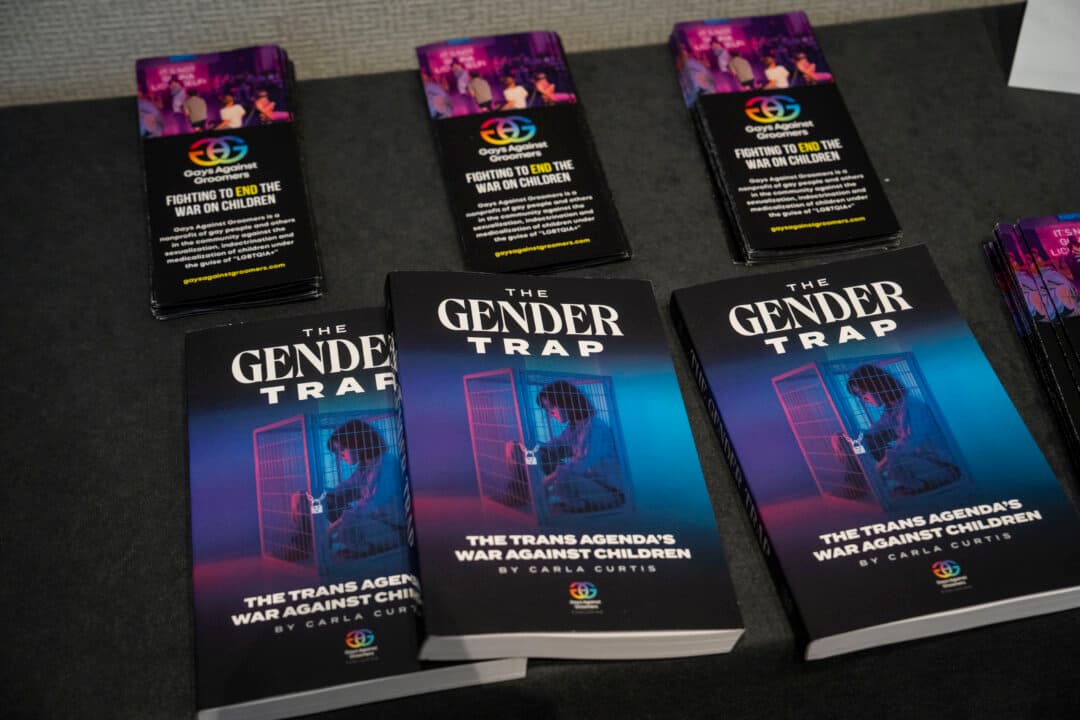
The Genspect—Life Beyond Transition event in Washington on March 12, 2026. (Madalina Kilroy/The Epoch Times)
In 2023, Oklahoma made it a felony for doctors to medically transition children, and it extended the right to file a lawsuit until they reach the age of 45. The legislation allows the attorney general to pursue criminal prosecution of medical providers until the victim reaches age 45.
Missouri extended its time frame to file a lawsuit as part of broader legislation banning medical gender interventions for minors in 2023. In that state, the plaintiff can sue for 15 years following his or her 21st birthday.
In Louisiana, lawmakers overrode Gov. John Bel Edwards’s veto to pass Act 466 in 2023, also known as the Stop Harming Our Kids Act. It allows individuals and their parents to pursue damages for 12 years after the victim turns age 18, up to age 30.
In 2024, New Hampshire passed House Bill 619, making it possible for a minor who received medical treatments for gender dysphoria to sue for up to 20 years after turning 18, to the age of 38. The law went into effect on Jan. 1, 2025.
Florida passed a law in 2025 that extends the tort deadline for such cases to 20 years after the cessation or completion of the sex-reassignment prescription or procedure. Last year, Montana also extended its deadline to file legal claims until age 30.

People protest legislation seeking to limit gender-related medical procedures for minors, at the Texas Capitol in Austin on March 27, 2023. (Brandon Bell/Getty Images)
Failed Attempts
In Texas, state lawmakers attempted to pass legislation to reform detransitioner lawsuits in 2023 with Senate Bill 1029. That bill, which passed the state Senate, would have extended the statute of limitations for the entirety of a patient’s life, but it died in the state House.
Another attempt in 2025 met a similar fate: House Bill 1088 failed to advance. The bill singled out gender modification surgeries and hormones for longer liability periods compared with general malpractice claims. The bill extended the deadline for minors who underwent gender modification procedures up to the claimant’s 25th birthday.
In 2024, the Kansas Legislature failed to pass Senate Bill 233, which would have set a 10-year statute of limitations to file a medical malpractice lawsuit involving gender transitioning from the date a minor turned 18. Gov. Laura Kelly vetoed the bill, and the legislature’s attempt to override the veto failed.
However, the legislature was successful on a second attempt, extending civil liability actions in 2025 by passing Senate Bill 63, The Help, Not Harm Act, which extended the deadline until age 28. The governor once again vetoed the bill, but this time the legislature successfully overrode it.
In February, the Wisconsin Senate and Assembly passed Senate Bill 405, which would have allowed lawsuits to be filed before a minor turns 33. Gov. Tony Evers vetoed it on March 31.