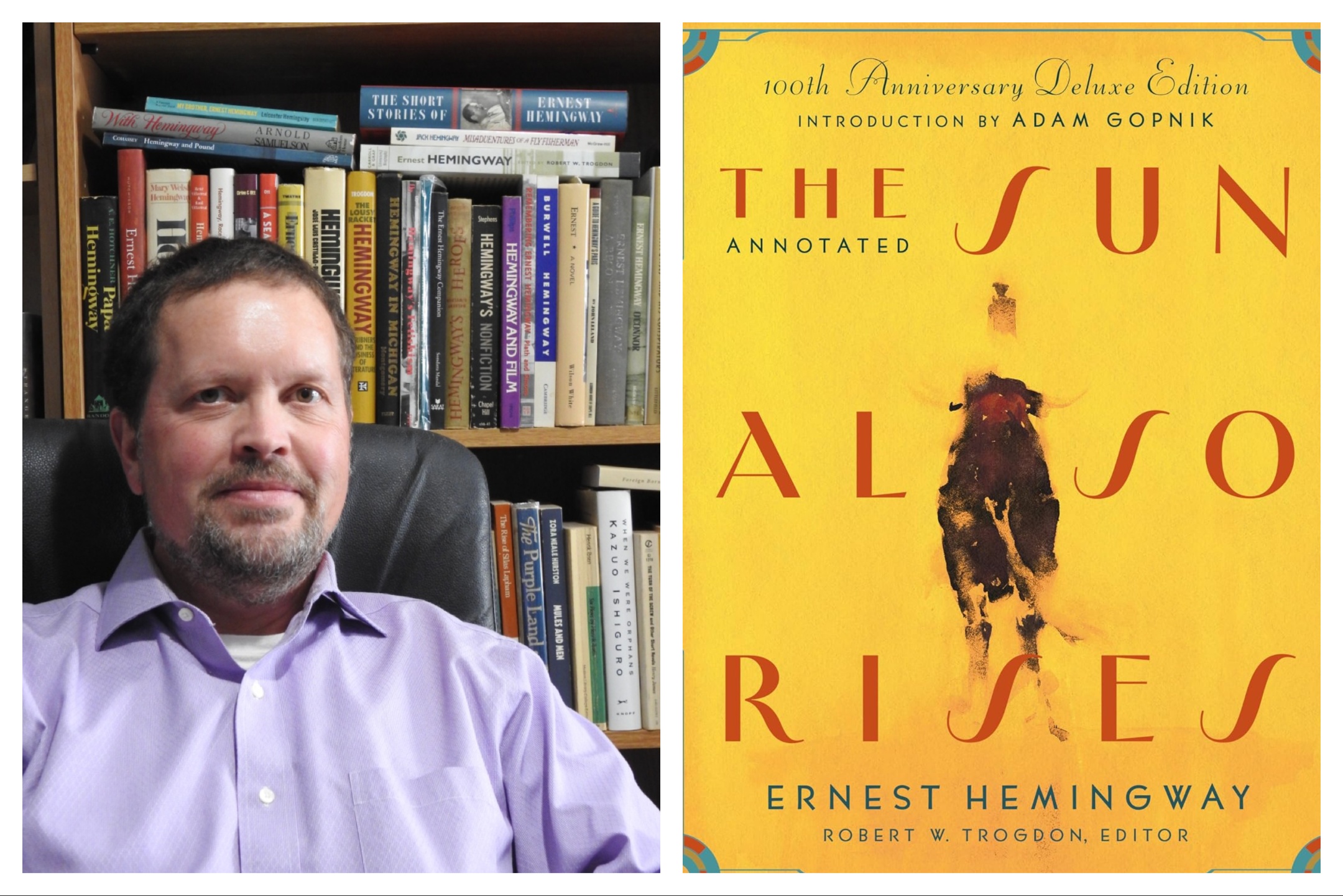
In March of last year, Library of America published “The Annotated Great Gatsby” to celebrate the centennial of arguably F. Scott Fitzgerald’s most famous and enduring work. The work was edited by James L. W. West III, an English professor at Pennsylvania State University and a leading scholar on Fitzgerald. With the special edition well-received, Library of America eyed the centennial release of another work of classic American literature: Ernest Hemingway’s “The Sun Also Rises.”
West was consulted regarding who should edit Hemingway’s debut novel. The English professor and Fitzgerald scholar recommended his colleague, Robert W. Trogdon, an English professor at Kent State University and a leading Hemingway scholar.
When John Kulka, the editorial director for Library of America, contacted Trogdon, the Kent State professor recalled, “I don’t think he got the question out before I said yes.”
There was already familiarity between Trogdon and Library of America, as he had previously edited two volumes of Hemingway’s works for the publisher. One of those volumes, published in 2020, included “The Sun Also Rises.” This previously edited version was the basis of the text used in “The Annotated Sun Also Rises,” which was published this month.
Hemingway’s Intentions
Trogdon explained that he made edits to the 1926 edition published by Charles Scribner’s Sons based on Hemingway’s original manuscript and typescript. The changes include Scribner’s use of British spelling (the publisher had planned to lease the printing plates to British publishers), some of Hemingway’s historical references that had been objected to during the initial editing process, and reverting to Hemingway’s original punctuation, which was part of the author’s writing style.
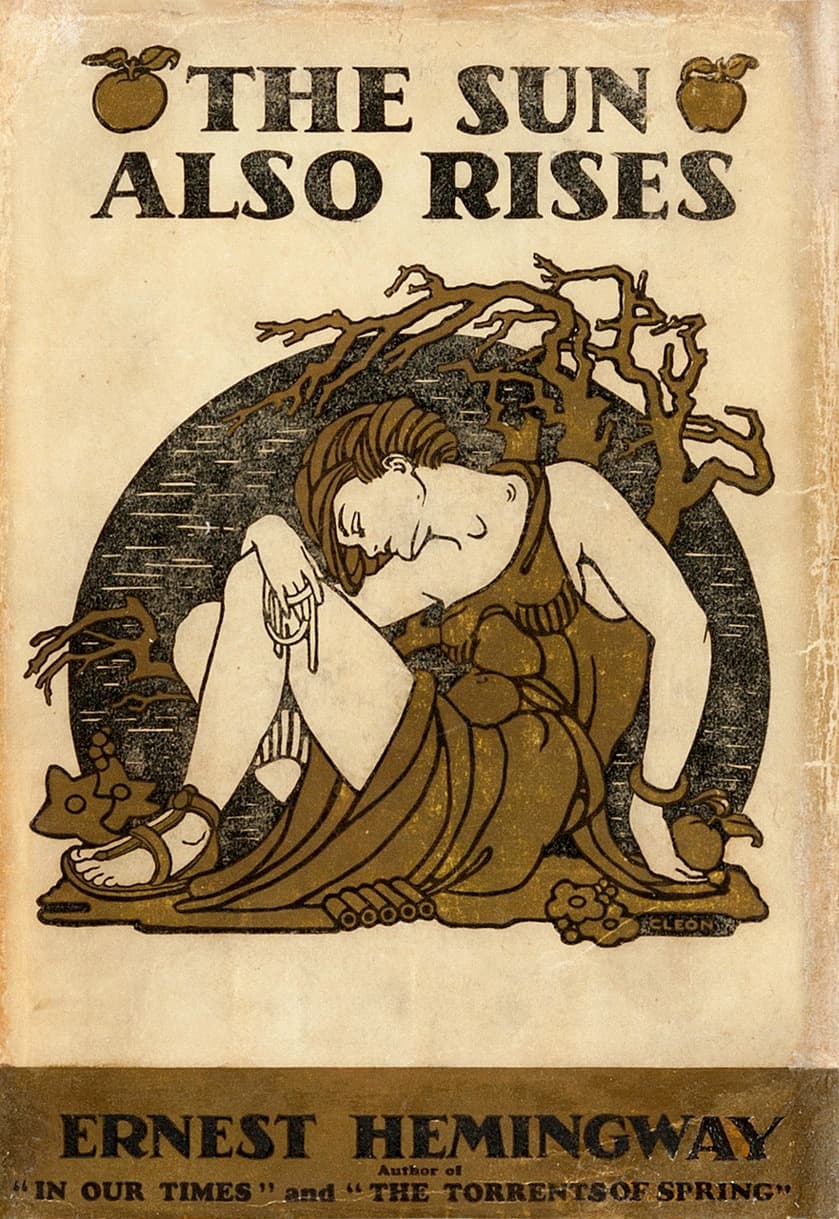
The first edition of "The Sun Also Rises," published in 1926 by Scribner's, with dust jacket illustrated by Cleo Damianakes. (Public Domain)
Hemingway’s style is known for its terse sentence structure, including the dialogue, as well as for its particular use of punctuation. Specifically, when Hemingway’s characters in the novel asked rhetorical questions, the author always ended the sentence with a period instead of a question mark. Trogdon said Maxwell Perkins, the renowned editor for Scribner’s, changed them all to question marks.
Certainly the most memorable rhetorical question in the novel comes in its final sentence, in which the protagonist Jake Barnes answers the question of his unrequited love interest Brett Ashley.
“I think it changes the ending where Jake is trying to stop the conversation,” Trogdon said. “He’s not asking the question. He’s wanting Brett to be quiet. So it ends on a bit of a downbeat note.”
Trogdon also removed the numerous exclamation marks added to Ashley’s dialogue, something he noticed his colleague and fellow Hemingway scholar Debra Moddelmog do in her 2024 edition for Broadview Press. According to Trogdon, the exclamation marks made Ashley seem more excited than Hemingway intended. He said his overall textual focus was about establishing Hemingway’s initial intentions for the work.
Unquestionably the most revised portion of the original manuscript is found at the end of the book entitled “Discarded Chapters from ‘The Sun Also Rises.’" Readers can thank Hemingway’s friend and fellow literary light, F. Scott Fitzgerald, for helping make “The Sun Also Rises” possible.
Fitzgerald not only made the introduction to Perkins, but also provided crucial editorial guidance by describing Hemingway’s first two chapters as “elephantine facetiousness” and convincing him to scrap those first 15 pages. Hemingway agreed and relayed that message to Perkins. Those pages, which according to Trogdon “are not widely available outside of the scholarly community,” are in this special edition.
These scrapped pages provide further backstory to some of the main characters, insight into Hemingway’s thought process for writing in first-person, and also demonstrates how weak the early writing was in the novel. Trogdon said these first two chapters demonstrate how Hemingway “learned to write a novel by writing a novel.”
Annotated Insight
“The Sun Also Rises” is considered almost autobiographical. The story and its characters are largely based on the 1925 trip to France and Spain that was organized by Hemingway for the purpose of seeing the bullfights in Pamplona.
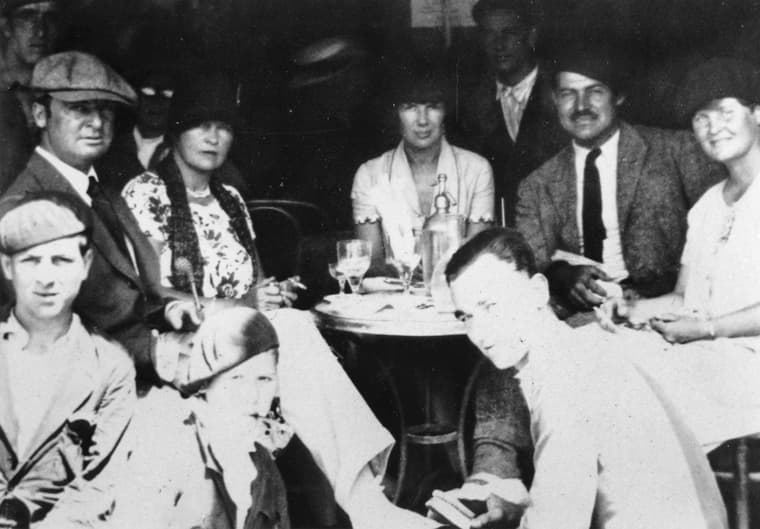
(L–R at table): Gerald Murphy, Sara Murphy, Pauline Pfeiffer, Ernest Hemingway and Hadley Hemingway in Pamplona, Spain, summer 1926. Photograph in the Ernest Hemingway Photograph Collection. (Courtesy of the John F. Kennedy Presidential Library and Museum, Boston)
The book has 140 images and illustrations of Hemingway, his friends who were the basis for his characters, the hotels, plazas, cafes, and bullfighting arenas. The book also includes a map of Paris that was created for Cambridge University Press’s “The Letters of Ernest Hemingway 1923–1925.” All the location images are those mentioned in the novel, enabling readers to visualize the actual places Jake Barnes (or Hemingway) visited.
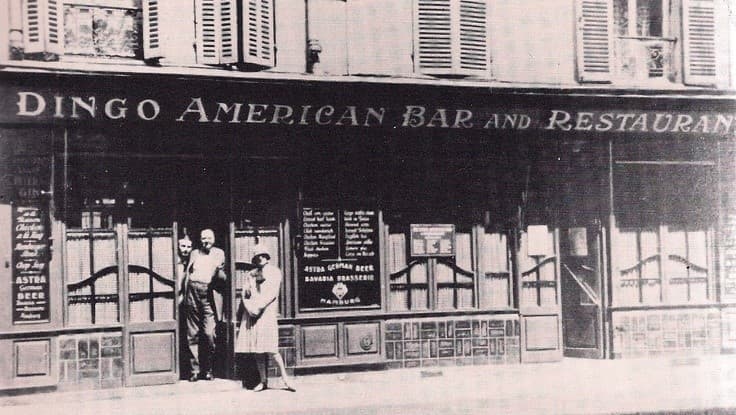
Dingo American Bar and Restaurant is mentioned in “The Sun Also Rise.” (Public Domain)
Although Trogdon’s (and of course, Fitzgerald’s) edits were crucial for “The Annotated Sun Also Rises,” “annotated” is the operative word for this “100th Anniversary Deluxe Edition.” Along the side panels of the book’s pages are Trogdon’s copious notes—more than 200 in all—selected from some of the leading Hemingway scholars, like Michael Reynolds and Carlos Baker, and writers of the past century, like Harold Bloom, Robert Penn Warren, and Dorothy Parker.
These annotations explain the places and events but also, and most importantly, the scholarly perspectives on the characters, their motivations, and Hemingway’s motivations and hidden meanings within various parts of the book.
Capturing The Lost Generation
Those motivations and meanings are certainly more hidden now than when they were first written 100 years ago. Specifically, the world had only recently exited the devastating Great War, and those who had grown up during that time and certainly those who had experienced the war (Hemingway had been an ambulance driver during the war) were labeled The Lost Generation, a phrase Hemingway used in the novel’s epigraph. Trogdon said “The Sun Also Rises” indeed captured the era.
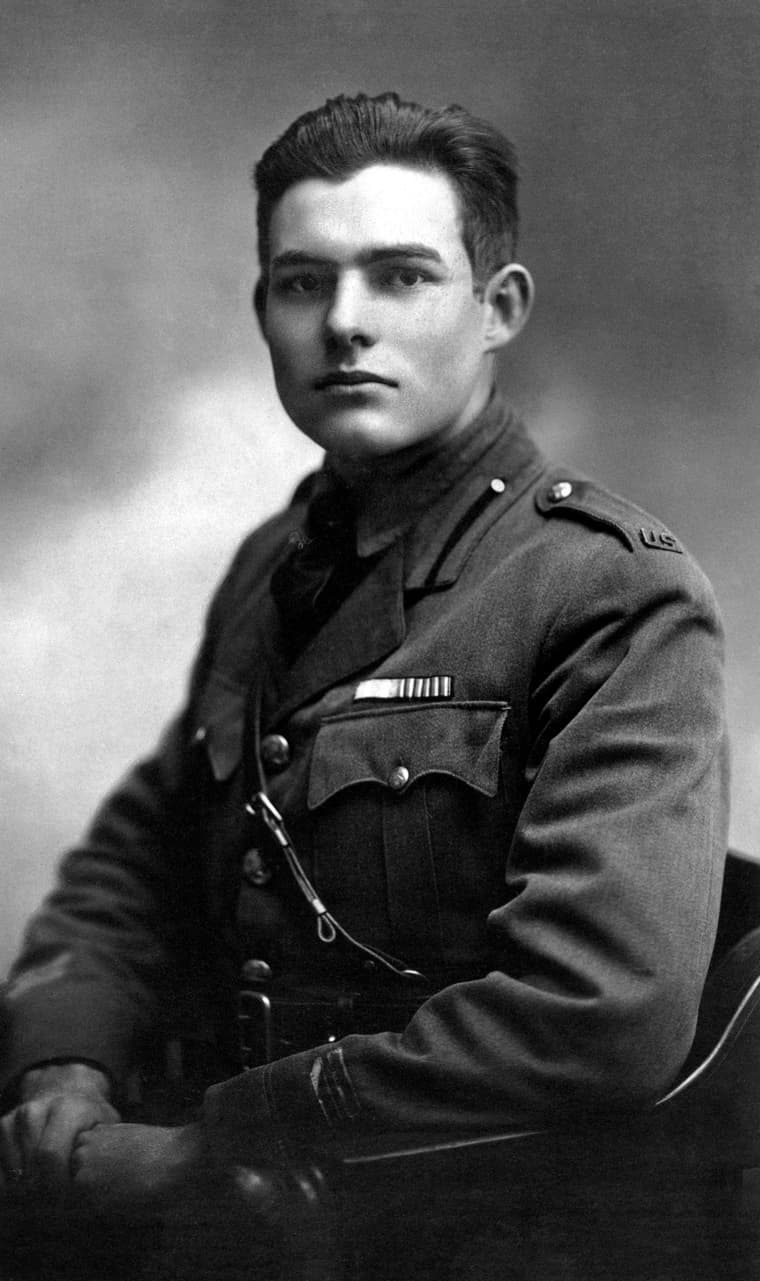
Ernest Hemingway, American Red Cross volunteer. Portrait by Ermeni Studios, Milan, Italy. Ernest Hemingway Photograph Collection, John F. Kennedy Presidential Library and Museum, Boston. (Public Domain)
“I think a lot of that is really what lasts. That recapturing of the landscape and the very specific time and morals and behaviors of this group of people,” he said. “But it also deals with a lot of universal ideas and themes. Jake is in love with a woman who can never really love him back. You’re dealing with the aftereffects of The Great War. And all the characters in one way or another are dealing with that in ways that are not the healthiest in the world.”
As Trogdon noted, “The Sun Also Rises” covers many themes, but he said the novel is ultimately about principles and values. He quoted a line from one of the minor characters of the book, Count Mippipopolous, who stated that the secret to life was that one “must get to know the values.” It is by that in which one can truly enjoy and properly prioritize life.
In the book, Barnes values numerous things—the outdoors, his friends, his love of Brett, his love of bullfighting, and his Catholic faith. Trogdon believes Hemingway created a man of principle within an unprincipled world.
“I think the novel is about Jake’s attempt to have something that he believes in so he isn’t drifting like these other characters,” he said. “He’s trying to create something that he believes in, something that means something so he can continue to live in this world. The wonderful thing about the end of the novel is that you don’t know whether he still has it or he doesn’t.”
Consistent Rediscovery
What is certain is the enduring impact of the novel. Although there is no certainty of how many copies of the book have been sold, it did hit the 1-million milestone 65 years ago in 1961. Hemingway’s book and those that followed influenced a generation of writers and continues to do so for better or for worse.
Trogdon indicated that influence was immediate and rather widespread, especially among writers who became famous for hard-boiled detective series like Dashiell Hammett and Raymond Chandler. Critics began identifying “new Hemingways” with their “clipped sentences and short dialogue.”
“It was good for certain writers to aspire to,” Trogdon said. “But for a lot it was a negative example, and they were probably better served by trying to not write like Hemingway.”
When it comes to teaching literature, Trogdon said he goes to “the Hemingway well quite often”; though it is not so that students will imitate the famous American author. Rather, Trogdon knows what Hemingway’s works, like “The Sun Also Rises,” can do for readers, no matter how many times they read him.
“I joke that I’ve been reading Hemingway since I was 16, and the whole thing is just trying to figure out what it is in the prose that leads me to feel the way I do about the text,” he said regarding Hemingway’s enduring quality. “Sometimes I think I understand. Sometimes I don’t. He’s not the same book to book or story to story. It’s always a pleasant surprise to rediscover that.”
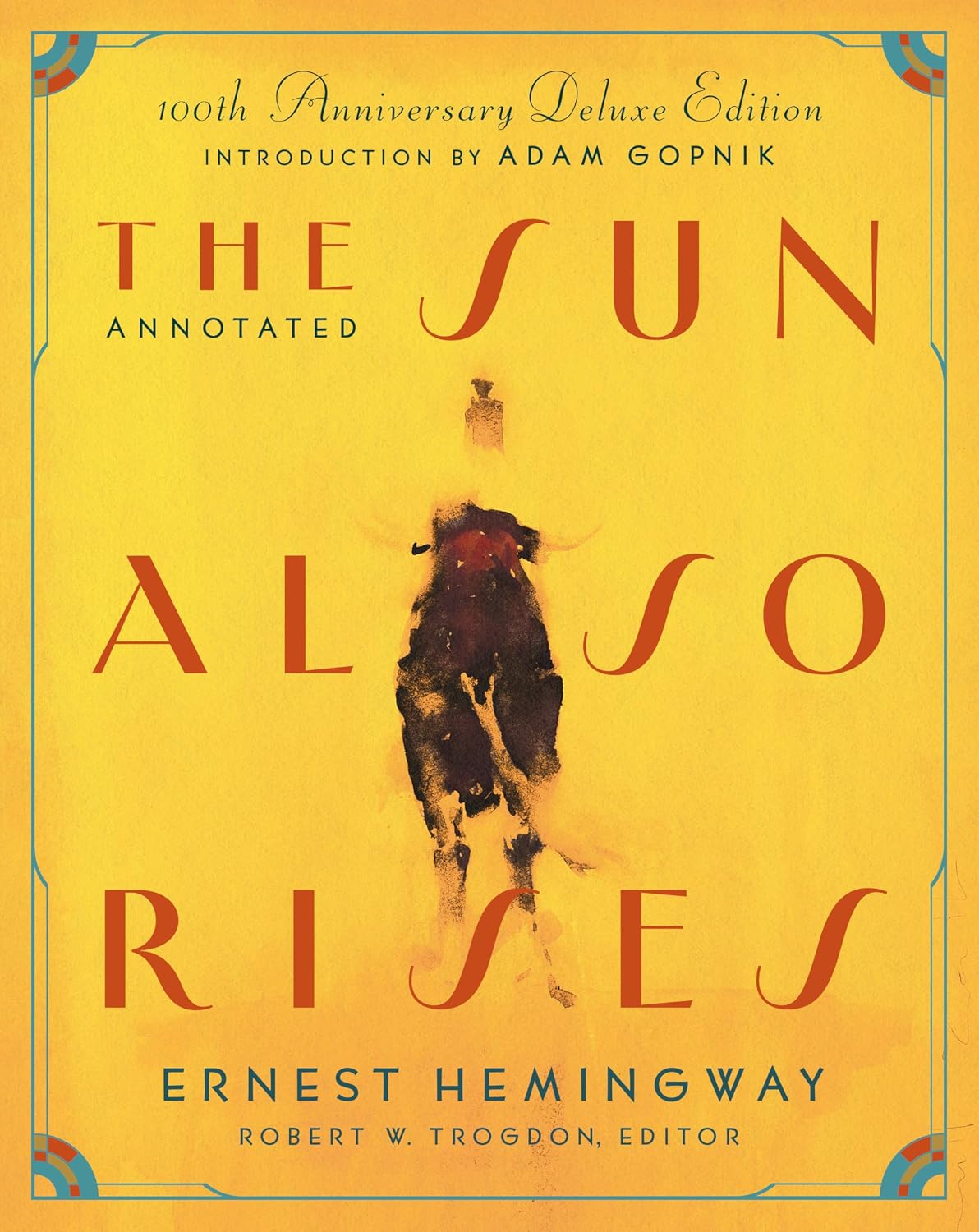
‘The Annotated Sun Also Rises: 100th Anniversary Deluxe Edition’
By Ernest Hemingway and Robert W. Trogdon
Library of America: Oct. 13, 2026
Hardcover, 364 pages
What arts and culture topics would you like us to cover? Please email ideas or feedback to features@epochtimes.nyc.