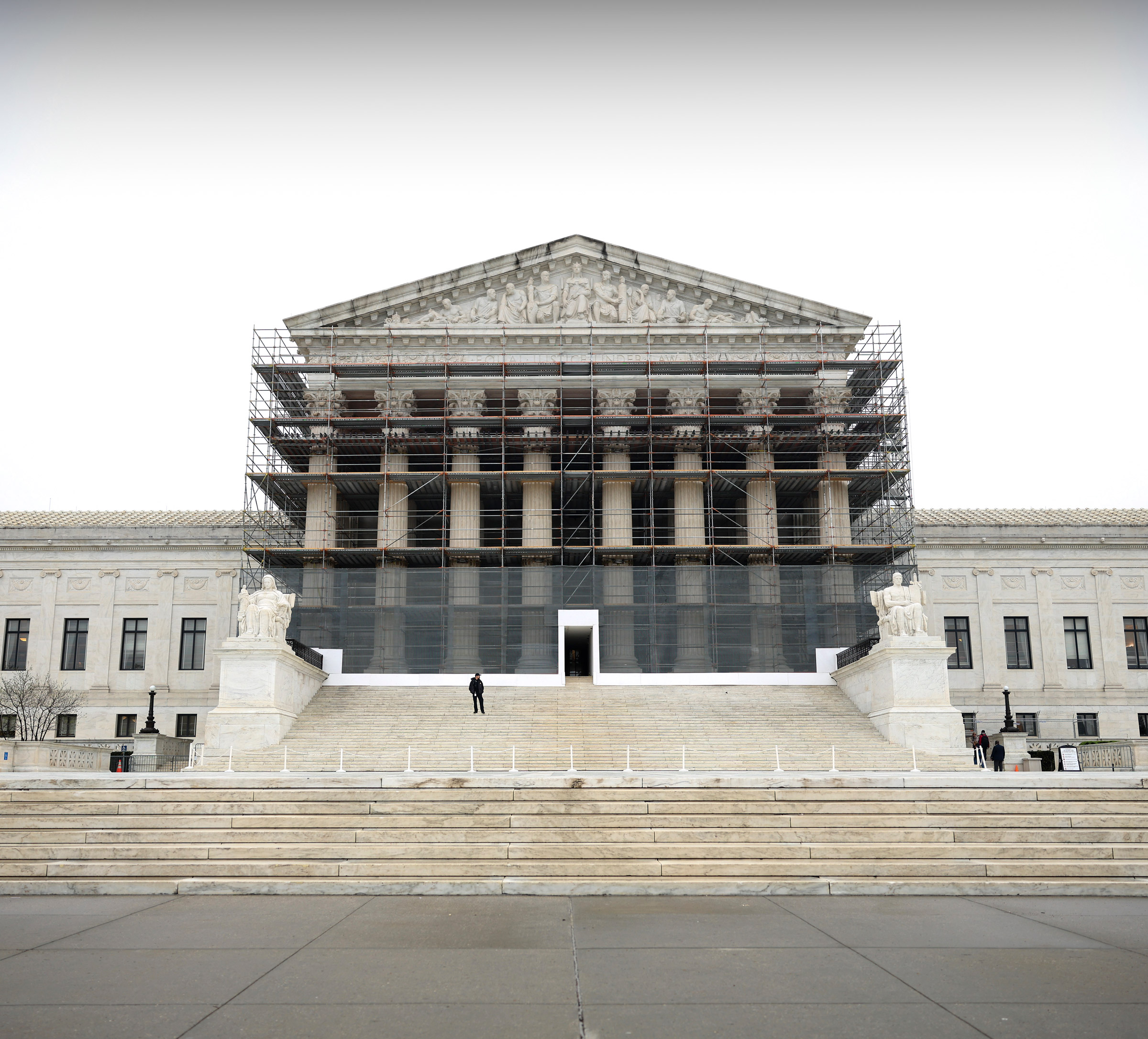

The Supreme Court hosted a highly anticipated oral argument on May 15 over how far judges can go in blocking presidential policies. The Trump administration has argued that the practice of blocking policies on a nationwide basis—or nationwide injunctions—has spun out of control in lower courts.
Some of the justices seemed open to restricting the ability of judges to issue nationwide injunctions, but it was difficult to read how they would ultimately rule.
The argument stemmed from disputes over President Donald Trump’s order restricting birthright citizenship, which is the concept that certain people receive citizenship by virtue of being born in the United States. Trump said that it should not apply to the children of illegal immigrants.
The administration has asked that the justices limit nationwide injunctions blocking those orders. U.S. Solicitor General D. John Sauer also told the court on May 15 that judges were exceeding their authority by issuing nationwide relief.
The eventual decision isn’t expected to include any final determination about the constitutionality of birthright citizenship, which critics say violates the 14th Amendment. However, the justices could consider who birthright citizenship applies to in deciding what to do with the lower court blocks on Trump’s policies.
Justice Ketanji Brown Jackson suggested that not providing broader relief would be inconsistent with the rule of law. Her colleagues, Justices Elena Kagan and Sonia Sotomayor, indicated that they thought Trump’s order violated the Constitution.
Sotomayor told Sauer at one point that “as far as I see it, this order violates four Supreme Court precedents.”
Trump himself weighed in on TruthSocial, posting that the 14th Amendment’s guarantee of birthright citizenship was “about the babies of slaves.” He said that America was being “a STUPID country” for the “sake of being politically correct” on this issue.
Justice Clarence Thomas seemed the most sympathetic to Sauer’s arguments, asking about the historical basis for nationwide injunctions. “So we survived until the 1960s without universal injunctions?” Thomas asked during an exchange with Sauer.
—Sam Dorman
BOOKMARKS
Milwaukee County Circuit Judge Hannah Dugan pleaded not guilty to charges that she allegedly tried to help a Mexican illegal immigrant evade arrest and deportation. Dugan allegedly escorted Eduardo Flores-Ruiz out of a courtroom back door when Immigration and Customs Enforcement (ICE) agents showed up to arrest him, but her lawyers said she was acting in her official capacity as a judge and cannot be prosecuted.
The United Kingdom and Germany announced joint development of a new “deep precision strike” weapon on May 15. The project is the fruit of the Trinity House Agreement, an October 2024 weapons development pact spurred by shifting global safety concerns.
The Federal Trade Commission (FTC) is warning event-ticket outlet StubHub to comply with its new rule on unfair or deceptive fees, or face hefty fines. The rule requires the company and others like it to disclose most of their fees upfront, with a few exceptions for incidentals like shipping costs or taxes.
Florida became the second state in the United States, after Utah, to ban fluoride in its drinking water systems. Gov. Ron DeSantis, who signed the bill into law on Thursday, said putting fluoride “into the water supply is basically forced medication on people.”
—Stacy Robinson