
“Unfortunately, Democrat Senators are blocking passage of [a government funding extension] in the Senate due to Democrats' insane policy demands, which include $1 trillion in new spending,” Vought said in the Tuesday evening memo to executive branch administrators.
It comes after the Senate, in a 55–45 vote, rejected Republicans’ House-passed “clean” government funding extension, which means it didn’t include any new policies or funding.
Democrats have called for the return of as much as $1 trillion in Medicaid funding cuts enacted as part of reforms in the One Big Beautiful Bill Act and an extension of Affordable Care Act subsidies set to expire at the end of this year.
Republicans have rejected those demands, saying that these shouldn’t be negotiated in the context of shutdown talks.
Earlier this week, Vought directed agencies to prepare plans for layoffs in the event of a shutdown.
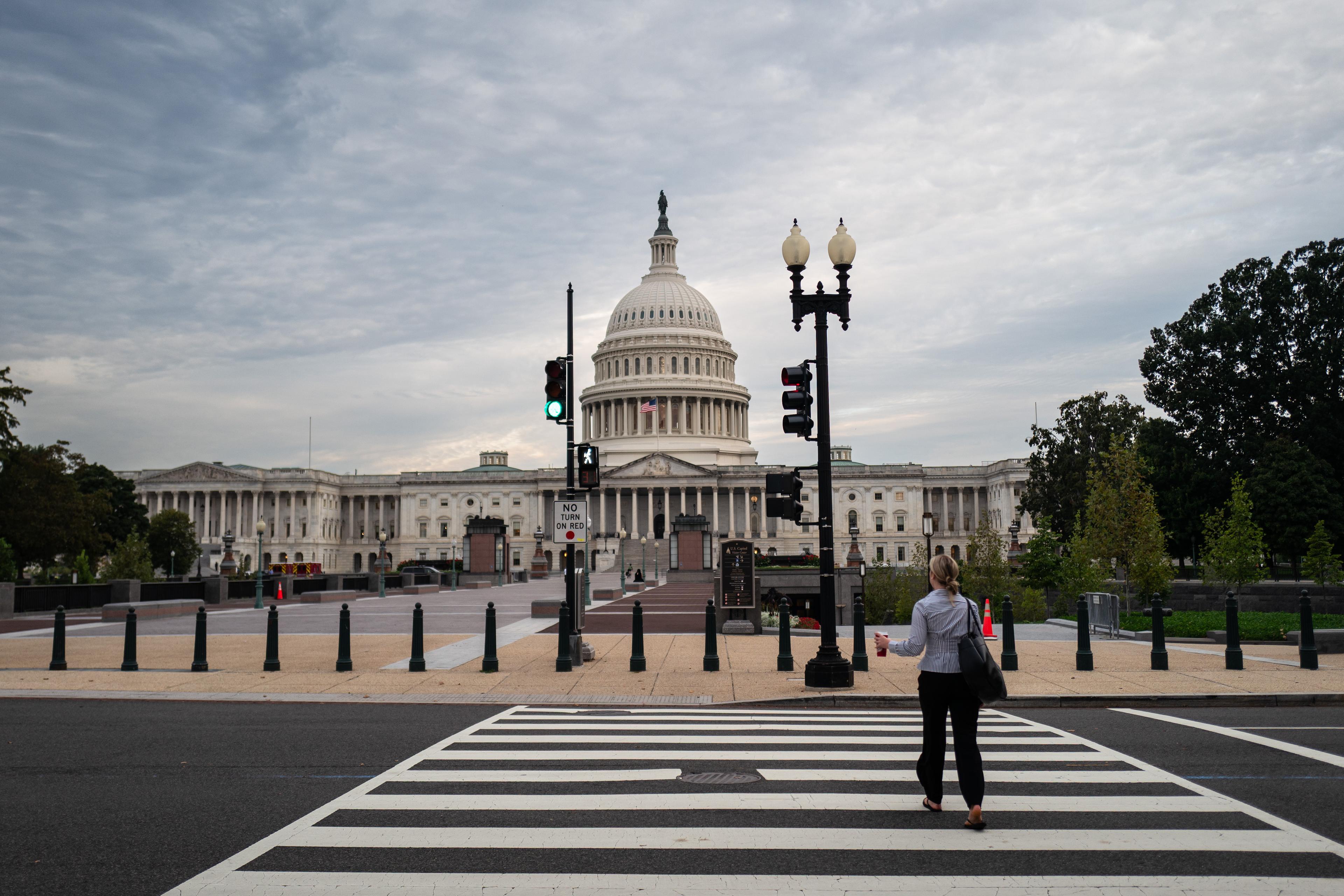
There’s no sign of progress on the issue on Capitol Hill as the government sits less than four hours away from the start of a shutdown.
The failed votes on both a Democratic and a Republican funding plan occurred around four hours ahead of a government shutdown deadline.
Republicans’ “clean” funding bill—which would simply extend funding with no bill riders or new policies—failed 55–45 on Tuesday evening, falling short of the 60 votes needed to advance.
Three Democrats backed the bill, a crack in Democrats’ defense that Republicans hope to build on to achieve passage of a clean funding bill.
Thune said more votes on the clean funding extension will be held tonight.
Schumer, meanwhile, demanded Republicans come to the negotiating table.
“Now two times, Republicans have failed to get enough votes to avoid a shutdown,” Schumer said. “They've got to sit down and negotiate with Democrats to come to a bill that can win bipartisan support.”
Democrats have pushed for the reversal of as much as $1 trillion in Medicaid funding cuts included in the One Big Beautiful Bill Act, and an extension to Affordable Care Act subsidies that are due to expire at the end of the year.

The government has officially shut down after lawmakers on Tuesday evening adjourned early with no agreement on government funding.
Lawmakers will return on Wednesday at 10 a.m. ET.
Ahead of its adjournment, the Senate’s 55–45 vote in favor of advancing the package fell five short of the 60-vote filibuster threshold.
Sen. Catherine Cortez Masto (D-Nev.) and Sen. Angus King (I-Maine), who caucuses with Democrats, joined Republicans in voting for the bill. Sen. Lisa Murkowski (R-Alaska), who voted against the GOP funding bill when it last came before the Senate, flipped her vote in favor of the measure.
Sen. Jeanne Shaheen (D-N.H.), the only Democrat to back passage of a Republican funding bill in March, voted against the bill. Sen. Rand Paul (R-Ky.) broke with his party and voted against the funding bill.
After the Senate failed to secure a supermajority for the White House-backed funding bill, White House Office of Management and Budget Director Russ Vought on Sept. 30 ordered federal officials to begin executing “their plans for an orderly shutdown.”
“Unfortunately, Democrat Senators are blocking passage of [a government funding extension] in the Senate due to Democrats’ insane policy demands, which include $1 trillion in new spending,” Vought said in the Tuesday evening memo to executive branch administrators.
Earlier this week, Vought directed agencies to prepare plans for layoffs in the event of a shutdown.
Ahead of the shutdown, a resolution sponsored by Democrats was rejected 47-53 along party lines.
Prior to the votes, representatives of each party said they wanted to avoid a shutdown and that their counterparts were responsible for the result.
Republicans sought a short-term extension of current spending levels to allow lawmakers time to finalize appropriations for 2026, while Democrats are refusing to back any continuing resolution that does not include changes to health care-related funding passed by Congress in the most recent budget bill. Both parties appear to believe public opinion is on their side.
Democrats insisted on the need to reverse as much as $1 trillion in health care-related spending provisions of the One Big Beautiful Bill Act and make the COVID-era Affordable Care Act enhanced premium tax credits permanent.
Democrats say their plan is necessary to prevent a loss of health coverage by tens of millions of people and avoid a sharp increase in health insurance premiums.
Republicans have said the Democrats’ proposal would add $1.5 trillion in spending and is an unserious starting point for discussions.
A Sept. 29 meeting of congressional leaders with President Donald Trump, Vice President JD Vance, and Vought failed to produce a resolution.

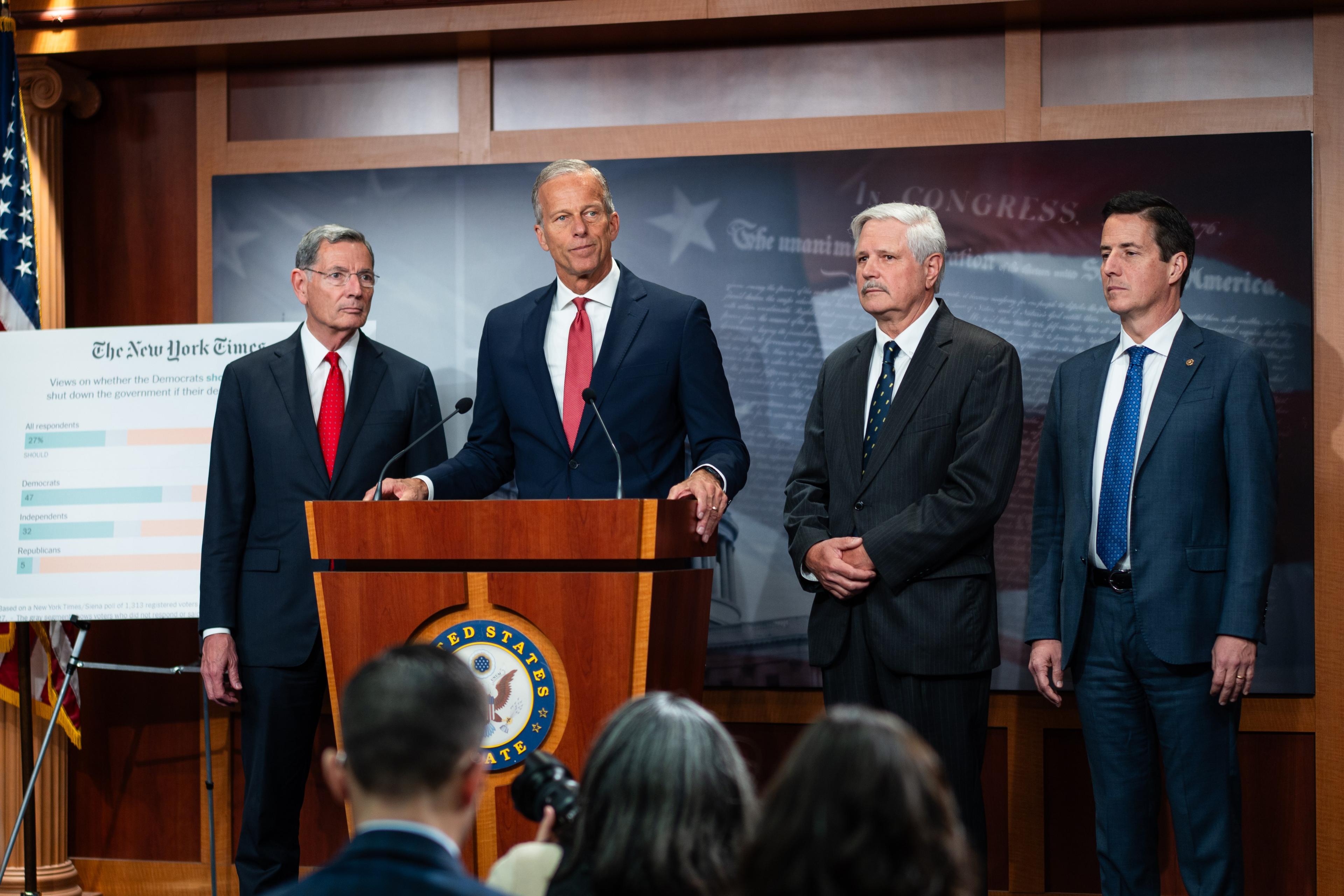
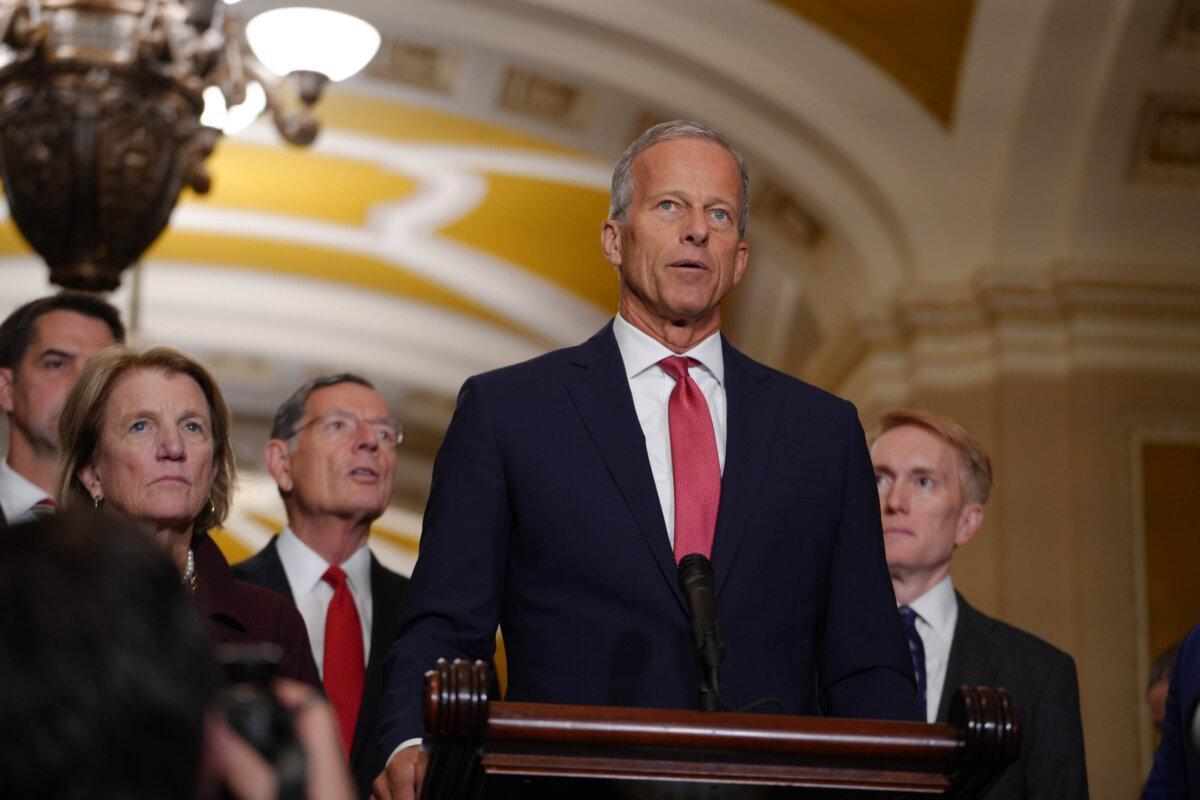
Senate Majority Leader John Thune (R-S.D.), joined by other Senate Republicans, speaks to reporters as the government is on the verge of shutdown amid a partisan standoff, on Capitol Hill in Washington on Sept. 30, 2025. (Madalina Kilroy/The Epoch Times)
Ahead of the Senate vote, both parties doubled down on their position.
Democrats repeated their ideas that health care reform is vitally important and requires immediate action.
“Health care creates an urgency,” Sen. Richard Blumenthal (D-Conn.) told The Epoch Times on Sept. 30. “Republicans are saying, ‘Agree to a clean CR and we'll talk about this stuff later.’ But people get sick regardless of the Republican timetable.”
Rep. Rosa DeLauro (D-Conn.) told reporters she would not trust Republicans’ word that they would negotiate over health care during the normal appropriations process.
“There’s no trust,” DeLauro said. “Remember McCarthy–Biden, they walked away from the deal,” she added, referring to a negotiated spending agreement in 2023 that was not passed into legislation.
Republicans continued to say that Democrats’ insistence on placing complex health-related negotiations on a short-term spending agreement was confusing and unnecessary.
“They’re kind of all over the map,” Sen. Josh Hawley (R-Mo.) told The Epoch Times. “I can’t tell what they want.”
Senate Minority Leader Chuck Schumer (D-N.Y.) said on Sept. 29 that he had made proposals to Republicans related to health care, but did not specify what they were.
When asked by The Epoch Times which health care issues Democrats were advancing, Blumenthal spoke instead about the urgency of addressing health care, adding, “I think it ends with some serious compromise on health care.”
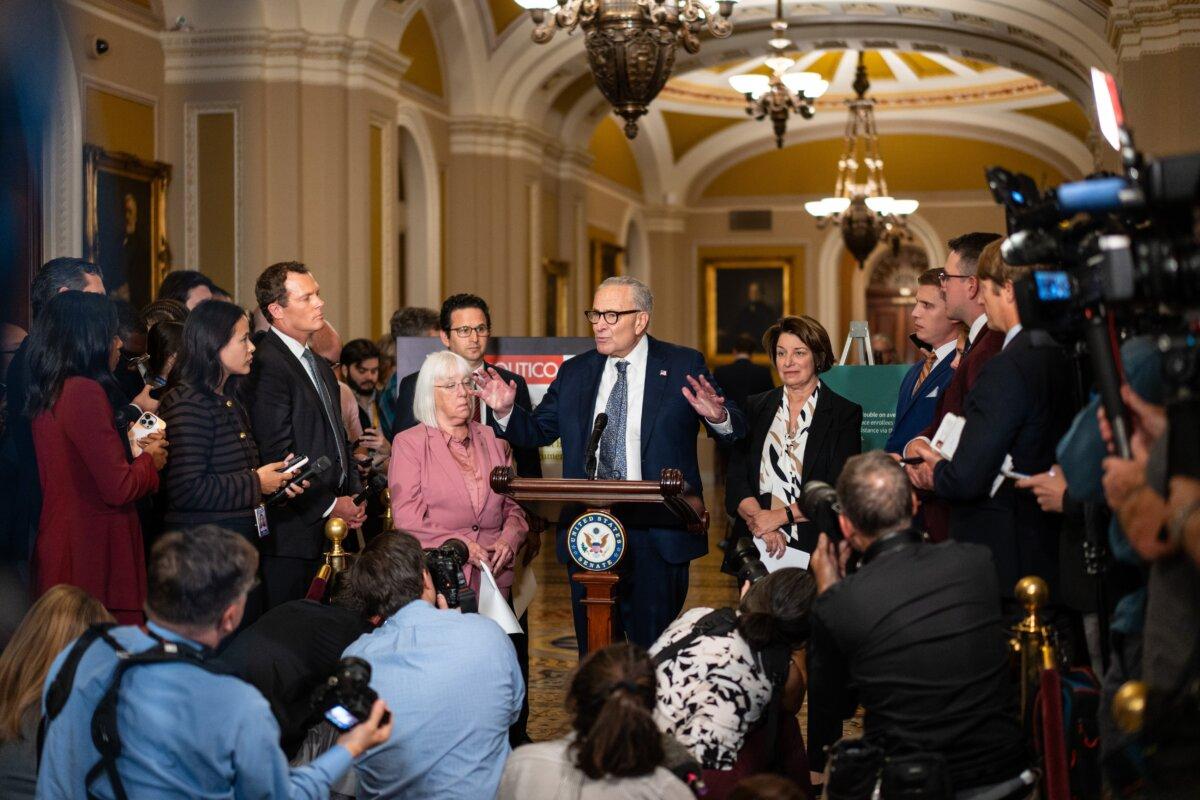
Senate Minority Leader Chuck Schumer (D-N.Y.), joined by other Senate Democrats, speaks to reporters as the government is on verge of shutdown amid partisan standoff, on Capitol Hill in Washington on Sept. 30, 2025.(Madalina Kilroy/The Epoch Times)
During a White House press conference, Trump said the administration could do things that are “irreversible” during a shutdown, such as “cutting vast numbers” of federal workers.
“I think the record shows that he is firing people regardless of the shutdown,” Blumenthal said. “He just seems to be on that path.”
Sen. Mike Rounds (R-S.D.) expressed optimism that the two sides could strike a deal centered on extending ACA enhanced premium tax credits.
“I just don’t think you’re going to have that much opposition on either side to giving an extension this year to the Obamacare subsidies,” Rounds told The Epoch Times.
Rounds said that could be coupled with a 45-day continuing resolution to allow further appropriations work. However, he said: “I don’t know whether Democrat leadership can actually accept not going to a shutdown. They may very well feel they have to do a shutdown just to show their far left base that they'll do it.”
Jackson Richman contributed to this report.

“Due to the possibility of a government shutdown, the reception in honor of Hispanic Heritage Month will no longer be taking place on Thursday, October 2, 2025,” the email read.
The White House told guests the event may be rescheduled and that they would receive a new invitation once a new date is set.
“We apologize for any inconvenience this may cause and hope to host you at the White House in the future,” the email stated.
The government is headed for a shutdown at 12:01 a.m. on Oct. 1 after rival funding bills failed to advance in the Senate.
The GOP measure received 55 yes votes, with 45 senators opposed. It needed 60 votes to move forward.
The Republican measure, which passed the House, would fund the government through Nov. 21.
Sen. Catherine Cortez Masto (D-Nev.) and Sen. Angus King (I-Maine), who caucuses with Democrats joined Republicans in voting for the bill.
Sen. Jeanne Shaheen (D-N.H.), the only Democrat to back passage of a Republican funding bill in March, voted against the bill. Sen. Rand Paul (R-Ky.) broke with his party and voted against the funding bill.
Sen. Lisa Murkowski (R-Alaska), who voted against the GOP funding bill when it last came before the Senate, flipped her vote in favor of the measure.
Absent a bipartisan deal before midnight, the government will shut down on Wednesday. This would mark the first sustained government shutdown since 2019.
Both parties’ leaders expected the outcome before the vote.
Senate Minority Leader Chuck Schumer (D-N.Y.) said ahead of a vote that the measure would fail again.
“The Republican CR was the wrong option for America a week ago. It remains the wrong option today, because it does nothing, absolutely nothing, to solve the biggest health care crisis in America,” Schumer said on the floor, citing reforms to Medicaid in the One Big Beautiful Bill Act, which Democrats have opposed.
Democrats have demanded as much as $1 trillion in alterations to the One Big Beautiful Bill Act’s Medicaid funding, and an extension to Affordable Care Act subsidies that are due to expire at the end of the year.
Senate Majority Leader John Thune (R-S.D.) also acknowledged that the House-passed CR was likely to fail in the Senate, but he nevertheless defended the bill as “clean” and “nonpartisan.”
“All indications are the Democrats are gonna reject the clean, nonpartisan funding extension here before us and choose to shut the government down,” Thune said, accusing Democrats of trying to “take government funding hostage.”
Democrats’ bill would have reversed up to $1 trillion in Medicaid cuts enacted under the One Big Beautiful Bill Act and extended Obamacare subsidies, in addition to providing funding for public media outlets NPR and PBS that was rescinded earlier this year.
Republicans have said these demands are non-starters, with President Donald Trump and Republican leaders taking a strong stance in favor of a “clean” short-term funding patch, meaning that the measure extends government funding without including policy riders.

The lawsuit was filed by the American Federation of Government Employees and the American Federation of State, County, and Municipal Employees.
“Announcing plans to fire potentially tens of thousands of federal employees simply because Congress and the administration are at odds on funding the government past the end of the fiscal year is not only illegal – it’s immoral and unconscionable,” wrote Everett Kelley, the national president of the American Federation of Government Employees, in a news release.

“Trump admitted himself that he is using Americans as political pawns,” he told reporters on Capitol Hill.
Trump and Republicans say they don’t want a shutdown, but cannot agree to the Democrats’ demands concerning health care in exchange for keeping the government open.

“I don't know whether Democrat leadership can actually accept not going to a shutdown,” Rounds told reporters on Capitol Hill.
“They may very well feel they have to do a shutdown just to show their far left base that they'll do it, at which time, it makes it more difficult to come out of a shutdown, but hopefully cooler heads prevail.”


A group representing major U.S. airlines warned that the looming Oct. 1 government shutdown could cause flights to be delayed because air traffic controllers and other federal employees may be forced to work without pay.
The federal government will partially shut down at 12:01 a.m. on Wednesday unless Congress can reach a funding deal.
Airlines for America said that furloughing tens of thousands of workers would mean longer wait times and other issues at airports. The group represents major carriers including United Airlines, Delta Air Lines, American Airlines, Southwest Airlines, Alaska Airlines, JetBlue, UPS Airlines, FedEx Express, Atlas Air, and Hawaiian Airlines.
“When federal employees who manage air traffic, inspect aircraft and secure our nation’s aviation system are furloughed or working without pay, the entire industry and millions of Americans feel the strain,” the group said in a Sept. 30 statement. “We appreciate the men and women who will be going to work, despite not receiving a paycheck, to ensure the safety and security of the traveling and shipping public.”
The group also stated that the midnight “shutdown threat is coming at a critical moment” after Congress approved a $12.5 billion plan to modernize the Federal Aviation Administration’s air traffic control systems.
“We urge elected leaders to act with urgency and in good faith to identify a solution that will keep the government open beyond October 1. Travelers, the shipping public and the dedicated federal employees who protect and maintain our nation’s aviation system deserve continuity,” Airlines for America said.
During a meeting at the White House on Monday between President Donald Trump and congressional leaders, no progress was made on a short-term funding bill that would have funded the government until December. In response, Trump released an AI-generated video that made fun of House Minority Leader Hakeem Jeffries (D-N.Y.), who was shown in the clip wearing a sombrero, and Senate Minority Leader Chuck Schumer (D-N.Y.).
“I think we’re headed to a shutdown because the Democrats won’t do the right thing,” Vice President JD Vance told reporters outside the White House after Monday’s meeting. In that same press event, House Speaker Mike Johnson (R-La.) told reporters: “If the Democrats make the decisions to shut the government down, the consequences are on them.”
Responding to Trump’s video, Schumer said in a post on X, “If you think your shutdown is a joke, it just proves what we all know: You can’t negotiate. You can only throw tantrums.”
During remarks to the media after the meeting, Schumer likewise said that it’s Republicans who need to decide on averting the shutdown.
“It’s up to the Republicans whether they want a shutdown or not,” Schumer said.
Democrats want to modify the bill to extend health benefits for millions of Americans that are due to expire at the end of the year. Republicans say they must tackle that issue separately.
“Cancel the Cuts. Lower the Cost. Save Healthcare,” Jeffries said in a social media post in response to Trump. “We are NOT backing down.”
The Epoch Times contacted the FAA for comment on Tuesday.
Reuters contributed to this report.
“I thought Fetterman was very articulate and very right. It's very disruptive,” Tillis told The Epoch Times.
“We're forgetting how disruptive and how wasteful government shutdowns are, and hopefully there's six more just like Fetterman, and we can get a short-term CR and move on.”
Fetterman had said that the key to Democrats getting their way on government funding is to “win elections.”
“Nothing is inevitable,” Trump said from the Oval Office after an announcement on lowering drug prices.
“But I would say it’s probably likely because [the Democrats] want to give health care to illegal immigrants, which will destroy health care for everybody else in this country.”
While Republicans don’t want a shutdown, Trump said, the administration could do things that are “irreversible” during a shutdown, like “cutting vast numbers” of federal workers.
Speaking to The Epoch Times, DeLauro accused Vought of “systematically trying to dismantle public health, education, the ability of the federal government to deliver services to the American people.”
She also said that it is Congress, not Vought, who has the power of the purse.
Rep. Paul Tonko (D-N.Y.) refuted Sen. John Fetterman (D-Pa.), who said that Democrats need to win elections if they want to have their way when it comes to appropriations.
“No,” Tonko told The Epoch Times. “D-Day is here. Tomorrow, the notices start going out about the [Obamacare] premiums.”
One of the conditions Democrats have for keeping the government open is an extension of the Obamacare subsidies, which expire at the end of the year. Congressional Republican leadership said that this is not the time to have that discussion.
Meanwhile, gold ETFs recorded their largest inflows since the start of the war in Ukraine in 2022.
Gold is up by more than 10 percent in September. So far this year, gold has jumped nearly 47 percent and is on track for its strongest annual performance since 1979.
Jeffries reiterated Democratic demands to extend health care subsidies and undo Medicaid reforms in the GOP megabill passed over the summer.
“Cancel the cuts. Lower the cost. Save health care. That’s what this fight is all about,” he said.
He was also joined by a group of citizens affected by Medicaid and Obamacare subsidies who shared their stories of what government services have meant to them.
Trump made the remarks before boarding Marine One on his way to Quantico, Virginia, to address a meeting of U.S. military generals and flag officers.
During government shutdowns, many federal employees are placed on furlough, and those who are required to report to work to perform essential services do so without pay. When funding is restored, they are given back pay.
Last week, the White House directed agencies to prepare plans for layoffs if the government were to shut down.
- The government is poised to shut down on Oct. 1 if Congress can’t pass a stopgap funding bill before then.
- Democrats want an extension of Obamacare subsidies and a rollback of the Medicaid reforms in the One Big Beautiful Bill Act in exchange for keeping the government open.
- Republicans have said the Democrats’ demands are nonstarters.
- Earlier this month, the House passed a GOP stopgap funding bill, known as a continuing resolution (CR), to fund the government through Nov. 21. This failed to advance in the Senate after being blocked by Democrats.
- Congressional leaders met with President Donald Trump on Sept. 29, but no breakthrough was reached. There are no plans for another meeting before the shutdown deadline.
- The Senate will vote again on the House-passed stopgap funding bill and an alternative Democratic proposal on Tuesday. Both are expected to fail, again on largely party-line votes.

Lawmakers have no clear path to avoiding a government shutdown that will occur at 12:01 a.m. on Oct. 1 without congressional action.
Republicans and Democrats remain at odds over a proposed stopgap spending bill after a Sept. 29 meeting between Congressional leaders and President Donald Trump proved fruitless.
Republicans want to pass what they call a clean continuing resolution (CR), which extends current spending for another seven weeks with no substantial changes. That time is needed, they say, to complete the regular appropriations process, which involves passing 12 appropriations bills in each chamber.
Senate Majority Leader John Thune (R-S.D.) said on Sept. 29: “Republicans are united to keep the government open. All it takes is Senate Democrats agreeing to the clean, nonpartisan CR already sitting at the Senate desk.”
In support of that idea, Vice President JD Vance noted on Sept. 29 that the Senate has already passed three appropriations bills with bipartisan support.
Democrats have said they will not support any funding resolution that does not address their concerns about health care spending.
“If the government shuts down, it’s because Republicans would rather shut it down rather than help people afford health care,” Senate Minority Leader Chuck Schumer (D-N.Y.) said on Sept. 29.
A key issue for Democrats is the extension of the Affordable Care Act’s (ACA) expanded premium tax credits, which function as subsidies that help some 20 million middle-income people pay for health insurance. Other demands appear aimed at dismantling health care spending changes made by the One Big Beautiful Bill Act, passed in July.
The Republican-controlled House passed a continuing resolution on Sept. 19.
That measure failed in the Senate the same day, where Republicans required seven Democratic or Independent votes, in addition to their 53 seats, to reach the three-fifths threshold, 60 votes, to avoid a filibuster. A Democrat-backed resolution also failed.

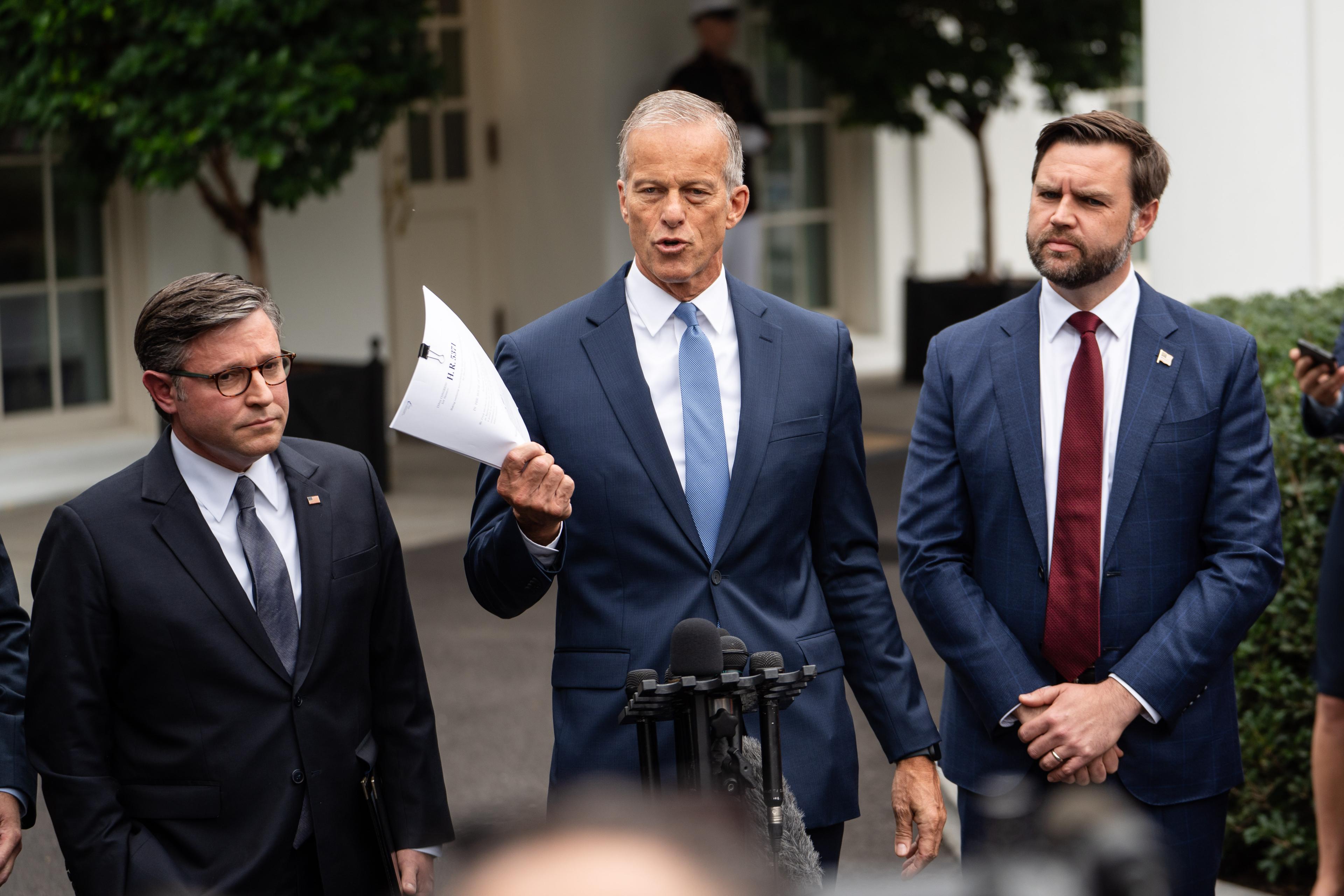
Vice President JD Vance, accompanied by Director of the Office of Management and Budget Russel Vought, Speaker of the House Mike Johnson (R-La.), and Senate Majority Leader John Thune (R-S.D.), speaks after a meeting to negotiate funding legislation to avoid a government shutdown, at the White House on Sept. 29, 2025. (Madalina Kilroy/The Epoch Times)
Republican Sens. Rand Paul of Kentucky and Lisa Murkowski of Alaska voted against the Republican-backed resolution.
Murkowski stated her support for extending the ACA expanded premium tax credits, as well as restoring some funds to wind down operations of the Corporation for Public Broadcasting, which will cease most operations on Sept. 30.
Paul is a fiscal hawk and a longtime opponent of continuing resolutions. “Missing appropriation deadlines has consequences,” Paul said in a 2018 statement.
Sen. John Fetterman (D-Pa.) was the only Democrat to vote for the Republican proposal on Sept. 19. He also voted for the failed Democrat-backed alternative.
Fetterman said he is unequivocally opposed to allowing any government shutdown. “I refuse to vote to shut our government down, and that’s not going to change,” Fetterman told reporters on Sept. 29.
“If [you] want to change policies, win elections,” Fetterman said, adding that while Democrats’ objectives may be desirable, allowing a government shutdown was the wrong way to pursue them. Democrats are currently the minority in both chambers.
Democrats have stated their cause as fighting for the health care of the American people. “It’s about people losing the care they count on every single day,” Sen. Elizabeth Warren (D-Mass.) told reporters on Sept. 29. “We’re just asking them to restore the money that they’ve already taken away from the American people.”

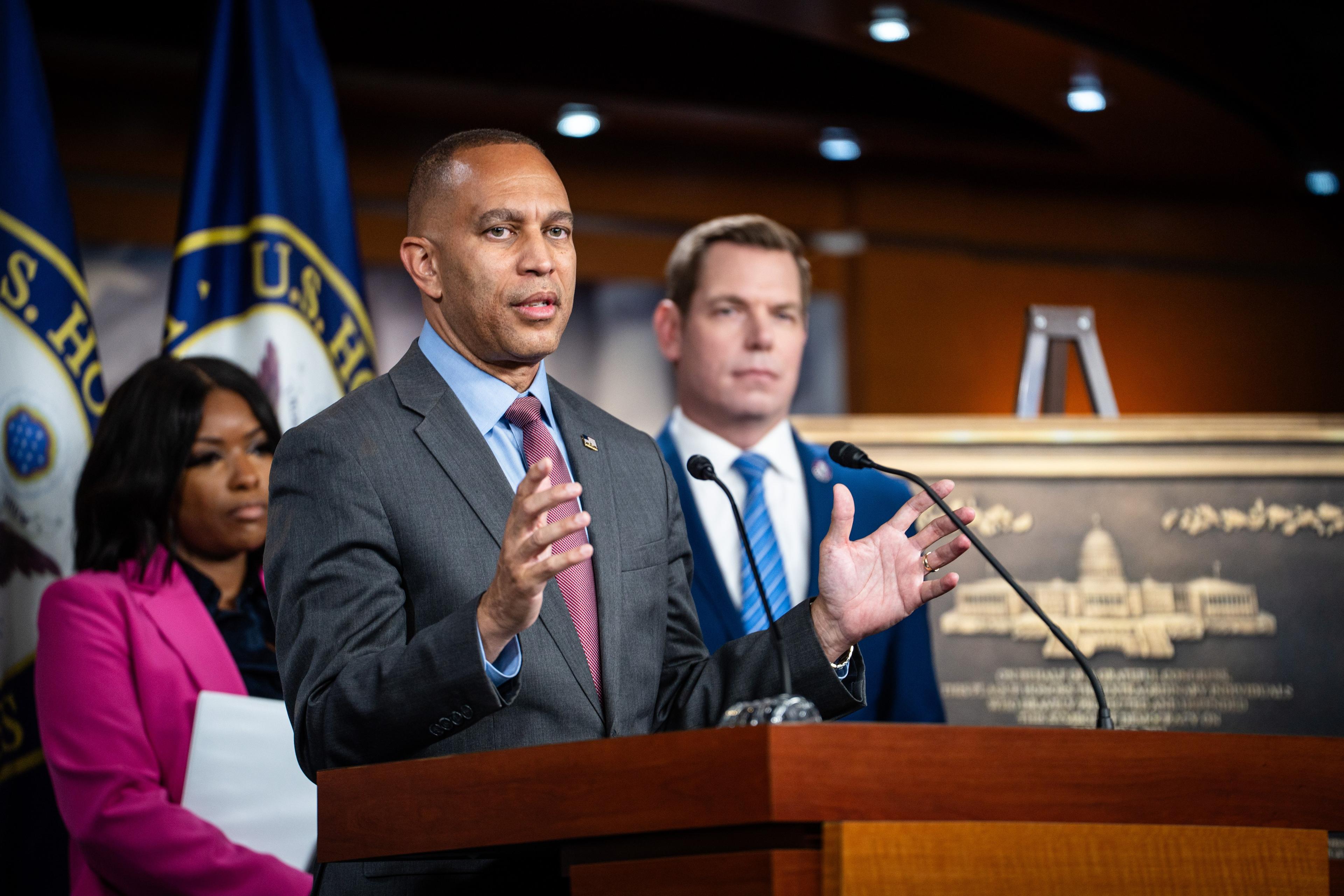
Senate Minority Leader Chuck Schumer (D-N.Y.) and House Minority Leader Hakeem Jeffries (D-N.Y.) speak after a meeting to negotiate funding legislation to avoid a government shutdown at the White House on Sept. 29, 2025. (Madalina Kilroy/The Epoch Times)
Some health-related elements of the Big Beautiful Bill are now in effect. Most will be rolled out over the next five years.
Sen. John Kennedy (R-La.) said a rollback of the Big Beautiful Bill was a nonstarter. “If my Democratic colleagues shut [the government] down, I assume they have a plan for getting it back open. But if their plan requires us to rescind the One Big Beautiful Bill, that'll happen when donkeys fly backwards.”
“This is purely a political shutdown,” Kennedy added.
Sen. Raphael Warnock (D-Ga.) voiced optimism about striking an agreement.
“I think if we [focus on] the people rather than the politicians, we'll come up with a bipartisan deal. Everybody will walk away a little bit unhappy but the people in the state of Georgia will be better off,” Warnock said on Sept. 29.
In the event of a government shutdown, nonessential personnel are furloughed without pay. A 2019 law requires that they receive back pay when funding is restored.
Service members would be required to work without pay during the shutdown. Social Security checks will continue to be issued.
Nathan Worcester and Stacy Robinson contributed to this report.
Congressional leaders failed to reach an agreement on a stopgap spending resolution that would avert a government shutdown at 12:01 a.m. on Oct. 1.
House Speaker Mike Johnson (R-La.), House Minority Leader Hakeem Jeffries (D-N.Y.), Senate Majority Leader John Thune (R-S.D.), and Senate Minority Leader Chuck Schumer (D-N.Y.) met with President Donald Trump on the afternoon of Sept. 29 but remained deadlocked as Democrats continued to demand significant additional spending on health care in exchange for their votes.
“We have very large differences on health care,” Schumer told reporters as he emerged from the White House conference. “[Trump] can avoid a shutdown, but there are still large differences between us.”
Jeffries said: “Democrats are fighting to protect the health care of the American people, and we are not going to support a partisan Republican spending bill that continues to gut the health care of everyday Americans. Period. Full stop.”
Republicans have said that a seven-week, continuing spending resolution should not be used as a substitute for the appropriations process, which involves agreement in both houses of Congress on a dozen individual spending bills.
Vice President JD Vance rejected Democrats’ use of health care policy disagreements as leverage in shutdown talks.
“We think that’s preposterous,” Vance said.
The vice president said that Republicans were willing to work to find a solution to health care issues, but not now.
“You don’t shut the government down,” he said.
Schumer said he had made some proposals to Republican leaders, but he did not say what they were.
He instead outlined what he called the consequences of not taking action, including rural hospital closures, cuts to Medicaid, and a dramatic increase in health insurance premiums for working people.
Democrats have also asked for an extension of enhanced premium tax credits, which are COVID-19-era subsidies for middle-income Americans who purchase health insurance through the Affordable Care Act, otherwise known as Obamacare.
The enhanced credits for about 20 million people in households earning more than four times the federal poverty level expire on Dec. 31.
The crux of the disagreement is that Republicans want to extend current spending levels for the next seven weeks while Congress continues to work on the 12 appropriations bills required to fund the federal government next year.
Democrats want new spending agreements to be added to the short-term spending bill, aimed at solving what they have called a health care crisis.
To pass a continuing resolution, Republicans, who hold 53 seats in the Senate, need at least seven votes from Democratic or independent senators.
The House passed a so-called “clean” continuing resolution—a bill that temporarily extends government funding at current levels without additions—on Sept. 19, but the measure failed in the Senate by a 44–48 vote. Eight Republicans did not vote.
“We are willing to sit down and work with them on some of the issues they want to talk about,” Russell Vought, director of the Office of Management and Budget, said, specifically mentioning the extension of enhanced premium tax credits.
During an appearance on “Meet the Press” on Sept. 28, Thune criticized Democrats for bogging down a simple continuing resolution.
“This is a simple, seven-week funding resolution to allow us to do a normal appropriations process,” he said. “We’re trying to do appropriation bills in the old-fashioned way.”
Congress has not agreed on the 12 appropriations bills since 1997. In most years, Congress has resorted to a series of short-term continuing funding resolutions throughout the fall, followed by a single omnibus spending bill made up of all spending decisions passed late in the calendar year.
No appropriations bill has passed both houses of Congress yet this year.
Health care has become a sticking point in congressional negotiations over a stopgap spending bill to avoid a shutdown of the federal government on Oct. 1.
The House passed a continuing spending resolution with bipartisan support on Sept. 19 that would have continued government funding through Nov. 21 at current levels. The Senate failed to approve the measure.
Here’s how health care plays into the standoff between congressional Republicans and Democrats, and the one issue that some observers think might resolve the matter.
What Democrats Want
Democratic leaders have said they will not support a continuing funding resolution unless it includes provisions to strengthen U.S. health care.
The One Big Beautiful Bill Act, often called the Big Bill, which was signed by President Donald Trump in July, eliminates nearly a trillion dollars in health care spending, largely from the Medicaid program, over a 10-year period.
Republicans say the cuts are largely aimed at eliminating fraud, waste, and abuse, and transferring some Medicaid costs from the federal government to the states.
Other provisions include increased work or community engagement requirements for Medicaid recipients and changes to a loophole that allows states to use a tax on health care providers to inflate the Medicaid payment they receive from the federal government. The bill also clarifies that people not legally residing in the United States are not eligible for Medicaid.
Democratic leaders have indicated that they will not support a continuing resolution that simply extends continuing spending legislation.
“Democrats do not support the partisan Republican spending bill because it continues to gut the health care of the American people,” House Minority Leader Hakeem Jeffries (D-N.Y.) told reporters on Sept. 24.
Jefferies said potential impacts of the Big Bill include higher insurance premiums, loss of health coverage by up to 10 million Americans, reduced spending on medical research, and financial hardship for rural hospitals.
“That’s why Democrats have drawn a line in the sand,” he said.
The Core Issue: Obamacare Expanded Tax Credits
Democrats have mentioned one issue prominently in the continuing resolution talks, which is an extension of the enhanced premium tax credits for the Affordable Care Act Marketplace—also called Obamacare—that were passed in 2021 as part of the American Rescue Plan.
Obamacare was designed to make health insurance more affordable by offering tax credits for low-income people to help with the cost of premiums.
The original premium tax credit applies to people whose income is between 100 and 400 percent of the federal poverty level. The federal poverty level for the continental United States is $15,650 in annual income for one person. The level is adjusted annually and increases based on household size.
In 2021, the American Rescue Plan created a second type of credit called the “enhanced” premium tax credit. The enhanced credit reduced the maximum amount enrollees would pay for premiums, and it opened Obamacare to people whose income is above 400 percent of the federal poverty level if their premium payment would be greater than 8.5 percent of their income.
A sharp increase in Obamacare enrollment followed, rising from 11 million in 2020 to 24 million by 2025.
This enhanced premium tax credit was intended to be temporary but was extended through 2025 by the Inflation Reduction Act.
Democrats have made a further extension of the enhanced credit a key demand in exchange for supporting a continuing resolution.
Banking on Popularity
Medicaid, Medicare, and Obamacare programs are “deeply popular” with the American people, Jeffries told reporters on Sept. 25, adding, “These are the things that we are fighting hard to protect, to fix our broken health care system.”
Aaron Dusso, chair of political science at Indiana University Indianapolis, said Democrats are banking on the popularity of health care issues to reach voters.
“Surveys tend to show that [voters] trust Democrats more than they trust Republicans on health care,” Dusso told The Epoch Times. “So it’s one of their bread and butter issues.”
The enhanced premium tax credits for Obamacare also have bipartisan support in the House. A bipartisan group of Congress members has introduced a bill to extend the enhanced credits through 2026.
Dusso said extending the enhanced tax credits could be the key to resolving the standoff, given that it already has bipartisan support.
“If a sincere offer is made to extend those tax credits for another year or more. I think that the Democrats would ultimately accept that,” Dusso said.
Any offer from Republicans would have to be “ironclad,” Jeffries said on Sept. 24, meaning written into the language of the continuing resolution.
“The problem is that Democrats only want to meet to repeat their demands,” House Speaker Mike Johnson (R-La.) said in a Sept. 24 social media post. Johnson added that Democrats were asking for “a MASSIVE $1.5 TRILLION spending HIKE in a simple 7-week funding bill.”
Any agreement will likely involve the approval of Trump.
The president canceled a scheduled meeting with Jeffries and Senate Minority Leader Chuck Schumer (D-N.Y.) on Sept. 23, saying that no talks would be productive given their demands.
Jeffries said on Sept. 25 that he is willing to negotiate.
“I’m here in the Capitol, willing to go to the White House at any time or to have that conversation,” Jeffries said. “I also know that at the end of the day, Donald Trump is the decision maker.”
Without an agreement, spending authority will expire after Sept. 30, forcing the government to suspend all but essential functions.