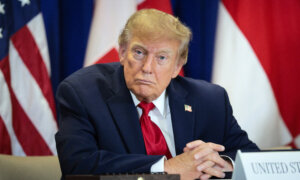
The Gaza cease-fire declaration that Trump signed with partners from Egypt, Qatar, and Turkey affirms that the signatories “pursue a comprehensive vision of peace, security, and shared prosperity in the region, grounded in the principles of mutual respect and shared destiny.”

Matan Angrest was held in a dark tunnel during his time as a hostage, said his mother, Anat Angrest. He was given more food nearer his release, she said.
Evyatar David’s father said his son was starved during his time in captivity.
"They continued to starve him even after the video; ahead of the release, they tried to stuff him," he said, referring to a video Hamas took of him that was released in August, showing him looking skeletal.
The Order of the Nile traces back to Egypt’s monarchical past, when it was used to confer a knighthood upon its recipient.
Trump said he was “deeply honored” to receive the award.
“Four coffins of deceased hostages are currently being escorted by IDF and ISA forces on their way to Israel, where they will be transferred to the National Center of Forensic Medicine for identification procedures,” the IDF said in a post on X.
“Before crossing into Israeli territory, a military protocol will be held in Gaza in their memory,” the post stated.
“During the protocol, IDF soldiers will drape the hostages’ coffins with Israeli flags, salute them, and recite a chapter from the Book of Psalms.”
"After years of suffering and bloodshed, the war in Gaza is over," he said.
“Humanitarian aid is now pouring in, including hundreds of truckloads of food and medical equipment and other supplies. Civilians are returning to their homes. The hostages are reuniting.”
“This is the day that people across this region and around the world have been working, striving, hoping, and praying for,” the prepared comments read.
“Together, we have achieved the impossible. At long last, we have Peace in the Middle East.”
The president is expected to connect the success of the first stage of the peace deal to a wider ambition to foster a “spirit of cooperation” and “put the old feuds and bitter hatred behind us.”
“What we have achieved together in recent days will change history and be remembered forever,” the comments read.
“From this moment forward, we can build a region that is strong, stable, prosperous, and united in rejecting the path of terror once and for all.”
The deal was signed in the Egyptian resort town of Sharm el-Sheikh.
The agreement includes the release of the remaining Israeli hostages, who were freed on Monday.
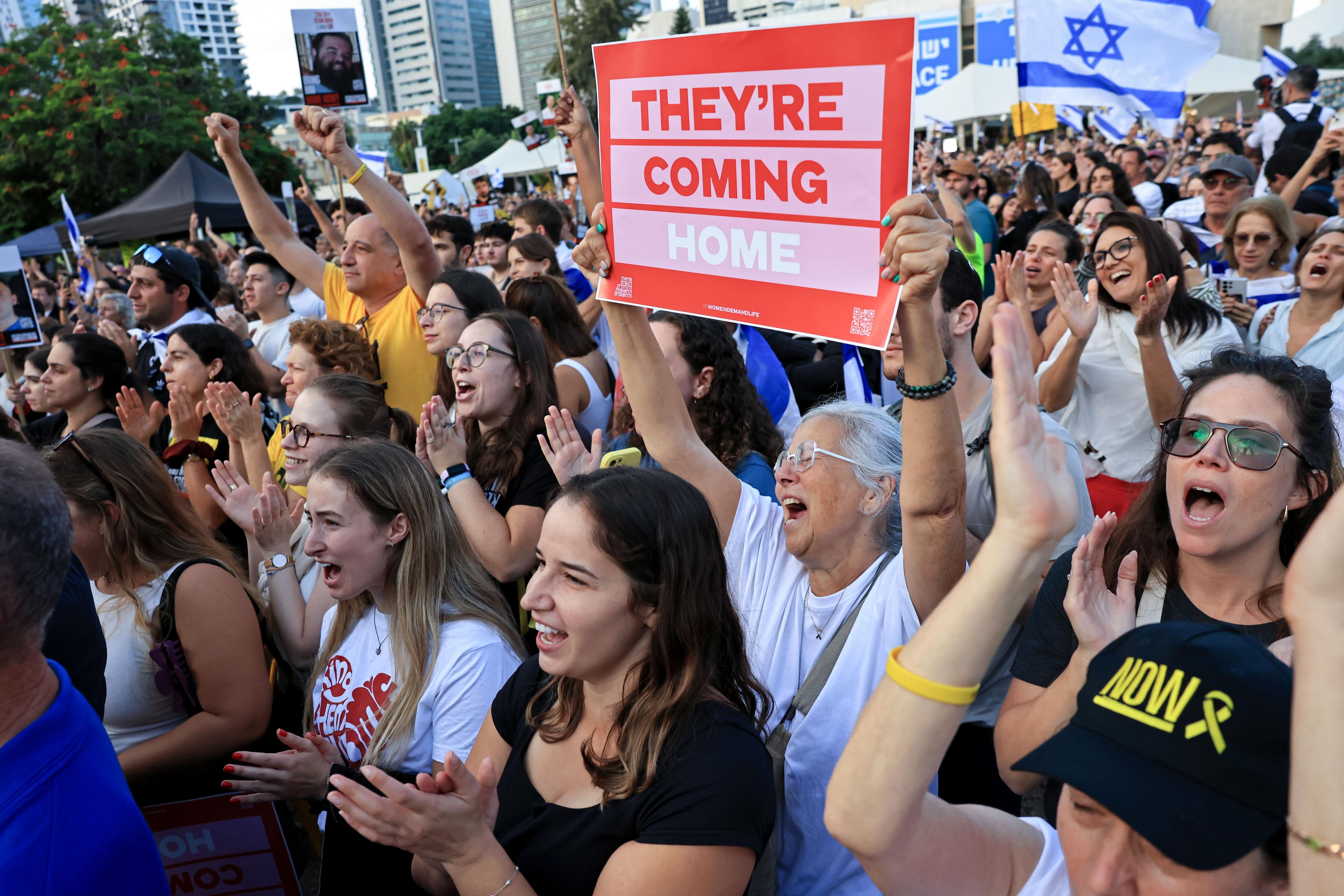

Hostages who had been held by the Hamas terrorist group for more than two years finally returned to their families in Israel on Oct. 13.
The Israel Defense Forces (IDF) posted images and video footage on X of hostages emotionally reuniting with their loved ones as part of the first phase of the cease-fire between the terrorist group and the Jewish state.
Eitan Mor was seen embracing his parents, both wearing Israeli flags around their shoulders, in a short video clip posted on the social media platform.
Mor was taken hostage by Hamas terrorists when they descended upon the Nova music festival on Oct. 7, 2023.
“In praise and thanksgiving to God, we are happy to announce that our Eitan is home!” reads a statement from the Mor family shared on X by the Bring Them Home Now campaign.
“Our beloved Eitan, how we waited for you, how we waited to see you finally after two years. We saw you for the last time today, on Hoshana Rabbah, two years ago, and we embrace you today back into the family.”
The family also thanked Israeli Prime Minister Benjamin Netanyahu, U.S. President Donald Trump, and the IDF for bringing their son home.
Numerous other families issued similar statements of thanks following the return of their loved ones.
Mor is one of 20 surviving hostages handed over by Hamas in the first phase of the cease-fire deal.
Others released on Oct. 13 include Bar Abraham Kupershtein, Evyatar David, Yosef-Chaim Ohana, Segev Kalfon, Avinatan Or, Elkana Bohbot, Maxim Herkin, Nimrod Cohen, Matan Angrest, Matan Zangauker, Eitan Horn, Gali Berman, Ziv Berman, Omri Miran, Alon Ohel, Guy Gilboa-Dalal, Rom Braslavski, Ariel Cunio, and David Cunio.
No women were among the living hostages.
“After 738 days, the last 20 living hostages have come home,” IDF spokesperson Brig. Gen. Effie Defrin said. “This is a defining moment. A moment that belongs to the people of Israel and to all those who believe in humanity.”
An international task force will work to locate any of the 28 deceased hostages who are not returned by Hamas within 72 hours, said Gal Hirsch, Israel’s coordinator for the hostages and the missing.
The hostages were brought back as part of “Operation Returning Home,” and they arrived on the eve of the Jewish holiday of Simchat Torah.
In exchange for the hostages, more than 1,900 Palestinian prisoners were released as part of the cease-fire deal.
The conflict began in October 2023, when Hamas-led terrorists crossed the border into Israel and killed 1,200 people before abducting 251 people and transporting them back to the Gaza Strip, where they were held captive.
“The minute we had inked a deal, Jared and I were already working on the implementation side, so we’re dug in, we’ll be here quite a bit, [but] that’s at the discretion of the president,” Witkoff said.
“It feels like a very honorable job.”
It is unclear what the conditions of the second phase are, but Trump’s 20-point plan to end the war, released on Sept. 30, includes the demilitarization of Hamas, and Gaza being temporarily governed by a “Board of Peace.”
According to Hamas, these prisoners are Guy Iluz, Bipin Joshi, Daniel Peretz, and Yossi Sharabi.
Iluz and Peretz were killed by Hamas in 2023, Sharabi was killed in captivity during an Israeli airstrike in 2024, and the circumstances around Joshi’s death in 2025 are unknown.
He will be in the resort town of Sharm el-Sheikh to oversee the signing of the deal to end the war between Israel and Hamas.
Israeli Prime Minister Benjamin Netanyahu will not be accompanying Trump, despite being invited, due to the summit falling on the Jewish holiday of Shemini Atezret.
Eitan Mor was seen embracing his parents, both wearing Israeli flags around their shoulders, in a short clip posted on the social media platform.
Mor was taken hostage by Hamas terrorists when they descended upon the Nova Music Festival on Oct. 7, 2023.
“In praise and thanksgiving to God, we are happy to announce that our Eitan is home!” said a statement from the Mor family, shared on X by the Bring Them Home Now campaign.
“Our beloved Eitan, how we waited for you, how we waited to see you finally after two years. We saw you for the last time today, on Hoshana Rabbah, two years ago, and we embrace you today back into the family.”
The family also thanked Israeli Prime Minister Benjamin Netanyahu, U.S. President Donald Trump, and the IDF for bringing their son home.
Mor is just one of 20 surviving hostages handed over by Hamas in the first phase of the cease-fire deal.
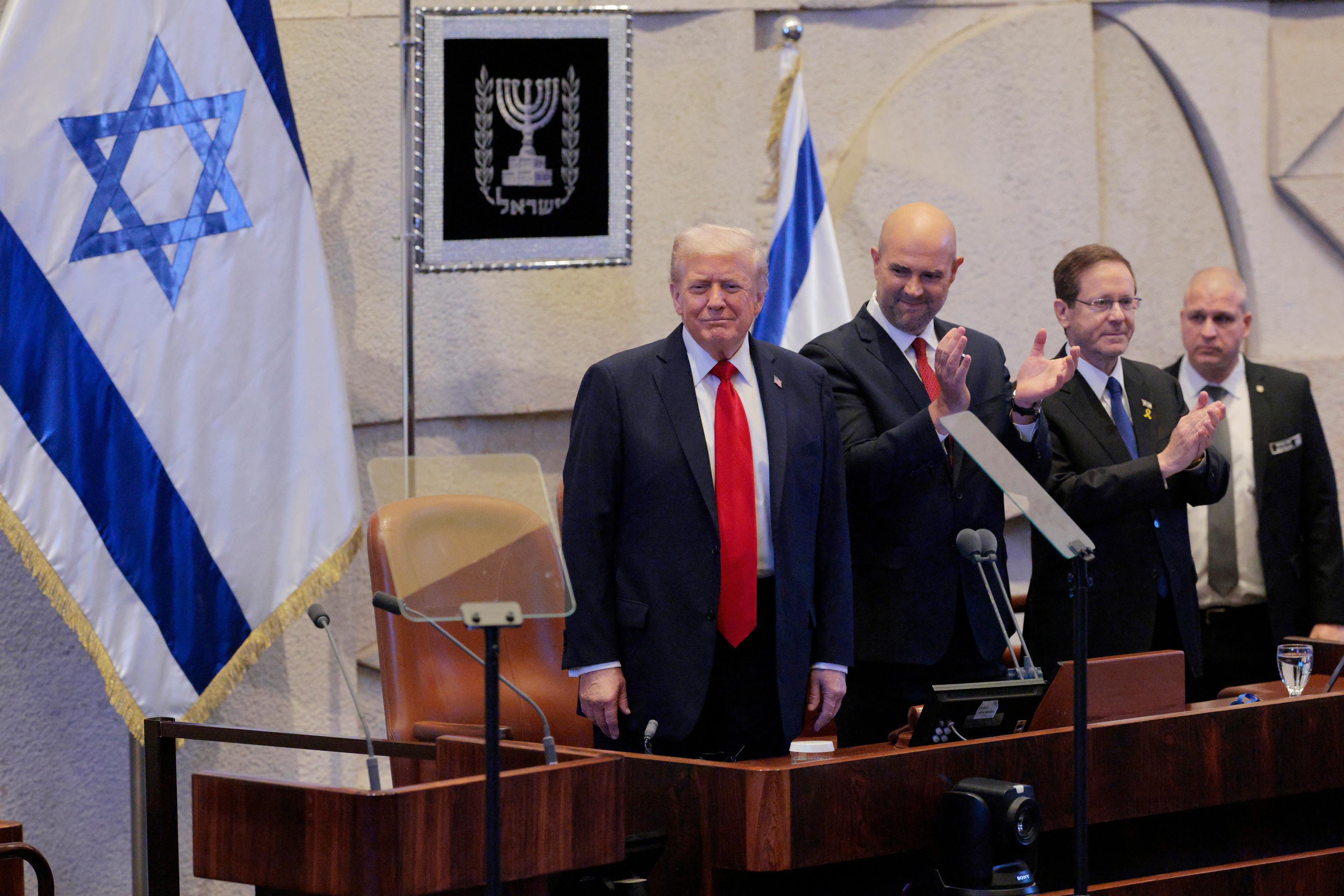

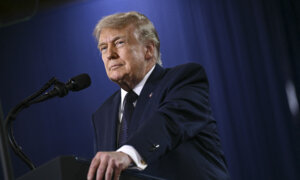
President Donald Trump declared a “day of profound joy, of soaring hope, of renewed faith” as he addressed the Israeli Knesset on Oct. 13, touting the implementation of a cease-fire designed to conclude two years of fighting in the Gaza Strip.
As he began his remarks, the president noted the release of the last 20 surviving hostages taken by Hamas on Oct. 7, 2023.
Trump said the remains of another 28 captives are also due to be turned over to Israeli custody.
The president set expectations for a cease-fire that will hold and lead to a lasting period of peace and prosperity in the Middle East.
“This is not only the end of a war, this is the end of an age of terror and death and the beginning of the age of faith and hope and of God,” Trump said.
“It’s the start of a grand concord and lasting harmony for Israel and all the nations of what will soon be a truly magnificent region. I believe that so strongly, this is the historic dawn of a new Middle East.”
Israel and Hamas had entered into a cease-fire agreement back in January, but the planned three-phase deal collapsed in March amid disagreements over its implementation.
The latest cease-fire is also set to proceed in phases.
Israeli forces within the war-torn Gaza Strip are supposed to pull back toward the outer edges of the territory, eventually coming to a buffer zone inside Gaza’s perimeter.
The Israeli government is also set to release Palestinians it has detained over the years.
The Israeli government turned over roughly 1,900 Palestinian detainees as part of the exchange on Oct. 13.
Trump credited his son-in-law Jared Kushner and special U.S. envoy Steve Witkoff for bringing about the current cease-fire deal.
As he went on, Trump described the past two years of conflict throughout the Middle East that followed the Oct. 7, 2023, Hamas attacks on Israel.
At times, he touted the successes of both the United States and the Israeli military.
“The dagger of Hezbollah, long aimed at Israel’s throat, has been totally shattered,” the president said at one point.
Hezbollah forces began launching rockets at Israeli-controlled territory shortly after the 2023 Hamas attack, leading to a cross-border skirmish between Israel and Lebanon and eventually extensive Israeli air strikes across Lebanon and a ground incursion last year.
At another point, Trump hailed the combination of U.S. and Israeli military actions against Iran in June.
Israeli forces launched a series of surprise strikes on Iran on June 13.
U.S. forces subsequently joined in shooting down retaliatory Iranian missile barrages and then struck three Iranian nuclear facilities.
“We took a big cloud off of the Middle East and off of Israel. And it was my honor to help,” Trump said of the U.S. operation against Iran.
Trump said he would like to forge a broader peace with Iran but said he would focus first on resolving the ongoing conflict between Russia and Ukraine.
“First, we have to get Russia done. We’ve got to get that one done. If you don’t mind, Steve, let’s focus on Russia first. We'll get it done,” he said.
Trump urged Israeli leaders to embrace the opportunity for peace.
“Israel, with our help, has won all that they can by force of arms. You’ve won. I mean, you’ve won. Now it’s time to translate these victories against terrorists on the battlefield into the ultimate prize of peace and prosperity for the entire Middle East,” he said.
Building on his call for peace, Trump repeatedly touted the Abraham Accords, an initiative he started during his first term in hopes of normalizing relations between Israel and a growing number of its predominantly Muslim neighboring nations.
“We’ve seen those nations that set aside their differences, reached across ancient divides, and pursued engagement are now among the most successful in the region,” Trump said.
Ahead of a planned visit to Egypt to meet with other regional leaders, Trump called for more signatories to join in the Abraham Accords.
Evgenia Filimianova contributed to this report.

Trump called it “a true honor” to address the Knesset in the “ancient and eternal capital, Jerusalem,” adding that the city “stands as living proof that a much brighter future for this entire region is truly within our grasp.”
In closing, Trump praised Israel’s endurance and progress, saying: “What you’ve done is a miracle. Look at your size. Look at your chances when it all started. … You are safer today, stronger today, and more respected today than at any time in the history of Israel.”
"It would be great if we could make a peace deal with [Iran]," he said while speaking at the Knesset.
"I think they want to, I think they're tired. … They want to survive. The last thing they want to do is start digging holes again in mountains that just got blown up.
"First, we have to get Russia done."
Trump also said his administration was "actively supporting the new president of Lebanon and his mission to permanently disarm Hezbollah's terror brigades."
Trump called on Iran’s leaders to renounce terrorism, stop threatening their neighbors, end funding for militant proxies, and “finally recognize Israel’s right to existence.”
"This is not said out of weakness. There's no weakness. But I'm going to say this, that we are ready when you are, and it will be the best decision that Iran has ever made," he added.
More than 1,900 prisoners are being released today as part of the cease-fire deal between Israel and Hamas.
Cheering crowds greeted buses as they arrived in the administrative center of the Fatah-run Palestinian Authority.
Some prisoners had their heads shaved.
Hamas also posted pictures on Facebook showing released prisoners, all wearing white baseball caps outside the Nasser Hospital in Gaza.
“Well, see now you can be a little bit nicer, Bibi, because you’re not at war anymore,” Trump said, addressing Israeli Prime Minister Benjamin Netanyahu.
Recalling his 2017 visit to Saudi Arabia, Trump said he had urged Arab and Muslim leaders to “build a future free of the grip of extremism and terror.”
He said that nations that “set aside their differences” and “reached across ancient divides” were now among the most successful in the region.
Trump praised the Abraham Accords as a foundation for expanded peace, calling on more nations to join.
Trump said that “the choice for Palestinians could not be more clear,” calling it their chance “to turn forever from the path of terror and violence.
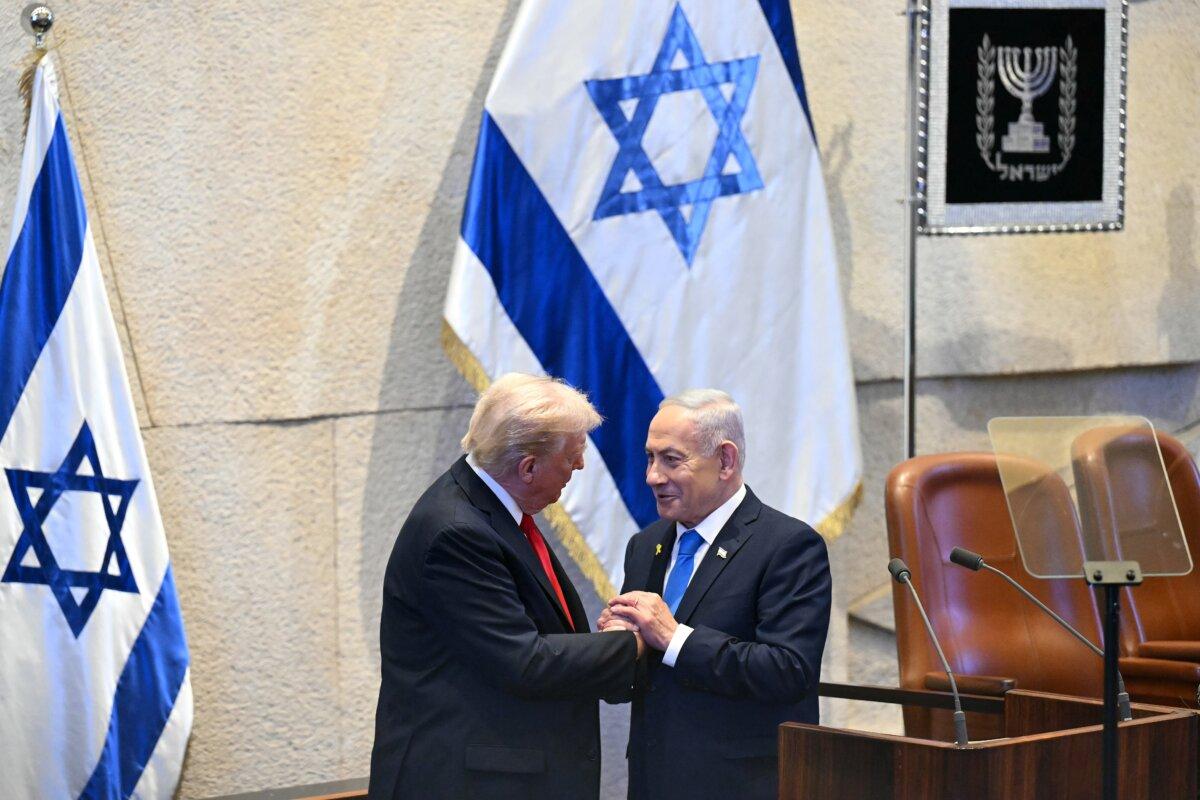
“We make the best weapons in the world ... and we've given a lot to Israel,” Trump said, adding that Prime Minister Benjamin Netanyahu would often call requesting advanced systems.
He praised Israel for using those weapons well, saying its growing strength “ultimately led to peace.”
Turning to the events of Oct. 7, Trump recalled “the worst slaughter of Jews since the Holocaust,” calling the Hamas attacks “one of the most evil and heinous desecrations of innocent life the world has ever seen.”
“The United States of America grieved alongside you,” he said, vowing that America joins Israel in "two everlasting vows, never forget and never again.”
Trump said that since Oct. 7, “Israel has been a nation at war.”
He said the “long and painful nightmare” is over, calling it “a very exciting time for Israel and for the entire Middle East.”
Trump praised the IDF for their “bravery and incredible skill,” saying the “forces of chaos, terror, and ruin” had been “weakened, isolated, and totally defeated.”
He credited “Operation Rising Lion” for Israel’s military success and the cooperation between Israeli and U.S. forces.
Knesset Speaker Amir Ohana apologised to Trump, who responded, "That was very efficient.”
Trump continued his address as the Knesset members cheered and chanted his name.
“This will be remembered as the moment that everything began to change and change very much for the better,” Trump said. “Like the USA right now, it will be the golden age of Israel and the golden age of the Middle East.”
He also thanked Arab and Muslim nations for working together to help free the hostages, calling it “an incredible triumph for Israel and the world.”
"After two harrowing years in darkness and captivity, 20 courageous hostages are returning to the glorious embrace of their families, and it is glorious," he said.
Trump praised Netanyahu as “a man of exceptional courage and patriotism,” joking that the Israeli leader was “not the easiest guy to deal with, but that’s what makes him great.”
He described Trump as “the greatest friend Israel has ever had in the White House” and called the day “momentous,” marking the return of the remaining hostages.
“At the beginning of the war, I promised to bring all the hostages home today with the indispensable help, the determined and focused help, the unremitting help of President Trump his esteem, and with the incredible sacrifice and courage of the soldiers of Israel, we are fulfilling that promise,” Netanyahu said.
Egypt’s presidential spokesperson said earlier that Netanyahu would join Trump and other world leaders at Monday’s summit.
Israeli leaders traditionally avoid traveling on the Jewish Sabbath and holidays, except in extraordinary circumstances.
“The Prime Minister thanked President Trump for the invitation but said he will be unable to attend due to time constraints ahead of the start of the holiday,” Netanyahu's office said in a statement on X, referring to the Shemini Atzeret-Simchat Torah holiday that begins tonight.
“Prime Minister Netanyahu thanked President Trump for his efforts to expand the circle of peace – peace through strength,” the office added.
“The Jewish people will remember you,” he said. “The world needs more Trumps.”
Ohana added that Israeli lawmakers will rally leaders from around the world to submit Trump’s candidacy for the Nobel Peace Prize next year, saying there was no one more deserving and referring to Trump as “the president of peace.”
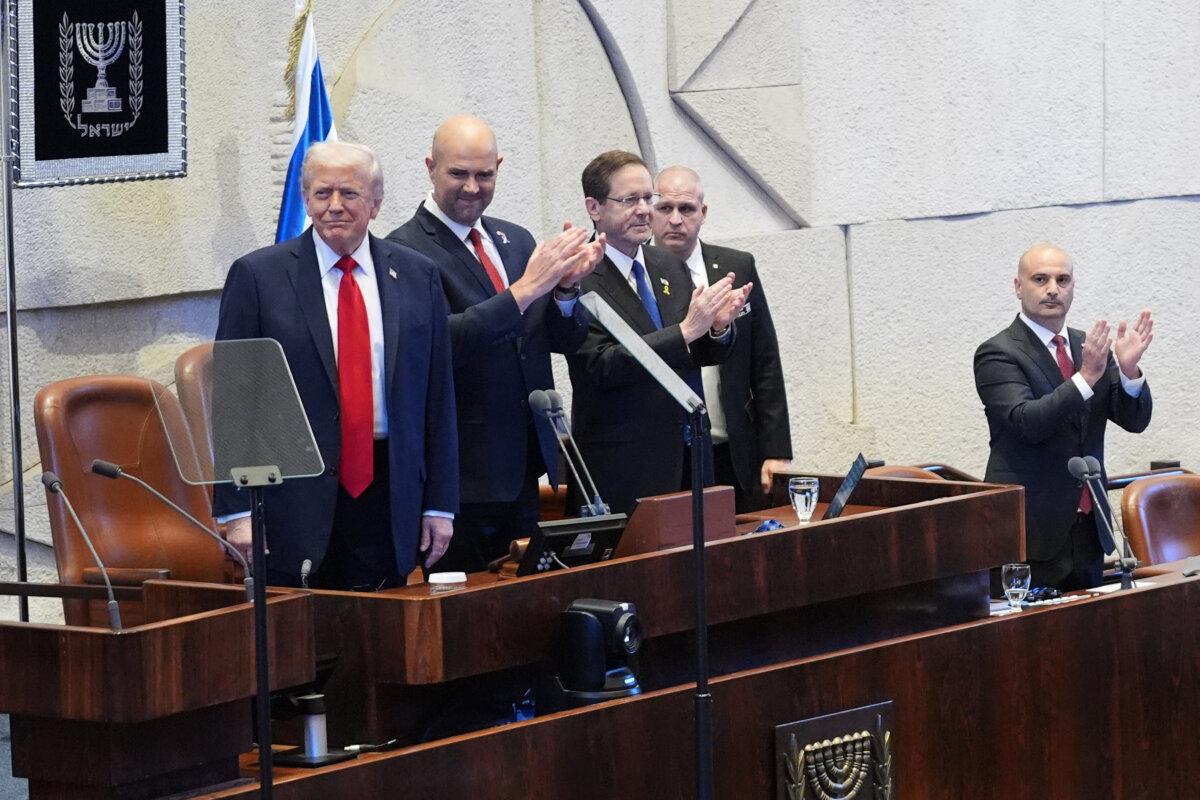
Israeli lawmakers also welcomed members of Trump’s delegation with a standing ovation and cheering.
The delegation included U.S. special envoy to the Middle East Steve Witkoff, Secretary of State Marco Rubi, Trump's son-in-law and former Middle East envoy Jared Kushner, U.S. Ambassador to Israel Mike Huckabee and Secretary of War Pete Hegseth.
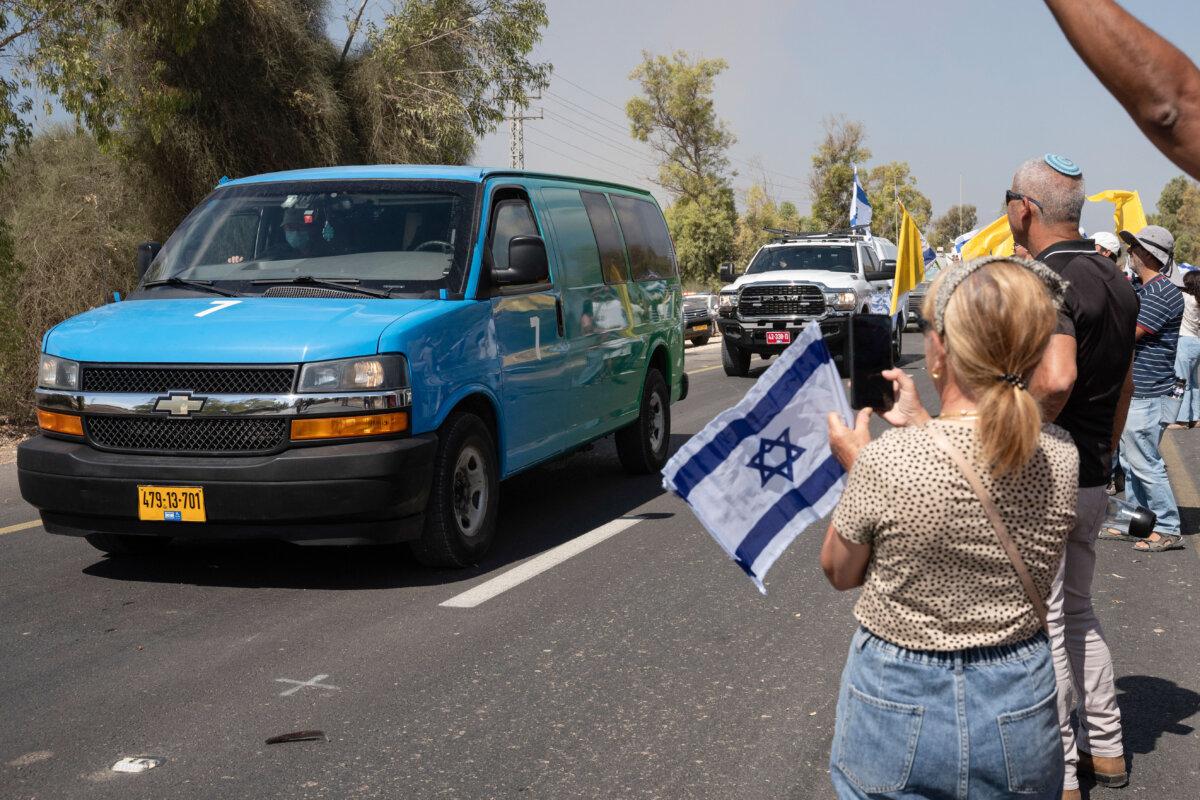
“They are currently on their way to the initial reception point in southern Israel, where they will reunite their families,” the IDF said in a post on X.
Following initial medical evaluations, six other hostages were airlifted to hospitals, accompanied by family members.
“IDF representatives are accompanying all family members who are waiting at the hospitals and continue to provide them with ongoing updates,” the military said in a statement.
"Both Palestinian President Mahmoud Abbas and Israeli Prime Minister Benjamin Netanyahu will take part in the peace summit to solidify the agreement to end the war in Gaza and reaffirm their commitment to it," the spokesperson said.
The spokesperson added that Trump and Netanyahu spoke by phone with Egyptian President Abdel Fattah al-Sisi ahead of the meeting.
The commanders and soldiers of the IDF salute and embrace the returning hostages as they make their way home to the State of Israel,” the military said in a statement. The IDF urged the public to act responsibly, respect the hostages’ privacy, and rely only on official information.
With this release, Hamas has handed over all 20 living hostages, as agreed in the first phase of the Trump-brokered Gaza peace deal.
“The peace plan requires strong international backing to succeed,” Kallas wrote in a post on X. “The EU stands ready to do its part. On Wednesday, it will restart a civilian mission to monitor the border crossing between Gaza and Egypt.”
Netanyahu rode with Trump in the U.S. presidential limousine, known as “the Beast,” and the pair were seen speaking as the convoy departed for the Knesset.
Herzog thanked Trump for his efforts in securing the release of the hostages and his commitment to building a peaceful future in the region.
Air Force One touched down at Ben-Gurion International Airport at 9:42 a.m. local time, after flying over Hostages Square in Tel Aviv, where tens of thousands have gathered, on the way to landing.
He was greeted by Israeli Prime Minister Benjamin Netanyhu, Israeli President Isaac Herzog, U.S. Ambassador to Israel Mike Huckabee, Israeli envoy to Washington Yechiel Leiter, U.S. Special Envoy to the Middle East Steve Witkoff, son-in-law Jared Kushner, and daughter Ivanka Trump, among others.
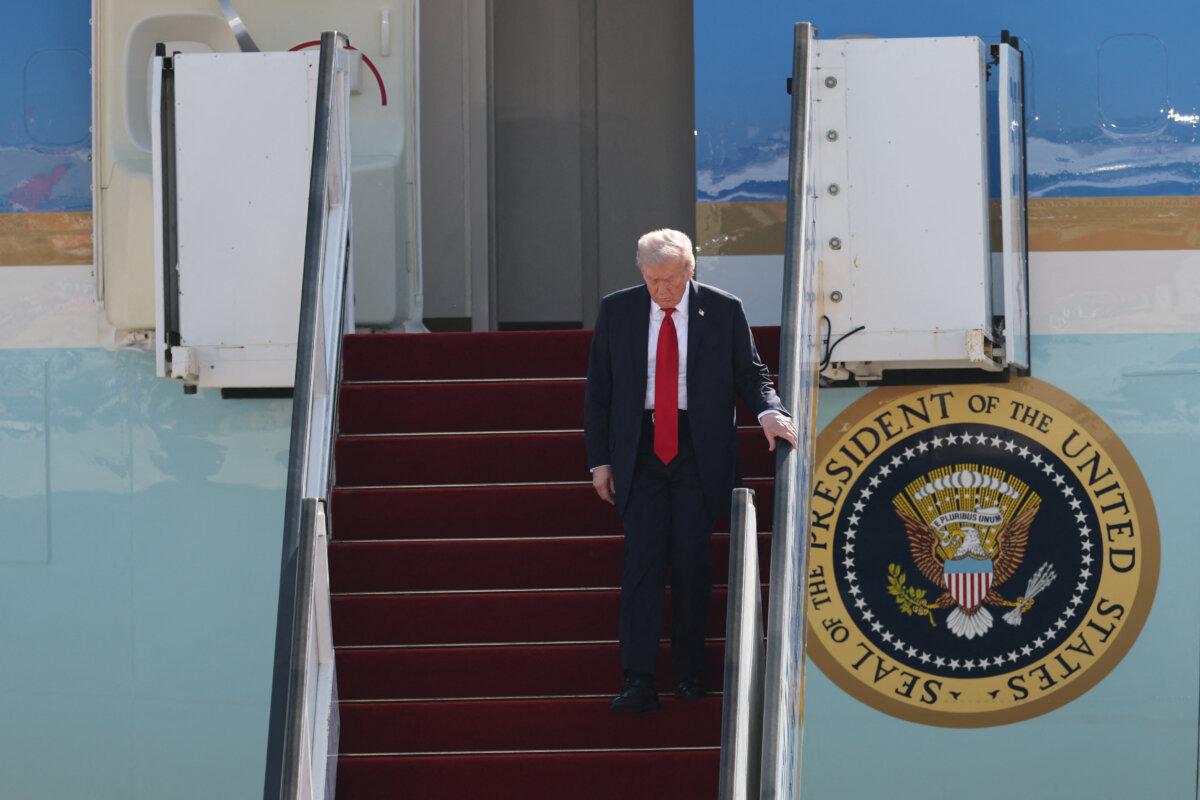


Trump will be given The Order of the Nile for his efforts to stop the war in Gaza, according to a statement from the Egyptian leader’s office.
The award will recognize Trump’s “distinguished contributions to supporting peace efforts, defusing conflicts, and most recently, his pivotal role in ending the war in Gaza,” it added.
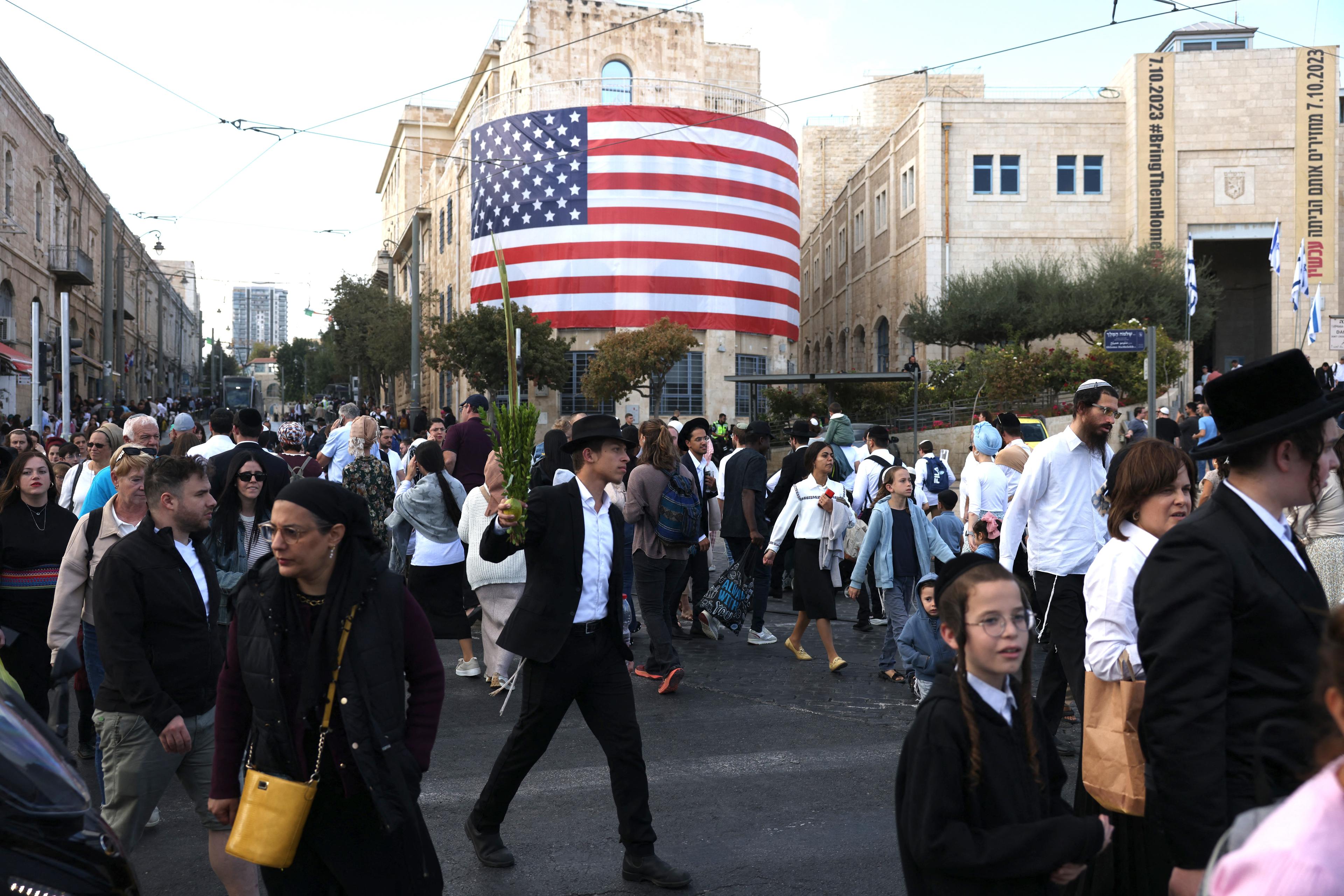

TEL AVIV—The Israeli Ministry of Defense announced that it has completed preparations to receive U.S. President Donald Trump at Ben Gurion Airport early on the morning of Oct. 13. A roughly 160-foot red carpet has been laid out at the center of the ceremonial plaza, alongside a platform for reporters and photographers, and dozens of Israeli and U.S. flags are flying.
At 11 a.m. local time (4 a.m. EDT), a trumpet fanfare will announce the president’s entrance into the Knesset plenum.
Knesset Speaker Amir Ohana, Opposition Leader Yair Lapid, and Prime Minister Benjamin Netanyahu will address the assembly in a special session convened in Trump’s honor. Their speeches will be followed by the U.S. president’s speech.
So far, only three U.S. presidents have addressed the Israeli parliament: President Jimmy Carter in 1979, President Bill Clinton in 1994, and President George W. Bush in 2008.
As part of preparations for the state visit, the Knesset building has been illuminated in the colors of both nations’ flags—blue, white, and red. Interior screens will display messages in both Hebrew and English, featuring a special event logo designed for the occasion. Two viewing areas have been designated for guests inside the building, and the event will be broadcast live via satellite worldwide.
“The visit of the U.S. president, against the backdrop of the framework for the release of our abductees, is accompanied by great emotion and expectation,” said Erez Tsidon, head of the Amun division of the Ministry of Defense, which is responsible for the reception. “Members of the Amun division have been working around the clock in recent days to ensure everything goes according to plan and that the event proceeds successfully and with dignity.”
On Oct. 11, Israel Defense Forces (IDF) Chief of Staff Lt. Gen. Eyal Zamir conducted a field tour in the Gaza Strip with U.S. Middle East envoy Steve Witkoff, Trump’s son-in-law Jared Kushner, and the commander of U.S. Central Command, Admiral Brad Cooper, among other senior commanders. Afterward, they visited the facility at the Re’im base that will receive returning hostages.
Senior Israeli political sources told Epoch Magazine in Israel that the agreement to implement the first phase of the Trump-brokered peace plan is a historic accord, representing the achievement of one of the war’s principal goals—the release of the last of the hostages taken by the Hamas terrorist group on Oct. 7, 2023.
The sources said the agreement is a direct result of Israeli military pressure on Hamas in the Gaza Strip and of the considerable assistance and backing of Trump, who succeeded in assembling an Arab-Islamic coalition to apply pressure on Hamas.
The return of all Israeli hostages, both living and dead, will immediately strip Hamas of its main leverage against Israel.
The next stage of the deal is expected to be the disarmament of Hamas and the demilitarization of the Gaza Strip, and in practice, Hamas will no longer remain a functioning governing body in the Gaza Strip—although it is not yet clear whether Hamas will agree to the U.S. plan for this part.
Israeli Defense Minister Israel Katz wrote in a post on X early on Oct. 12: “Israel’s great challenge after the phase of returning the hostages will be the destruction of all of Hamas’s terror tunnels in Gaza, directly by the IDF and through the international mechanism to be established under the leadership and supervision of the United States.
“This is the primary significance of implementing the agreed-upon principle of demilitarizing Gaza and neutralizing Hamas of its weapons.
“I have instructed the IDF to prepare for carrying out the mission.”
Shifting Battle Lines Inside Gaza
Hamas retains a reduced military leadership in the Gaza Strip led by Izz al-Din al-Haddad, with two other brigade commanders and several battalion commanders.
After the withdrawal of IDF forces in the Gaza Strip to the agreed-upon lines, a Telegram channel associated with Hamas’s military wing reported on Oct. 10 the launch of a wide-ranging operation against local Palestinian militias that collaborated with Israel during the war in the Gaza Strip.
The channel, called The Deterrent—The Force on the Ground, posted a short statement saying: “Across the Gaza Strip our strikes continue from north to south. The Deterrent’s hand is striking now at the lairs of betrayal and collaboration.”
According to reports from the Gaza Strip, on the night between Oct. 10 and Oct. 11, clashes took place in northern Gaza between Hamas forces and militia members whose activity is centered in Beit Lahia. According to reports, Hamas detained 17 of those militiamen. Hamas is also contending with two additional militias in the southern Gaza Strip that oppose it.
Hamas is portraying its mere survival of the organization in the Gaza Strip—despite the severe blow that the IDF inflicted on its military wing—as a “victory.”
Israel’s key challenge will be maintaining security in the West Bank. Senior security officials who spoke with Epoch Magazine in Israel predict that Hamas plans to turn the West Bank into its new theater of operations against Israel, led by Zaher al-Jabarin, head of Hamas’s military wing in the West Bank.
On Oct. 8, the IDF spokesman reported that Israeli forces had intercepted a weapons shipment sent by Iran’s Islamic Revolutionary Guard Corps (IRGC) and its Quds Force special operations unit to terrorists in the West Bank. The shipment reportedly contained asymmetric weapons, including anti-tank rockets, claymore-type charges, drones capable of carrying explosives, hand grenades, and machine guns. The statement noted that this seizure follows the foiling of similar weapons-smuggling attempts uncovered earlier this year.
Senior security officials told Epoch Magazine in Israel that they estimate that the release of hundreds of “heavy” terrorists as part of implementing the first phase of the agreement could strengthen Hamas in the West Bank and ignite a new wave of terror.
One senior security official told Epoch Magazine in Israel that Hamas is on the verge of defeat in the Gaza Strip, but that it will not raise a white flag in its war against Israel. It will concentrate its efforts in the West Bank to build new terror infrastructure, from which it will dispatch terrorists to carry out massacres and suicide attacks against Israelis.
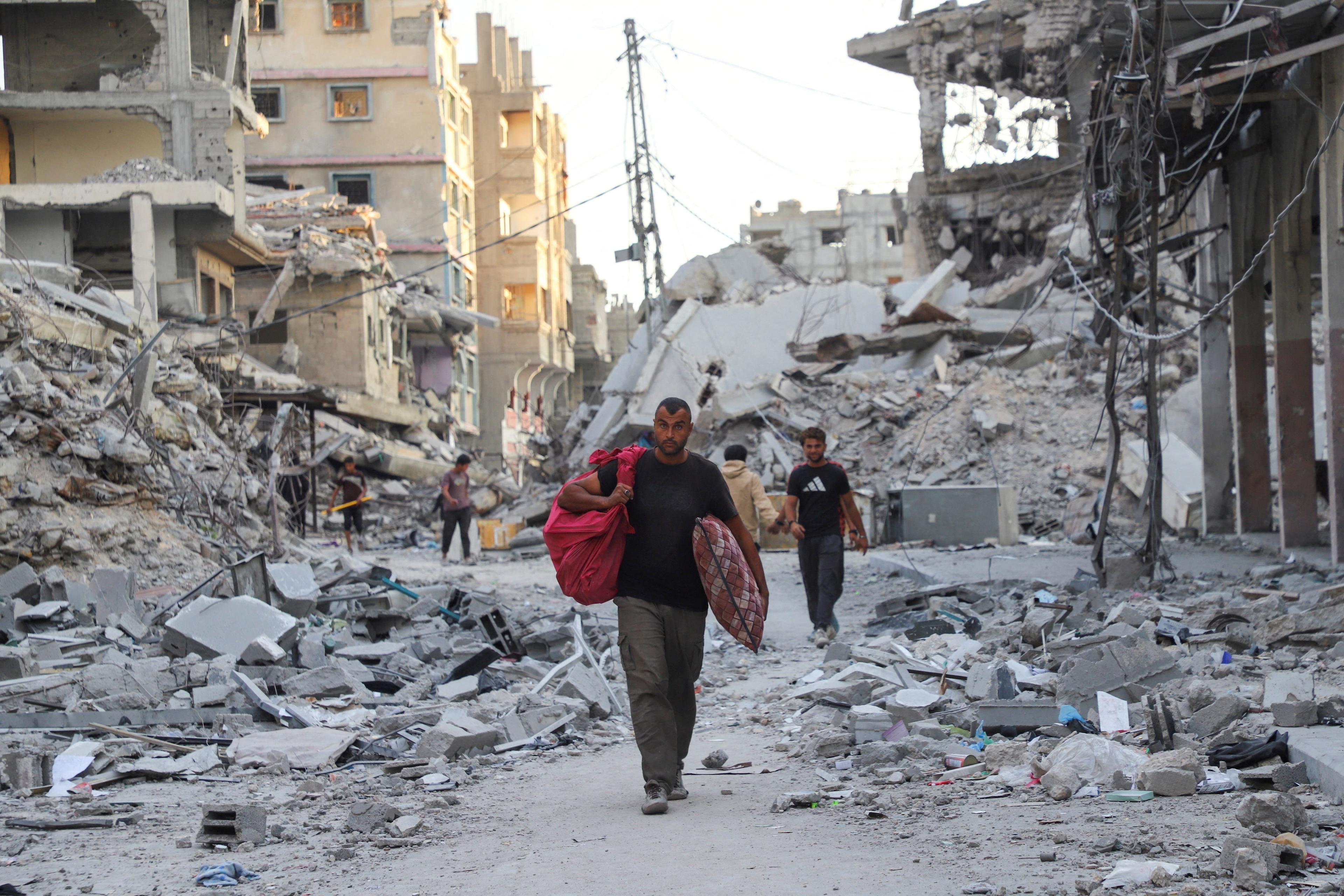

The cease-fire brokered by U.S. President Donald Trump between Israel and the Hamas terrorist group held for a third day on Oct. 12, offering hope for a more lasting peace, two years after the Oct. 7, 2023, attack.
By noon on Oct. 13, Hamas is expected to release the remaining hostages from that attack. Israel, meanwhile, is expected to release 1,700 Palestinians who have been detained in the Gaza Strip.
During an interview with ABC News on Oct. 12, U.S. Vice President JD Vance said he expected 20 living hostages to be released within 24 hours.
Israeli Prime Minister Benjamin Netanyahu said in a statement released on social media on Oct. 12: “Israel is prepared and ready to immediately receive all of our hostages.”
According to the Israeli government, a reception facility for hostages has been set up at Sheba Medical Center.
The standstill in hostilities came ahead of Trump’s planned trip to the Middle East, where he will meet with hostages, speak at Israel’s parliament, and meet with Netanyahu on Oct. 13. Trump is expected to join other leaders for a peace summit later in the day in Sharm El Sheikh, Egypt.
“We are on the cusp of true peace in the Middle East, really for the first time in my lifetime,” Vance told ABC News anchor George Stephanopoulos on Oct. 12.
Vance said it was not the administration’s intention to have troops on the ground but that there are already U.S. troops in the area to monitor the terms of the cease-fire. They will ensure that Hamas does not attack innocent Israelis.
Residents of the Gaza Strip have already started to return home after two years of conflict and devastation in the area. About 90 percent of the Gaza Strip’s 2 million residents have been displaced and more than 67,000 Palestinians have been killed, with about half of the deaths representing women and children, according to the Hamas-controlled Gaza Health Ministry. The number does not distinguish between combatants and civilians, and The Epoch Times is unable to verify its accuracy.
The United Nations stated that it was clearing roads inside the Gaza Strip for the delivery of food amid a hunger crisis in the territory. Hundreds of trucks with humanitarian aid, including 400 from Egypt, were expected in the Gaza Strip on Oct. 12.
The U.N. World Food Programme stated in August that a famine had been confirmed in the Gaza Strip for the first time, affecting more than 500,000 people. It noted that nearly all of the cropland territory was damaged or inaccessible.
Stéphane Dujarric, a spokesperson for the U.N. secretary-general, said on Oct. 10 that “after two years of war, the rehabilitation of infrastructure is urgently needed to enable recovery.” Dujarric said it was “critical that Member States extend generous funding for the response so that the humanitarian communities can scale up.”
The U.N. said it has 170,000 metric tons (about 187,400 tons) of food and other humanitarian aid and 6,000 trucks of aid waiting to enter.
Israeli Defense Minister Israel Katz said he had instructed the Israel Defense Forces to prepare to destroy Hamas’s tunnels.
“Israel’s great challenge after the phase of returning the hostages will be the destruction of all of Hamas’s terror tunnels in Gaza, directly by the [Israel Defense Forces] and through the international mechanism to be established under the leadership and supervision of the United States,” Katz said in a social media post on Oct. 12.
“This is the primary significance of implementing the agreed-upon principle of demilitarizing Gaza and neutralizing Hamas of its weapons.”
Netanyahu has thanked Trump for securing the release of the hostages. He also credited U.S. special envoy to the Middle East Steve Witkoff and Trump’s son-in-law Jared Kushner.
“I want to personally thank both of you, Steve, Jared,” Netanyahu said. “It’s been long hours. You worked around the clock, but not only worked—I think you put in your brains and your hearts.”
Reuters and The Associated Press contributed to this report.