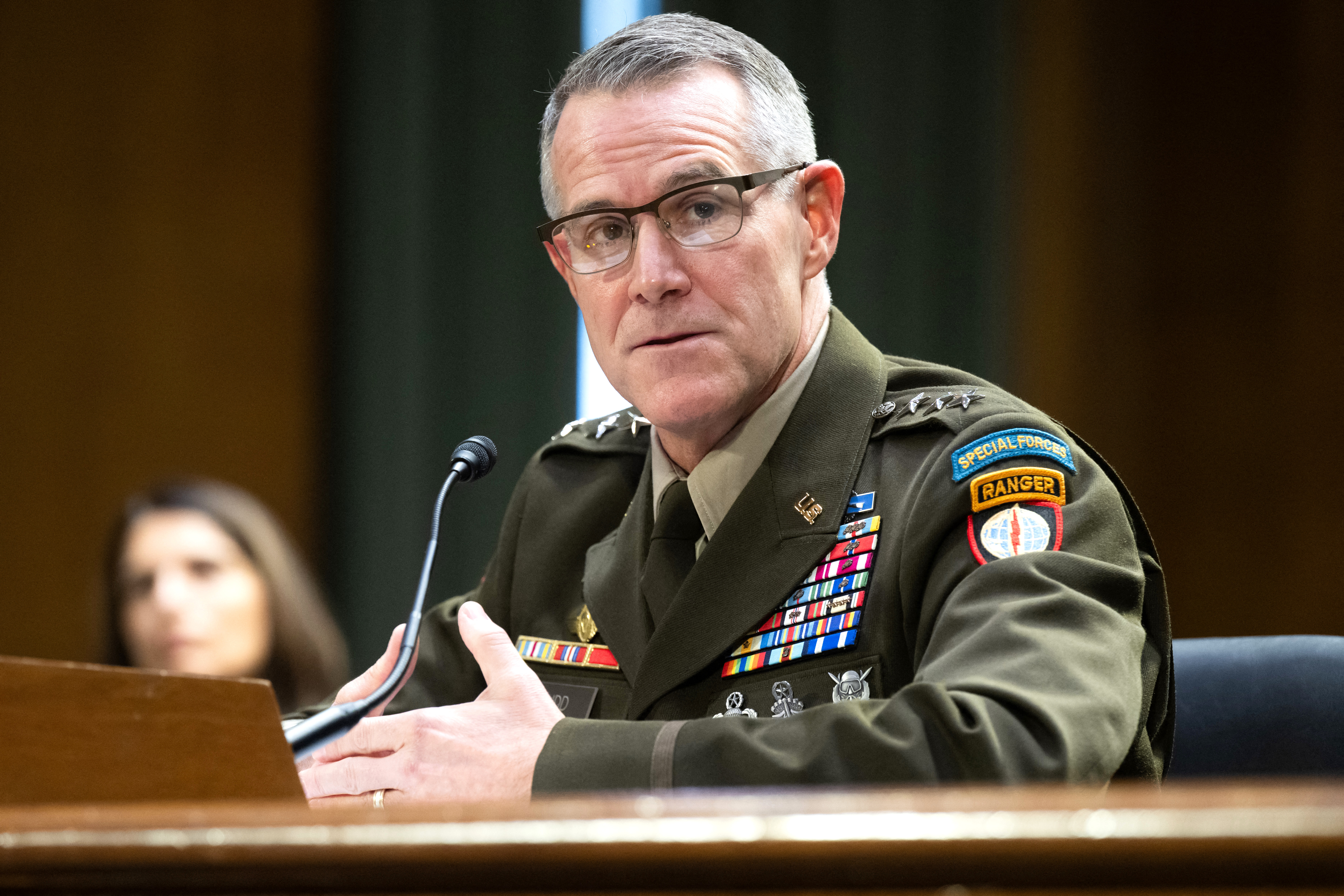

The Senate on March 10 confirmed Lt. Gen. Joshua Rudd to lead the National Security Agency (NSA) and U.S. Cyber Command, approving his nomination by a 71–29 vote.
As part of the confirmation, Rudd was promoted to the rank of general. The NSA has lacked a permanent director since President Donald Trump dismissed Gen. Tim Haugh in April 2025. In the interim, U.S. Army Lt. Gen. William Hartman has overseen Cyber Command operations.
During Rudd’s confirmation hearing before the Senate Intelligence Committee in January, lawmakers raised concerns about whether federal law enforcement and national security authorities could be used to target political critics. The questioning reflected broader debates in Washington over the potential politicization of intelligence and surveillance powers.
Rudd told senators that, if confirmed, he would strictly follow the law.
“If you are directed to target people in the United States for surveillance, will you insist that there be a judicial warrant?” Sen. Ron Wyden (D-Ore.) asked.
“If confirmed, I will absolutely commit to executing the foreign intelligence mission of the NSA in accordance with the authorities it has been given and within all applicable laws,” Rudd replied.
The NSA plays a central role in U.S. national security, focusing on cybersecurity, signals intelligence, and cryptography. The agency works closely with other intelligence organizations and the Department of War to defend government networks and collect foreign intelligence.
Its mission has expanded significantly in recent years as the growth of the internet and digital technologies has created new opportunities for intelligence gathering while also increasing cyber threats from adversaries such as China and Russia.
Rudd was born in Southern California and raised in South Carolina. He graduated from Furman University in 1993 with a bachelor’s degree in political science and received his commission through the Reserve Officers’ Training Corps (ROTC). He later earned a master’s degree in strategy and national security from the Naval War College and completed a fellowship at Duke University through the Army War College.
Rudd began his military career as a quartermaster officer before transitioning to the Army Special Forces in 1996. Over the course of his career, he has commanded units at every level, from an operational detachment to an entire Special Forces group.
Most recently, he served as commander of Special Operations Command Pacific, where he oversaw U.S. special operations forces across the Indo-Pacific region. His previous assignments include deputy commanding general for operations with the 25th Infantry Division and commander of the 3rd Operations Support Group.
Rudd has deployed in support of several major U.S. military campaigns, including Operation Enduring Freedom in Afghanistan, the Iraq War under Operation Iraqi Freedom and Operation New Dawn, and the anti-ISIS campaign known as Operation Inherent Resolve.
His experience in the Indo-Pacific comes as U.S. strategic focus increasingly centers on countering China’s influence in the region. That challenge now extends beyond conventional military competition to include cyber operations and artificial intelligence-enabled espionage.
For example, cybersecurity researchers have reported that hacking groups such as GTG-1002 have used artificial intelligence models—including Claude, developed by Anthropic—in campaigns targeting U.S. organizations.
Separately, U.S. allies in September linked the hacking group known as Salt Typhoon to two additional Chinese companies. At the same time, bipartisan lawmakers in Congress have called for the removal of China-owned VPN applications from app stores, citing potential national security risks.
The Associated Press contributed to this report.