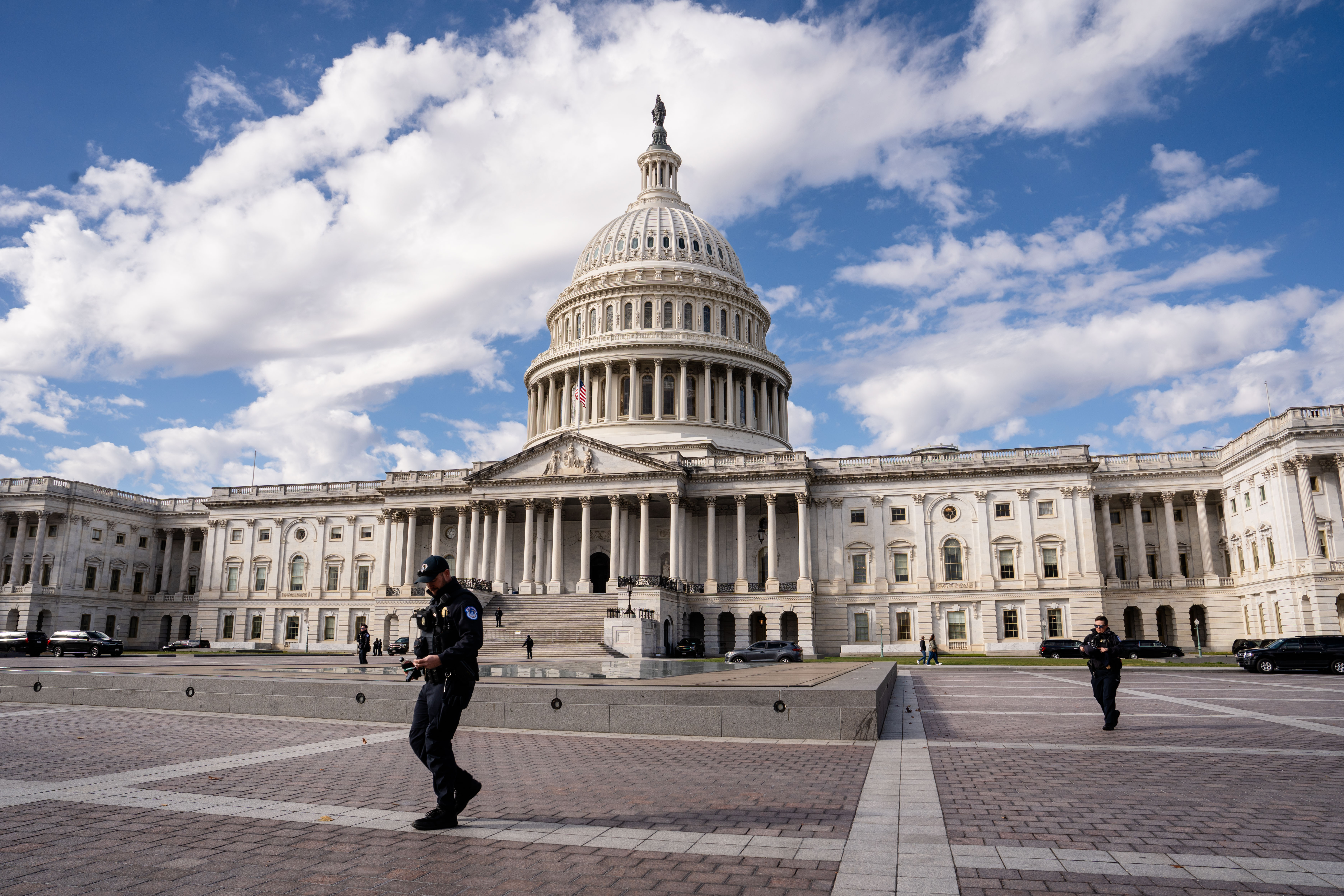
After 40 days of political gridlock, lawmakers in the U.S. Senate have reached a deal to reopen the federal government, clearing the way for the longest shutdown in U.S. history to end, while setting in motion a complex process to restart suspended programs, pay furloughed workers, and repair economic damage.
The Senate voted 60–40 on Nov. 10 to advance a temporary funding measure that consists of a “clean” stopgap bill that finances most federal agencies through Jan. 30, giving appropriators time to come up with long-term bills to fund the government through the entire fiscal year 2026, which runs through the end of September.
The agreement also includes three full-year appropriations bills wrapped into one “minibus,” which covers the Department of Agriculture, Department of Veterans Affairs, military construction, the Food and Drug Administration, and the legislative branch.
The House is expected to pass the legislation this week, with President Donald Trump indicating he will sign it.
“We’re going to be opening up our country,” Trump told reporters in the Oval Office on Nov. 10. “It’s too bad it was slow, but we’ll be opening up our country very quickly.”
Federal Workforce Returns
Roughly 1.25 million federal employees have missed paychecks since Oct. 1, the day the shutdown began. Once Trump signs the bill into law, agencies will recall furloughed staff as soon as practicable and begin issuing back pay for the entire shutdown period, as required under the Government Employee Fair Treatment Act of 2019.
That law guarantees retroactive pay to both furloughed and “excepted” workers who stayed on the job without pay. The Senate-approved measure also reverses layoffs ordered via reduction-in-force (RIF) notices issued during the shutdown and pauses new ones through the funding window, stabilizing federal employment rolls after weeks of uncertainty.
Federal contractors, however, are not covered. While contract work can resume immediately, contract employees will not receive compensation for missed work—making the shutdown’s financial toll permanent for thousands.
Under the Government Employee Fair Treatment Act, agencies must issue back pay “at the earliest date possible” after funding is restored, regardless of scheduled pay dates. That means workers will be paid as soon as agency payroll systems can process the payments, rather than waiting for the next regular pay cycle.
Economic Impact
The 40-day lapse left a mark on an economy already strained by high interest rates and other factors. Flights were canceled, government contracts were delayed, and some food-aid recipients saw their benefits disrupted.
Much of the lost economic activity will be recovered as operations resume and workers receive back pay, but the Congressional Budget Office (CBO) estimates about $11 billion in economic output will be permanently lost—canceled trips and deferred purchases that won’t be made up.
“Although most of the decline in real GDP [gross domestic product] will be recovered eventually, CBO estimates that between $7 billion and $14 billion (in 2025 dollars) will not be,” the agency said, adding that fourth-quarter GDP will be lower than it would have been in the absence of a shutdown.
A six-week shutdown could trim fourth-quarter growth by 1.5 percentage points, the agency said, though reopening could boost first-quarter growth next year by 2.2 points as spending rebounds.
Health Care Subsidy Fight Postponed
The deal leaves unresolved one of the Democrats’ central demands: an extension of the expiring Affordable Care Act (ACA) premium tax credits.
Under the compromise agreement, the Senate will hold a vote in mid-December on whether to extend the subsidies, which otherwise expire Jan. 1. The vote is not expected to reach the 60-vote threshold needed for passage.
That delay means health insurance premiums in 2026 will be higher for millions of Americans unless lawmakers act separately. Republicans have said they prefer to address rising costs through health-savings accounts and market-based reforms, rather than automatically renewing the ACA subsidies.
Food Assistance to Resume
The shutdown triggered a tangle of court orders and agency directives that left many states unsure whether they could issue full Supplemental Nutrition Assistance Program (SNAP) benefits.
The reopening bill funds SNAP and the related Women, Infants, and Children program through Sept. 30, 2026, restoring normal operations and state administrative funding.
Households in some states, such as Hawaii and New Jersey, have already received full monthly allocations, while others—including Nebraska and West Virginia—are still waiting. Full funding should normalize payments, but the catch-up could be uneven.
Once the government reopens and the Department of Agriculture issues updated SNAP guidance, states that issued only partial payments will make up the remainder, though the process could take some time. That’s because of variations in state systems, some of which are decades old and required manual overrides or computations to carry out court-mandated partial payments during the shutdown—now to be followed by a reversal of those adjustments.
Flights and Transportation
Air travel will remain turbulent for several days even after reopening.
The Federal Aviation Administration (FAA) last week ordered airlines to cut up to 10 percent of flights at 40 major airports because of staffing shortages among air-traffic controllers working without pay. More than 7,900 flights were canceled between Friday and Monday.
Transportation Secretary Sean Duffy said last week that the FAA will lift those restrictions as quickly as possible, but that the agency will continue flight reductions until staffing levels stabilize among air traffic controllers, and after officials can ensure optimum flight safety.
Duffy urged air traffic controllers to get back to work to minimize disruption. “To those who have worked throughout the shutdown—thank you for your patriotism and commitment to keeping our skies safe,” he said in a post on social media. “I will work with Congress to reward your commitment.”
Other Key Impacts
National parks and museums are expected to reopen gradually as furloughed workers return to employment and maintenance backlogs are cleared.
Federal courts, immigration hearings, and regulatory enforcement will resume normal schedules after operating at limited capacity for weeks.
Small-business, housing, and farm-support programs—such as Small Business Administration and Department of Agriculture loans and Federal Housing Agency mortgage processing—will restart and begin clearing a backlog of applications and delayed grants.
The Associated Press contributed to this report.