
President Donald Trump confirmed on Dec. 10 that the United States seized a large oil tanker off the coast of Venezuela.
Although the current U.S. administration said the tanker was used to transport sanctioned crude oil from Venezuela and Iran, Caracas described the U.S. actions as “international piracy.”
The latest operation added to brewing tensions between Washington and Caracas as the White House continues to pressure Venezuelan leader Nicolás Maduro to step down.
Here is what to know about the situation.
The Operation
Trump told reporters about the operation, although he stopped short of providing additional details.
“As you probably know, we’ve just seized a tanker on the coast of Venezuela,” Trump said. “Large tanker, very large, largest one ever seized, actually.”
Guyana’s maritime authority said on Dec. 10 that the Skipper supertanker, loaded with Venezuelan crude oil, was improperly flying the Guyanese flag. After being informed of the U.S. seizure, the agency said it would pursue action over the unauthorized use of its flag.
“We have seen a growing and unacceptable trend of vessels using the Guyana flag without registration,” the department said.
Attorney General Pam Bondi confirmed on X that the Coast Guard, FBI, Homeland Security Investigations, and the Pentagon jointly executed the seizure warrant.
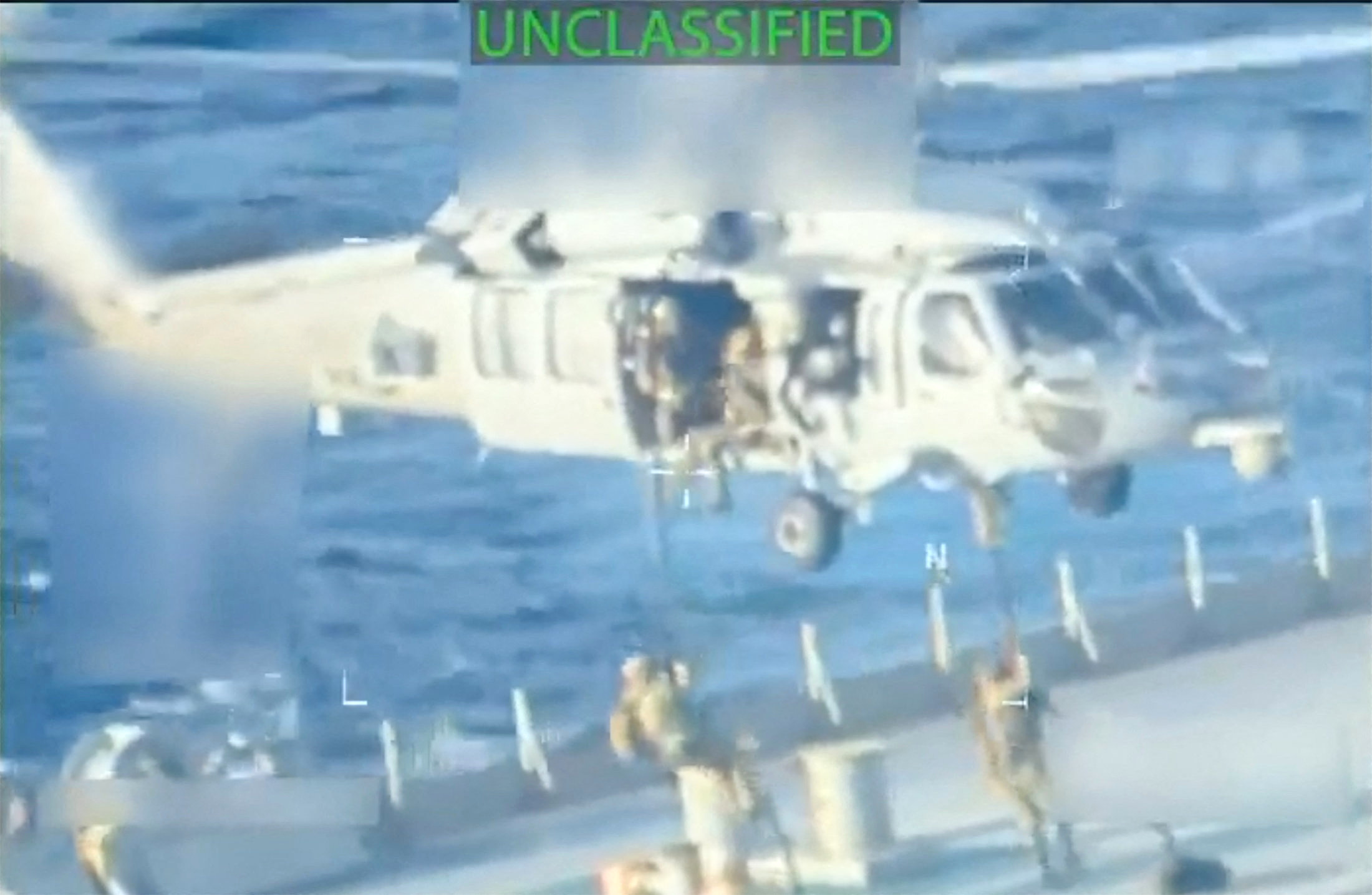
Bondi also posted a 45-second video of the raid on X, which shows armed U.S. personnel dropping from helicopters and spreading across the vessel’s deck. No crew members appeared.
“For multiple years, the oil tanker has been sanctioned by the United States due to its involvement in an illicit oil shipping network supporting foreign terrorist organizations,” Bondi said in the social media post.
Oil or Narcotics
Senior administration officials also indicated that the incident was related to narcotics.
Appearing before a House Homeland Security Committee hearing on Dec. 11, Homeland Security Secretary Kristi Noem defended the operation as part of the White House’s counterdrug efforts in Latin America.
Noem told lawmakers that “lethal doses of cocaine” had been prevented from coming into the country because of the operation. Under the president’s direction, she said, the United States is fighting back against a “regime that is systematically covering and flooding [the] country with deadly drugs and killing [the] next generation of Americans.”
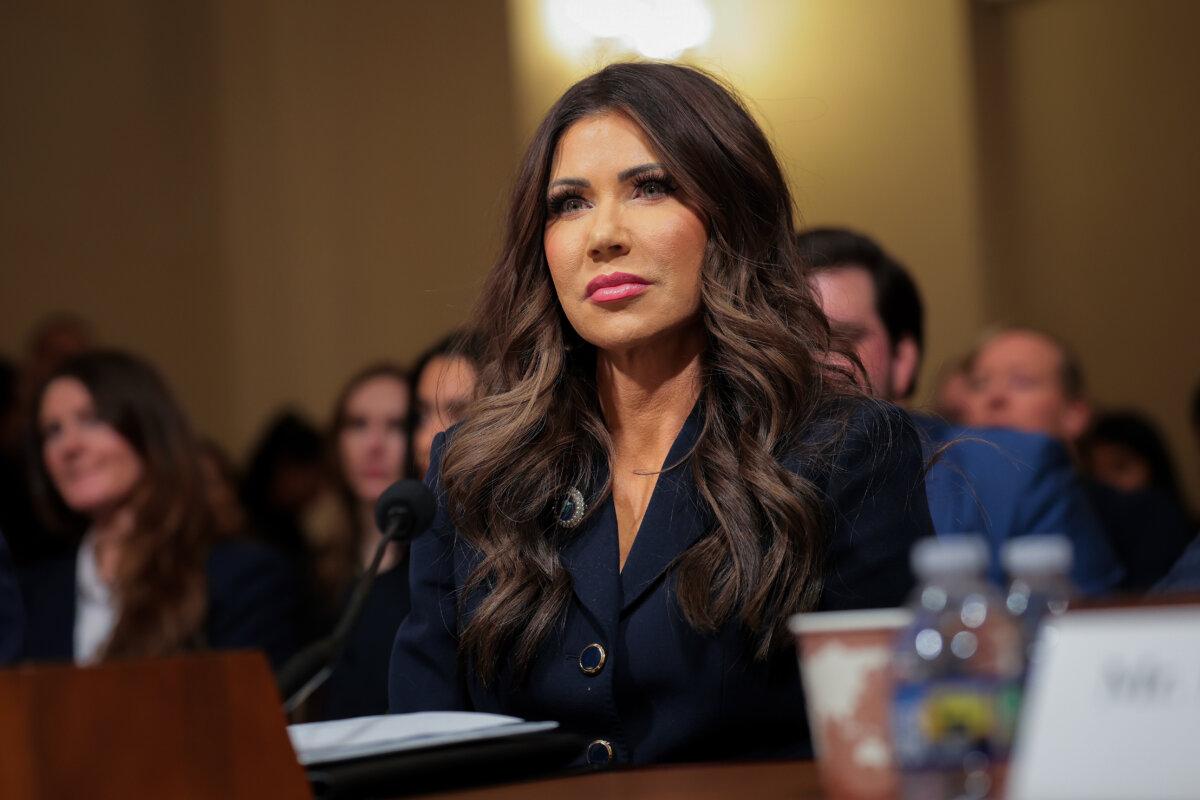
Secretary of Homeland Security Kristi Noem testifies before the House Committee on Homeland Security in the Cannon House Office Building in Washington on Dec. 11, 2025. (Anna Moneymaker/Getty Images)
When asked whether U.S. operations in Latin America were tied to oil or narcotics, White House press secretary Karoline Leavitt said the administration was focused on a broad range of priorities in the Western Hemisphere. She said similar seizures could be carried out to prevent oil revenues from flowing to the illicit drug trade.
“We’re not going to stand by and watch sanctioned vessels sail the seas with black market oil, the proceeds of which will fuel narcoterrorism of rogue and illegitimate regimes around the world,” Leavitt told reporters at a Dec. 11 news briefing.
In recent weeks, the Trump administration has launched military strikes on vessels it said were smuggling drugs into the United States. The government has also designated the Cártel de los Soles as a foreign terrorist organization, asserting that the group operates under Maduro’s direction.
During remarks at the White House on Dec. 2, Trump indicated that he may move ahead with land strikes in Venezuela. He further warned that additional countries implicated in drug trafficking into the United States could be subject to military action.
‘International Piracy’
It remains unclear what will happen to the crude oil on the ship.
“We keep it, I guess,” Trump said. “I don’t know.”
Yván Gil Pinto, Venezuela’s foreign affairs minister, called it “blatant theft” and “international piracy” on social media.
“The true reasons for the prolonged aggression against Venezuela have been laid bare,” Pinto said in a Dec. 11 statement posted to Instagram.
“It is not migration. It is not drug trafficking. It is not democracy. It is not human rights. It has always been about our natural wealth, our oil, our energy, the resources that belong exclusively to the Venezuelan people.”
The Iranian Embassy in Caracas, Venezuela, in a Dec. 11 X post, criticized the U.S. actions, labeling them as “state piracy” and accusing the United States of engaging in “armed robbery at sea.”
Oil Prices
Energy prices have responded little to tensions brewing in Latin America.
The U.S. benchmark for oil prices, West Texas Intermediate, fell by 4 percent this week to less than $58 per barrel. This year, they are down by 20 percent.
Likewise, the global benchmark for oil prices, Brent, dropped by 4 percent this week to about $61 per barrel. Year-to-date, Brent has plunged by 18 percent.
“Some people suggest that seizing an oil tanker could be considered an act of war, but if there is indeed a valid justification, we may learn more soon,” Phil Flynn, energy strategist at The PRICE Futures Group, said in a Dec. 11 note.
“For now, the market seems willing to give the President the benefit of the doubt.”
Venezuela exports more than 900,000 barrels of oil per day, higher than last year’s average of about 656,000 barrels.
Jack Phillips and Reuters contributed to this report.
Correction: A previous version of this article misspelled the name of Yván Gil Pinto, Venezuelan foreign affairs minister. The Epoch Times regrets the error.