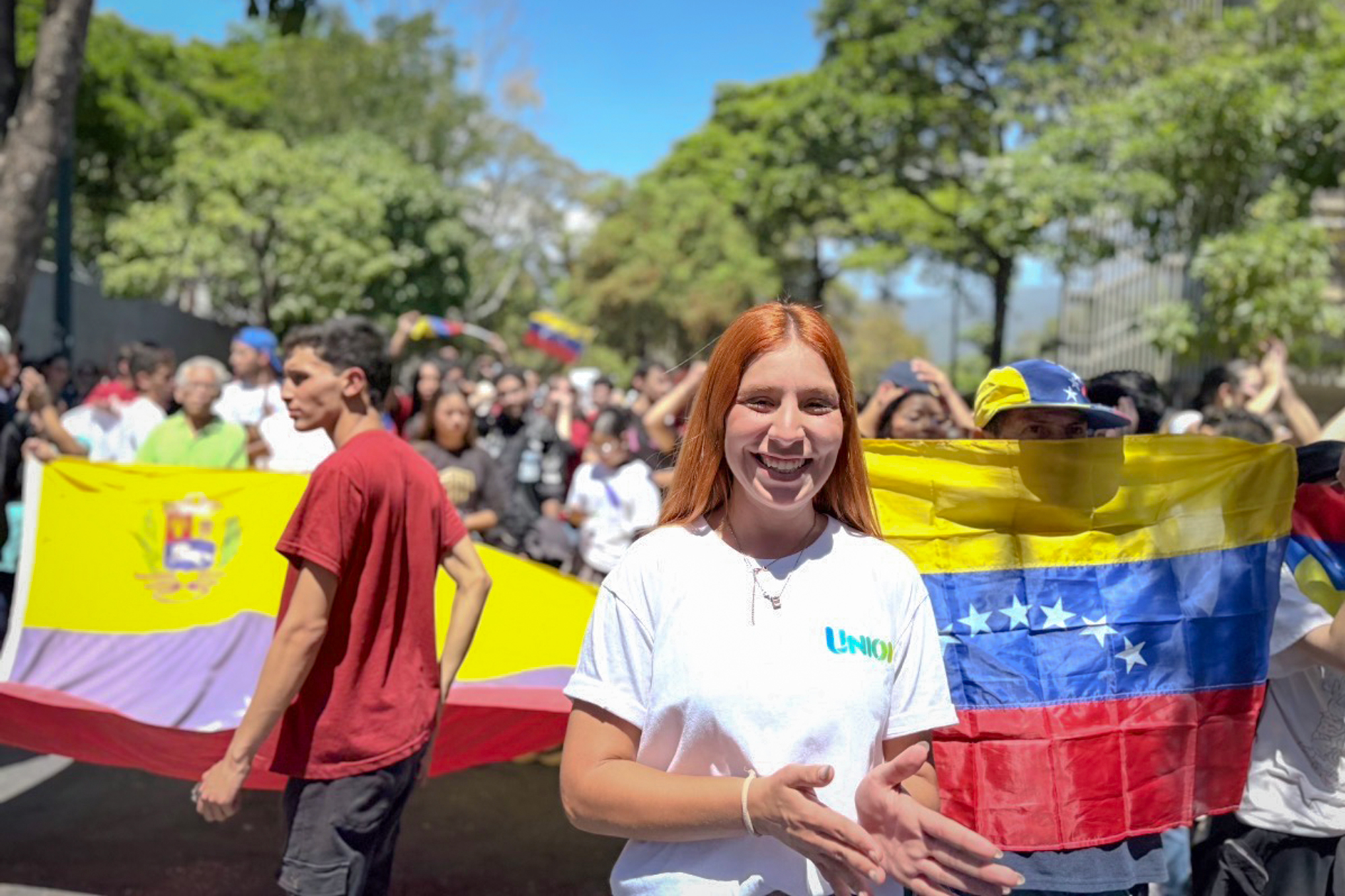

Since U.S. forces captured Nicolás Maduro, Venezuelans have been seeing some rights return to the socialist country, such as freedom of speech, sources told The Epoch Times.
This is despite the fact that top leaders from the same oppressive regime remain in power.
“Everyone is feeling that we are getting some freedom,” said 21-year-old Jacobo Malkhasian, who lives in the capital city of Caracas.
“We’re getting some rights ... some possibilities to now have free speech.”
Other aspects of daily life, such as high inflation, have yet to see improvements after the overnight U.S. operation to capture former Venezuelan leader Maduro on Jan. 3, Malkhasian said.
The Epoch Times spoke to several Venezuelans living in their home country and expats in the United States who expressed gratitude for President Donald Trump and the U.S. military. They said a sense of relief has settled over the South American country in the past few months.
However, achieving a lasting, peaceful, and free society in Venezuela could take years because of what they described as a population with post-traumatic stress disorder.
Freedom of Speech Returns
Prior to Maduro’s capture, there was no real news coverage or sense of freedom of speech in Venezuela, multiple sources explained.
“[Maduro] took control of what the media says, and if the media didn’t say what he wanted, he destroyed,” Malkhasian said. “The news in Venezuela always was [an] alternate reality—the Chavista reality.”
Chavistas are supporters of Chavismo, a political ideology named after the late Hugo Chávez, Maduro’s predecessor.
Media coverage in Venezuela before Maduro’s capture reflected Russia as a necessary ally and the United States as an enemy, said Malkhasian, who works with a student political opposition group called UNION at the Central University of Venezuela.
Malkhasian described his type of work as difficult and dangerous up until Maduro’s capture.
“If you talk, you go to jail. If you make any discussions that get the government uncomfortable, you go to jail—you disappear,” he said.
Basic Necessities
“There is freedom, but in the economic way, there’s trouble,” Malkhasian said.
One Venezuelan woman who spoke to The Epoch Times, 24-year-old Oriana Campos, said she could not establish a strong enough internet connection for a phone interview and instead supplied written replies via WhatsApp.
Right now, the priority should be on securing water and electricity supplies, and workers’ purchasing power, Campos said.
Water and electricity issues vary dramatically depending on the area, a Venezuelan man wishing to remain anonymous said. Some places have adequate service, while his area might be without water for two or three days at a time, he said.
But he has seen improvements in utilities issues, including internet speeds, he said.
Meanwhile, prices remain high and wages low due to nearly three decades of “laziness, corruption, destruction, and theft of resources” by the socialist government, Campos said.
Venezuela experienced hyperinflation under its socialist regime. World Bank data show the country’s inflation rate skyrocketed to more than 225,000 percent in 2018. It has since come down, but remains at elevated levels.
The anonymous Venezuelan said that after Maduro’s capture, he saw food prices decrease, though not dramatically. That hasn’t happened in years.
Right to Assembly, Expression
Campos explained that she feels less afraid to assemble, express, and even discuss such matters with The Epoch Times since Maduro’s capture. Before, she said, state security forces would never have allowed a protest to reach the National Assembly.
“When they saw a protest on the street, they repressed [it] with tear gas, pellets, or locks to prevent people from walking further,” Campos said.
The anonymous Venezuelan source also said he would have never dared to speak to The Epoch Times before Maduro’s capture.
He recalled that during the 2024 election, the country knew the opposition party had won, but the Maduro regime claimed victory anyway.
The regime would send out armed forces to “shoot whoever they had to shoot” to stamp down protests, he said.
The United States continuing to put pressure on Venezuela, Malkhasian said, could help ease the shift to a new stage in the country’s existence.
“I think that Venezuela is going to be a great country in 20 years,” he said. “We’re going to look back, and we’re going to say, ‘We did it.’”
—Troy Myers; Stacy Robinson
BOOKMARKS
The Senate rejected a war powers resolution to halt further U.S. military operations against Iran on Wednesday. The bill, sponsored by Sen. Tammy Duckworth (D-Ill.), failed to advance in a 52–47 vote.
The U.S. and Israel are weighing a week-long ceasefire against Hezbollah, officials told Epoch Magazine Israel. Israeli Prime Minister Benjamin Netanyahu is expected to convene his security cabinet on April 15 to discuss military operations in Lebanon, the officials said.
Treasury Secretary Scott Bessent expects gas prices to drop back to around $3 a gallon by September.“I’m optimistic that during the summer, we will see gas with a three in front of us sooner rather than later,” he told reporters at an April 15 press briefing.
Honda is recalling more than 440,000 Odyssey minivans due to a software programming error that could cause airbags in the second- and third-row seats to accidentally deploy during rough driving conditions. The minivans are model years 2018–2022 and were manufactured between January of 2017 and June of 2022, the company said in a report to the National Highway Traffic Safety Administration.
Kevin Cichowski, a Democratic candidate in Florida’s upcoming gubernatorial primary, has been arrested for allegedly beating his parents. Cichowski is one of 14 candidates running to succeed Gov. Ron DeSantis, who is serving his final term.
—Stacy Robinson