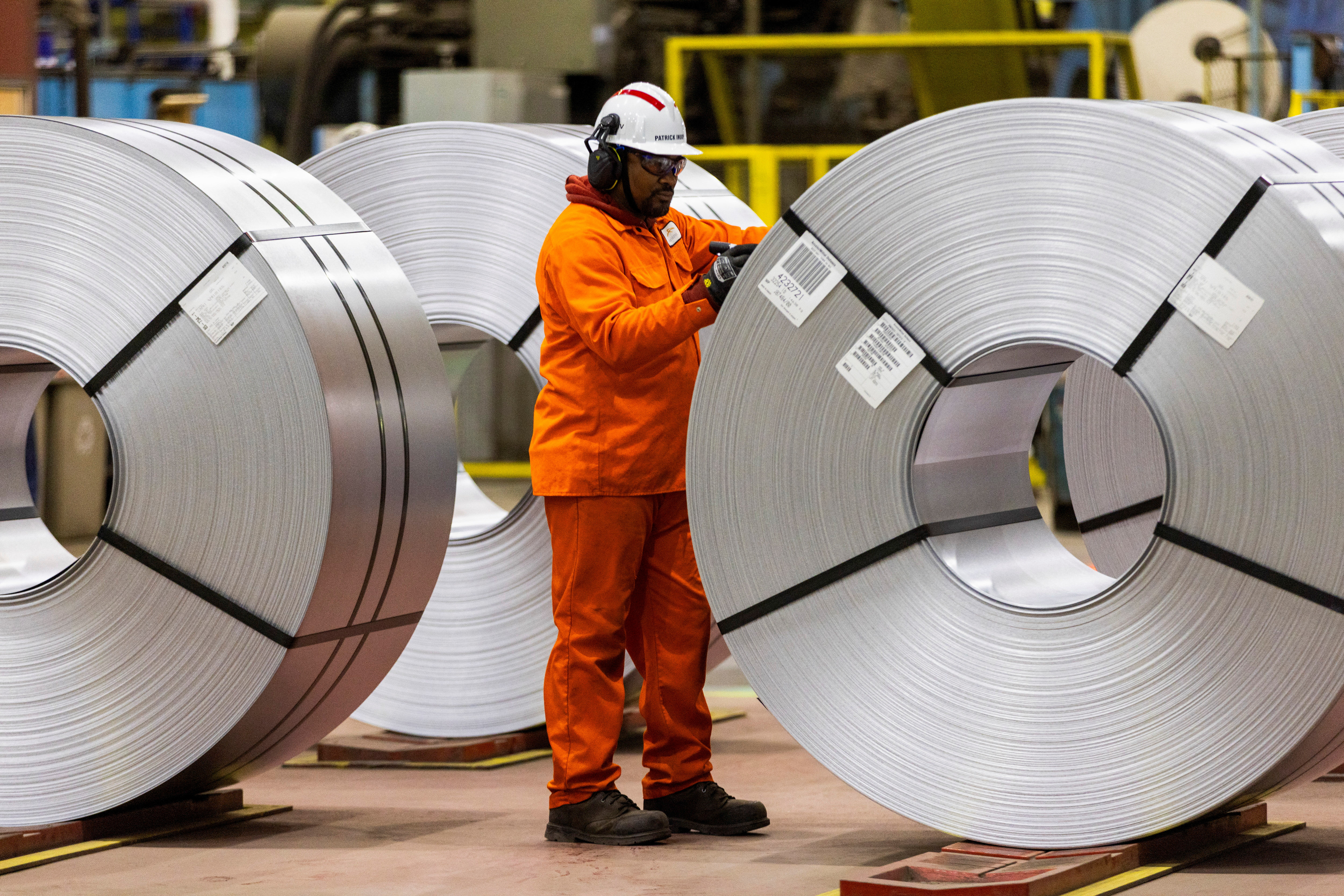

Ottawa has announced new steel quotas to bolster the industry in response to U.S. tariffs, imposing a 50 percent surtax on steel imports exceeding 2024 levels from countries with which Canada does not have a free trade agreement.
“Our government has a mandate to build one Canadian economy—the strongest in the G7. That means standing up for our industries and workers and defending them from the harmful impacts of unjust U.S. tariffs,” Finance Minister François-Philippe Champagne said in a June 27 press release.
Ottawa has implemented tariff rate quotas that will add a surtax to steel imports from non-free trade agreement countries surpassing 2.6 million tonnes. The measure will help support Canada’s domestic steel industry, which has come under threat from tariffs by U.S. President Donald Trump, the finance department said.
The president implemented 25 percent global tariffs on steel and aluminum imports in March, and then doubled them to 50 percent in June. Canada initially responded by launching retaliatory tariffs targeting $30 billion in U.S. goods, but Prime Minister Mark Carney told reporters in June that Canada would “take some time” to determine how it would respond to the second round of steel tariffs.
The new quota policy will also prevent steel originally destined for the United States from being redirected to Canada, as U.S. tariffs have led many countries to seek new markets for their steel. The policy took effect on June 27 and will be reviewed in 30 days.
The federal government announced several measures to strengthen Canada’s steel and aluminum industries on June 19, including limiting federal procurement of the two building materials to Canadian suppliers and “reliable trading partners” with which the country has trade agreements. That measure begins on June 30.
Ottawa also announced it would establish a new tariff rate quota of 100 percent of 2024 levels on steel products from countries where Canada has no free trade agreement, and that it would create two separate government stakeholder task forces for steel and aluminum to monitor trade and market trends.
Ottawa began requesting in March that recipients of federal grants switch to using Canadian steel and aluminum instead of U.S. products, with then-Industry Minister Anita Anand saying the federal funding was a “testament to the value the government saw in your project or ecosystem for the Canadian economy,” and that all Canadians are now expected to “do more.”
Canadian Steel Producers Association CEO Catherine Cobden said while the organization appreciates the government’s “willingness to act,” it is concerned “the immediate measures fail to address the crisis we are in.”
“The industry had asked repeatedly for significantly lower import levels on unfair traders to regain market share at home,” Cobden said in a June 26 statement. “We believe it is long overdue.”
The association, which represents the 17 largest domestic steel companies, said the tariff rate quota would still allow high levels of foreign steel to enter Canada tariff-free. While the association supports the additional measure to fight global steel overcapacity, the implementation hasn’t come soon enough, Cobden said.
“It is encouraging to hear renewed commitments to use steel in future public projects where this is feasible. This is a laudable long-term objective,” she added. “However, without the right border actions, our steel producers will be unable to contribute to projects around our country because we will be a significantly reduced and weakened industry.”