
Commentary
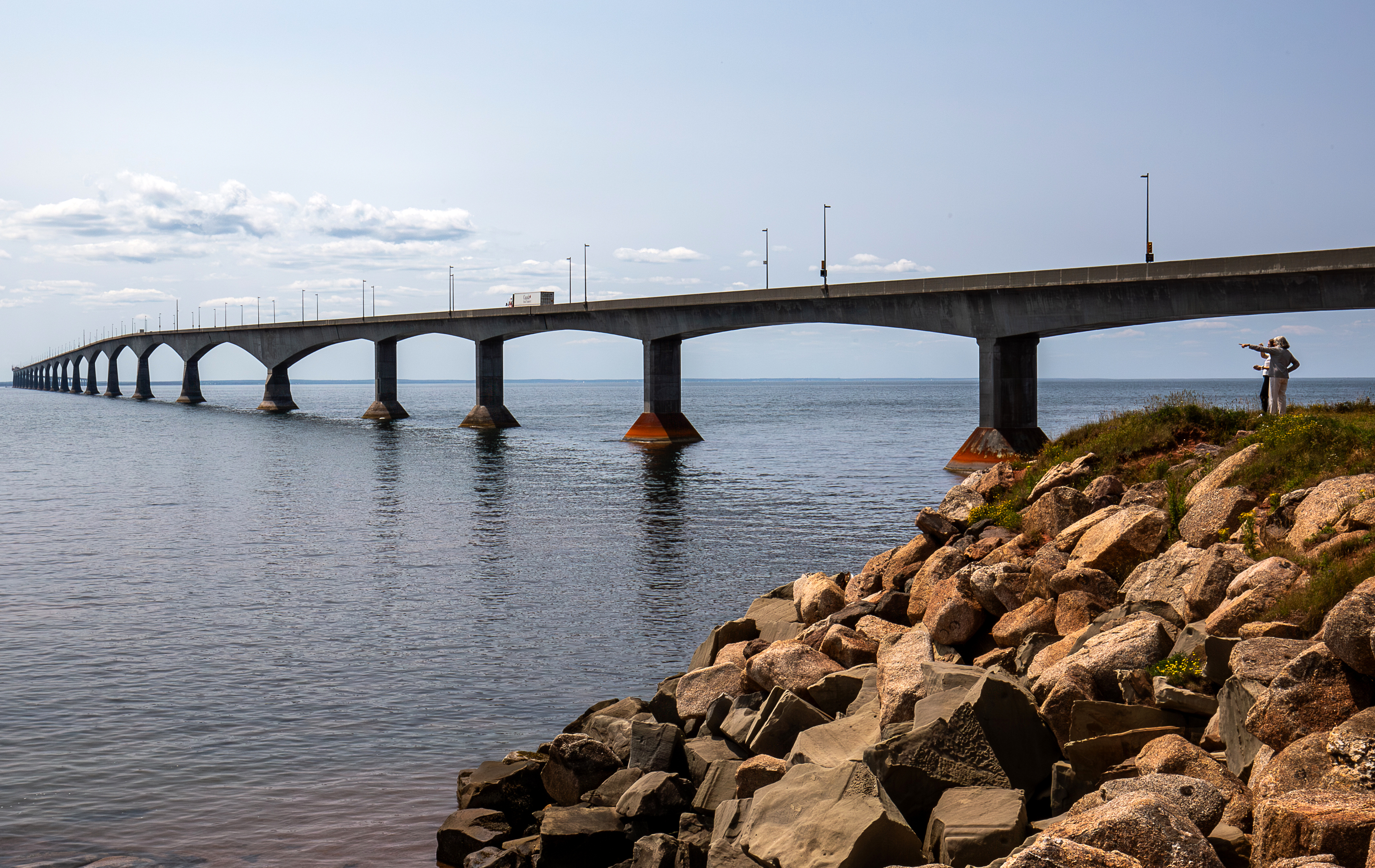
In Vancouver, the Pattullo Bridge has been renamed the “stal̕əw̓asəm Bridge” and Trutch Street is now “šxʷməθkʷəy̓əmasəm Street.” On Vancouver Island, Mount Douglas is now “PKOLS.” On Prince Edward Island, there is a push to rename Confederation Bridge “Epekwitk Crossing.” In Ottawa, the Sir John A. Macdonald Parkway is now “Kichi Zībī Mīkan.” And in Saskatoon, John A. Macdonald Road has been replaced with “miyo-wâhkôhtowin Road.”
These names are derived from the indigenous languages of various First Nations local to the areas in question. These are not isolated instances—they are part of an accelerating campaign to rename streets, buildings, and landmarks with indigenous names as part of Canada’s new commitment to “reconciliation.”
In some cases, the goal is to purge Canada’s landscape of names that commemorate figures with legacies that have become targets of historical revisionism, such as Sir John A. Macdonald, the first prime minister whose nation building has become eclipsed by some of his policies towards indigenous peoples.
In others, the idea is to centre indigenous culture and deprioritize names associated with non-indigenous English Canada. After all, this is an issue specific to Anglo Canada. As usual, French Canada is more preoccupied with its own internal cultural wars to take part in national ones.
The need to prioritize indigenous place names has been enshrined into the United Nations Declaration on the Rights of Indigenous Peoples (UNDRIP), with Article 13 of the document stating that indigenous peoples have the right “to designate and retain their own names for communities, places and persons.”
In B.C., which was the first jurisdiction in Canada to enshrine UNDRIP into law in 2019 (joined by the Northwest Territories in 2023), the renaming push is being carried to its logical endpoint by including entire towns and cities.
There is an ongoing push to rename the city of Powell River on the Sunshine Coast, while the community of Okanagan Falls in the B.C. Interior—which has voted to become a municipality—may be forced to consult local First Nations about whether it can keep its name going forward.
Celebrating indigenous cultural and language revitalization is not the issue. The key problem is how that is done—and currently it is too often being done by shoving aside and replacing the history, language, and culture of non-indigenous Canada. This is clearly seen in the concerted effort to rename established towns and cities in B.C., a practice which may spread elsewhere.
A rarely spoken truth in the debate over renaming is that non-indigenous Canadians value local place names just as indigenous peoples do—attachment to symbols associated with a place is a feature of the human experience, not exclusively the indigenous experience.
As the City of Vancouver put it when renaming Trutch Street: “Language is an essential part of culture and identity and it connects people to land and place.” While the City was referring to First Nations specifically, this is evidently true of all peoples of the world throughout time.
This attachment to place is part of why the City of Toronto’s decision to rename Dundas Square to “Sankofa Square” (a word in the Twi language of Ghana meaning “to retrieve") generated intense opposition, with a petition opposing the renaming soaring to nearly 35,000 signatures.
Replacing the names of streets and landmarks with difficult to pronounce names in unfamiliar writing systems produces a dislocating, chaotic effect in Canada’s urban landscape. Perhaps even more importantly, it erases Canadian history.
Canada’s squeamishness about public commemorations of anyone remotely connected to our colonial origins—the proverbial “dead white men”—is without parallel in the rest of the world.
During the turmoil of the 2020 Black Lives Matter protests, when institutions and governments across the West faced calls to expunge every trace of potential systemic racism, French President Emmanuel Macron stood firm and declared that “the republic will not erase any trace, or any name, from its history ... it will not take down any statue.”
In 2008, Mongolia erected a monumental 40-metre tall stainless steel statue of Genghis Khan to honour the 800th anniversary of the founding of the Mongol Empire—the expansionist empire whose death toll is estimated at between 20 and 60 million.
The rest of the world can distinguish between celebrating a nation-building figure without agreeing with every single action they took in their life. Canada would benefit from this maturity and historical nuance.
Perhaps the most disturbing element in the campaign to rename streets, landmarks, and towns is the fact that a more productive, less divisive way of public honouring indigenous culture exists but is not chosen.
Few, if any, Canadians would object to the installation of brand-new monuments or statues of great indigenous figures of the past. For instance, the indigenous warriors who fought in the War of 1812, or the indigenous soldiers who shed their blood in the world wars.
That would be a step along the path of true reconciliation. Instead, we see increasing demands to dislodge and replace Canada’s existing names and symbols, a path which will only lead to further division.