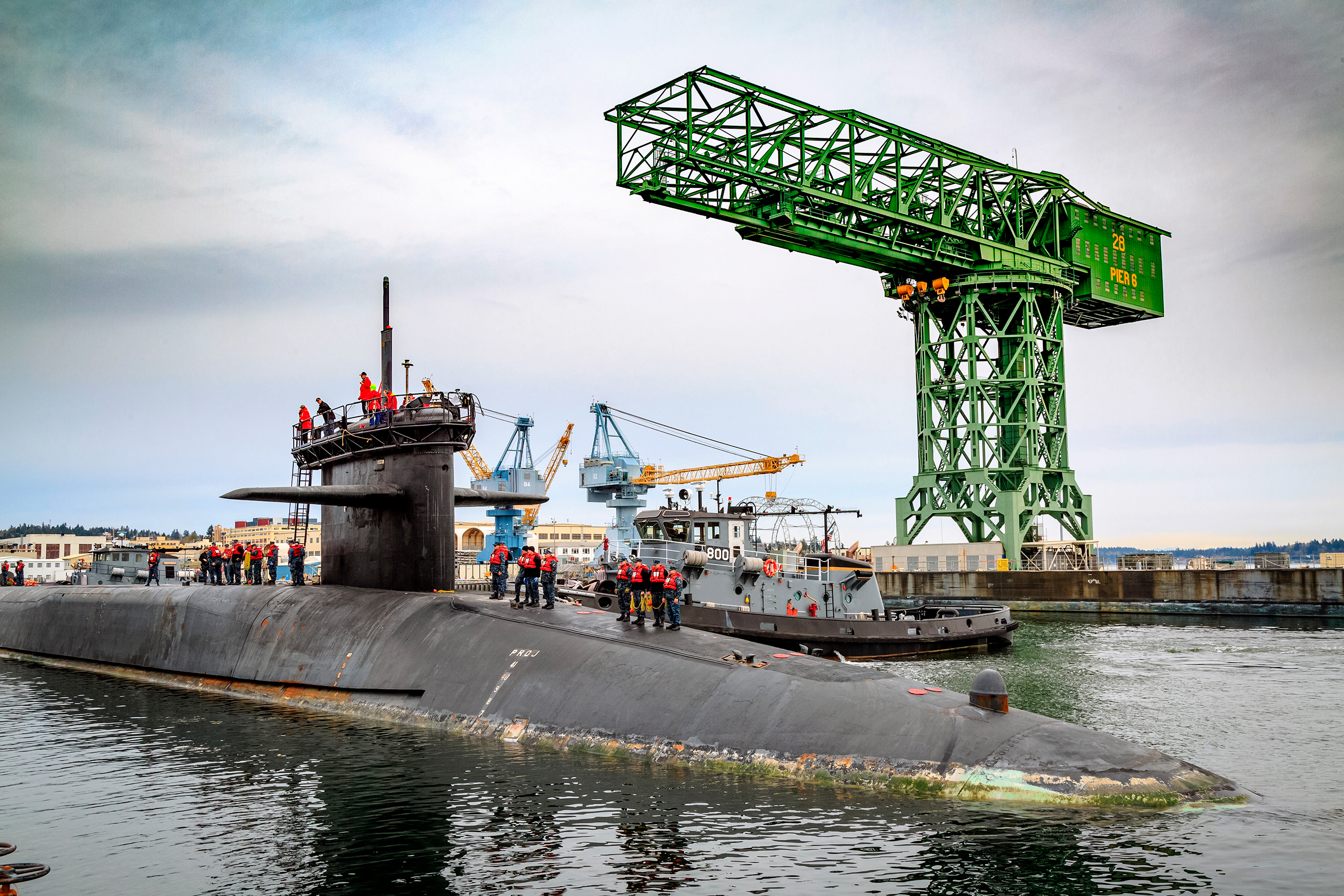

Maintenance delays for the U.S. Navy’s attack submarines have cost $3.4 billion and resulted in the loss of more than 15,000 operational days over the past 10 years, according to the Government Accountability Office (GAO).
A GAO report released on Aug. 27 found that the U.S. Navy had “not fully mitigated attack submarine fleet maintenance and other challenges affecting readiness.”
The report was publicly released after President Donald Trump ordered the Department of War on Aug. 13 to establish a new naval shipyard and component repair center to address increased costs and delays.
As of fiscal year 2025, the U.S. Navy had 44 attack submarines, which are used to gather intelligence undetected and strike enemy targets.
“These capabilities make attack submarines some of the most requested assets by the global combatant commanders,” the GAO report stated.
The GAO found that the U.S. Navy had recently made progress in reducing active idle time, a period when submarines and their crews are forced to remain pier-side, cannot carry out normal operations, and cannot begin maintenance.
The agency found that inactive idle time, a period when submarines are forced to wait for decommissioning, had increased and was expected to worsen.
“Without mitigation, 15 attack submarines will enter inactive idle time from fiscal year 2026 through fiscal year 2030—during which time the Navy could incur more than 14,000 days of inactive idle time and $3.1 billion in costs to operate and support these inactive submarines,” the GAO said.
In one example, the GAO said the USS Pasadena entered inactive idle status on Jan. 1, 2025, but was not expected to begin the decommissioning process at Norfolk Naval Shipyard until Nov. 15, 2028, due to shipyard limitations. While the submarine will not be operational as it awaits decommissioning, it will remain fully crewed with Navy sailors. The GAO estimated the delay will cost the Navy over $300 million.
The GAO also found that the number of attack submarines the U.S. Navy can deploy has been limited due to delays in construction of new Virginia-class attack submarines. While the Navy has a goal of building two new Virginia-class submarines per year, construction rates only allowed for the delivery of one per year as of June 2025.
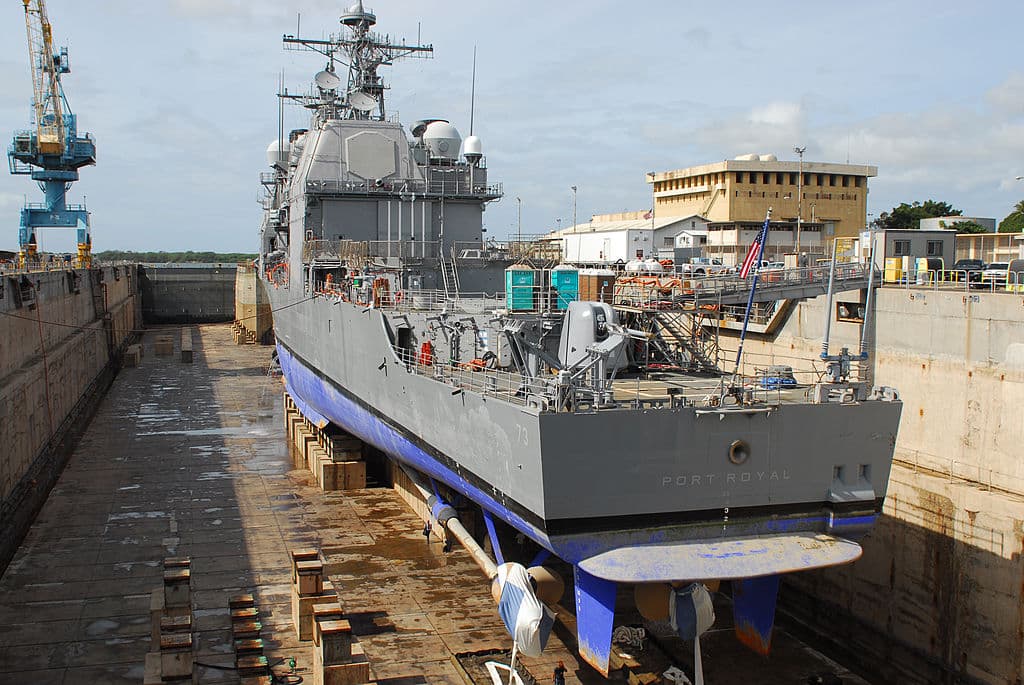
Guided-missile cruiser USS Port Royal sits in drydock at the Pearl Harbor Naval Shipyard as it is readied for repairs in Pearl Harbor, Hawaii, on Feb. 19, 2009. (Michael F. Laley/U.S. Navy via Getty Images)
The construction delays were attributed to late material deliveries from suppliers and limited availability of experienced workers due to competition in the labor market, according to the GAO report. It noted that the Navy plans to invest billions of dollars in shipbuilder wages and the supply chain to mitigate the delays.
The Navy’s potential options for increasing submarine decommissioning efficiency and reducing inactive time include a reduced crewing initiative, service-life extensions, and pier-side nuclear reactor defueling, according to the GAO. The report found that the Navy had not fully evaluated these alternative options.
The GAO recommended that the Navy fully evaluate alternative options to improve decommissioning efficiency and develop an inactivation plan to reduce inactive idle time for attack submarines. The Navy concurred with both of the agency’s recommendations.
The Epoch Times reached out to the Navy and the Pentagon for comment but did not receive a response before publication time.
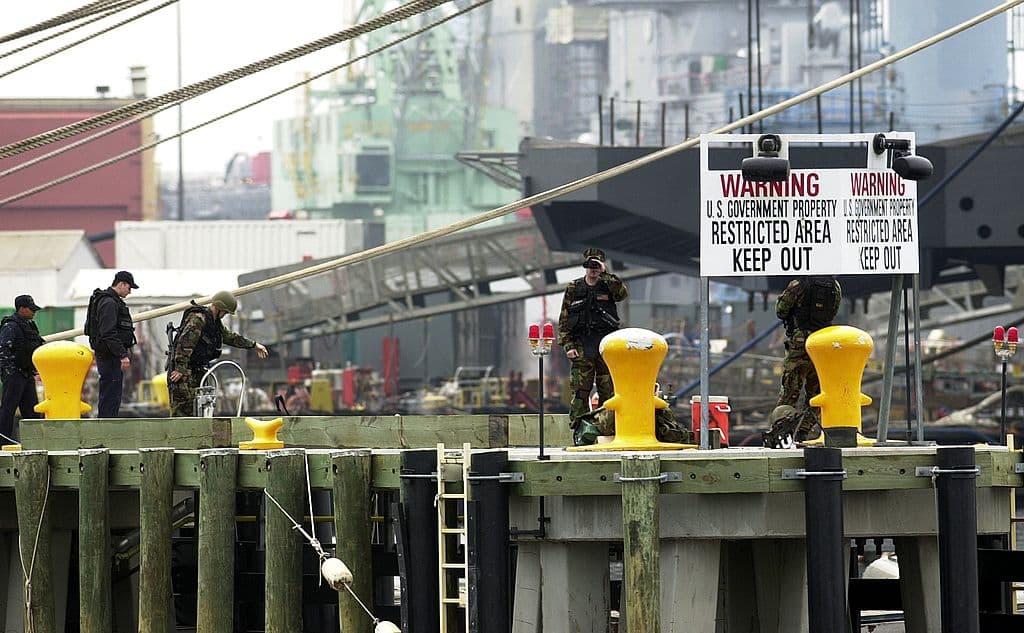
U.S. Marines watch passing boats along the Elizabeth River as they guard the piers of the Norfolk Naval Shipyard in Portsmouth, Virginia, on April 5, 2003. (Liza Mizelle/Getty Images)
The Navy currently has four public naval shipyards in the United States that perform depot maintenance on attack submarines and other nuclear-powered ships. These include Norfolk Naval Shipyard, Pearl Harbor Naval Shipyard, Portsmouth Naval Shipyard, and Puget Sound Naval Shipyard.
Only about 11 percent of attack submarine depot maintenance was completed on time at the Navy’s public shipyards during fiscal years 2016 through 2025, according to the GAO.
In addition to the four public naval shipyards, two private shipyards, Connecticut’s General Dynamics Electric Boat and Virginia’s Newport News Shipbuilding, can be used in certain cases to conduct maintenance on the Navy’s attack submarines.
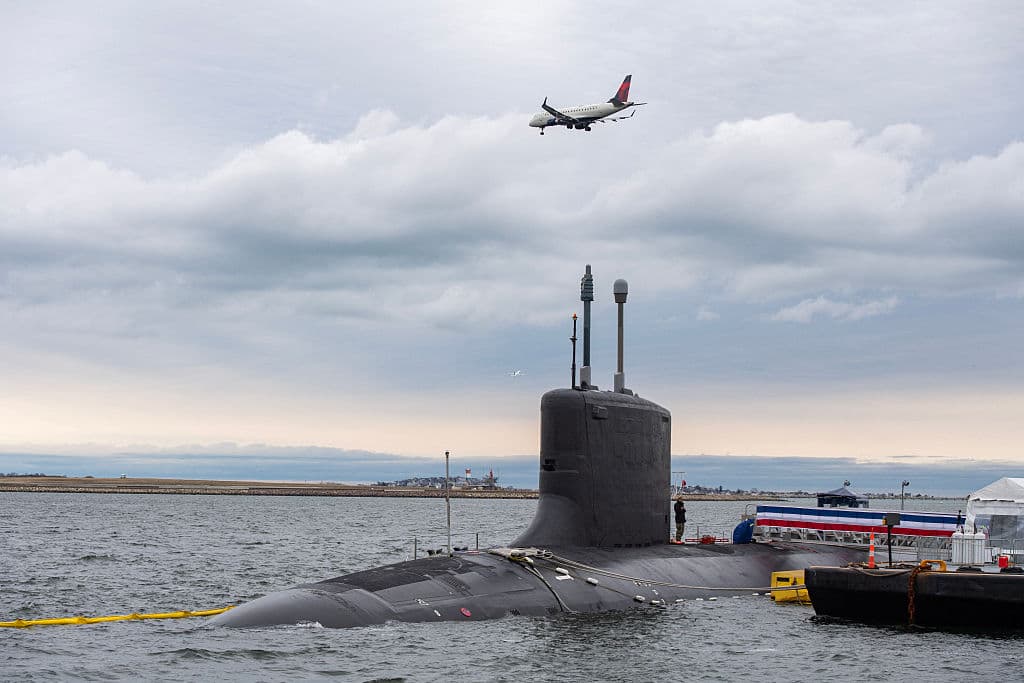
The Virginia-class fast attack submarine USS Massachusetts (SSN 798) sits docked at the Conley Container Terminal before her commissioning ceremony in Boston, Mass., on March 27, 2026. (Joseph Prezioso/AFP via Getty Images)
Earlier this month, Trump issued a memorandum directing the War Department to establish a fifth naval shipyard to “increase nuclear-powered submarine and aircraft carrier readiness.” The establishment of a fifth shipyard would be the first of its kind in over 80 years, according to the White House.
Trump also directed the War Department to establish a component repair center to hold, repair, and refurbish parts needed for the Navy’s submarine programs.
“The United States Navy has experienced a series of shipbuilding setbacks stemming from overly complex designs and iterative design change procedures, which have resulted in cost growth, delays, and cancellations,” Trump wrote.
“The Department of War shall restore both capacity and competition to the maritime industrial base as it expands our naval force structure.”