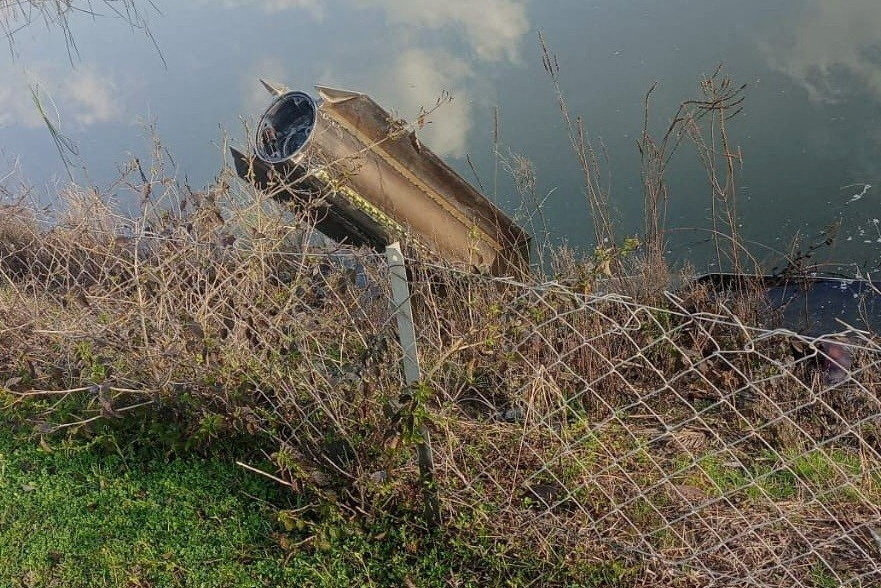

NATO air defenses intercepted an Iranian ballistic munition fired toward Turkey, the Turkish Defense Ministry said on March 13, marking the latest in a series of missile incidents over its airspace.
“All necessary measures are being taken decisively and without hesitation against any threat directed at our country’s territory and airspace,” the ministry said, adding that consultations were under way “with the relevant country to clarify all aspects of the incident.”
Turkish officials were closely monitoring regional developments, it said.
The latest interception follows similar incidents on March 4 and March 9, when Iranian missiles were fired toward Turkey amid escalating regional tensions.
NATO spokesperson Allison Hart, in a March 13 post on X, confirmed that NATO had “again successfully intercepted an Iranian ballistic missile” heading to Turkey and stressed that the alliance “remains vigilant and stands firm in its defence of all Allies.”
Turkey was the first NATO member to report an Iranian missile approaching its airspace since tensions surged following a joint U.S.–Israeli military operation launched on Feb. 28 targeting Iranian infrastructure and leadership.
After the incidents, NATO moved to strengthen air defenses in southeastern Turkey, deploying a U.S.-made Patriot system to Malatya province to help protect the alliance’s Kurecik radar base, a key early-warning facility.
US Reaction
The missile fired on March 4 was detected traveling over Iraqi and Syrian airspace and was intercepted before it could reach Turkish territory.
Following the incident, Secretary of War Pete Hegseth told reporters at the Pentagon that the event did not appear to meet the threshold for invoking Article 5 of the NATO treaty.
“We are aware of that particular engagement, although there is no sense that it would trigger anything like Article 5,” Hegseth said.
Article 5 states that an attack on one NATO member is considered an attack on all, a provision invoked only once, after the Sept. 11, 2001, attacks on the United States.
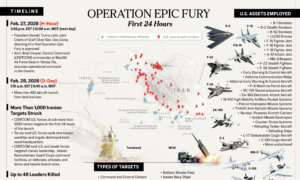
The missile incidents come amid a rapidly expanding confrontation following U.S. and Israeli strikes on Iran that began Feb. 28. At a Pentagon news conference on March 13, Hegseth said the campaign had hit more than 15,000 targets, averaging over 1,000 strikes per day.
Iran has responded with drone and missile attacks across the region, including a strike in Kuwait that killed six American soldiers, underscoring the risk of escalation beyond the immediate battlefield.
Ankara Stresses Deterrence
Ankara has sought to balance strong warnings with calls for restraint.
“Türkiye places great importance on good neighbourly relations and regional stability,” the Turkish Defense Ministry said on March 9.
“However, we once again emphasize that all necessary measures will be taken decisively and without hesitation against any threat directed at our country’s territory and airspace.”
Turkish President Recep Tayyip Erdogan echoed that message on March 12, emphasizing the need for diplomatic efforts to prevent a wider war.
Speaking at a ceremony in Ankara, he said Turkey was working to contain violence tied to Iran.
“As Türkiye, we are pursuing intensive diplomacy to prevent the escalation of the Iran-centered spiral of violence that carries the risk of dragging our geography into an all-out catastrophe,” Erdogan said.
“Despite those seeking to dishearten and deter us from the fight, we will continue to work determinedly and patiently.”