
State lawmakers are requesting audits of California’s fuel regulations, which are expected to raise gas prices, and on San Francisco Bay Area bridge tolls, which will see an annual increase through 2030.
“We were hoping that the audit would be heard in June,” state Sen. Dave Cortese, who requested one of the audits, told The Epoch Times. “We’re just competing with all the other audits that are in there right now.”
Cortese requested a review of how the Metropolitan Transportation Commission (MTC) and the Bay Area Toll Authority (BATA) use toll money.
This includes requesting information on annual toll revenue, annual expenditures broken down by projects, annual bond and other income, and a timeline of when all projected expenses would be completed. It is also asking for more details on why MTC is adopting another set of toll increases.
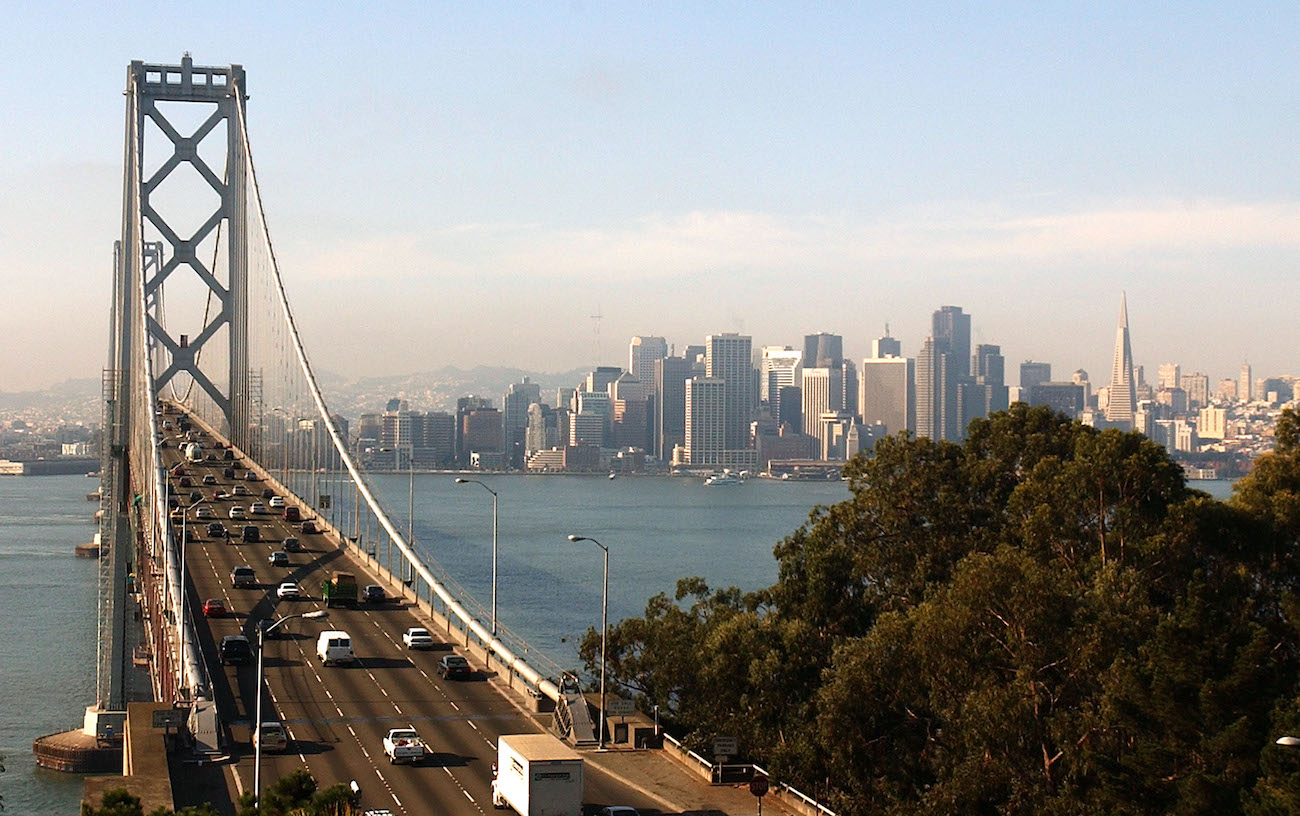
Seven state-owned bridges in the Bay Area have already implemented a $3 toll increase, resulting from Senate Bill 595 passed in 2017 and the voter-approved Regional Measure 3 in 2018. These two measures approved three $1 toll increases that took effect in January 2019, January 2022, and January 2025.
Revenue from the increased tolls is to be used for bridge maintenance and supplemental funding for highway and transit programs in the region, according to SB 595.
In its 2024 annual report to the state legislature, MTC said it had allocated around $1.6 billion in Regional Measure 3 funds.
Now a new set of planned toll increases, separate from SB 595 and Regional Measure 3, is set to take effect beginning in 2026, according to MTC. BATA approved the increases in December 2024.
Under the changes, the current $8 bridge toll will increase incrementally to $10.50 by 2030 for people using FasTrak. Drivers who choose to pay tolls via invoices can expect to pay $11.50 at that time, and drivers who have three or more occupants in their car will pay $5.25 by 2030.
MTC said on its website that the new toll increases “will be used exclusively for the maintenance, preservation and operation of” the seven state-owned Bay Area bridges.
However, Cortese said, “What is troubling is that the increasing toll revenue is consolidated into a single pool, making it very challenging to track how the funds from each regional measure and from the seismic safety increased are being used.”
He said he hopes the Joint Legislative Audit Committee prioritizes his toll audit request, which was submitted in February, but he noted that the committee commissions audits twice a year, once in June and once in August.
“I really want to see those answers to those questions,” said Cortese, who served as chair of MTC before being elected in 2020 to the state Senate.
The other audit request, which was recently sent to the Joint Legislative Audit Committee, seeks to examine how the California Air Resources Board (CARB) determines the state’s low carbon fuel standard.
CARB approved amendments to its fuel regulations in November 2024 in order to create a new blend of gasoline that has a lower carbon intensity to help California meet its emission goals.
The new rules could raise gas prices by up to $0.65 per gallon in the short term, according to a study by the University of Pennsylvania’s Kleinman Center for Energy Policy. This figure could rise to $0.85 by 2030 and almost $1.50 by 2035.
In the audit request, state Sen. Brian Jones listed four questions, which focus on CARB’s methods for estimating economic impacts, its transparency requirements, its weighing of economic and environmental concerns, and whether any consumer costs have been obscured.
“Californians are demanding answers and action before yet another hidden tax hits the pump,” Jones said in a statement.
Jones’s and Cortese’s requests were not included in the Joint Legislative Audit Committee hearing on June 18. The next meeting is scheduled for August.