The Albanese government has introduced major changes to wealth generation channels for Australians.
Leading up to the budget, there was much scrutiny over proposed plans to remove negative gearing for property investors, change the Capital Gains Tax (CGT), and introducing a new minimum tax on family trusts.
Changes to Negative Gearing
As of 2025,
approximately 1 million Australian taxpayers claim negative gearing on residential investment properties. These investors, comprising about 35 percent of all property owners, use rental losses to offset other income, with the average annual tax deduction per investor being around $8,700.
The practice allows individuals to accumulate investment properties faster, and also helps keep current rental rates low.
From July 1, 2027, Australians will only be allowed to use negative gearing on new homes, while previous arrangements will continue.
Capital Gains Tax
In Australia, CGT applies when an individual sells assets like an investment property, shares, crypto, and even prized collectable items.
When these items are sold, the profit is taxed under the CGT. However, under the previous regime, a 50 percent standard discount applied.
This discount will now be removed and replaced with a flat 30 percent tax, as well as a cost reflecting inflation over time.
Both the CGT and negative gearing measures are estimated to generate $3.6 billion over five years from 2025-26, according to the budget papers.
New Tax on Family Trusts
The government is also introducing new rules around discretionary trusts—also called family trusts—a legal structure in which a trustee holds and manages assets for beneficiaries, with the trustee having the discretion to decide how income and capital are distributed.
The structure is often used by families and businesses to lower their own tax obligations or “income splitting” between family members.
It’s a popular model because it offers flexibility for tax planning, asset protection, and family wealth management. From July 1, 2028, the government is introducing a 30 percent minimum tax on such vehicles.
There will be a three-year grace period from July 1, 2027 for small businesses to restructure.
The measure is expected to generate $4.5 billion over five years.
The introduction of this measure will mean “a fairer rate of tax paid on discretionary trust income, better aligning the tax rate on trust income with the tax rates paid by workers,” the government says in an explanatory document (pdf).
Treasury analysis claims that in 2022/23, on average, families with discretionary trusts paid a tax rate around 4 percentage points lower than families with similar incomes who do not use a trust.
In Australia, the number of discretionary trusts has doubled since 2001/02, outpacing the 70 percent increase in companies. Approximately 840,000 (80 percent) of Australia’s 1 million trusts are discretionary trusts.
Discretionary trusts paid out $142.4 billion in income to other organisations in 2022/23; since 2011/12, the average annual growth in income has been 7.8 percent.
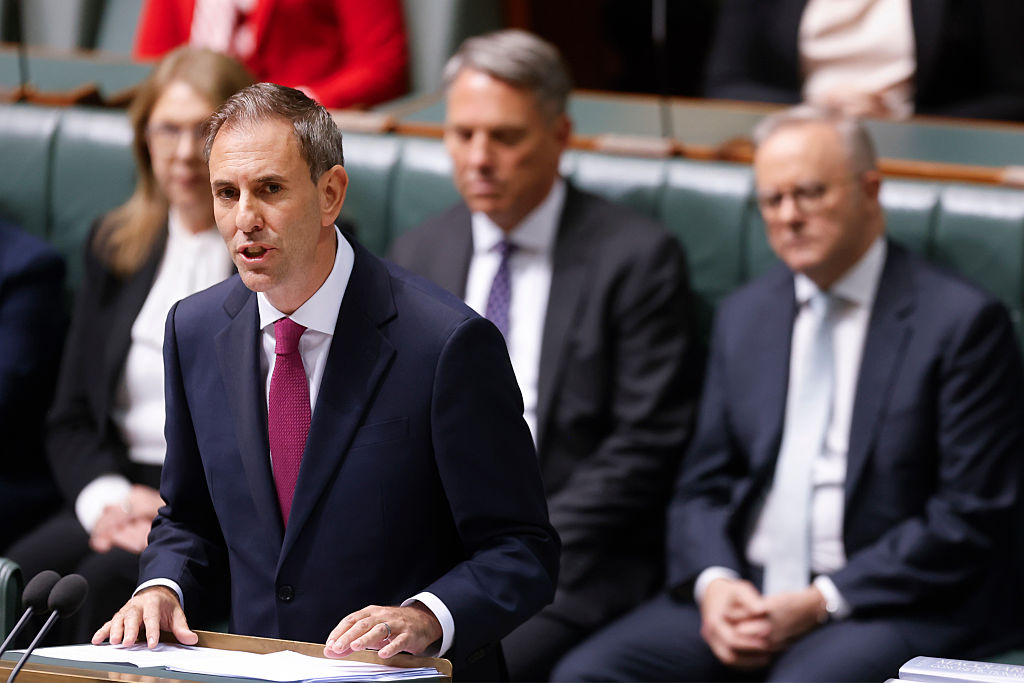
In his Budget speech Treasurer Jim Chalmers said the government was “reforming trusts to level the playing field between workers and families who earn a living through wages and salaries, and people who live off income from assets held in trusts.”