Support for remaining part of Canada in the Oct. 19 referendum was strongest in Alberta’s major cities, as polls had predicted. But the preliminary results also reveal other notable patterns in how Albertans voted.
About 75 percent of Albertans voted against separation, while 25 percent supported holding a binding referendum on separation, according to preliminary results as of the evening of Oct. 20, with 90 percent of voting locations reporting.
Outside Edmonton and Calgary, support for holding a separation referendum reached 34 percent, compared with less than 20 percent in the province’s two major cities.
Two rural electoral divisions had more votes against remain than for: Central Peace-Notley in northern Alberta, and Rimbey-Rocky Mountain House-Sundre in the central part of the province, each with 51 percent voting against remain.
The ballot included nine other questions. The first five addressed immigration, access to provincially funded services, and proof of citizenship for voting. Questions six to nine proposed constitutional changes, including opting out of federal programs to introduce provincial equivalents, provincial input in judicial appointments, and abolishing the Senate.
The question with the highest proportion of “Yes” votes was Question 5, which asked whether proof of citizenship should be required to vote, an issue that has been a point of contention south of the border. Overall, 64 percent of Albertans voted in favour of requiring proof of citizenship, while 36 percent voted against. Outside Edmonton and Calgary, support rose to 75 percent, but stood at around 50 percent in the province’s two major cities.
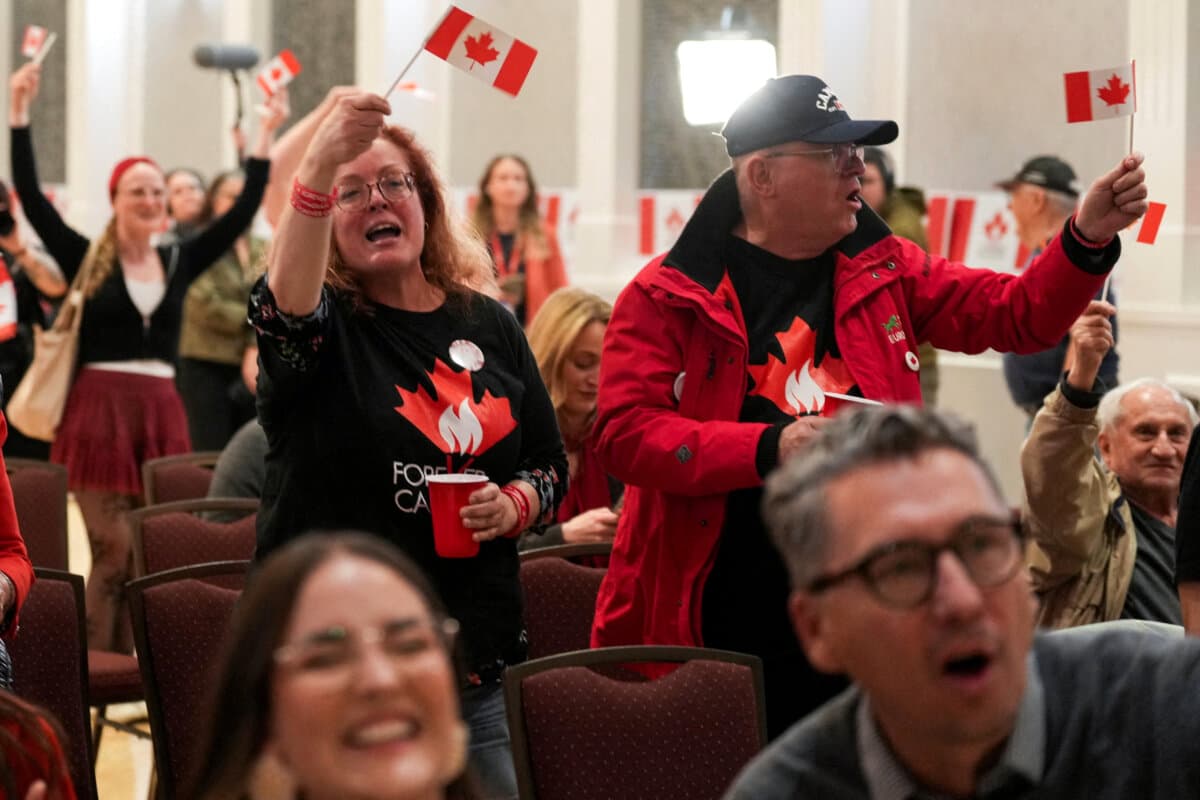
Supporters of the Forever Canadian group, who want Alberta to remain in Canada, wave Canadian flags as they watch the results of a non-binding referendum on Alberta sovereignty, in Edmonton on Oct. 19, 2026. (Reuters/Todd Korol)
The only question among the first nine to get more “No” votes than “Yes” votes, according to preliminary results as of Oct. 20 evening, was Question 8. It proposed amending the constitution to allow provinces to opt out of certain federal programs, including those involving health care, education, and social services, while retaining federal funding to establish their own programs. About 51 percent of voters rejected this proposal.
Some proposals, particularly those related to constitutional reform, have close results that could change as votes from all locations are counted.
Questions 1 through 5, which dealt with immigration issues and didn’t require constitutional reform, received province-wide “Yes” votes of between 50 and 60 percent. In Edmonton and Calgary, however, “No” votes generally ranged from 50 to 60 percent. In rural areas, “Yes” votes reached the high 60s, pushing the province-wide “Yes” vote above 50 percent on each question.
The constitutional questions produced closer results. The three that passed did so with “Yes” votes of just over 50 percent, while Question 8 failed by just one percentage point. Outside Edmonton and Calgary, the “Yes” vote for these changes was in the low 60s. Conversely, the “No” vote in the two major cities was in the same range for this question.
In both Edmonton and Calgary, almost none of the proposals passed, with the exception of Question 5, relating to the proof of citizenship for voting, which just barely surpassed the 50 percent mark.
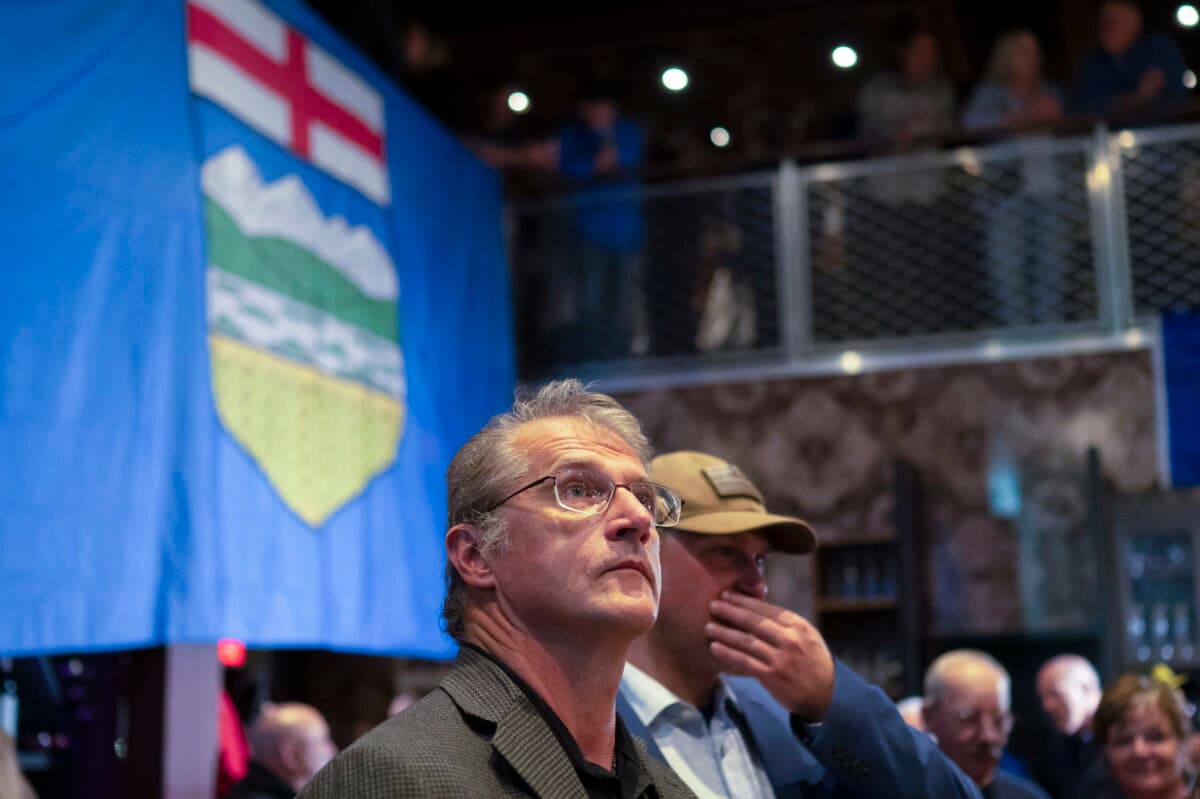
Alberta Prosperity Project supporters watch the referendum results start to appear in Edmonton, on Oct. 19, 2026. (The Canadian Press/John Ulan)
Question 1
Question 1 asked whether Alberta should have more control over immigration so it can be decreased to more “sustainable levels,” while prioritizing Albertans for new employment opportunities.
With 90 percent of voting locations reporting, 54 percent of Albertans voted for this change and 46 percent voted against.
Edmonton residents demonstrated the least support for the proposal, at 42 percent, while Calgary followed closely, at 45 percent. The remaining voters outside of these two cities embraced the concept at 66 percent.
Question 2
The second question asked whether only Canadian citizens, permanent residents, and those holding Alberta-recognized immigration credentials should have access to provincially funded programs, as the province deals with an influx of migration.
Preliminary figures show an overall “Yes” vote of 55 percent, and 45 percent against.
Edmonton again showed the lowest level of support, at 41 percent. In Calgary, 47 percent voted in favour, while 65 percent of Albertans outside these cities endorsed it.
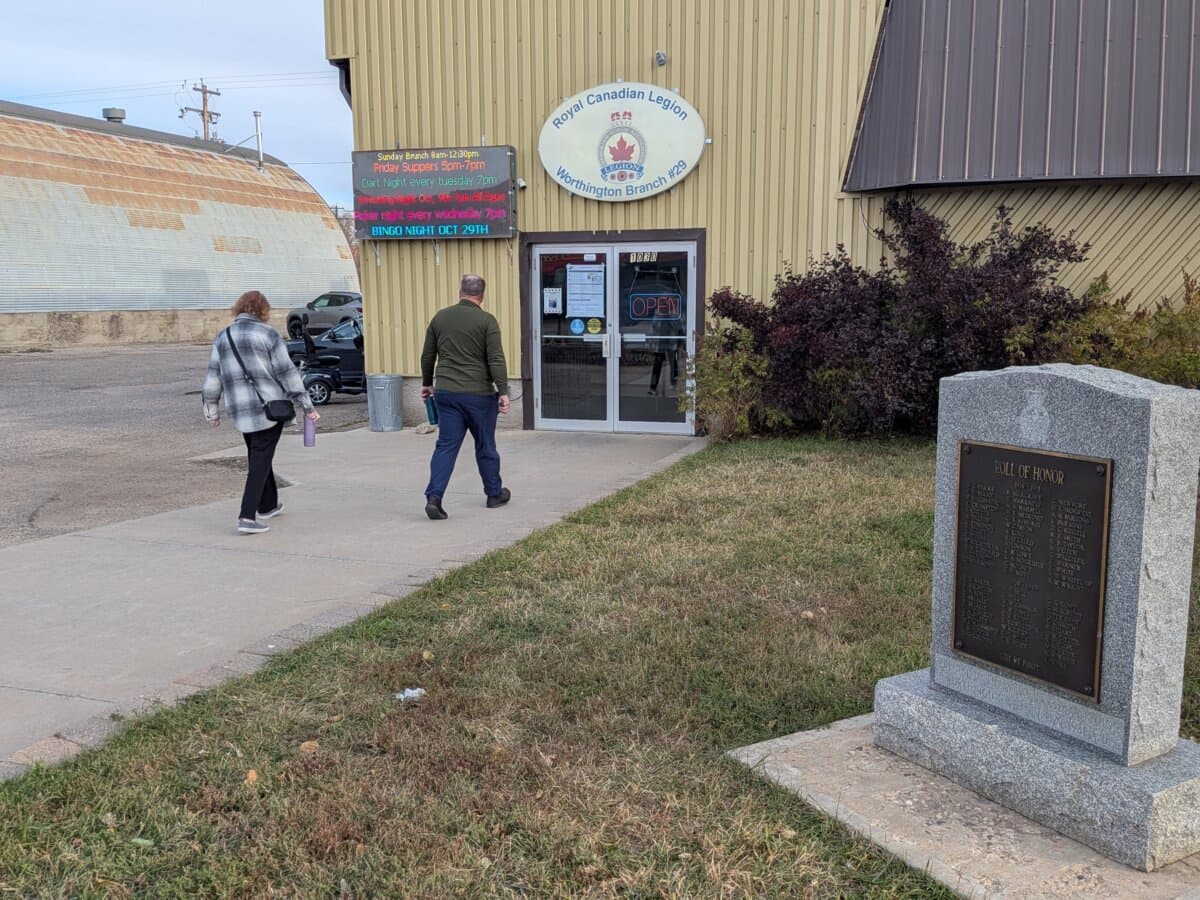
Voters enter the Royal Canadian Legion in Wainwright, Alta., to vote in the provincial referendum on Oct. 19, 2026. (Paul Rowan Brian/The Epoch Times)
Question 3
The third question asked if Alberta should introduce a law requiring all individuals with a non-permanent legal immigration status to reside in Alberta for at least 12 months before qualifying for any provincially funded social support programs.
Overall, 58 percent of Albertans voted for this proposal, and 42 percent voted against.
Only 44 percent of Edmontonians voted for this change, followed closely by 49 percent of Calgarians. Outside the two major urban centres, support for this change was 67 percent.
Question 4
Question 4 asked whether Alberta should charge people with non-permanent immigration status a “reasonable fee or premium” to use Alberta’s health care and education systems.
The fee proposal garnered backing from 57 percent of Albertans, with 43 percent against.
The “Yes” vote in Edmonton was at 44 percent, and 49 percent in Calgary. Support in other parts of the province for this proposal was at 66 percent.
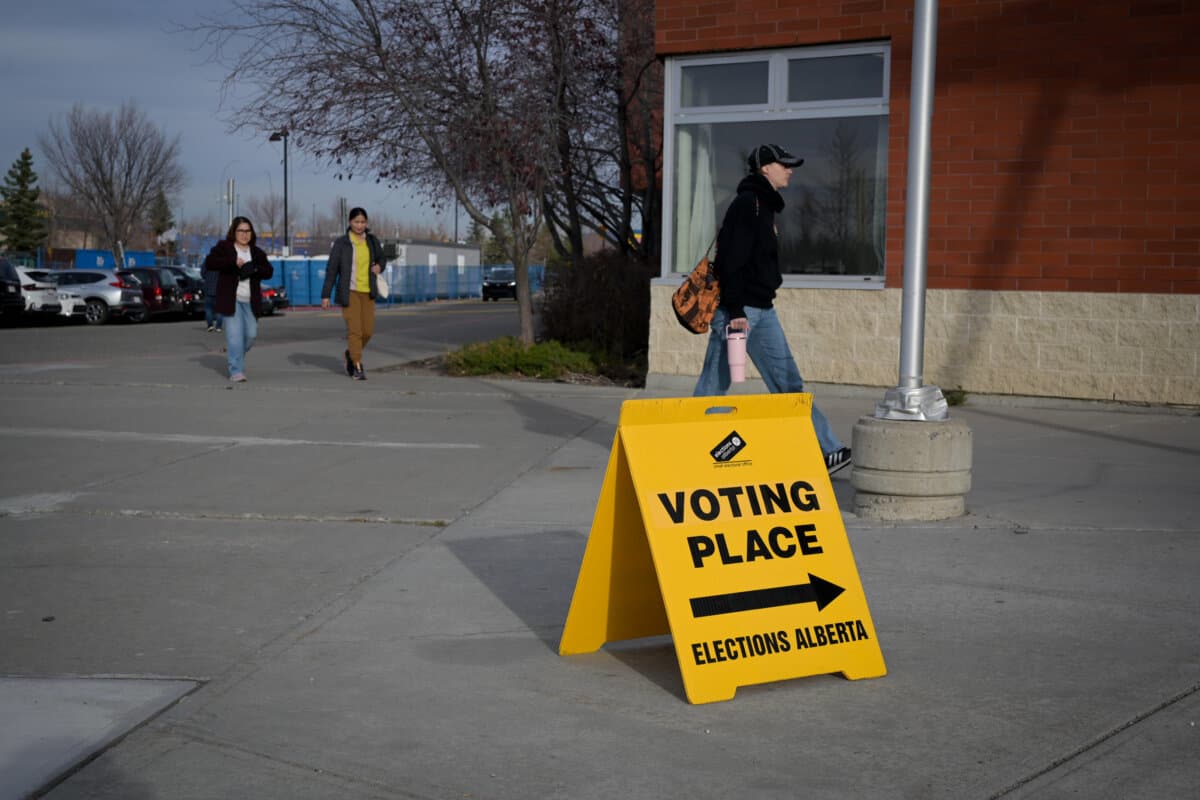
A polling station in Calgary during Alberta's referendum on Oct. 19, 2026. (Carlos Herrera for The Epoch Times)
Question 5
The middle question on the ballot received the highest proportion of “Yes” votes. It asked if a law should be introduced requiring individuals to provide proof of citizenship to vote in an Alberta provincial election.
About 64 percent of people in the province voted to adopt this change, while 36 percent voted against it.
In Edmonton, 50 percent backed the proposal, trailing behind Calgary’s 54 percent support. Outside of these two cities, 73 percent voted “Yes.”
Question 6
The sixth question inquired whether voters would back Alberta’s government collaborating with other provincial governments to modify the constitution, enabling provinces to choose the justices assigned to their provincial King’s Bench and Appeal courts.
Preliminary results show the proposal passing narrowly with 51 percent, with 49 percent against.
Only 36 percent of Edmontonians backed this proposal compared to 41 percent of Calgarians and 62 percent of remaining voters.
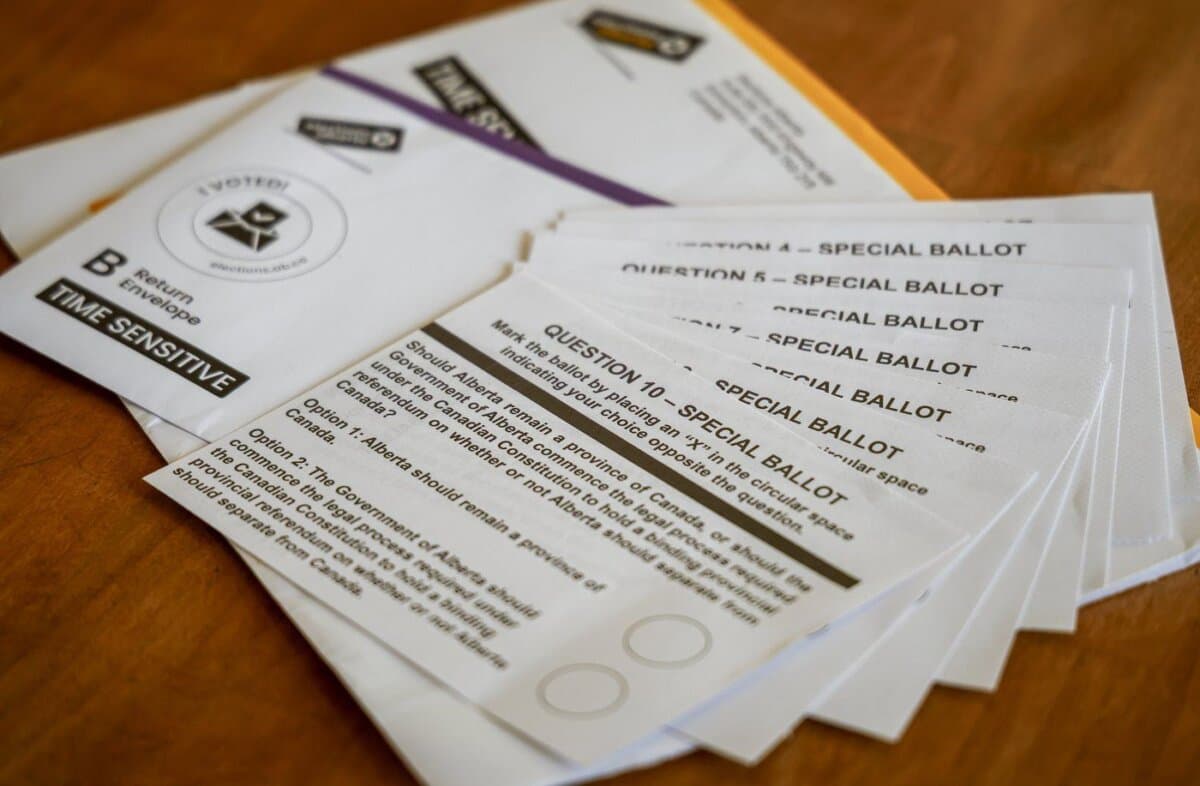
Alberta referendum mail-in special ballots are seen in Calgary, on Sept. 24, 2026. (The Canadian Press/Jeff McIntosh)
Question 7
Voters were next asked if Alberta should work with other provinces to amend the constitution so the unelected Senate could be abolished.
The proposal had the overall support of 54 percent of Albertans, with 46 percent against.
Edmonton voters showed the least enthusiasm, with only 38 percent in favour of this proposal, followed by Calgary’s 44 percent “Yes” vote. Support for this change outside the two cities was at 64 percent.
Question 8
Question 8 asked whether Alberta should seek a constitutional amendment allowing provinces to opt out of federal programs considered to intrude on provincial jurisdiction, retain the associated federal funding, and establish their own programs. The question cited examples such as health care, education, and social services.
Overall, 51 percent of Albertans rejected this proposal, with 49 percent voting in support.
It was supported by only 35 percent of Edmonton voters and 40 percent of Calgary voters. It had 60 percent support outside those two cities.
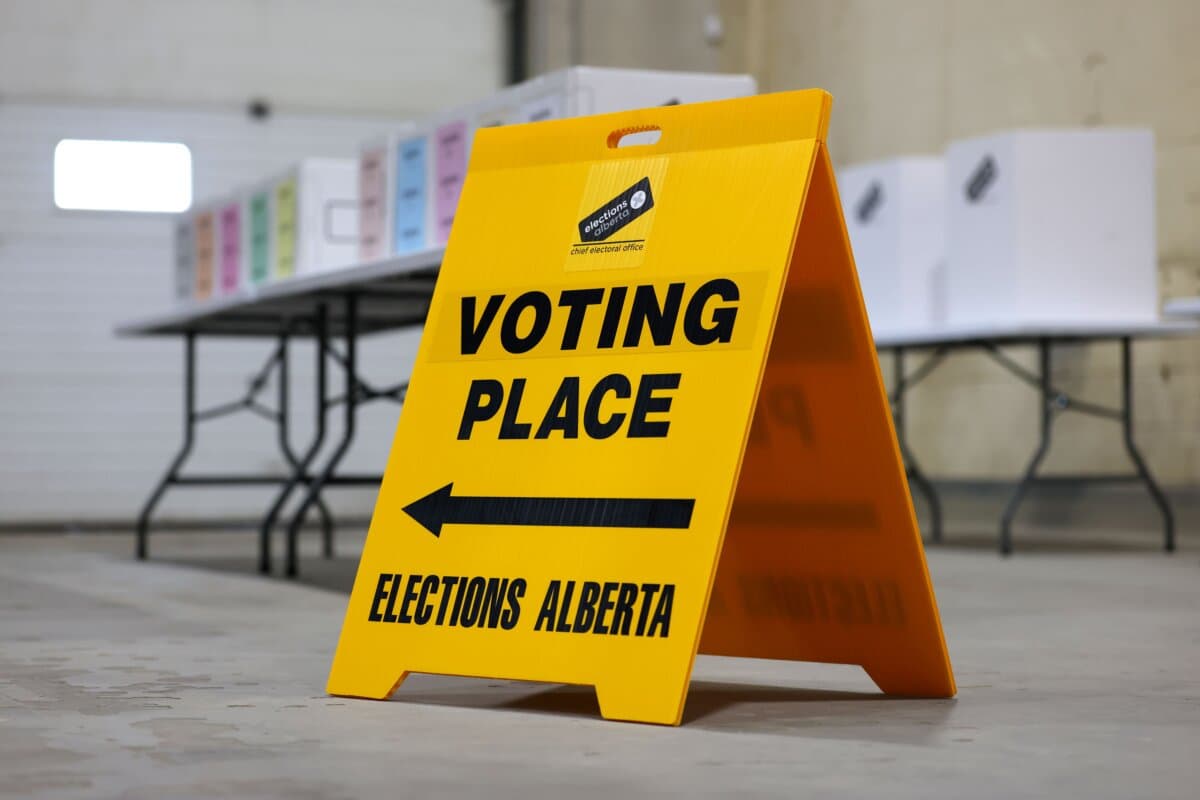
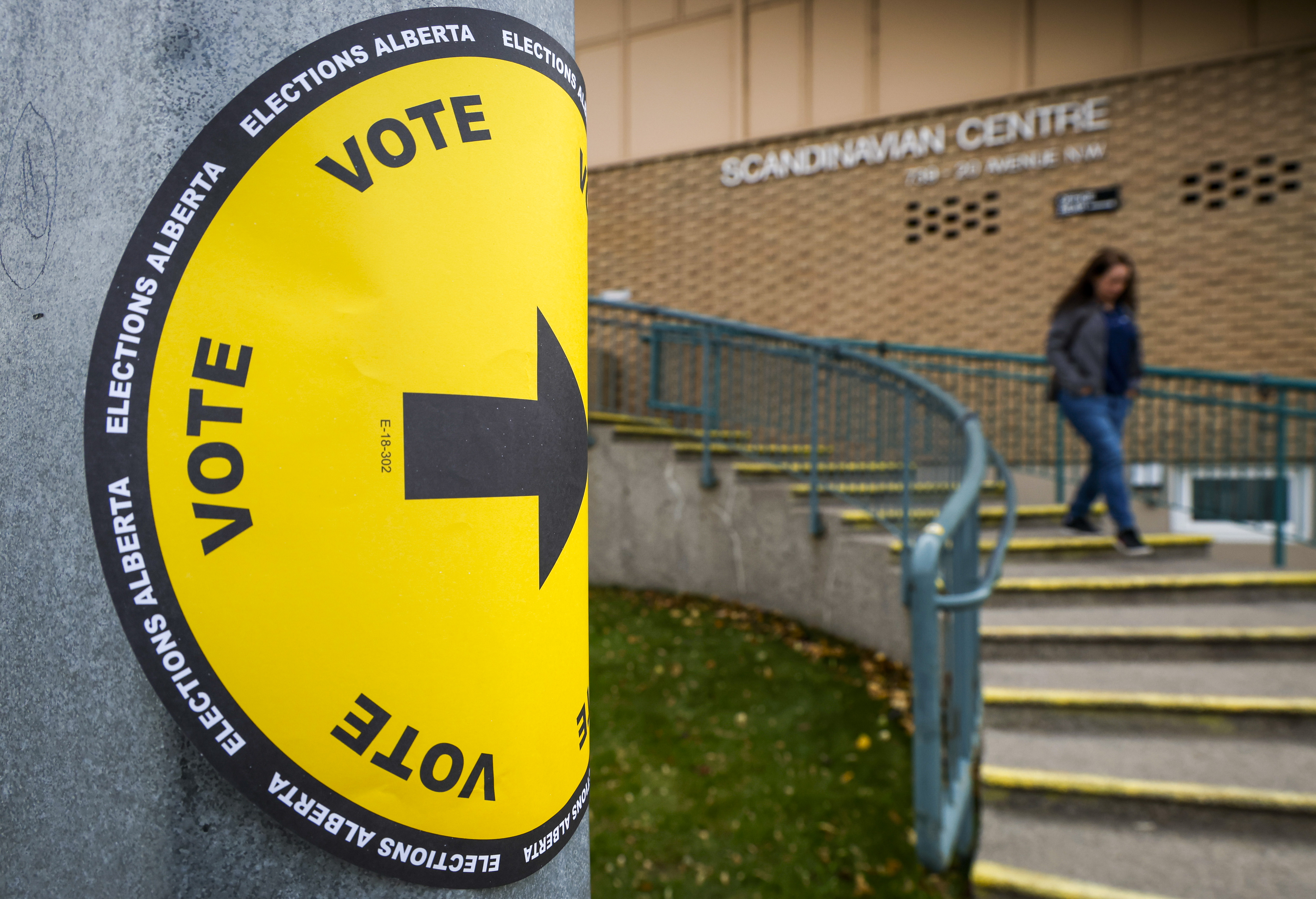
A voting sign to be used for the 2026 Alberta Referendum in Edmonton, Alta., on Sept. 3, 2026. (The Canadian Press/James Maclennan)
Question 9
The last of the constitutional questions asked whether Alberta should collaborate with other provinces to strengthen protection of provincial rights against what the province considers federal overreach. The proposal would establish that provincial legislation in areas of provincial or shared constitutional authority takes precedence over conflicting federal legislation.
Preliminary results show the proposal passing with 51 percent of the vote, and 49 percent against.
Support was once again the lowest in Edmonton, where just 38 percent of voters backed the measure, compared to 41 percent in Calgary and 62 percent throughout the rest of the province.
Question 10
The separation question may have been the final question on the ballot, but it was also the one that received the most definitive response, with approximately 75 percent of Albertans casting their ballots to remain in Canada and 25 percent supporting a binding separation vote.
Preliminary data from Elections Alberta showed that 86 percent of voters in Edmonton and 82 percent in Calgary favoured remaining in the federation. In the rest of the province, support for the remain side was at 66 percent.