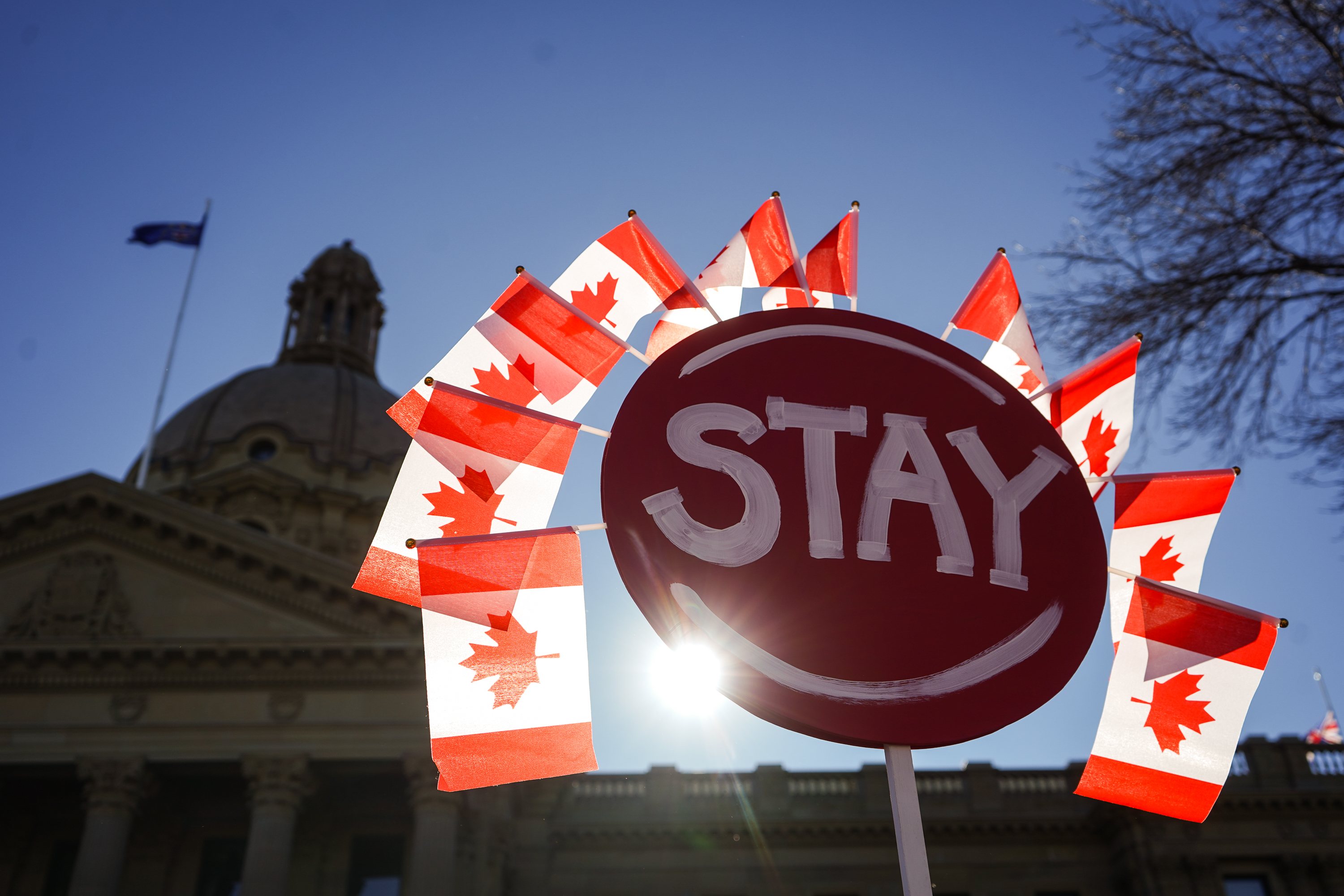
A strong majority of Albertans have voted for the province to remain in Canada, preliminary results from the Oct. 19 referendum show.
“I’m very pleased to see the initial results from Elections Alberta show widespread support for remaining in Canada. Albertans have voted for a stronger Alberta in a united Canada,” Alberta Premier Danielle Smith said on social media late on Oct. 19 local time.
With 4,657 of 5,587 voting locations reporting, about 75 percent voted to remain in Canada, while 25 percent voted for holding a binding referendum on separation, according to early results at around noon on Oct. 20.
The question regarding separation asked whether residents want Alberta to stay within Canada or begin the legal process required to hold a binding referendum on independence.
The referendum also included questions about giving the province more control over issues such as immigration, as well as constitutional reforms, including abolishing the Senate.
Early results show a majority of Albertans generally supported giving the province more control over policy issues, while voters were more divided on constitutional reforms.
The non-separation-related questions on the ballot and the early results as of noon showing how Albertans voted on them included:
- Giving Alberta more control over setting immigration levels into the province and prioritizing economic migrants and Albertans in the workforce. Yes: 55 percent; No: 45 percent.
- Restricting provincially funded services to Canadians, permanent residents, or people with “Alberta-approved immigration status.” Yes: 56 percent; No: 44 percent.
- Requiring temporary residents to have lived in Alberta for at least 12 months before they can access social assistance programs provided by the province. Yes: 58 percent; No: 42 percent.
- Charging temporary residents “a reasonable fee or premium” for accessing publicly funded education and health-care services. Yes: 58 percent; No: 42 percent.
- Requiring people to provide proof of Canadian citizenship in order to vote in Alberta elections. Yes: 64 percent; No: 36 percent.
Specifically, the questions involving constitutional reform included:
- Permitting provinces to choose and appoint judges to provincial King’s Bench and Appeal courts instead of having them appointed by the federal government. Yes: 52 percent; No: 48 percent.
- Abolishing the Senate. Yes: 54 percent; No: 46 percent.
- Allowing provinces to opt out of federal programs involving health care, education, and social services, while retaining the federal funding to spend on their own versions of the programs. Yes: 49 percent; No: 51 percent.
- Giving priority to provincial laws over federal laws when they conflict in areas of provincial or shared responsibility. Yes: 51 percent; No: 49 percent.
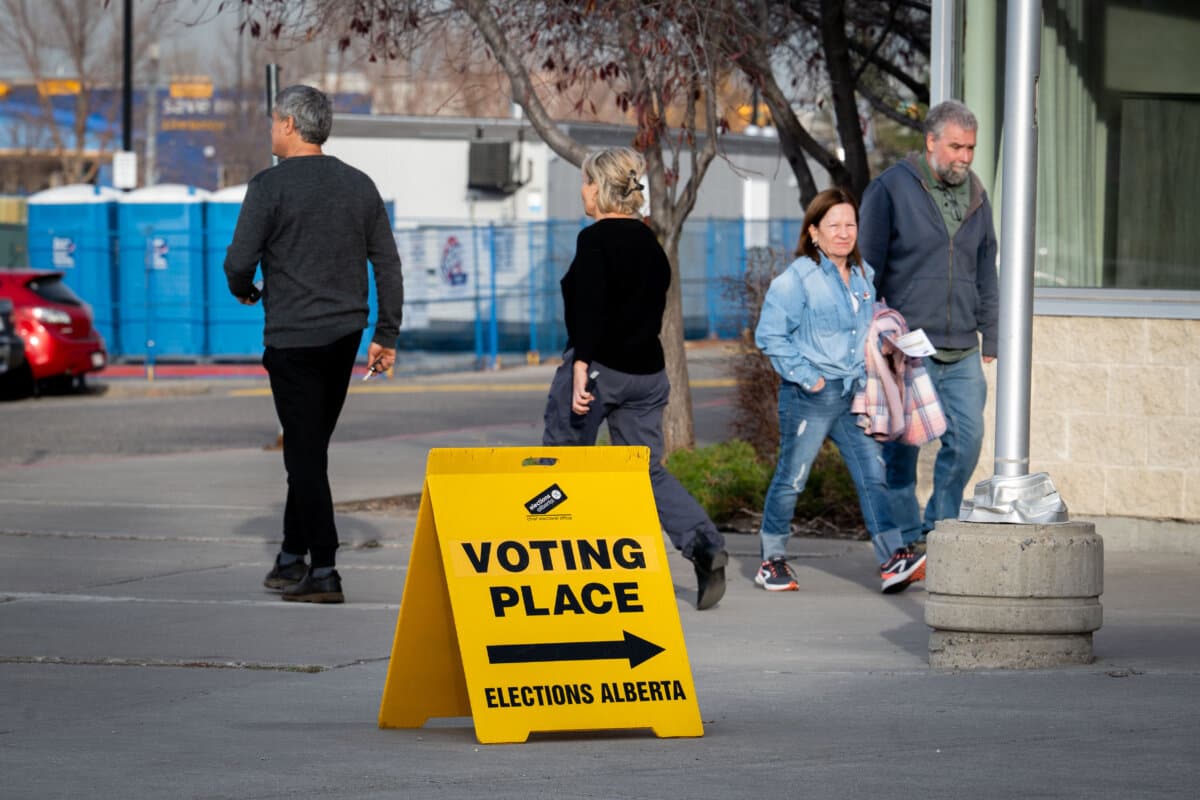
A polling station for Alberta's referendum in Calgary on Oct. 19, 2026. (Carlos Herrera for The Epoch Times)
Smith said she will address Albertans about the referendum results on the evening of Oct. 20.
“Thank you to all Albertans who took time to vote on these critically important referendum questions,” she said.
Prime Minister Mark Carney said that Albertans have “made a clear choice.”
“They chose unity, to build together, and to take care of each other,” he said in a statement early on Oct. 20. “While votes on all questions continue to be tallied, tonight’s results on the defining question of separation mean that Albertans and all Canadians will move forward together with renewed purpose and high ambition.”
Pro-independence organizer Keith Wilson said the results show that about a quarter of Albertans feel the province needs to be treated better.
“What many don’t understand is that Alberta is treated differently within Confederation than other provinces, and it’s a function of how the constitutional framework works, or more importantly, does not work for Alberta,” he said. “Tonight concludes a campaign, but the conversation about Alberta’s future in Canada and our place in Canada and our role in Canada will continue.”
Referendum
Separation advocates argue that federal energy and environmental policies have constrained Alberta’s resource sector, while also objecting to the province’s contributions to federal revenues under the equalization program, various federal policies, and what they see as Ottawa’s excessive control over provincial affairs. They say that independence would give Alberta control over its natural resources, revenues, and policy direction.
Those who oppose secession, including Smith, have called for unity, saying Ottawa is changing its resource policies, and that separation isn’t the answer. Smith cited several examples while speaking on Oct. 16 at the Canada Strong and Free Conference in Calgary, pointing to Ottawa’s decision to drop the oil and gas emissions cap, advancement on the proposed Pacific Link oil pipeline from Alberta to B.C., and increased input on judicial appointments.
But she urged Albertans to vote “Yes” on the other proposals to help “build a strong and sovereign Alberta within a united Canada.”
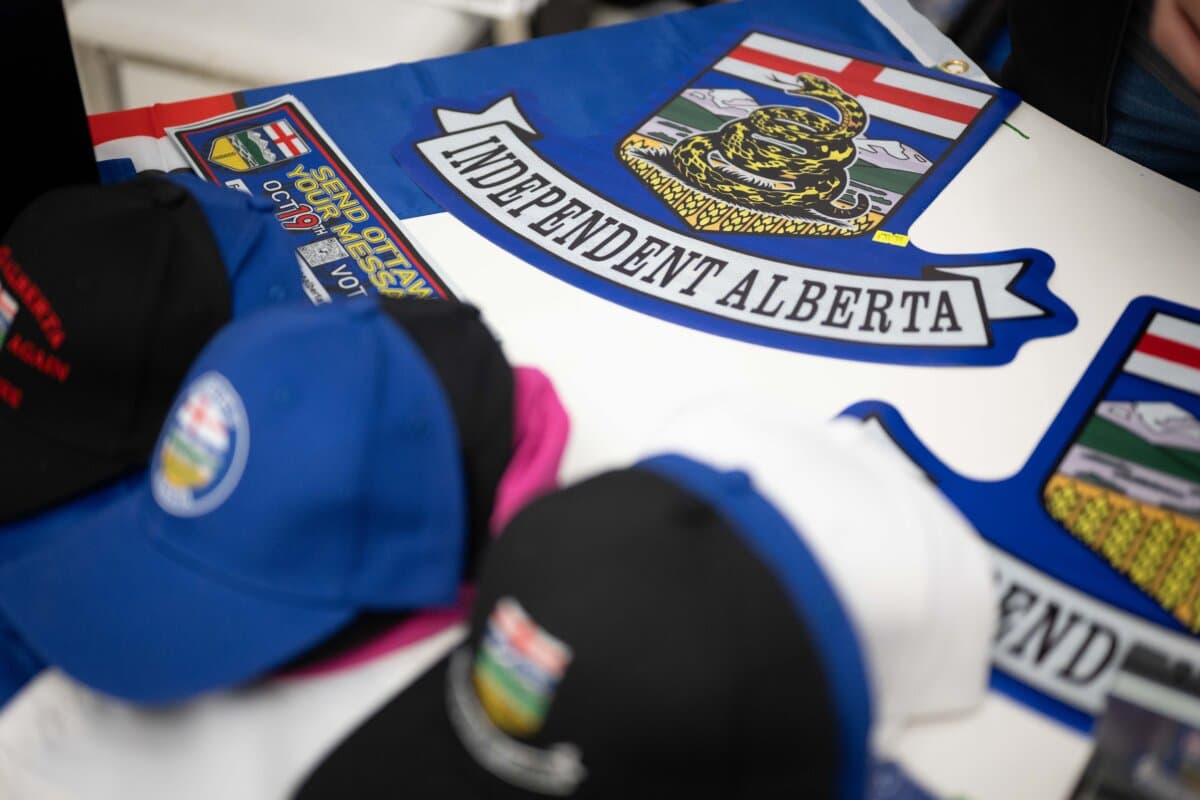
Items in support of Alberta independence featured at a Let's Talk Alberta event held in Calgary on Oct. 13, 2026. (Carlos Herrera for The Epoch Times)
Carney and Conservative Leader Pierre Poilievre joined Smith in Alberta ahead of the vote to push for national unity.
Carney had said that Albertans should not only reject separation, but that they should vote against the other nine proposals as well.
Poilievre told Calgarians during an Oct. 16 speech that he understands disillusionment with the state of affairs in Canada, but that separation isn’t the answer.
Voting hours at some polling stations were extended past the previously scheduled 8 p.m. MST closing time because they opened late. Vote count started once all polls closed at 10 p.m. MST.
More than 1.3 million citizens voted in advance polls.
Elections Alberta says official results will be announced on Oct. 29.
This is a developing story, updates will follow.