
The Trump administration is using all its legal levers to obtain complete voter rolls, pressing ahead with dozens of lawsuits and investigations in multiple states. Although some of the lawsuits have been dismissed, criminal proceedings have yielded results.
The Department of Justice (DOJ), through its criminal and civil rights divisions, has been reaching out to states since May to request voter rolls with complete personal information, mainly driver’s license numbers or the last four digits of Social Security numbers. About a dozen states have provided the data voluntarily.
The department said the information is necessary to determine whether states are complying with federal voter roll maintenance laws.
Democratic states have almost uniformly refused to provide the data. Some Republican states also have been wary of submitting the information, usually referring the DOJ to the public versions of their voter lists with sensitive information redacted.
The Constitution leaves it up to states to organize their elections, but also grants Congress authority to override state election laws.
“The Times, Places, and Manner of holding Elections for Senators and Representatives, shall be prescribed in each State by the Legislature thereof; but the Congress may at any time by Law make or alter such Regulations,” the elections clause reads.
Congress has passed multiple landmark election bills, including the 1993 National Voter Registration Act and the 2002 Help America Vote Act. Both speak to rules for maintaining voter rolls by removing ineligible individuals, such as those who have moved, died, or do not qualify to vote for other reasons.
President Donald Trump has vowed to strengthen federal election oversight, maintaining that irregularities in the 2020 election cost him victory. His lawyers vigorously and unsuccessfully contested the results.
Trump has been pushing the Safeguard American Voter Eligibility America Act, which would require Americans to present proof of citizenship, such as a passport or a birth certificate, for voter registration.
The bill passed the GOP-controlled House in February, but stalled in the Senate, where Republicans lack the votes to overcome the filibuster.
Civil Suits
At least 22 states, plus the District of Columbia, have refused to provide unredacted voter data to the DOJ, usually citing state and federal privacy laws.
Some states have stalled, telling the DOJ that they needed more time to review the legal implications.
Since September, the department has filed lawsuits against state election officials, trying to compel production of the data. So far, at least 29 states, plus the District of Columbia, have been sued.
The lawsuits argue that the DOJ has broad authority to request the data under Title III of the Civil Rights Act of 1960.
The law requires states to retain election documents and make them “available for inspection, reproduction, and copying” by the attorney general upon demand.
The department’s lawyers stated that courts cannot question what the DOJ needs the data for as long as the demand provides a reason, which, in this case, is that the department needs to check whether states comply with voter rolls maintenance rules outlined in federal laws.
States have argued that Title III was intended to prevent racial discrimination, rather than facilitate compliance with voter roll maintenance. They have stated that the DOJ needs to provide not just a reason, but also “basis” for its demands—some “specific, articulable facts pointing to the violation of federal law.”
They have further raised the issue of privacy laws, both state and federal, precluding them from sharing sensitive personal data.
The DOJ has argued that federal laws trump state laws and that federal privacy laws are already satisfied because the department has provided states with the means of transmitting the data securely and will handle it in accordance with existing procedures.
So far, none of the suits have proceeded far enough to grant the department’s request.
Three of the earlier suits, in California, Oregon, and Michigan, have been dismissed by federal judges. The administration has appealed the cases.
Criminal Proceedings
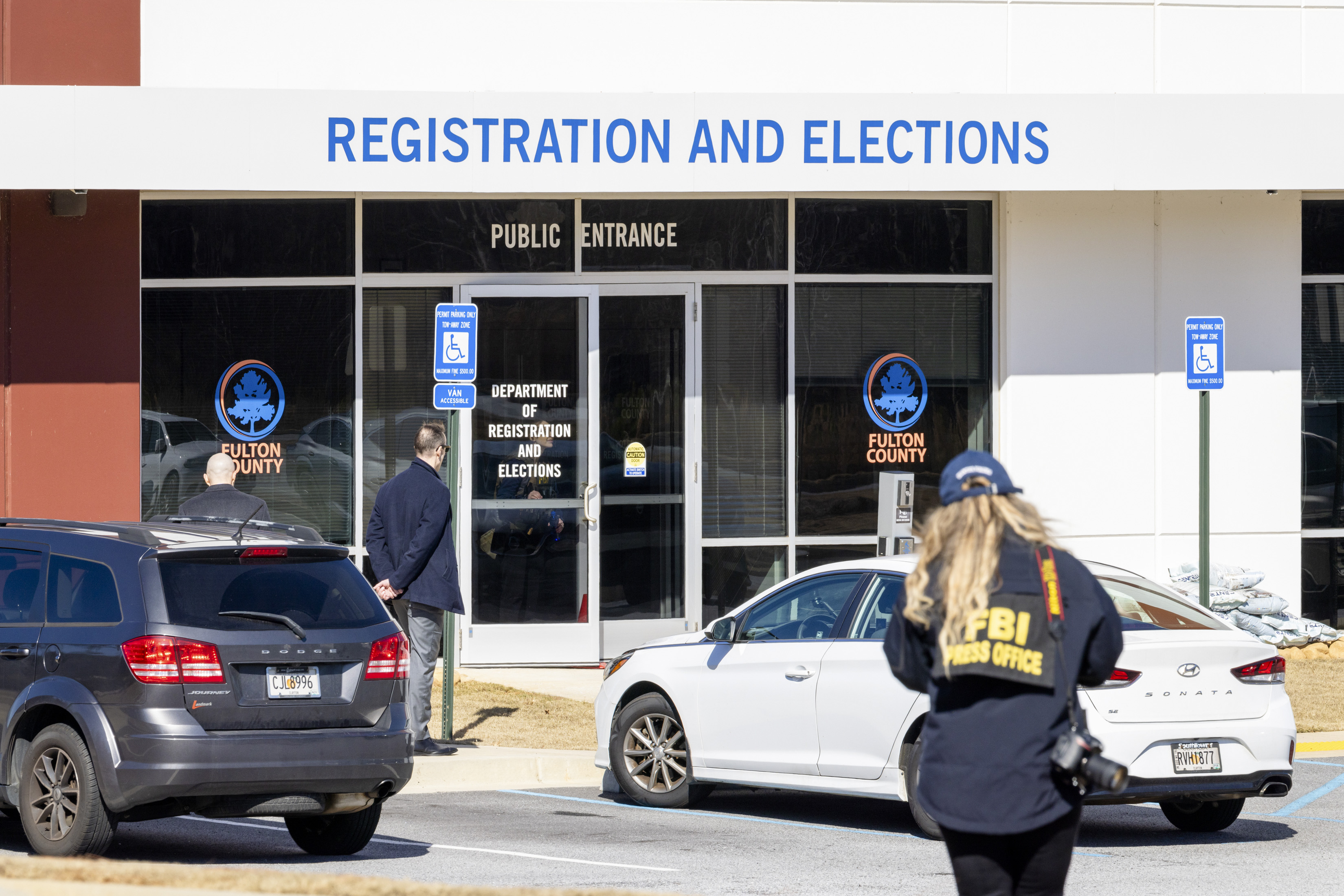
On Jan. 28, the FBI executed a search warrant in the election offices of Fulton County, Georgia, which includes the broader Atlanta area.
Agents seized hundreds of boxes of documents, including physical ballots.
The affidavit supporting the warrant pointed to multiple issues with the 2020 elections in the county, including its two recounts, one by hand and one by machine.
Georgia Secretary of State Brad Raffensperger, who was responsible for overseeing the election, has dismissed the issues as administrative and human errors that did not affect the election outcome.
But the affidavit states that even if the result would not change, the issues indicate that crimes may have been committed.
In early March, the FBI obtained a grand jury subpoena to collect election documents pertaining to the Arizona Senate’s 2020 audit of Maricopa County, where nearly two-thirds of Arizonans live.
The large volume of electronic data included ballots and voter records, The Epoch Times reported.
Voluntary Compliance
A dozen states have voluntarily provided the data or indicated that they will do so: Alaska, Arkansas, Indiana, Kansas, Louisiana, Mississippi, Nebraska, Ohio, South Dakota, Tennessee, Texas, and Wyoming.
Some states, including Florida, Missouri, Montana, Iowa, South Carolina, Alabama, and Idaho, have not provided the data, but have yet to be sued.
There is no indication that data from North Dakota and North Carolina have been requested by the DOJ.
The department has been offering states a memorandum of understanding that outlines the conditions under which the demanded data should be provided. The memorandum would require states to remove ineligible voters within 45 days of being alerted by the DOJ.
Most states have refused to sign it, including some among those that have ultimately shared the data.
Federal laws require, in certain circumstances, that voters be notified before they are removed from the rolls and that officials wait two election cycles before removing them. At least 13 Republican states have mentioned the 45-day requirement as an issue of concern.