

Iranian Americans consider U.S.–Israeli military action a big step toward freeing their homeland from an oppressive regime, according to those interviewed by The Epoch Times in multiple U.S. states on Feb. 28, hours after the airstrikes on Iran began.
It is a mission to “liberate 90 million people in Iran,” no matter how some media reports might “spin” it, said Sherry Yadegari, who lives in the Atlanta area.
Several Iranian Americans who spoke with The Epoch Times said that they were hoping for a quick end to the conflict and lamented civilian casualties. But they all expressed hope that Iranian citizens might soon gain the freedom that they have long sought and said they support the strikes.
People were “dancing in the streets,” Yadegari said, and people were praising U.S. President Donald Trump and Israeli Prime Minister Benjamin Netanyahu for their joint operation against Iran.
The United States’ Operation Epic Fury and Israel’s Operation Roaring Lion launched together, a couple of hours after dawn in Iran on Feb. 28. Airstrikes hit key targets, including weapons sites and the compound of Iranian leader Ali Khamenei, killing him and many other top officials.
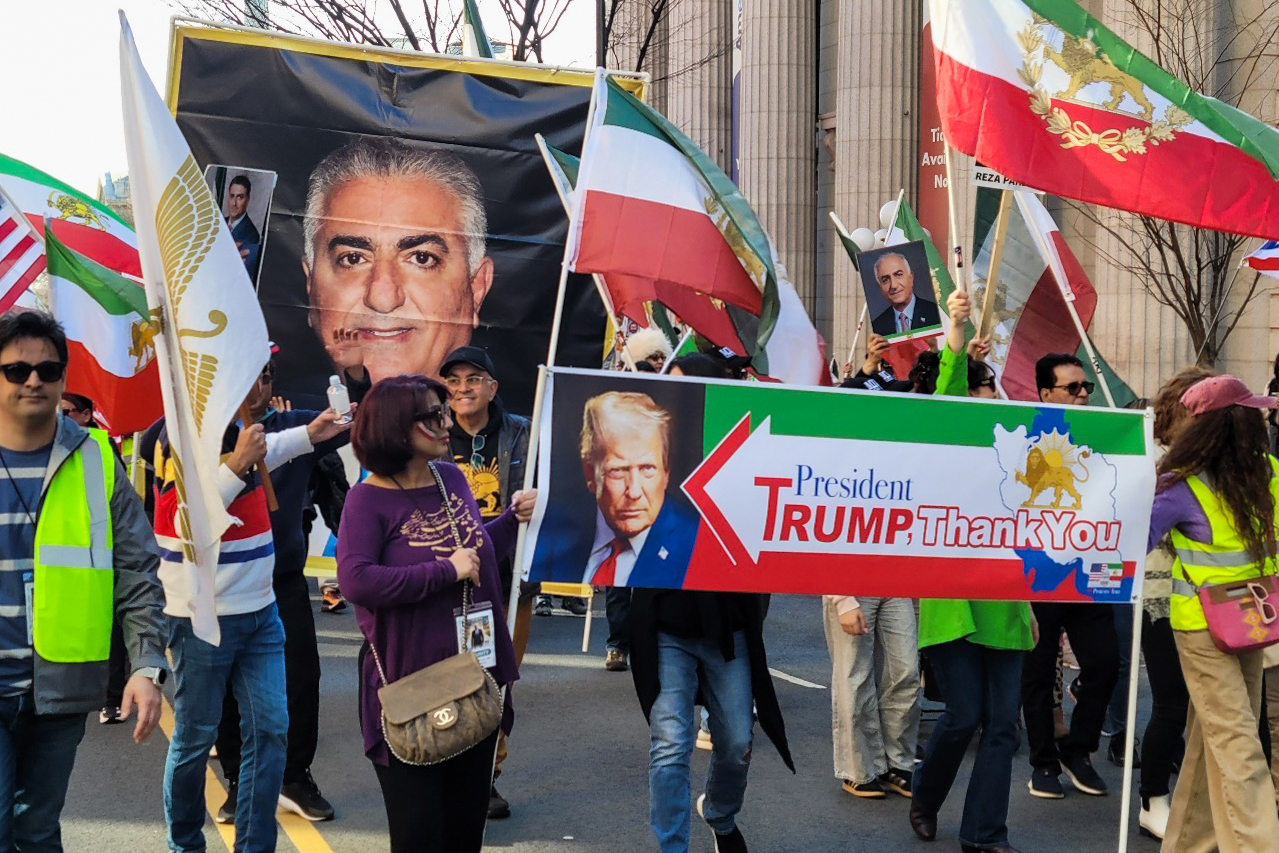
In the U.S. capital, about 200 supporters waved American and Iranian flags and shouted thanks to Trump and Netanyahu. A large banner read, “Thank you, President Trump.”
During the march from the World War I Memorial toward the White House, participants chanted “USA!” and “Make Iran Great Again.”
One sign read: “This is not a war. It’s a rescue mission.”
A separate march in Washington, near the Georgetown neighborhood, drew an even larger crowd later in the day, a video posted on X shows.
With this military operation, Trump is fulfilling a pledge that he made on Jan. 13 to help persecuted Iranian protesters, several interviewees said.
The president encouraged “Iranian patriots” to continue protests that began in late December 2025, even though Iranian government forces were arresting and killing them by the thousands.
“Help is on its way,” he said at the time.
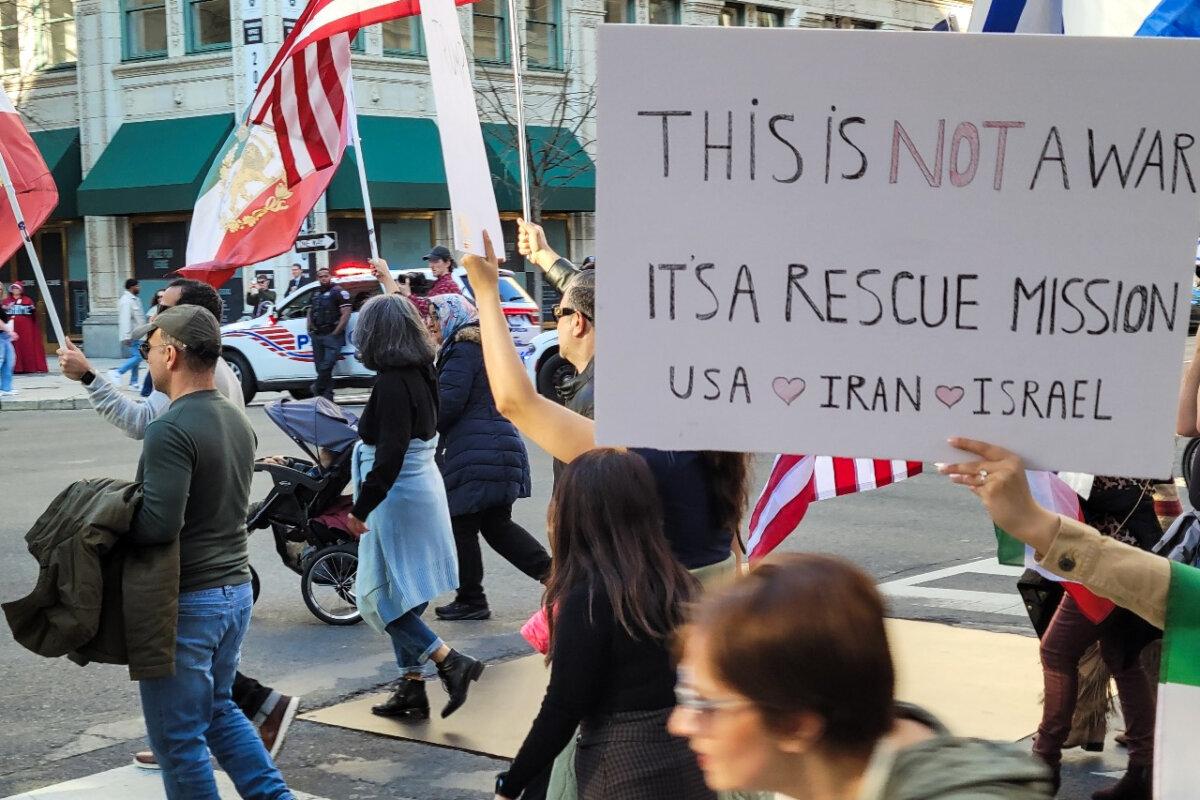
People supporting the joint U.S.–Israeli military strikes against Iran wave banners and signs during a march from the World War I Memorial toward the White House on Feb. 28, 2026. (Stacy Robinson/The Epoch Times)
‘Help Is Here’
“Help is here, but it is in an early stage,” Ray Sharifi, a California grandfather who was born in Iran, told The Epoch Times.
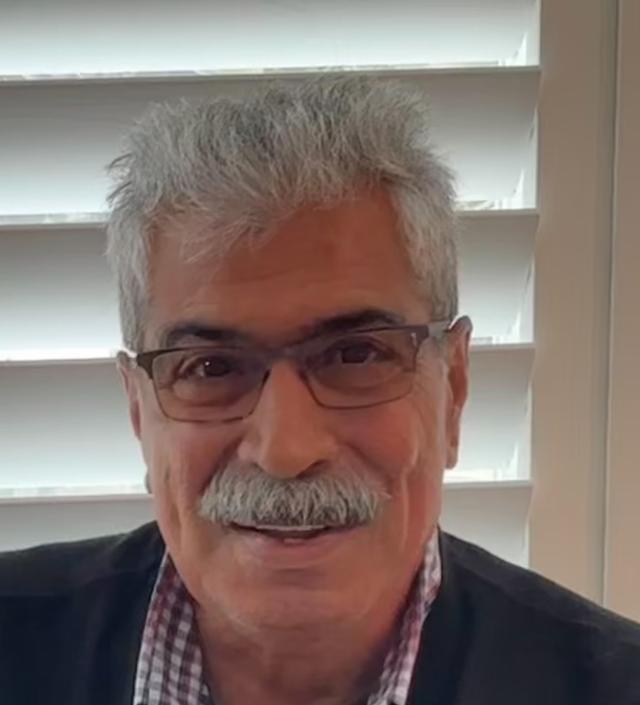
Ray Sharifi, who was born in Iran but lives in San Diego, in a 2026 photo. (Courtesy of Ray Sharifi)
Sharifi said that late on the night of Feb. 27, when he went to bed in his San Diego home, he had a feeling that the United States might act against Iran.
He spotted a news alert flash across his cellphone, confirming the airstrikes. That report left him “delighted,” he said.
All day on Feb. 28, Sharifi said he got no sleep as he constantly monitored news reports.
Sharifi said Iranian citizens needed outside assistance to topple the regime leaders, to weaken them.
Then, the people “can pour into the street again” and take their nation back, he said.
Both Trump and Netanyahu issued statements urging the Iranian people to do just that.
In a video address, Trump told Iran’s citizenry to remain sheltered until the bombings cease.
“When we are finished, take over your government. ... This will be probably your only chance for generations,” he said.
Yadegari concurred; failure to “seize that opportunity” represents her biggest fear about this situation, she said.
Brave Iranian Women Saluted
Saeed Shafiyan-Rad, president of the Iranian Association of Boston, said the nonprofit group cannot take a political stand. But speaking for himself, he said the courage of Iranian women has touched him the most.
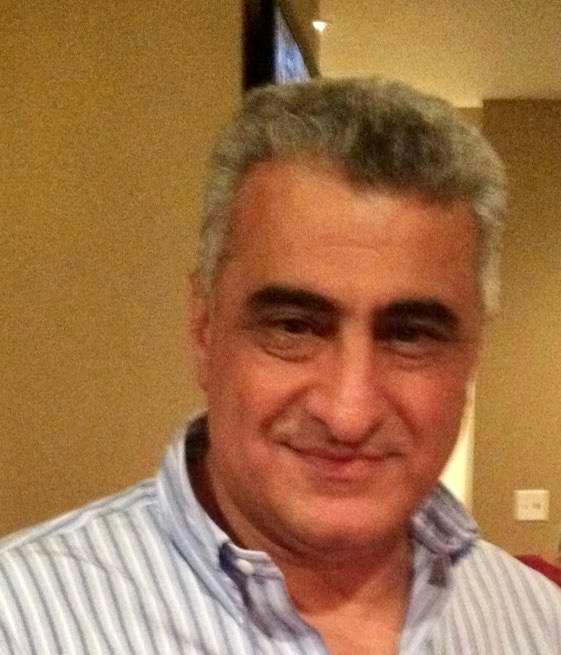
Saeed Shafiyan-Rad, president of the Iranian Association of Boston. (Courtesy of Saeed Shafiyan-Rad)
“They are the bravest people that I’ve seen so far, and my heart is bleeding for them,” he told The Epoch Times.
The women have torn off hijabs, the traditionally required Muslim attire for women, and burned them. They risked their lives with that act of defiance against a regime that forced people to convert to Islam, Shafiyan-Rad said.
“And these are beautiful, beautiful young ladies. ... They’re sacrificing their life for democracy and freedom in Iran,” he said.
Their stories have been suppressed by state-controlled media, Shafiyan-Rad said. But he said he believes that, nevertheless, their courageous acts will be remembered for many years to come.
Publicly opposing the regime, and taking pictures or certain videos, can be punished by prosecution or even death, Shafiyan-Rad said.
Meanwhile, citizens are suffering economically, he said, alleging that the regime has stolen the nation’s wealth from the people.
Tears of Joy, Relief
Dina Sheikami, an Iranian from Canada who joined the celebratory march in Washington, said Iranian nationals across the globe were relieved to hear of the Ayatollah’s death.
“It was such a significant moment ... because we lost so many beautiful people [during his regime],” Sheikami told The Epoch Times.
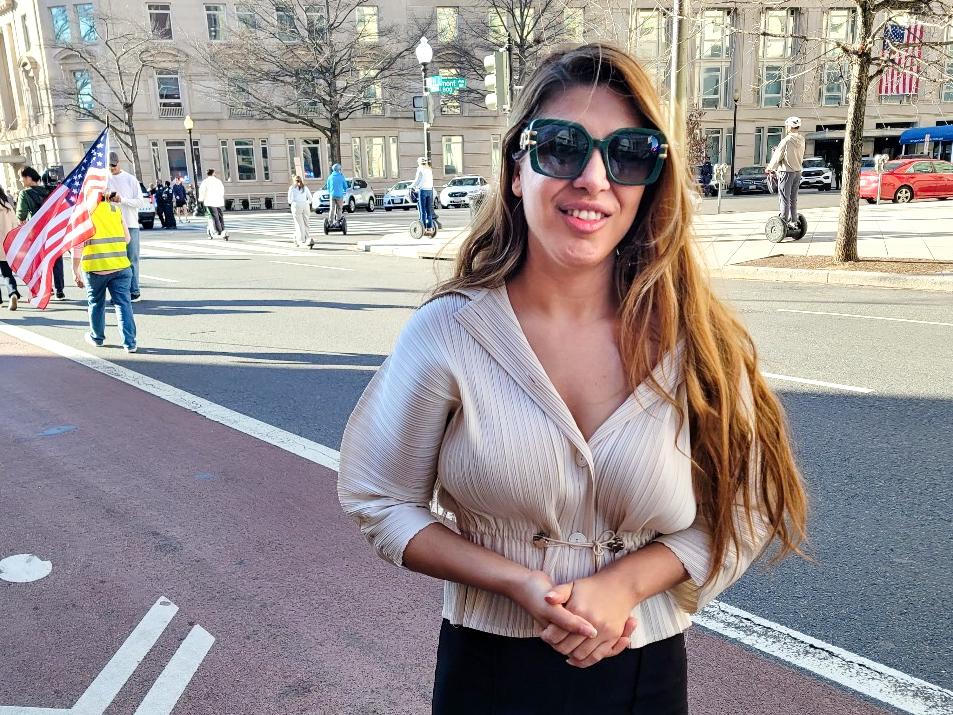
Dina Sheikami, an Iranian from Canada, participates in a march in Washington to praise the U.S.–Israeli strikes on Iran on Feb. 28, 2026. (Stacy Robinson/The Epoch Times)
Sheikami said of some Iranian celebrities’ claim that Iranians opposed outside intervention, “It is such a lie.”
“We need all the support from all around the world ... [from people] who can help us make our wish come true, which is to remove the Islamic regime from power,” she said.
Another marcher in Washington, Shima Safinia, a 31-year-old Iranian who came to the United States in 2017, said she was crying in relief over the news that the ayatollah had been eliminated.
“I’ve been waiting for this second my whole life,” she told The Epoch Times.
Transition Leader Suggested
Safinia said she and many people in Iran support Reza Pahlavi, son of the deposed Shah of Iran, to become the nation’s new leader during a “transitional period” followed by a vote for a permanent leader. Safinia said she supports his election for that role, too.
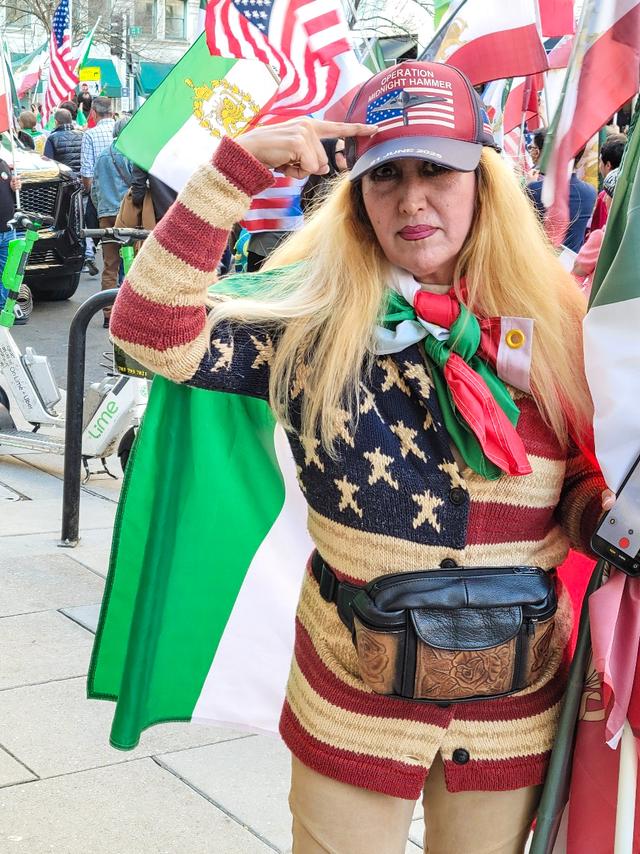
A woman who identified herself as “Anita” shows off her pro-U.S. and pro-Iranian attire as she and others celebrate the U.S.–Israeli strikes against Iran during a march in Washington on Feb. 28, 2026. (Stacy Robinson/The Epoch Times)
Rahm Ahmadi, a 78-year-old Iranian American living in the Dallas area, said that the Shah’s son has widespread support.
Pahlavi represents one of the political factions with support in Iran in a highly fragmented opposition.
Ahmadi said that, before he came to the United States in 1973, his homeland was prosperous and had a lot of freedom under Shah Mohammad Reza Pahlavi.
Iranians are of Persian descent, he said, and they and the Israelis share a heritage that is different from those of the other Arab nations in the Middle East.
It’s been decades since Ahmadi visited Iran. If there is new leadership, he may return once again—for the first time in 23 years.
Stacy Robinson and Travis Gillmore contributed.