
The Supreme Court ruled on Feb. 20 that a significant portion of President Donald Trump’s global tariffs were invalid.
The decision applies to a set of tariffs implemented under an emergency powers law, called the International Emergency Economic Powers Act (IEEPA).
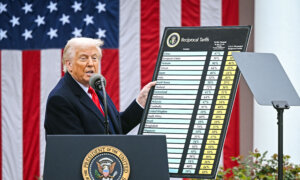
IEEPA tariff measures include reciprocal tariffs on all countries, fentanyl tariffs on China, Mexico, and Canada, transshipment tariffs on Canada, Russian oil, and Venezuelan oil tariffs on India, free speech tariffs on Brazil, and trade deals with foreign countries.
In his response to the decision, Trump said he will impose a blanket 10 percent tariff on all trading partners under another authority, known as Section 122 of the Trade Act of 1974. Those tariffs can only be levied for 150 days, after which they will need to be extended by Congress. The administration will also explore other tariff pathways, such as Section 301 of the same law, which requires the Department of Commerce to conduct an investigation into potential unfair trade practices before imposing tariffs to remedy violations.
Treasury Secretary Scott Bessent said on Friday that the agency projects this alternative tariff plan to result in “virtually unchanged tariff revenue” this year.
Trump suggested that businesses wanting to claim tariff refunds may have to litigate the issue in court, adding that the administration might “end up being court for the next five years” dealing with the matter. Many companies have already filed lawsuits to recover tariff payments they’ve made.
Here’s a look at the revenue tariffs levied under the emergency powers law brought in.
Tariff Revenue
Total U.S. tariff revenue more than doubled in fiscal year 2025 from the year before.
The revenue from the tariffs struck down by the Supreme Court exceeds the total U.S. tariff revenue collected in fiscal year 2024.
Breakdown of IEEPA Tariff Revenue
Most of the IEEPA tariff revenue—nearly 90 percent—was from reciprocal tariffs on all countries and fentanyl tariffs on China, according to data from U.S. Customs and Border Protection.
The reciprocal tariffs accounted for 61.2 percent of total IEEPA tariff revenues as of Feb. 20. The fentanyl tariffs on imports from China accounted for 28.4 percent of the IEEPA tariff revenues.
The rest of the revenue—tariffs on imports from Mexico (fentanyl tax), Canada (fentanyl and the transshipment penalty), India (Russian and Venezuelan oil tax), Japan (trade deal), and Brazil (free speech tax)—accounted for 10.4 percent.