
This episode will premiere on June 13, 2026, at 5 p.m. ET.
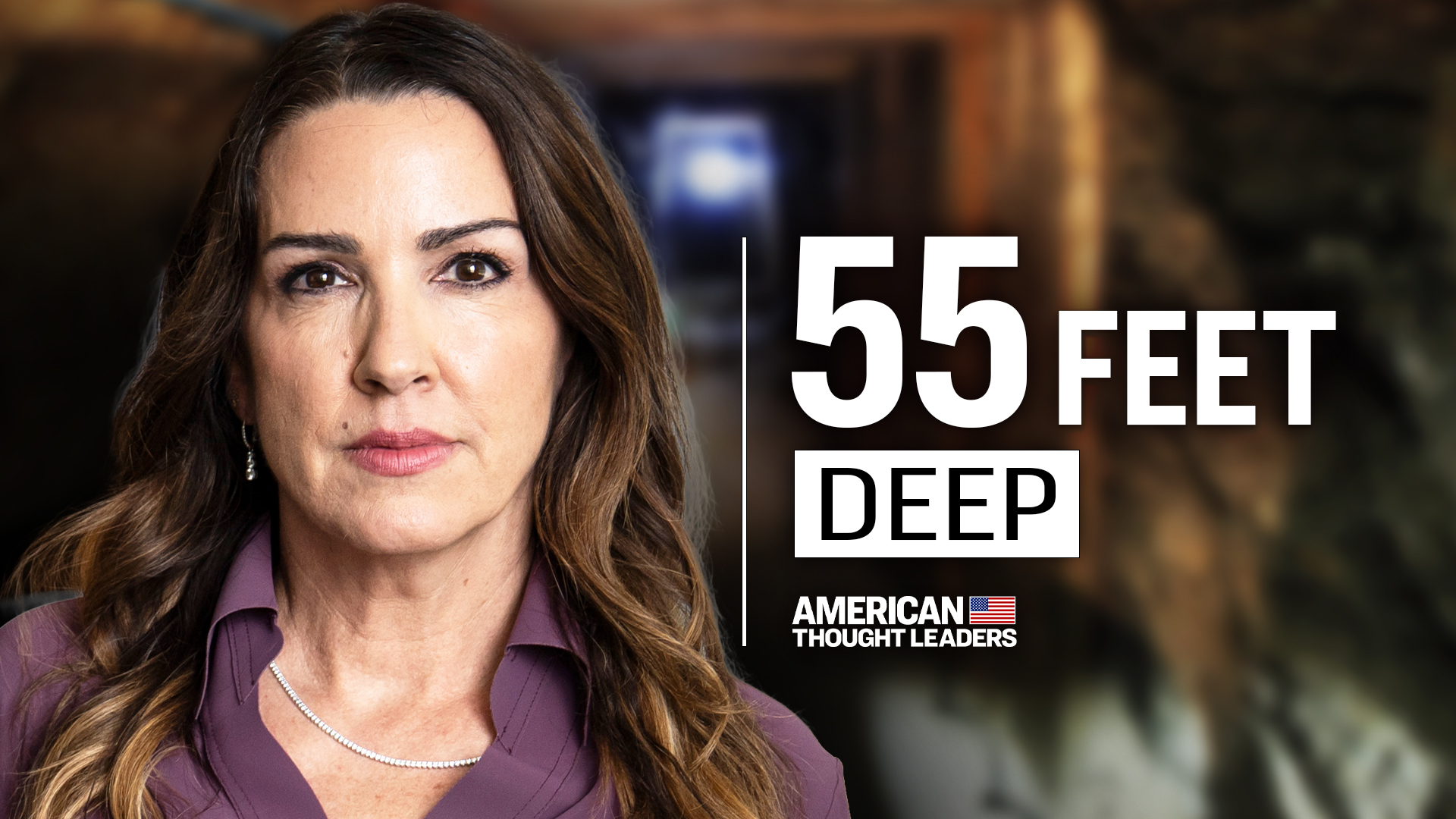
[RUSH TRANSCRIPT BELOW] U.S. federal investigators recently discovered a sophisticated tunnel 55 feet underground between Mexico and California—among the largest ever found—with electricity, a rail system, ventilation, reinforced walls, and a complex hydraulic lift system.
White House “drug czar” Sara Carter estimated that it was used to transport narcotics worth hundreds of millions of dollars. This is just one of the over 200 tunnels of varying sizes and sophistication that have been discovered in the last four decades, with many more likely still undetected, she said.
As Director of the Office of National Drug Control Policy (ONDCP), Carter is fighting to end the narcotic epidemic killing Americans, seize cartel finances, and make a drug-free life the new norm in America.
Deaths from illicit narcotics in America have been rising for decades and reached an all-time high in 2022, with 112,000 Americans dying in a single year. Since the Trump administration took office, that number has dropped to about 68,000 for the 12-month period ending in November 2025. But Americans of all ages are still dying.
In this episode, Carter breaks down the complex pipelines that are driving this epidemic and how the Trump administration has been going on the offensive to attack both the supply and demand sides of this crisis.
How exactly do illicit narcotics and precursor chemicals make their way into the United States? How have America’s enemies weaponized these deadly drugs? And how can we begin to comprehend the truly devastating human cost—the many young lives that were abruptly cut short and the families left behind?
Carter revealed that she always thinks to herself, “This could be my child.”
On the evening of our interview, she told us she would be heading to meet an Angel family who recently lost their son, a recent law graduate, to a line of fentanyl-laced cocaine.
“His parents had all the hopes in the world for him. … He went to a party after law school in Miami and made a huge mistake. He did a line of cocaine that had fentanyl in it, seized, had a heart attack, and died in an instant in the party,” she says.
Views expressed in this video are opinions of the host and the guest, and do not necessarily reflect the views of The Epoch Times.
RUSH TRANSCRIPT
Jan Jekielek:
Sara Carter, such a pleasure to have you on American Thought Leaders.
Director Sara Carter:
It’s so great to be with you, Jan. Thank you so much for having me and for being here at my office in Washington. D.C.
Mr. Jekielek:
Well, recently there was this massive, kind of very high-end tunnel discovered across the border, under the border. And I know tunnels are something that you’ve been involved in in the past. So tell me a little bit about how important these tunnels are and how you even get a tunnel like this built.
Director Carter:
These are highly sophisticated tunnels. I started my work more than 20 years ago. I would say it’s probably more like 25 years ago when I started covering the southern border with Mexico. It’s about roughly 2,000 miles, varying in terrain. The Tijuana Estuary, which I’m very familiar with, is the area in which this most recent tunnel was discovered. It was 55 feet deep and miles long, ending up in San Diego covered by a business warehouse. This is very common for the Sinaloa cartel. The Arellano-Felix cartel used to operate out of the Tijuana area, so that plaza is very familiar to our law enforcement.
One of the most interesting things about how those tunnels are built is that not only are they highly sophisticated, they take a lot of equipment, right? So you’ve got to be able to dig, you’ve got to be able to move the dirt out, you’ve got to be able to get oxygen in. They’ve got usually rail systems where they move the narcotics or the humans that they’re trafficking through. So they’ve got to get them from point A to point B, they’ve got to get it there safely, they’ve got to be able to then move their product, their illicit narcotics, outside of that warehouse and then out into the distribution, right? Sites throughout the United States. Or if it’s humans, they’ve got to get them through there alive, safely, get them into the warehouse and then move them out.
We have eyes everywhere. Under President Donald J. Trump and under his administration, our administration right now, we are working with every law enforcement agency as a whole of government. We understand these choke points, but it’s still difficult. When you have something that’s under 55 feet of ground, they’ve been building it for years, right? We don’t know how long they’ve been moving narcotics through there. Hundreds of millions of dollars of narcotics have probably made their way through this tunnel. Imagine the national security implications of that.
Imagine us trying to discover these tunnels. These are tunnel rats, right? They’ve figured out how to make them bigger, better, broader, more effective. We have to be able to keep up with it. We have technology that we are using to try to keep up with some of these bad actors. Sinaloa is famous for it. We also have our law enforcement, our U.S. Customs and Border Protection. We have tunnel teams. So we are constantly playing this game of cat and mouse.
But now, under President Trump, we’re on the offensive. We’re not just reactionary; we’re on the offensive. So we are actively seeking out these tunnels. We can’t go into details of how we do this or what qualifies us to be able to do this because we don’t want to give away the information to our enemies and to the cartels. But we are actively seeking out these tunnels. We are going to take them out. We’re going to destroy them. They’re having a much harder time getting their product across the border because we’ve shut it down, and they are looking for new ways and new mechanisms.
But this is an old one. I actually ran into some of these tunnels when I was a young journalist covering the border. In my first investigation, I actually stumbled on some of the tunnels. Nothing as fancy as this, a much more rudimentary tunnel, but I did find them.
Mr. Jekielek:
So this actually reminds me of something you wrote in your letter in the National Drug Control Strategy, which is new, actually. This is something I'd love to talk about. But first you said, we will take the fight to the enemy with a relentless offensive. That’s what I’m hearing. But then there’s the other part, which is building the culture of resilience, right?
Director Carter:
Right.
Mr. Jekielek:
Where living drug-free is the norm.
Director Carter:
And living drug-free is the social norm. You know, the majority of Americans do not use drugs. It is tragic and horrible that we have addiction rates that soared in the United States. A lot of that happened when we didn’t pay attention to the opioid crisis in America. We didn’t see what was coming. We didn’t want to see what was coming. We didn’t want to see what was coming.
I think back to William Bennett in the first Bush administration. Dr. Robert DuPont would say he was the very first drug czar. The very first drug czar that was confirmed by the Senate was William Bennett. I was thinking back to his national strategy that you were talking about. You’re talking about mine now, but he had his own.
When I read it and I was looking at it, back then you look at 12,000 to 14,000 deaths a year. We were very concerned about the drug epidemic, especially in our urban communities, poverty-stricken communities, underprivileged communities, African-American communities, and Latino communities. Back then we said, how do we stop this from expanding, from growing and eviscerating entire areas of our nation?
What happened was we weren’t thinking outside the box necessarily. We were targeting and hitting the right points, but we were missing the bigger, broader picture. These are our enemies, right? What are our enemies doing? Not just the cartels, which operate as—now, thank God, we’ve designated some of the bigger ones foreign terrorist organizations under President Trump—but our adversaries, how do they benefit from our nation falling apart, from drug use, and drug overdose and poisonings.
So we had to think outside the box, but it went from—we went from 8,000 drug overdose deaths a year in the early 1980s, right? Which people were concerned about, to its high point in 2019, and then in 2020 and 2022, and we saw 112,000 Americans in one year—in one year, unacceptable. And we see our children dying, children that should not be dying. They didn’t die of an overdose; they died because they ordered an Adderall, sadly, because our society is hyper-focused on prescription medication, or people think that because they’re going to take an Adderall, they’re going to do better on tests, and there’s this competition. But ordering Adderall online, on the internet, on whatever social media app they’re using, and what they get is a pure fentanyl tablet. When their parents find them, they find them dead on the floor of their bedroom.
Mr. Jekielek:
I was looking at this wall of people that you have here at the office, and it’s utterly heartbreaking. I mean, it actually hits home because if you haven’t been—I haven’t been sort of directly faced with this issue. I have a few friends whose children have actually passed, so it’s close to me. But when you see all the faces, you realize this could be anybody. This isn’t like a specific demographic; this is literally anybody.
Director Carter:
Could be your child. Could be a two-year-old. Could be a three-year-old that got their hand on a pill, which has happened. Or a family member who’s an addict who leaves things lying around. I know horrific stories I’ve heard where they’ve ordered it online, and then their parents walk in the bedroom and find them dead.
I actually was with my daughter and we were going back to our old high school. We were driving around the neighborhood, and she said, hey, Mom, remember so-and-so? Did you know she died of fentanyl poisoning? Hey, Mom, remember this kid? Did you know that they are in a hospital now, and they’ve completely lost their minds? Remember, he was on the football team, and he is using drugs, and now his parents can’t even salvage him because he has induced psychosis from narcotics.
This is unacceptable. This is the United States of America. If anything, we should be there for our community. We should be able to stop this, and we are now under President Trump. By the way, under President Biden, so many Americans who didn’t want to face the crisis were ignoring a real threat to our nation.
Could you imagine, and someone told me this just today, a friend of mine was saying, could you imagine if a bomb was dropped every year in the United States and 100,000 people were just wiped off the planet just every year, or 68,000 or 79,000? We would be in a state of shock. We wouldn’t even know how to deal with that, right? We would be, it would be on the news every day. It would be the headlines.
But for some reason, this did not become the headlines until young Americans and Americans from all economic backgrounds just started dying. Parents started talking to one another and they said, you had a 12-year-old that died? Wait, your son was only three? Wait, my mother took a Percocet and she died? We started to wake up and we are waking up. We’ve awoken this sleeping giant.
I always say to people, I’m a mama bear. I’ve got six kids. I’ve got beautiful grandchildren. And every time I talk about this, I just tear up. This could be my child. I’m going to have dinner today. Today is the day we’re doing this interview. And tonight I’m meeting with an angel family. I haven’t met them before, but I knew their son.
He was one of my son-in-law’s best friends. They went to high school together. They played football together. He went to college, graduated from law school. His parents had all the hopes in the world for him. So proud of him. So proud of him. And he went to a party after law school in Miami, made one big, huge mistake. Did a line of cocaine that had fentanyl in it.
He seized up, had a heart attack and died in an instant at the party. This is unforgiving. You can’t experiment anymore. We have adversaries that have contaminated our supply chain. We have cartels that could care less. I hate hearing that statement, but why do they want their customer to die? They do not care because there’s always another customer around the corner.
The majority of Americans do not use drugs. We’ve become reliant a lot. We’re kind of a dependent society on our medical industry, right? But as far as illicit drugs, the majority don’t. And hopefully, with this presidency, we’re making a shift, but we can’t take our foot off the gas. We have to continue. 68,000 this year is a big decrease for us, right? From the 112,000-plus that we lost before, it’s now still 68,000 lives.
Mr. Jekielek:
So something I’ve covered quite a bit on this show is the Chinese Communist Party’s use of unrestricted warfare. And one of the methods of warfare is drug warfare, right? And actually, someone we both know pretty well, Peter Schweizer, has documented how the Chinese are involved in every part of the supply chain of what the cartels end up delivering to America. How much are you looking at this?
Director Carter:
Every day. There is not a day that goes by that I’m not in this office that I do not think about that, that I do not address that. I’ve already spoken with Chinese counterparts in China about this, whether that’s the Ministry of Public Security [MPS] or government officials. I’ve made it very clear that we understand and we know where these precursor chemicals are coming from and that it will not be tolerated and that we will continue to hold anybody and everyone and even nation-states accountable for the deaths of our children.
President Trump has made that very clear, and I promise that I will continue. And I have made that promise both in our national drug control strategy and openly, without hesitation, that I will never be afraid to speak up and hold those actors accountable that are killing our kids. It is absolutely unacceptable.
You’re right. It is unrestricted warfare. There are ways of targeting a nation without ever lifting up what we can consider an obvious weapon. So I know that, and I’ve made it very clear in our national drug control strategy that our focus is going to be a clean supply chain from origination to destination. That means when products leave mainland China and come to the United States, I expect that those products and that cargo are to be clean. I have made that very publicly known. I’ve made that privately known, and we are working on that.
It’s kind of like a carrot and a stick. Do you want to do business with me? Make sure those precursor chemicals that are used to make fentanyl are not in that supply chain, and if they’re dual-use, then tell me how much is in there, file that licensing agreement so that we can measure it when it comes to our country so that I can ensure that any precursor chemical, whether that’s being used for makeup or for some other usage, does not contain an excessive amount that should not be coming to the United States. And we’re hitting every single choke point, including with the U.S. Mail. The United States Postal Inspection Service [USPIS] has been working very closely with me, and we are hitting the cartels, and by the way, any adversarial nation that’s allowing this to happen at every single point, whether that’s land, sea, or air.
Mr. Jekielek:
That sounds excellent, but ultimately, right, the proof is in the execution, if you will.
Director Carter:
Right.
Mr. Jekielek:
And this is very difficult. For example, I’m aware that there’s not a lot of inspection that happens at the ports, even around prescription drugs and assessments, whether it’s FDA and so forth. It’s a very, let’s just say, a lot less than one would expect or one would imagine, at least, right? Never mind looking for these drugs and so forth. Now, the FBI director, Kash Patel, has gone to China, met with his counterpart on this issue, and they’ve made some promises, but their promises are not things that, when looking at historical precedent, you can count on, not by a long shot. So how do you deal with it?
Director Carter:
I’m grateful that Director Patel, and I know Director Kash Patel very well, is working closely with his counterparts in China, and government officials. I am continuing to do so as well. I was in Mexico talking to folks in Mexico about their port system and what we need to do to ensure that we’re seeing a clean supply chain before it even reaches the United States, before it even comes into the Western Hemisphere. Part of our strategy is to deal with that directly. We’re looking at all kinds of new technology, technology that was unheard of in the past. How can we implement this technology to ensure that the cargo that is coming in is clean?
You’re absolutely right, it is extraordinarily difficult. I’m up against a lot. There are a lot of challenges. A big challenge is money, right? People want product moving faster. They want their supplies moving quickly. The stores want their products coming in as quickly as possible. Slowing down the supply chain to inspect becomes an issue.
How do we move that through and ensure, to our best ability—and we’re constantly playing this cat and mouse game—that what’s coming into the United States, we have done everything we can to protect our citizens and the national security of this country? And that is what we’re working on. And that is why I’ve called together meetings with senior officials.
That’s what we do here at the Office of National Drug Control Policy [ONDCP]. We oversee all of the agencies that are allocated. There are 19 agencies, all the way from Health and Human Services to the Department of War [DOW]. We oversee over 42.5—sometimes people believe it’s a little bit more than that, but right now that’s what we’re looking at—over $42 billion in U.S. taxpayer money that is going to this, to ensuring that we not only have a clean supply chain and that we’re working on all of the issues, whether that’s DOW targeting the cartels overseas, being the hammer, right, being on the offensive, or whether that’s recovery and treatment in the United States.
Our job is to make sure that we’re working together as a whole of government, that our Homeland Security Task Forces now, under President Trump, have the capability and the ability to do what’s needed to cut off the heads of the snake, but that we’re operating cohesively so we’re not missing something. So if we need to fix what’s going on in our ports, we’ve got to fix it. If we need to fix what’s coming in through the mail, we need to fix it, and we need to own up to what we can’t do and what we need to be doing, and that means being honest. That doesn’t mean ignoring what the facts are or pretending that the facts are something different than what they are.
But you are absolutely right. One of the biggest disappointments is inspections at our ports. We are not getting sufficient inspections at our ports, and we need to do better at that. That’s why I’m here, and that’s why we are working on getting the technology that’s needed and also holding private industry accountable. You want to move products to the United States? If I run an inspection of your cargo ship and I find precursor chemicals on that cargo ship or cocaine or whatever other illicit drugs are coming in on there, you are going to get dinged. Do you want that to happen? That’s my message to private industry. Put the onus on them as well and make sure that they understand that there is going to be a price to pay if they do not clean their system.
So we have a lot of work to do. People probably would have never thought like this office here in Washington, D.C. would have so much of a lift. We’re excited about that. When I first came on board, I was working as a special advisor to the president before finally, over eight months later, getting my confirmation vote in January.
Mr. Jekielek:
Well, and congratulations for the actual swearing-in. That was just recently, just a few days ago, right?
Director Carter:
Yes. So we did a ceremonial swearing-in. So when, on January 6th, when I was confirmed as director of ONDCP, I did a swearing-in, which happens immediately so we can get to work, so I can do my job. And obviously, a lot’s been happening in the news, so I was waiting patiently for my ceremonial swearing-in and the Vice President so graciously finally did it. And it was very exciting for my family and for me to have that moment. I never expected to be here.
I have a lot of faith in God and a lot of, you know, I had amazing parents, but my mom worked in a factory, you know, after my father passed away. And, you know, my dad was a World War II vet who worked for Lockheed Martin, and, you know, he was a mechanic and we didn’t have a lot. I didn’t have a silver spoon, so to speak. I worked really hard my whole life to be able to be here in Washington, D.C., and have the opportunity to do this, to fight for other mothers and fathers, for our nation and our Constitution. I have to tell you there is no greater honor, other than being a parent and a wife, than what I’m doing right now.
Mr. Jekielek:
So there has been a significant change in the number of deaths, so what exactly do you ascribe that to?
Director Carter:
A number of factors. But the most important one is President Trump’s policy, our policy on the border. We shut down the border, which first and foremost, I believed, was the most simple task: Follow the law. Shut down the border. It was wide open. I would cover the stories there, spend so much of my life on that border. I would just see hundreds and thousands of people just pouring into our country across the Rio Grande. Even late at night, I would watch with night vision, and I would see hundreds of people moving across the Mexico side, getting ready to transfer on boats and come over to Texas, whether that was Eagle Pass, Brownsville or McAllen, it didn’t matter.
I would see the hordes of people. I would see children being trafficked into the United States without parents, without any guardians, in the hands of smugglers that did only God knows what to these beautiful children that had nowhere to turn to. And then there are American people and what we faced from that.
So we shut down that border. We started hitting all of the major choke points. We have a department of war that’s actually doing its job. We designated the terror, you know, we designated the cartels, foreign terrorist organizations, the biggest ones, you know, the most nefarious organizations. We have Maduro. We captured him. One of the best operations I’ve ever seen conducted. We have done what we said we were going to do. There were no more games. It isn’t like, we’re going to do this, shame on you, and we never do anything.
Mr. Jekielek:
And just on that point, did you see less material coming from Venezuela after that operation?
Director Carter:
Yes. We’re still fighting it. We still have cocaine cultivation. This is money. You’re talking hundreds of billions of dollars, right, in resourcing. So you have to imagine decades, more than 50 years of these cartels amassing hundreds of billions of dollars. And we’re the United States government. So we have to abide by rules, law. Thankfully, we have a president that doesn’t tie the hands of law enforcement or the military, allows them to do their work, and allows us to do our work. But we still have to abide by it. We still have to go through a bureaucracy. We still have laws that we have to respect.
The cartels don’t have to do that. They don’t need to respect anybody. They do whatever they want. Imagine hundreds of billions of dollars, if not trillions, in illicit financing, oil theft, right? Even the sale of exotic animals, money laundering, moving their money through cryptocurrencies, all kinds of new innovative ways of hiding and moving their financing.
That’s what we’re up against. So we’re up against not just a gang. This isn’t a small gang of bad guys that are bootlegging across the border like the 1800s or like during prohibition, right? This is about massive organizations that have embedded themselves into the fiber and fabric of their governments. They have threatened, they have blackmailed, they have purchased homes in the United States. They have more money than we can ever imagine.
We have to target them, not only physically target their organizations, that means destroy and dismantle them with our Homeland Security Task Forces and all of our other agencies, but we have to literally rip their financing from them. We can’t collapse these organizations unless we take away their money. And I promise you, we are taking their money.
I don’t want a cartel leader to get up in the morning and be able to pay out all the 100,000 people that they have on their, you know, like their army, right? Their boots on the ground. I want them to get up in the morning and try to go into their account and not be able to get in it, to have it seized completely. So we’re working on multiple levels and we’ve seen cooperation on all levels, even with governments in the Western Hemisphere.
Mr. Jekielek:
Well, this is what you’re describing as the expertise of the FBI director, is, you know, follow the money, as he likes to say.
Director Carter:
Yes. Director Patel, he’s right. Follow the money. Follow the money, then take the money. What do the cartels want more than anything? They want power and money. That is what keeps them alive. That’s their heartbeat, their power, and their money. And they’re vicious. They have no regard for human life. They have no regard for the nation-states that they operate in. We have to be just as tough on them, if not tougher, and that means taking and seizing their financing.
By the way, doing what we’re doing right now in Mexico, targeting those even in the government that have sold out to the cartels, that have made it easier for them to operate, getting those extraditions, those warrants on them, and working closely with our counterparts like we do with President Sheinbaum, for example. We saw significant progress in Mexico, especially with CJNG [Jalisco New Generation Cartel] and when we were able to go after El Mencho. We did that through our intelligence but utilizing the Mexican National Guard, the Mexican Special Forces, and General Trevilla, that operation. They cooperated with us. We said, look, here’s the information, go get them, and they did. We had never seen that before, not in that same way, and not with that cooperation.
By the way, right now, you know, targeting the folks in Sinaloa, all of the government officials that are part of the Culiacan clan that has protected the Sinaloa cartel, Los Chapitos, Los Mayitos, Joaquin Guzman’s entire operation, and El Chapito’s entire operation. We are able to do that because the Mexican government, like many of the governments in our hemisphere, know that President Trump means what he says. He just absolutely does. If he said, we are going after you if you do not cooperate with us. We are going to target you, and you are going to regret it. So do you want to cooperate, yes or no?
Beyond that, it’s what’s good for them, and they know it too. They’re their own sovereign nations. They’ve understood this for some time, being government officials that really want to clean out the system. They really want to get to some point where their own countrymen aren’t reliant on the movement of drug financing, but reliant on their own economic futures of prosperity for their people. They’re seeing that now, and they’re seeing that opportunity, and they trust that President Trump and this administration will not abandon them, that we will see it through. And you can’t say that about other administrations.
Mr. Jekielek:
You know, on this point, I’ve heard that even the MPS, the Ministry of Public Security in China, has been somewhat uncharacteristically cooperative. And that just, to me, speaks to, because in there, there’s all those so-called organized crime, and China obviously operates under the auspices of the Chinese Communist Party, ultimately. So but that tells me that there’s that the U.S. is exerting a kind of leverage that they haven’t before.
Director Carter:
Yes, absolutely. And I think with MPS, we’ve seen that as well. And I think that’s why we’re seeing that cooperation that Director Patel is talking about when it comes to dealing with particular cases where we’re following the money, where we’re trying to stop the movement of precursor chemicals to our nation. I think, though, that we can’t let our foot off the gas. I have said this to all the Chinese officials: I want to work. I want cooperation. I want things to be better for both of our nations.
But there are two things: one, a clean supply chain, and two, a continued reduction in deaths. I’m looking for those two things. And then, you know, if someone says, well, give me details, what can we say? How about this? How about that? No, I’m looking for those two things, not too many details. I want a clean supply chain. And if I see a dirty supply chain, I’m going to call you out on it, and a reduction in deaths. That’s on us too, right? We have to take responsibility for our own nation and for our own crisis and our own problem and our use of drug use.
So it’s going to require us empowering every mom and dad, every family member, to be a part of this. You remember back in World War II, there was Rosie the Riveter, joining the team and fighting back. That’s what we really have to do in America. We have to make everybody kind of understand that this is not something that the government can completely solve on its own. I can’t either. It’s about our children and being able to communicate with them and being able to say, here are the tools, the government, here are tools, here are resources, but you need to fight for your communities. You need to fight for your children. You need to be the mama and papa bears out there at the front protecting your kids from the drug dealers on the streets. And let us do the national security side of it and stop the supply from coming in.
Mr. Jekielek:
Well, one thing that’s stark and obvious in your drug control strategy on this sort of building resilience side is the faith-based approaches, which I haven’t seen an emphasis like that on in the past. So tell me a bit about that.
Director Carter:
I am so excited about our faith-based approach. We really separated that from everything else, considering 83 percent of people in America believe in a power greater than themselves, a higher power. I have a deep faith in God. As you know, AA [Alcoholics Anonymous],NA [Narcotics Anonymous], some of the oldest, made in the 1930s…
Mr. Jekielek:
And the ones that work.
Director Carter:
The ones that work are faith-based. But what we want to do is enable them to do even more. We want to give people choice, kind of like school choice. If you’re Catholic, you might want to go to a faith-based Catholic rehab, and maybe those rehabs could help, and then we would be doing more as a government. What’s really effective? We’re working on that right now, looking at how we can help faith-based recovery and treatment programs?
What more can we do? We’re taking a good look at that, and I think that’s going to make a big difference.
I also hosted a roundtable of all faiths, non-denominational. I had Catholics, I had Mormons, I just had everybody. We had everybody sitting around the table talking about what we can do as communities to help our children, to get outreach to them, to help families better communicate with their kids. And think about who we can reach in the United States by just focusing on our faith-based communities.
Mr. Jekielek:
See, it makes a lot of sense to me because faith-based communities tend to have this knowledge of this external accountability. You know, you have to face your maker when you pass on, so you want to behave better as a result. And so, you know, basically taking advantage of that reality as a way to help someone overcome some addiction can be horrific. Sometimes it’s so deep, it’s very hard to escape, even with some drugs, you know, with heroin, there are, you know, one or two, alcohol, often you become addicted.
Director Carter:
Yes, heroin and alcohol. I’ve even seen that in my own personal life, you know, people I love deeply, family. It is so tough. And there’s so much compassion, you know, and people have to make the choice themselves to want to get better, to want to give that up. And it’s a tough thing to do when your whole being feels like it’s dependent on something that’s outside of yourself, and that struggle is real. We want to be there for people that are ready to stand up and say, I don’t want this anymore. Sometimes the one place you can turn to is God, your church, your community, your faith and say, please God, take this off my shoulders, take this burden from me.
As the director of the Office of National Drug Control Policy, as a drug czar, I want people to have that option. I want them to be able to do that. I believe that sometimes that’s the best way that they can find that hope and free themselves of what’s chaining them, what’s making them a prisoner to this. They can’t lead a fulfilled life.
Drug addiction and alcoholism are not just about one person. It’s the whole family. And then it’s the whole community. And then everything falls apart. You’ve seen that in Kensington and Philadelphia. We’ve seen it in other parts of the United States where drug addiction has taken over and destroyed entire communities. It’s the kid that gets shot in the street that is on their way to school or the child that I covered that was in her house getting her dinner off the table and, you know, having a great night, and the bullets fly through her window, and the eight-year-old hits the ground and dies. It’s about all of us.
Mr. Jekielek:
You know, you’re just reminding me, and I thought about this as I was preparing for the interview. I have an old friend from high school, basically, who was caught by a stray bullet in one of these harm reduction sites in Toronto. This was in Canada, and it’s just kind of a terrible reality. Effectively, it had become a kind of a drug-dealing place as these harm reduction sites tend to. So maybe, as we start to finish up, tell me a little bit about how you view that approach to dealing with drugs and the drug problem.
Director Carter:
We can’t enable it. I have been around addicts. They manipulate; they fight for everything they think they want to get away with, whatever they want to get away with, until they come to a point—it’s not until almost everything’s taken from them that they have to either make the decision that they want to get clean, that they want to give it up, that they want to find some kind of hope. Sadly, so many we’ve seen on the streets, we want to give them a second chance. That’s why we have Narcan, right? We believe in that.
We believe in saving lives. Every human life is important. Every human being has another opportunity to get better, right? Every time they survive. But enabling, no, that never works. Harm reduction, we’ve kind of removed that from our lexicon here at ONDCP. We’re not reducing harm. We want this to end. We want to fight back. We’re not giving in. We are treating this as a disease, right?
As our chief medical Dr. Love says, we want to catch it early on. Before they even jump into the river, we want to stop it. We believe in primary prevention, and we believe that children are happier when they have the right tools to handle their problems, not drugs, not alcohol. It’s not cool anymore. We want it to be a cultural change. We want to work with Hollywood; we want to work with everybody else.
Kids are so much happier when they can go play soccer and play baseball and hang out with their friends and study and not have to worry about being dependent on something or not being depressed and drinking all night or getting up in the morning with a hangover or having a father who’s so addicted or a mother that’s so addicted that their kid is sitting in the back of the car while they’re strung out on heroin and the kid is sitting in a hundred-degree car while their parents are passed out in the front seat. That is not the way to live your life.
I don’t want to help people die; I want to save them. I want to help them find another way and that just requires tough love. I know there was probably a point where people were doing that as parents, not my parents, but I want to have tough love, right? I have kids. You cannot drink in my house. Your friends cannot drink in my house. You cannot do drugs in my house. Your friends cannot do drugs in my house.
I want them to be healthy. I’m not here to be their friend; I’m here to be their parent. And we need to start thinking about the way we are handling this issue in America. And as far as harm reduction, I want people to live. I want them to live. I don’t want sites where they can shoot up.
I remember I was in San Francisco. This story is going to make you laugh. I was covering a story there. Maybe it won’t make you laugh. Maybe it’s just sad. I was interviewing folks, and I'd seen this site where they were giving alcohol, you know, so people wouldn’t get the cessation. Like, you know, alcoholics wouldn’t suffer from withdrawal, so they were passing out free alcohol, basically. I saw this one man get in line for that alcohol shot. Like I can’t even tell you how many times. By the time he was done getting like his last shot, he was toasted. He was done. He was out for the count, right? And these men walked by, and I asked him a question about this. He said, I’m a recovering alcoholic. I interviewed this guy, and he said, this is a joke. This is supposed to be harm reduction. It’s causing harm.
When somebody hits the ground and they have to go to a hospital and they’re suffering from withdrawal symptoms, which is very dangerous with alcohol—by the way, it’s very dangerous. It could kill someone. But when the hospital gets them, it’s a point where they can actually, and they are going through withdrawal, where they can make a choice now to get help or to go back out in the streets. So it’s tough love.
It’s not the government’s job to move people towards their own end and demise. Our job is to ask, what can we do to ensure that we have effective treatment centers, that we’re not giving our money away to these, you know, fraudulent treatment centers, that they’re effective, and that we’re doing our best to protect the national security of the United States, and that we are helping our citizens and teaching our children principles that we are living, that we are willing to live by? And that’s a drug-free America.
That’s why our national drug control strategy is an outside-of-the-box thinking. We believe it’s the social norm, and we want to keep emphasizing that. We want our enemies to know and our adversaries to know that chapter one is emerging threats. We are doing incredible work in the area of emerging threats, so seeing it before it takes over, catching the crisis before it can grow. And that requires technology and a lot of testing and working as a whole of government, everybody working together to ensure that.
So I’m excited about what this administration is doing, what I’m doing with President Trump to protect American lives. And I truly, truly know in my heart that we’re going to see those numbers continue to go down. And we are going to continue to fight for every American family and every American child because, in the end, it’s about future generations, right? It’s about the future of this beautiful nation.
Mr. Jekielek:
So, final question. Let’s say that you’re someone that’s watching, and you have a friend, a relative, someone who you’ve kind of given up on trying to help because they have one of these addictions to these drugs. What is your advice at this moment? You’re offering a very hopeful vision here. What can someone like that do who’s kind of given up but maybe wants to see a little bit of hope right now?
Director Carter:
Don’t give up on them. It’s tough. I’ve personally gone through it myself, not me being addicted, but people that I loved suffering from addiction and suffering from all kinds of substance use disorders. Don’t give up on them. There is always hope, and it’s getting them once they get into the hospital, once they go through withdrawal, getting that transfer quickly into a facility if they so choose.
Because remember, it’s up to the person. If they so choose, getting them into that facility so that there’s no gap time. And that’s what we’re really working on here. We are working on getting toolkits out there so that we don’t lose one precious moment of saving that person’s life. They are all human beings. They were all once somebody’s baby. They were all once somebody’s child. They all had hopes and dreams. You can ask a young child, what do you want to be when you grow up? No one ever says, I can’t wait to grow up to be a heroin addict. I can’t wait to grow up to be an alcoholic. No one says that.
I’m not saying that they haven’t made their own bed in some cases and that they’ve harmed people with their addiction. What I’m saying is, don’t give up. There is hope. Our job is to make it better, is to make it easier for people to seek recovery and treatment than it is to get drugs off the streets. That’s what our job here at ONDCP is, especially with our demand team, and that’s what we’re working on.
Mr. Jekielek:
Well, Sara Carter, it’s such a pleasure to have had you on.
Director Carter:
Thank you so much for having me. I look forward to coming back and spending more time with you. Thank you for having me on the show.
This interview has been partially edited for clarity and brevity.