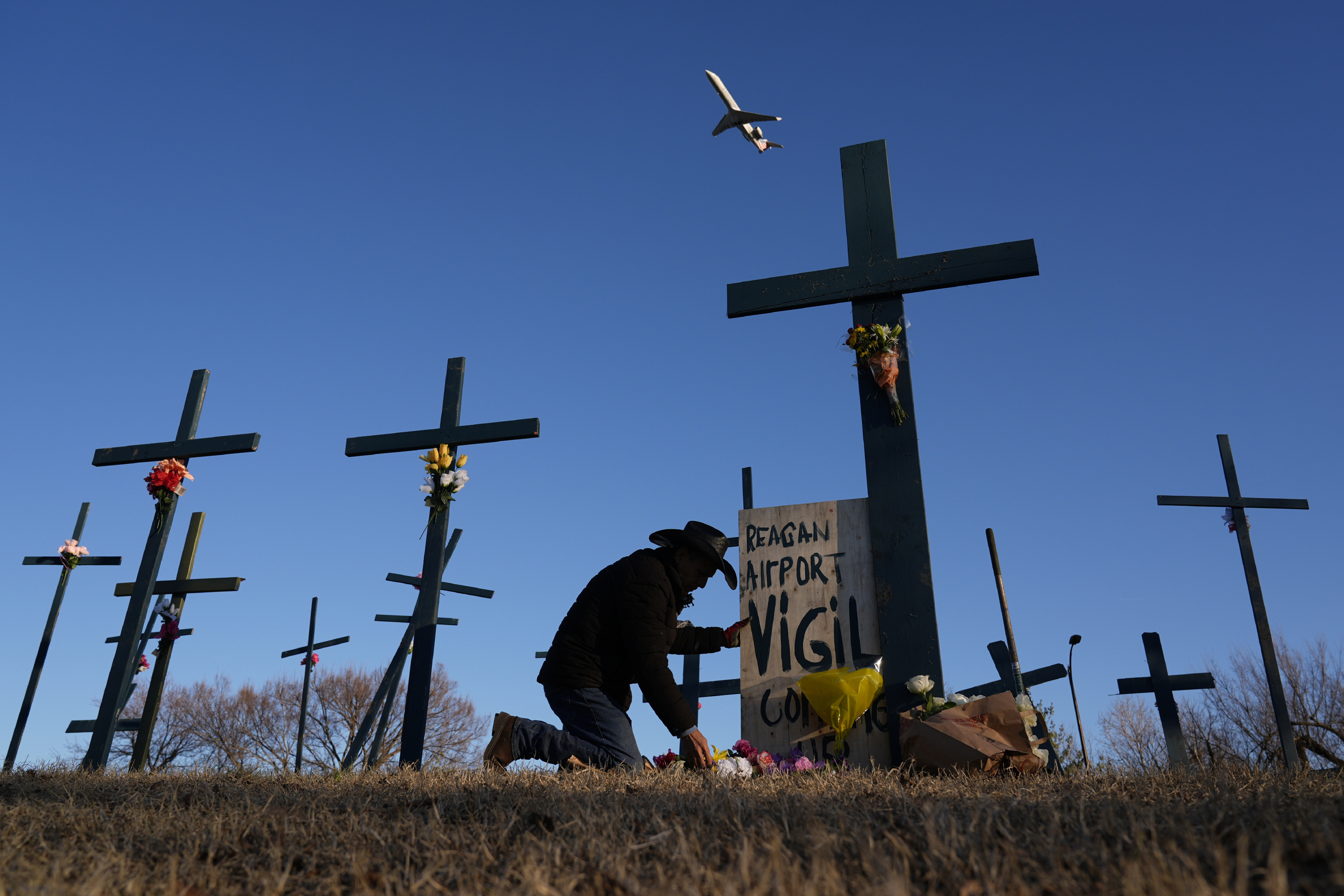

The House on April 14 passed a critical aviation safety bill aimed at preventing future midair collisions such as the one that occurred over Washington’s Potomac River in January 2025.
Backed by the National Transportation Safety Board (NTSB) and several industry groups, the Airspace Location and Enhanced Risk Transparency (ALERT) Act would require most aircraft operating around busy U.S. airports to include critical location transmitting devices to allow pilots to see where other nearby aircraft are.
The NTSB has been recommending the technology, known as Automatic Dependent Surveillance-Broadcast (ADS-B), since 2008. The midair collision between an American Airlines regional jet and an Army Black Hawk helicopter in January 2025 could have been prevented with ADS-B, NTSB Chairwoman Jennifer Homendy has said in multiple hearings since the crash, which killed all 67 people on board the two aircraft.
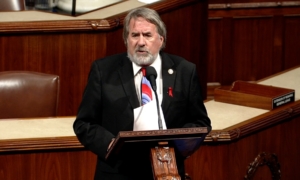
The ALERT Act passed in a 396–10 vote after the House teed the bill up for a vote on the evening of April 14, following its unanimous approval last month by two key House committees.
However, multiple groups and representatives for the family members of the people who died in last year’s midair collision have expressed concern that the bill is not as strict as the Senate’s Rotorcraft Operations Transparency and Oversight Reform (ROTOR) Act, which fell short by a single vote when the House considered it in February.
“January 29, 2025, made clear what is at stake,” the main families group said in a statement on April 14 before the House vote. “The 67 lives lost that day should be honored with an improved system that prevents this from happening again.
“And the flying public should not have to wait longer than necessary for those protections to be in place.”
Critically, the ALERT Act allows U.S. military aircraft to operate without ADS-B whenever the technology “would affect operational security” and while carrying out “special missions” throughout the Washington metropolitan area.
The technology includes two different devices: one for transmitting an aircraft’s location, known as ADS-B Out, and another for receiving those transmissions from other aircraft or for weather and traffic alerts, known as ADS-B In.
“We remain concerned that the bill provides the military with too much discretion, including the authority of whether and how to equip with ADS-B In,” the Transportation Trades Department, which represents 39 transportation unions nationwide, said in a statement before the April 14 vote.
“Further, the ALERT Act relies on discretionary agency authority for broadcasting military aircraft position in the DC region and the creation of ‘procedures’ for the use of broadcasting ADS-B Out outside the DC region that are, again, subject to the discretion of the Armed Forces.”
By contrast, the ROTOR Act, cosponsored by Sens. Ted Cruz (R-Texas) and Maria Cantwell (D-Wash.), would have established statutory requirements for helicopters using the technology near “mixed-traffic, high density airports,” the union group said.
Cruz warned his House colleagues ahead of the April 14 vote that the ALERT Act would not guarantee the necessary safety measures to prevent another midair collision.
“The ROTOR Act ... would mandate ADS-B In where ADS-B Out is required, closing the technology gap that allowed last year’s devastating mid-air collision over the Potomac,” Cruz wrote.
“Congress should not advance a bill that neither improves aviation safety nor closes the loopholes that have allowed operators, including the military, to fly blind in congested airspace.”
The Associated Press contributed to this report.