
President Donald Trump said that he will continue the U.S. Naval blockade of Iran until the regime accepts his administration’s demands over its nuclear program.
In an April 29 interview with Axios, Trump said he is refusing Iran’s proposal, which includes opening the Strait of Hormuz if the U.S. lifts its blockade and postponing discussions over Tehran’s nuclear program.
“The blockade is somewhat more effective than the bombing. They are choking like a stuffed pig. And it is going to be worse for them. They can’t have a nuclear weapon,” Trump told Axios.
Iran has maintained that its nuclear ambitions are for a peaceful civilian energy program, while the United States and Israel have accused Tehran of pursuing a nuclear warhead.
Trump suggested that Iran wants to end the blockade by reaching a deal with the United States.
“They want to settle. They don’t want me to keep the blockade. I don’t want to [lift the blockade], because I don’t want them to have a nuclear weapon,” he said.
Earlier in the day, Trump urged the Iranian regime to ink a deal with his administration to end the war.
On Wednesday, Iran warned it would engage in “unprecedented military action” against the U.S. blockade of regime-associated ships, if it’s not lifted.
Trump told Axios on Wednesday that he considered the blockade “somewhat more effective than the bombing.”
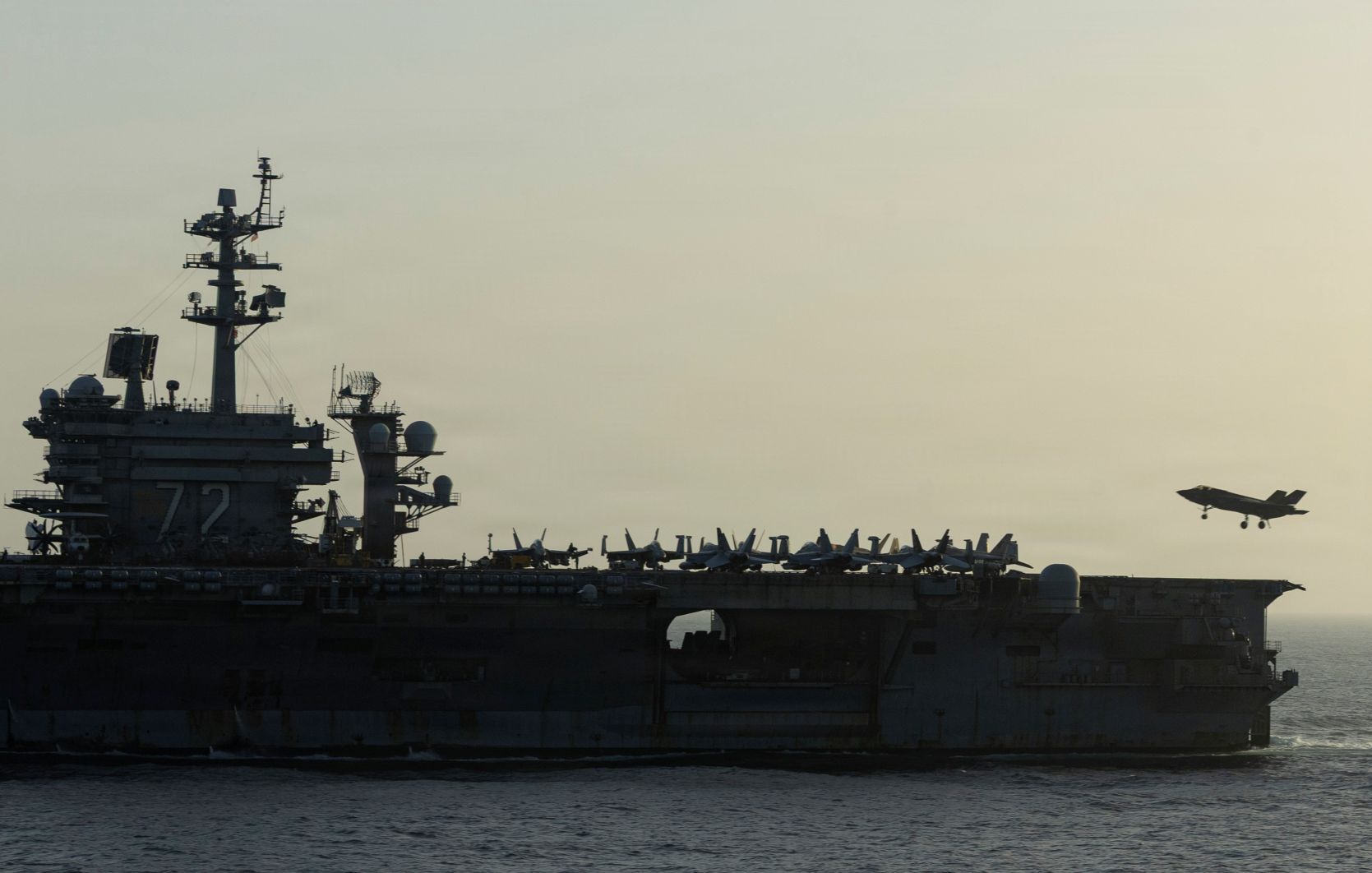
U.S. Central Command Admiral Brad Cooper said Wednesday afternoon that U.S. forces had achieved a “significant milestone” after successfully redirecting the 42nd ship trying to bypass the naval blockade.
“Right now there are 41 tankers with 69 million barrels of oil that the Iranian regime can’t sell. That’s an estimated $6 billion-plus from which Iran’s leadership cannot financially benefit,” he said in a statement. “The blockade is highly effective and U.S. forces remain fully committed to total enforcement.”
Oil prices have steadily climbed again after initially falling when the United States and Iran agreed to a ceasefire on April 8. West Texas Intermediate crude rose by nearly 7 percent on Wednesday, reaching more than $106 per barrel. Brent crude was up by more than 9 percent by late afternoon the same day.
U.S. military operations against Iran since the start of the war on Feb. 28 have cost roughly $25 billion in taxpayer money, a top Pentagon accounting official told Congress on Wednesday.
Acting Pentagon comptroller Jules Hurst said munitions accounted for most of the costs, but operations, maintenance, and equipment replacement costs were also factored in.
The Pentagon is already asking congress for $1.5 trillion for military and defense spending in the fiscal year 2027 budget. That would amount to a 42 percent increase compared to fiscal year 2026, which was roughly $1.03 trillion.
Trump told reporters in the Oval Office on Wednesday that the United States had destroyed roughly 80 percent of Iran’s missiles and missile factories, and warned that he would wipe out the rest “very quickly if we don’t make a deal.”
He added that Russian President Vladimir Putin offered to help with Iran.
“He told me he’d like to be involved with enrichment if he can help us get it,” Trump said. “I said, ‘I’d much rather have you be involved with ending the war with Ukraine. To me, that would be more important.’”
Putin “doesn’t want to see [Iran] have a nuclear weapon,” Trump added.
Ryan Morgan contributed to this report.