
There is a quiet once again in the field in Bickmarsh, located 45 minutes south of Birmingham, UK. Now that the electronic hum of metal detectors and the sound of scraping shovels have died down, the land has resumed its pastoral role, following a flurry of archaeological activity that uncovered ancient coins.
The cache of 63 coins that ultimately emerged from the soil has now been surgically cleaned and stored under archival standards. This rare find from the ninth century, called the Bickmarsh Hoard, may tell us more about life in the age of Viking invasions into England.
The original extraction unfolded on a hot July morning in 2022.
Simon Hall, the operations manager for the Solihull-based outfit Go Detecting (Midlands) Ltd, watched as silver coins emerged from the ground one by one. The detectorists dusted off 25 pennies that day.
“The guys were literally shaking every time a new coin was found. They were spellbound,” Hall later told local newspaper Stratford-upon-Avon Herald. “It’s not something that happens every day.”
Hall and the members of his detectorist club realized they were bound by the UK Treasure Act to alert officials of the British Museum’s Portable Antiquities Scheme. Soon, the site was cordoned off to protect it, and archaeologists in the county of Worcestershire where the field is located became involved.
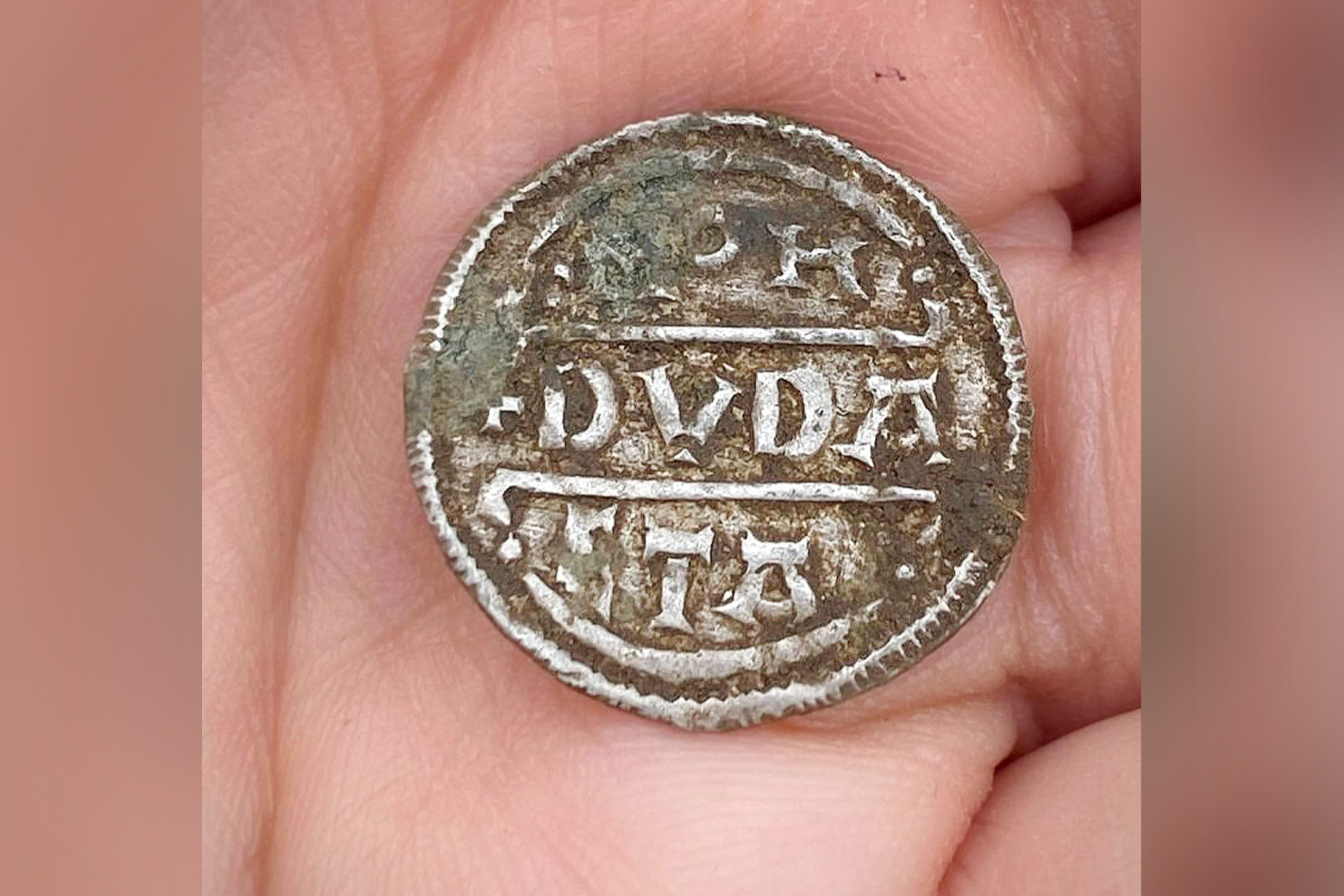
A silver coin from the Bickmarsh Hoard. (Worcestershire Archive and Archaeology Service)
The field was squared off. A two-phase excavation launched with Hall and his team surveying using their metal detectors first, then archaeologists dug in more targeted areas. Controlled stripping of the earth revealed that the coins were isolated within the topsoil.
Many more were found.
Two additional concentrations of coins emerged, leading the researchers to expand their excavation. The haul of 63 coins had been minted in Early Medieval days. Their markings pointed to the reign of King Burgred, who ruled Mercia, one of the most powerful Anglo-Saxon kingdoms.
And they found still more. Over 100 artifacts were uncovered, hailing from Roman times to the present. Of particular interest were 35 fragments of a lead sheet. Coins from other famous hoards have been found wrapped in lead, such as the Lenborough Hoard in Buckinghamshire. Modern-day plowing could explain the distribution of the artifacts across the field. Diagnostic research still cannot confirm this wrapping was used at Bickmarsh, however. Interestingly, no structures were uncovered.
It wasn’t until the coins were assessed by specialists at the British Museum that they began hinting at what their original owners feared: Vikings. Researchers believe that the coins may have been buried for safekeeping at a time when Viking armies were moving across England during the ninth century.
The most significant coin was an imitation gold solidus with the markings of Louis the Pious, while two Frankish deniers (units of currency) hailed from continental Europe. The hoard’s international fingerprint was the calling card of Scandinavian fleets that pillaged the Frankish Kingdom before pivoting toward the English coast.
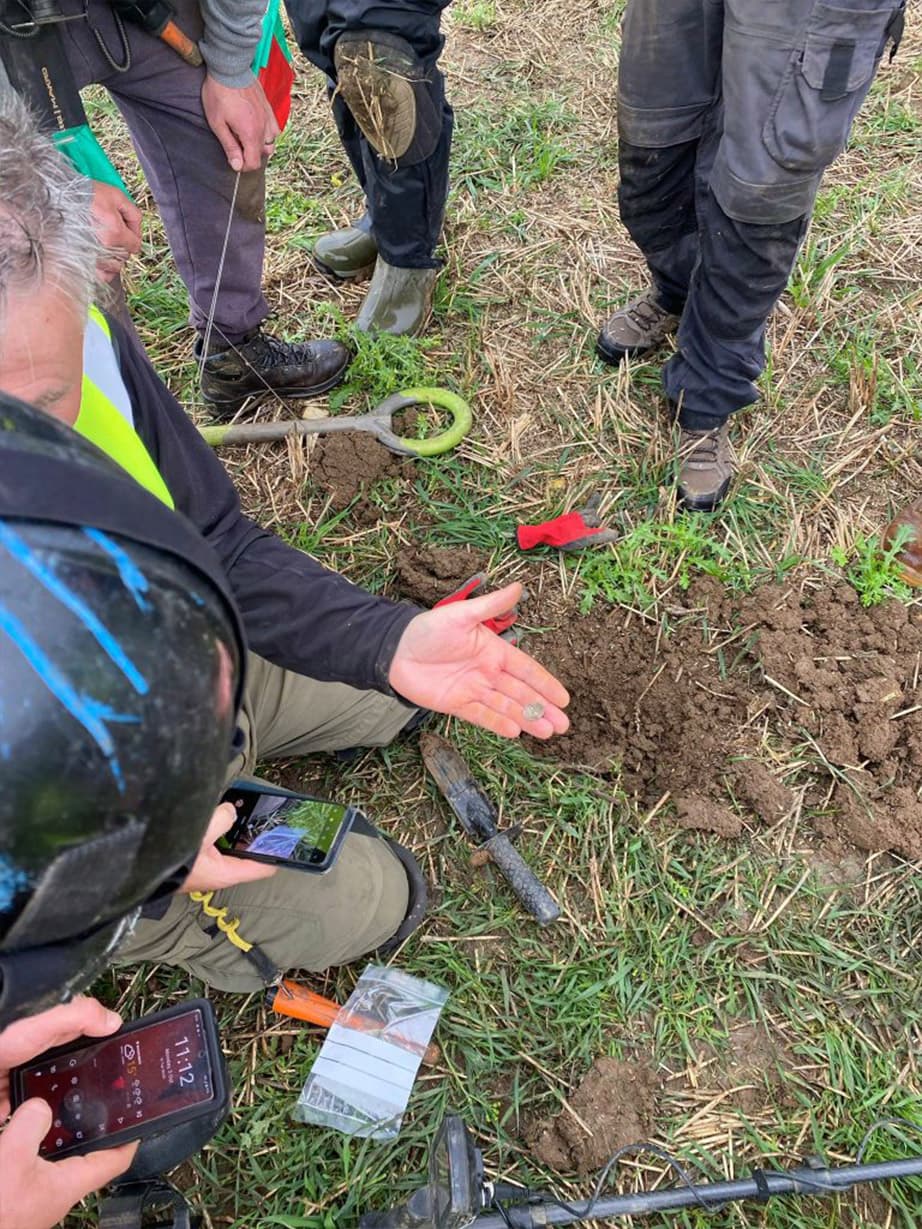
Metal detectorists examine a silver coin plucked from a field in Bickmarsh, UK. (Worcestershire Archive and Archaeology Service)
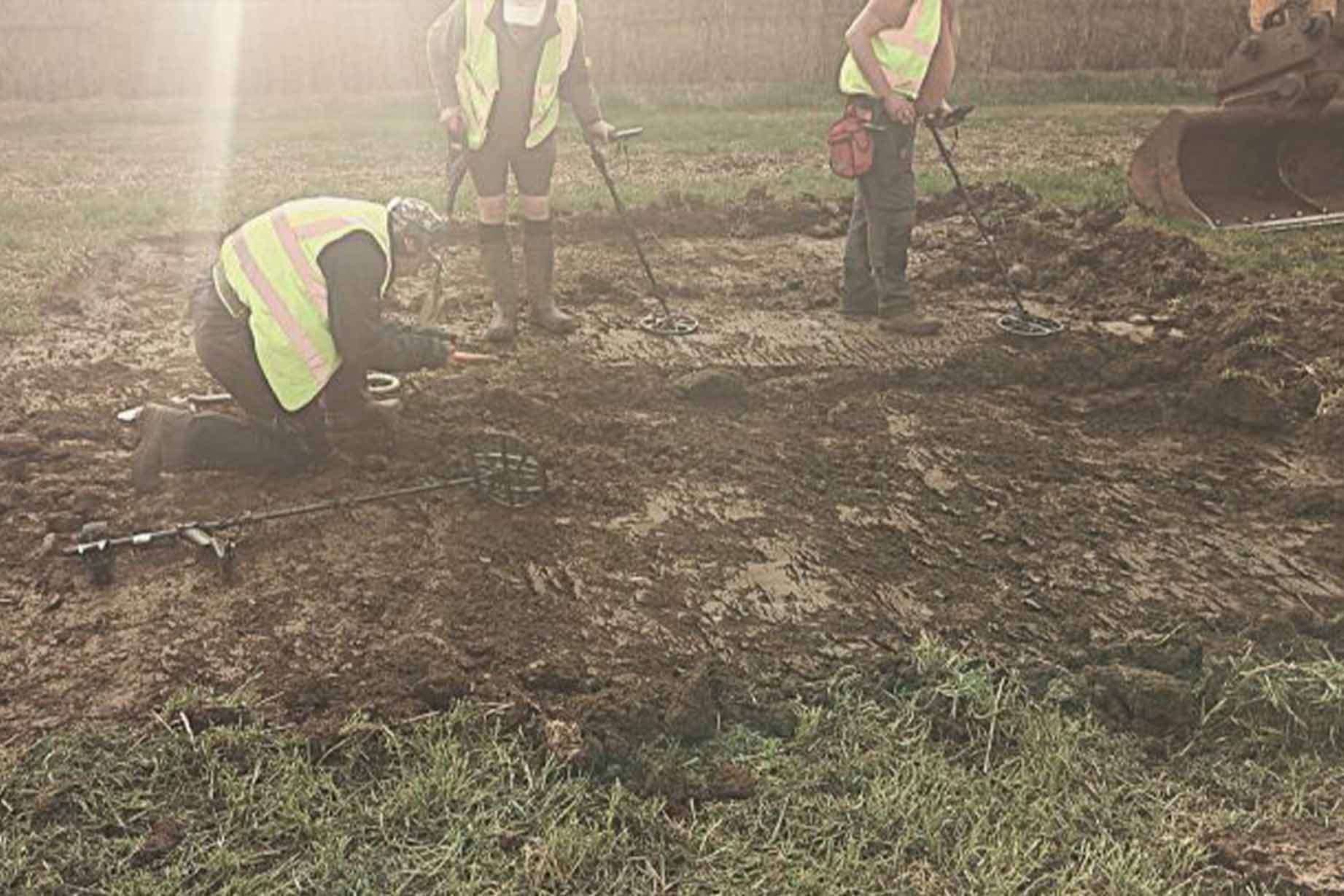
Artifacts are excavated in a field in Bickmarsh, UK. (Worcestershire Archive and Archaeology Service)
Gareth Williams, a former Early Medieval coin specialist at the British Museum, was able to pin down a time frame for the coins by looking at their markings. Most were minted under Burgred, who ruled from 852 to 874. His brother-in-law, Alfred of Wessex, assumed the throne in 871 and discontinued the former ruler’s coinage the year he died. That places the Bickmarsh Hoard somewhere between 871 and 874—mirroring records of Viking invasions.
Fear in the mind of the coins’ owner was likely well-placed. By 867, Viking armies had captured Nottingham, deep in Mercian territory. King Burgred tried to buy peace, but the threat loomed until his exile to Rome in 874. A client king, Ceolwulf, was later installed by the Vikings; it was a time of upheaval.
“Hoard deposits are often linked to periods of uncertainty or instability. Someone might hide their wealth in the ground intending to return once the danger had passed,” the Worcestershire Archive and Archaeology Service noted in its official findings. “The shallow burial of the Bickmarsh Hoard suggests exactly this kind of hurried decision.”
This era of turmoil reshaped boundaries, drawing new borders as the Vikings carved out vast lands from London to Chester. While Worcestershire lies just beyond that frontier, the hoard also attests to a deeply interconnected world. Whether hidden from Viking raiders or local unrest, its foreign pieces tether the quiet hamlet of Bickmarsh to a cross-channel economy. Even here, life was rippled by massive geopolitical waves reshaping mainland Europe.
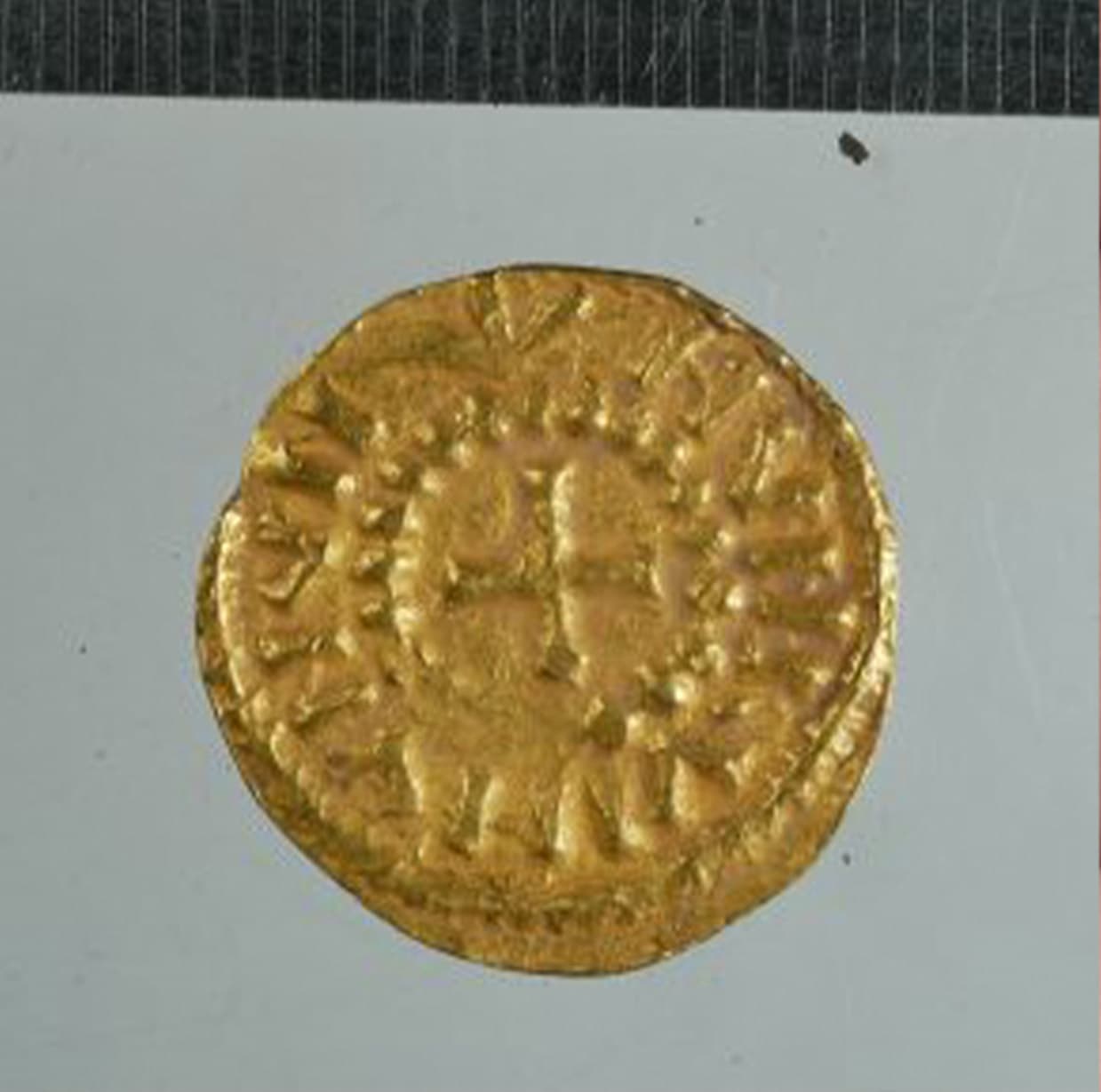
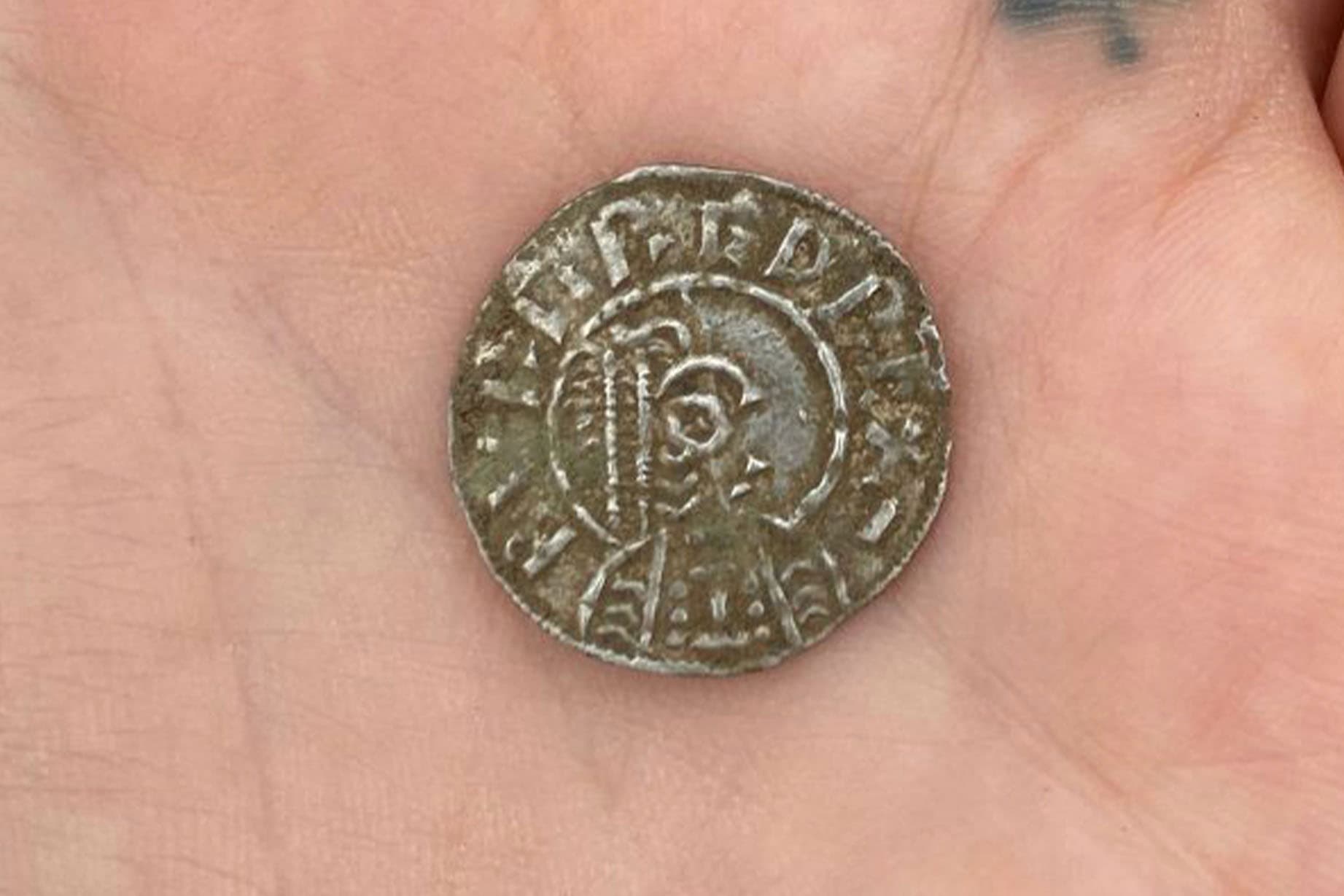
An imitation gold soldius from the Bickmarsh Hoard. (Portable Antiquities Scheme)
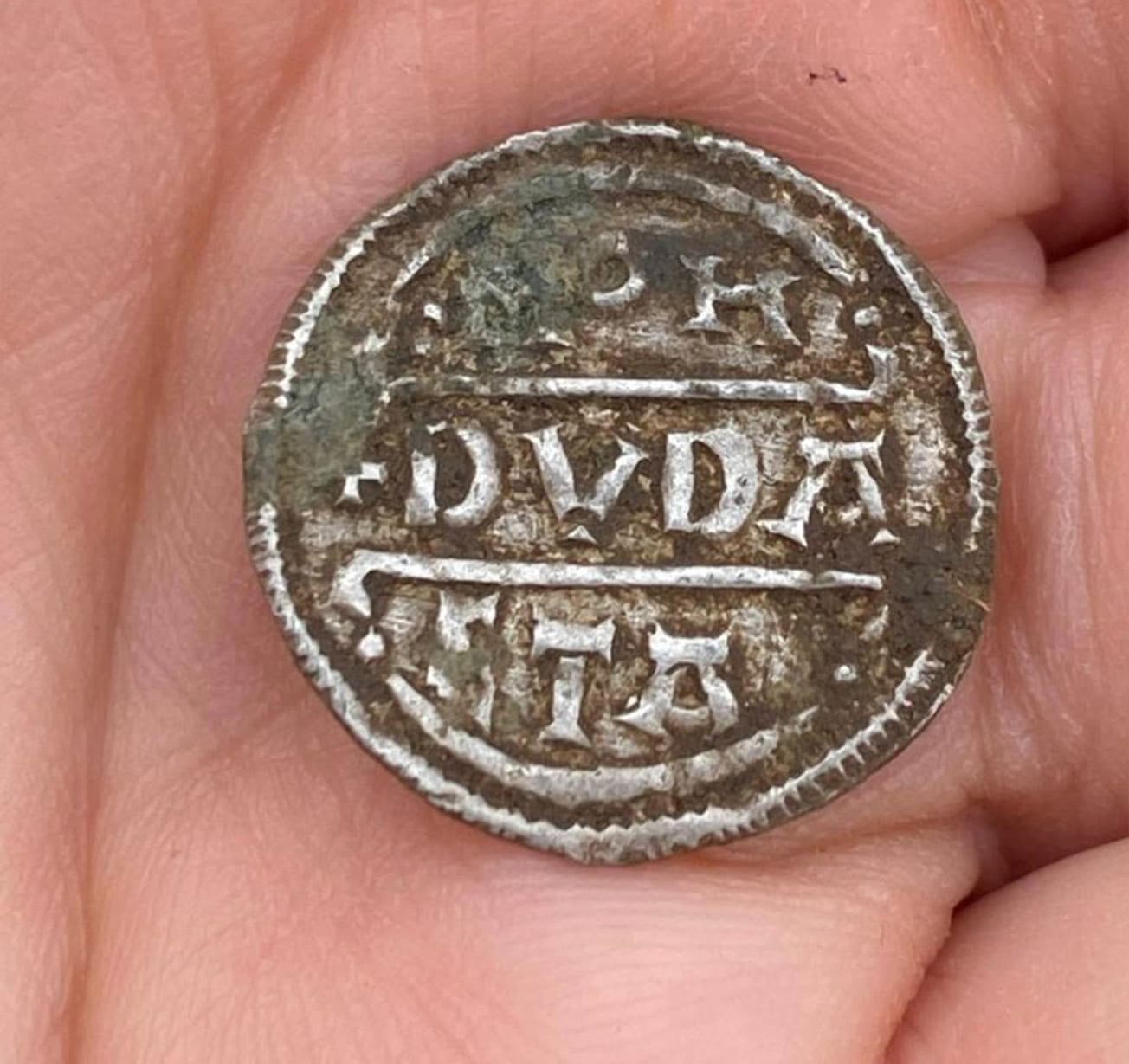
A silver penny dating from the late ninth century. (Worcestershire Archive and Archaeology Service)
After its formal announcement this past April, the Bickmarsh Hoard now awaits appraisal by the Treasure Valuation Committee. Experts have placed the hoard’s worth between 2,000 and 3,000 pounds, though its historic price could be far greater. It could end up being bought by a Worcestershire museum, funded by public donations and heritage grants.
The total amount could be split 50/50 between Go Detecting (Midlands) detectorists and the landowner, who still walks that quiet field in Bickmarsh, as humans have done for ages.